
Bears
Waterton Lakes National Park

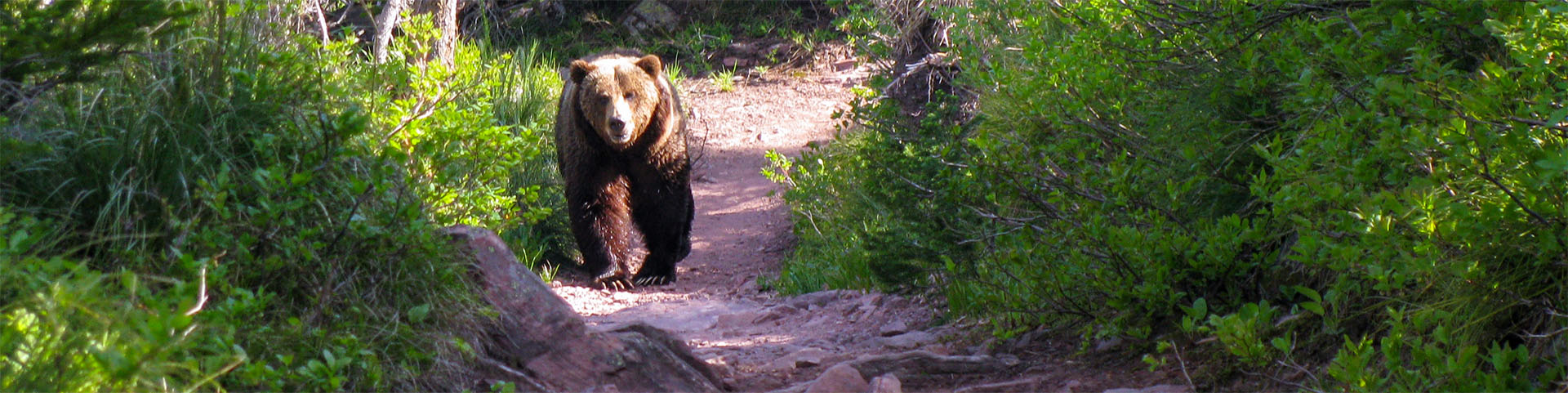
Two types of bears call Waterton and the surrounding area home: the black bear (Ursus americanos) and the grizzly bear (Ursus arctos).
Healthy populations of both bear species show that there is high quality, secure habitat and travel corridors here.
Human-wildlife coexistence programs work to keep people safe while also protecting bear populations. It's a delicate balance. Whether you're hiking for days or just sightseeing for a few hours, it's important to know how best to keep yourself, other visitors, and wildlife safe.

Once a bear population is reduced, it is hard for them to recover. The greatest threats to bears are loss of habitat loss and human-caused death. Here in Waterton, bears are part of a larger regional population, moving between British Columbia, Montana, and Alberta.
Comparing black bears and grizzly bears
Parks Canada wildlife specialists collect data on where bears spend their time in the national parks. If you are visiting here, you can help our conservation efforts by reporting your bear sightings. Knowing the difference between a grizzly bear and a black bear is helpful information.
Here are some tips to help you become an expert bear-spotter:
Colour
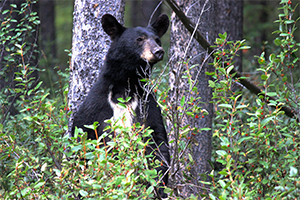
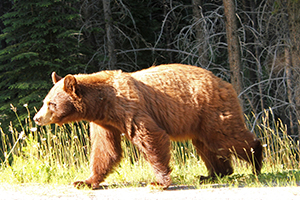
Many people think that if a bear is black it must be a black bear and if it is brown it must be a grizzly bear. The truth is, both species come in a variety of shades. Colour alone is not a good indicator of species.
- The species we refer to here in western North America as the grizzly bear is found throughout the northern hemisphere in places like Japan, Europe, Asia and Scandinavia, where it is commonly referred to as the brown bear. Although they are often brown, grizzly bears can range in colour from jet black to light blond.
- Many grizzly bears have natural highlights. Frosted tips on their hair give them a grizzled look, hence the name.
- Black bears range in colour from blond, and even white in some circumstances, to brown, cinnamon, and black.
- You often see a black bear with a white patch on its chest, called a chest blaze.
Size
Bears in the Rocky Mountain national parks are generally smaller than those found in other regions of North America. Grizzly bears are typically bigger than black bears, but female grizzlies and male black bears can weigh the same, so don’t rely on size alone to tell them apart. Bears here on average weigh in at:
- Male grizzlies: 150 to 300 kg
- Female grizzlies: 80 to 150 kg
- Male black bears: 80 to 150 kg
- Female black bears: 45 to 100 kg
Shape
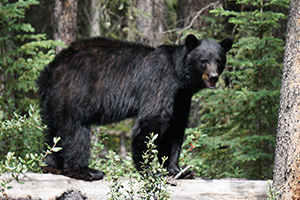
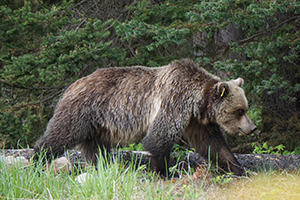
- Grizzly bears have a very prominent muscle mass over their shoulders that creates a noticeable hump.
- The rump is lower than the shoulders on a grizzly.
- The shoulder hump is not prominent in black bears.
- The rump is higher than the shoulders on a black bear.
Head
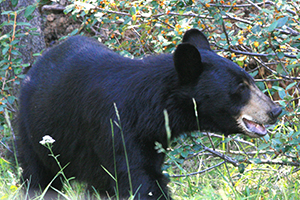
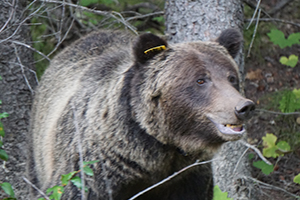
- A grizzly bear has a large, round head and a dished or concave face.
- A black bear has a smaller head with an elongated snout. When you look at a black bear from the side, its head and snout form a straight line.
Ears
- Grizzly bear ears are short, round and set well apart.
- Black bear ears are more prominent, being longer and pointier.
Claws
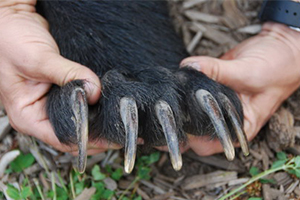
- Grizzly bears have long, curved claws (5 to 10 cm) used for digging in the ground for roots, insects and ground squirrels.
- Grizzly bear claws vary in colour from white to dark with light streaks.
- When looking at grizzly bear tracks, claws marks are evident 5 cm or more in front of the toes.
- Black bears have short, black claws (3 to 4 cm), great for climbing trees.
- Claw marks are not always visible in black bear tracks; if you do see them, they are close to the toes.
How Parks Canada helps bears thrive
Protecting habitat
Canada’s mountain national parks provide a large, protected area of secure habitat for bears, where disturbance and habitat fragmentation are minimized.
Protection from human disturbance
National parks have reduced speed limits as well as prohibitions on harassing wildlife to help keep bears and other animals safe.
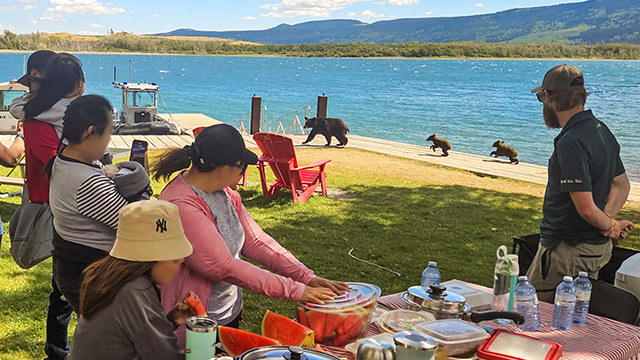
Parks Canada’s Human-Wildlife Coexistence staff are dedicated to managing bears and humans in high use areas, especially in spring and summer. You may encounter these teams patrolling park roads to support safe wildlife viewing by ensuring drivers stay in their vehicles.
Monitoring
Parks Canada monitors bear activity in the park using remote wildlife cameras, VHF (very high frequency) and GPS (global positioning system) radio and satellite collars, and visual sightings.
We keep detailed records of wildlife incidents in the national park. Data about conflicts between bears and humans helps us prevent them in the future.
Reducing attractants
To prevent bears from becoming habituated to people and human food, we use bear-proof garbage bins throughout Waterton Lakes. We’ve installed bear-proof storage lockers for food at all backcountry campgrounds as well.
Parks Canada staff also remove animals killed on roadways to reduce the number of bears scavenging near the road.
Education
We teach bear safety to park users, including how to keep a bare campsite with no attractants, how to use bear spray, how to view bears from the road and how to travel safely in bear country.
We teach bears that are becoming habituated to people to avoid humans instead by using aversive conditioning. Aversive conditioning means creating a negative experience associated with humans. This teaches bears to avoid people and helps them survive.
- Date modified :