
Carnivores
Waterton Lakes National Park
Cougars (Puma concolor)

The cougar (mountain lion, puma), is the largest cat in North America. Cougars are solitary, nocturnal animals with great vision and strong hunting skills. Their lair is usually in a crevice among rocks or in a sheltered spot out of the wind. Cougars can breed year-round if their food sources are abundant. The spotted, blue-eyed kittens weigh just under a pound at birth.
Cougars hunt by stalking and pouncing, like a domestic cat. Their favorite prey are deer, but they also hunt elk, small mammals, bighorn sheep, and even moose!
Park biologists monitor cougar activity within the park. Cougar tracks may be seen in winter in and near the townsite, where deer like to gather. Their tracks differ from canid prints, as a cougar’s claws are retracted as they walk or run. This is one of the signs that indicate a healthy population in the park.
Visitors are encouraged to learn more about safety precautions relating to cougars and other carnivores.
Canada lynx (Lynx canadensis)
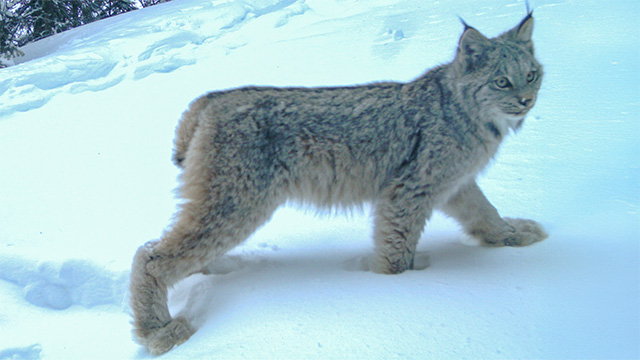
The lynx is smaller than a cougar, but still a fantastic hunter. They are specialists of boreal and sub-alpine mountain habitats and mature forests.
Lynx need dense forests to provide cover for their den sites. They also need an area able to support a healthy population of snowshoe hares, their main food source. They may also eat red squirrels, grouse, mice and voles. Lynx are known for their large feet, which aid travel in deep snow, and the long fur tufts on their ears.
While the Canada lynx is listed as threatened south of the border, they are not considered at risk in Canada. However, lynx are uncommon in Waterton, and are secretive animals. It is unlikely to see one in the park.
Bobcats (Lynx rufus)
Like the lynx, bobcats are uncommon and not often seen in Waterton. They tend to prefer open woods, thickets, and areas with low snowfall. Bobcats hunt similar prey as Canada lynx; hares, rodents, and grouse.
They are tawnier in colour, slightly smaller in size, and have smaller feet and ear tufts than lynx.
Wolverine (Gulo gulo)
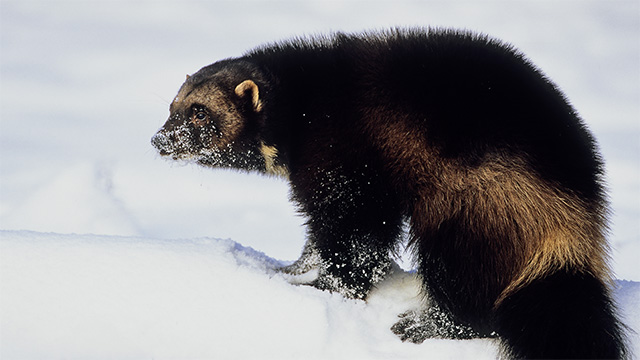
Found throughout high elevation forests and well into the harsh alpine, the habitat of the wolverine covers a wide territory.
The wolverine, particularly males which can be twice as big as females, is often mistaken for a small bear or a large marmot. Males can weigh up to 18 kilograms, while females are as heavy as 12 kilograms. They have a rich, chocolate brown coat with blonde stripes down the sides. Individuals have unique silvery markings on their face, which is broad and large for the body size.
Once thought to be almost exclusively eaters of carrion, we now know they are accomplished predators. They can kill large prey, often animals several times their own size. In summer, marmots and small mammals are the usual prey. In winter, most of their diet consists of large mammals such as mountain goats, moose and caribou that were previously killed by wolves or avalanches.
The wolverine is an enduring symbol of deep wilderness, dogged determination and fierce independence. Yet in the Rocky Mountains, their numbers are few and threats to their habits and habitats are increasing. Increasing human use in their habitat is leaving this remarkable species at risk. They are listed as a species of Special Concern (SARA).
Wolverines seek the same solitude and isolation desired by many backcountry visitors. Denning females with young are particularly vulnerable to disturbance from skiers and hikers.
Wolves (Canis lupus)
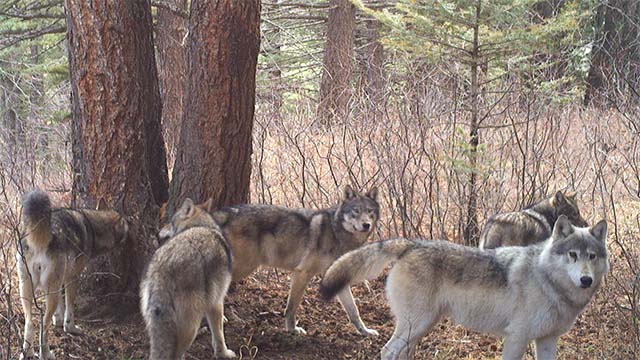
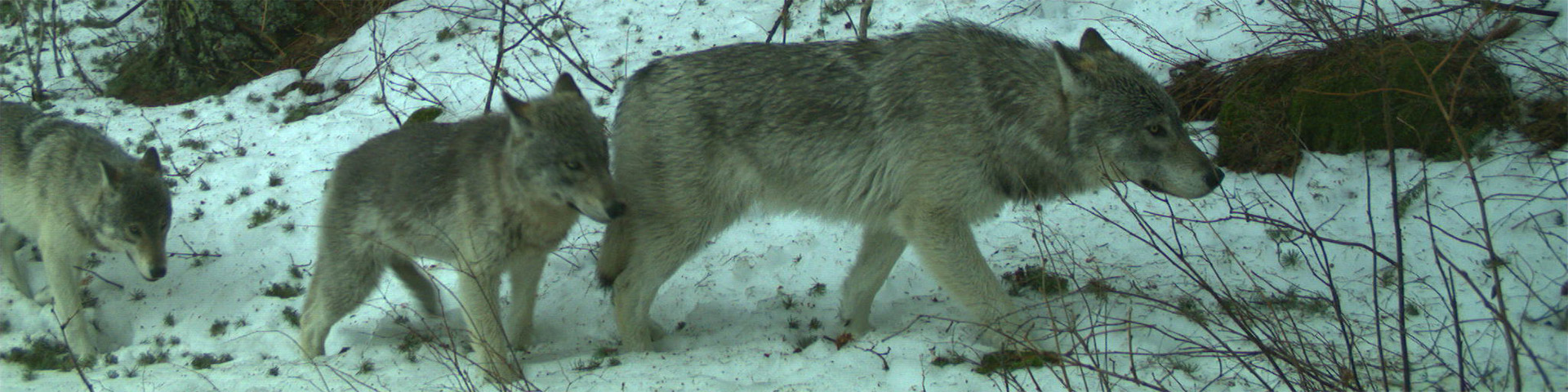
The wolf is the largest member of the canine family. They have long legs and tail to run through deep snow, with a broad snout, and short ears. Seeing a wolf is rare in Waterton.
Wolves excel at hunting large prey. Their social nature, combined with expressive behaviour make them strong pack animals. They depend on deer, elk, moose, and sheep for food, but will also prey on many smaller animal species.
Wolves travel in nuclear families consisting of a mated pair and their offspring. Young wolves may leave to form their own packs when mature.
In the early 1900s, wolves became locally extinct from southern Alberta and northern Montana. Wolf numbers have increased in southern Alberta since then, but the attitude towards wolves is still harsh. A shift to a more positive attitude toward wolves is needed.
The protection of wolves in national parks alone does not ensure their survival. They need room to roam, plus our understanding and tolerance. Most wolves in Waterton are only passing through. Wolves travel long distances for food and shelter. They range large territories, which include only a small area inside the park. One radio collared wolf in Glacier National Park's travelled North, almost to the Yukon, in one winter!
The key to a healthy wolf population is their continued protection! Alberta's Wolf Management Plan calls for a population of 50 wolves in southwestern Alberta. This plan aligns with Parks Canada's interest in maintaining wolf populations for a healthy ecosystem. The most important conservation areas are the Flathead Valley in Montana, and British Columbia.
Coyotes (Canis latrans)
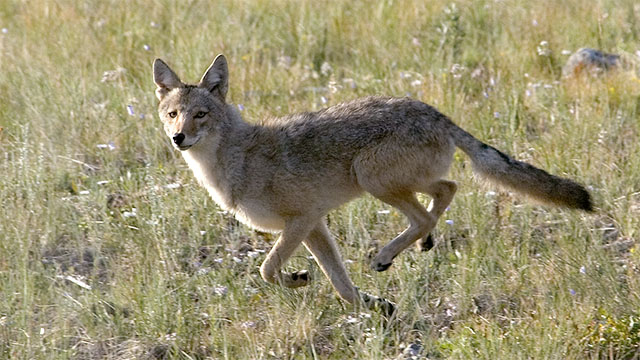
If you see a large member of the canid family in the park, it’s likely a coyote! Coyotes are more common than wolves in Waterton. Their nocturnal serenades can sometimes be heard in the park's aspen forests and prairies. Coyotes have also been sighted on mountaintops.
The coyote is a medium-sized animal. It has a slender muzzle, large, pointed ears, a bushy tail held upwards when excited, and downwards while running. The family pack is the basic social unit. The litter, usually five to seven, is born in May. Both parents help raise the young. Mated pairs usually stay together for several years.
Coyotes are scavengers and active predators of small rodents, birds and sometimes deer. They are often seen patrolling near roads in search of vehicle struck animals.
Coyotes are known for their teamwork while hunting. In winter, they chase deer out onto frozen lakes, keeping them trapped on the slippery surface. In turn, coyotes must be alert for larger predators such as cougars, wolves and bears.
Red foxes (Vulpes vulpes)
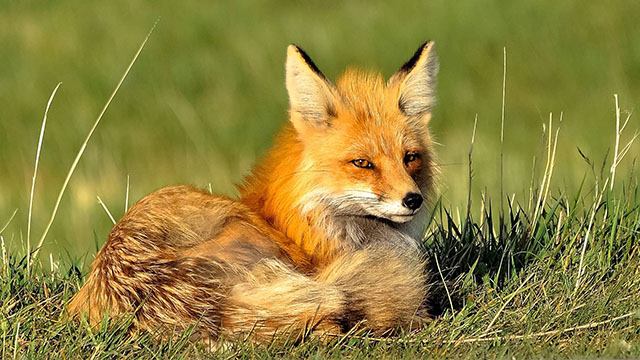
Red foxes are small animals that look like dogs and are mostly active at night. Although they are called red foxes, they don’t always have red fur. Some are black, silver, or a mix called “cross,” a reddish-brown with a dark line across their back and shoulders. Most red foxes have white bellies, black ears, and black legs. They also have long, bushy tails that can be almost half the length of their bodies. Red foxes are slim and have long legs, weighing up to almost 14 kilograms.
Red foxes are the most common wild dog in the world. They live across the Northern Hemisphere, including North America, Europe, Asia, and parts of North Africa. They can live in many different places and are very good at living near people.
Their diet consists mostly of rodents like mice and ground squirrels. They are also known to eat berries, grass, and unfortunately, human food. They will dig through garbage or steal food left out at campsites or picnic areas. Even though foxes are usually shy, they can become bold if they are habituated to being fed by people. Foxes that rely on human food can become aggressive.
Related links
- Date modified :