
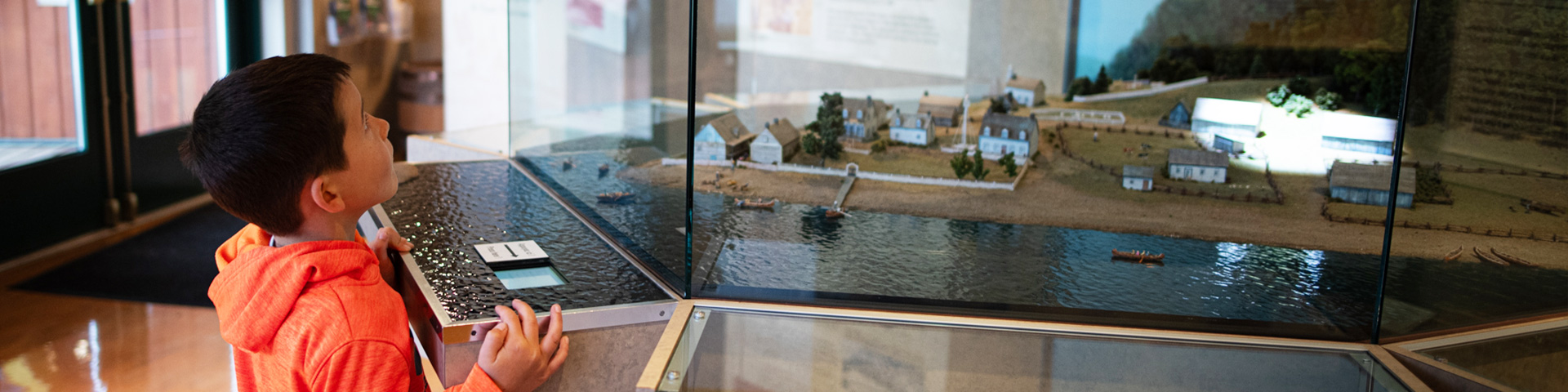
Exhibits
Obadjiwan–Fort Témiscamingue National Historic Site
Make the most of your visit to Obadjiwan–Fort Témiscamingue National Historic Site by visiting the permanent and temporary exhibits.
Most requested
Permanent exhibit: Obadjiwan
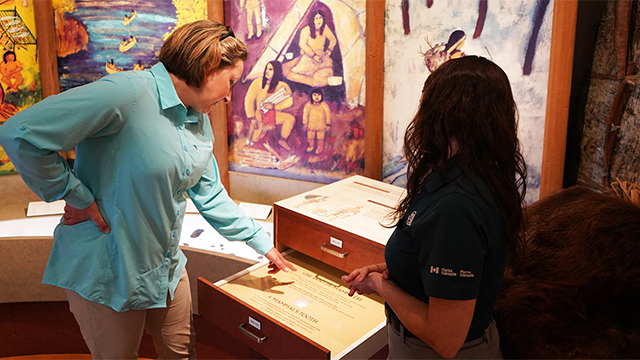 Obadjiwan exibition
The Obadjiwan interactive exhibit recounts the history of Fort Témiscamingue and testifies to the thousand-year-old presence of the Anishnabe (Algonquin) in the region, while transporting visitors to the era of the flourishing fur trade.
It bears witness to the fierce rivalry between the French and British to exploit the supply of pelts in Hudson’s Bay in the 17th and 18th centuries. The fort also serves as a reminder of the activities of the independent 18th century traders and the successive fur trade monopolies held in the upper Outaouais Basin, in the 19th century, by the North West and Hudson’s Bay companies.
Location: visitor and interpretation center
Languages: English and French
Accessibility: the exhibit is located on the first floor of the visitor and interpretation centre. The main entrance is accessible, with no external threshold and automatic door opener.
Temporary exhibit: Kwekiwe’adjimowin—Flip the Narrative

Stephany Lafave, a 30-year-old artist and photographer, was born in Iqaluit, Nunavut, and grew up in Northern Ontario. Since 2021, she has been developing her photographic practice in close collaboration with First Nations communities, traveling across the region to share her art.
As a project coordinator at the Algonquin Nation Tribal Council, she maintains deep connections with the people and communities she documents.
In this exhibit, she presents a series of portraits she has captured that invite viewers to challenge preconceived notions about Indigenous peoples. Each image reminds us that identity is multifaceted and nuanced, and cannot be confined to a single perspective.
Stephany Lafave’s work pays tribute to shared histories while celebrating the resilience, strength, and vitality of Indigenous peoples.
Dates: running from June 21 to September 7, 2026
Location: room la Dérouine, in the visitor and interpretation centre
Languages: English and French
Accessibility: the exhibit is located on the first floor of the visitor and interpretation centre. The main entrance is accessible, with no external threshold and automatic door opener.
Permanent exhibit: The Memory of Time
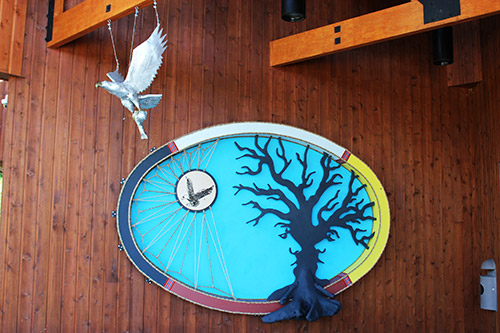 The Memory of Time by Karl Chevrier and Christian Paquette
This impressive and meaningful work of art was inaugurated in 2021 to mark the 300th anniversary of the French trading post.
Created by the Anishinabe artist Karl Chevrier and visual artist Christian Paquette, this work of art combining sculpture and visual art commemorates the confluence of cultures and the collaboration between Indigenous and non-Indigenous people.
This project was made possible by the Government of Canada and Les Amis du Vieux-Fort, a partner of the Obadjiwan–Fort Témiscamingue National Historic Site.
Location: outdoor terrace of the visitor and interpretation centre
Languages: English, French and Algonquin
Accessibility: the exhibit is located on the outdoor terrace, on the first floor of the visitor and interpretation centre. The main entrance is accessible, with no external threshold and automatic door opener.
Permanent exhibit: Indigenous artifacts
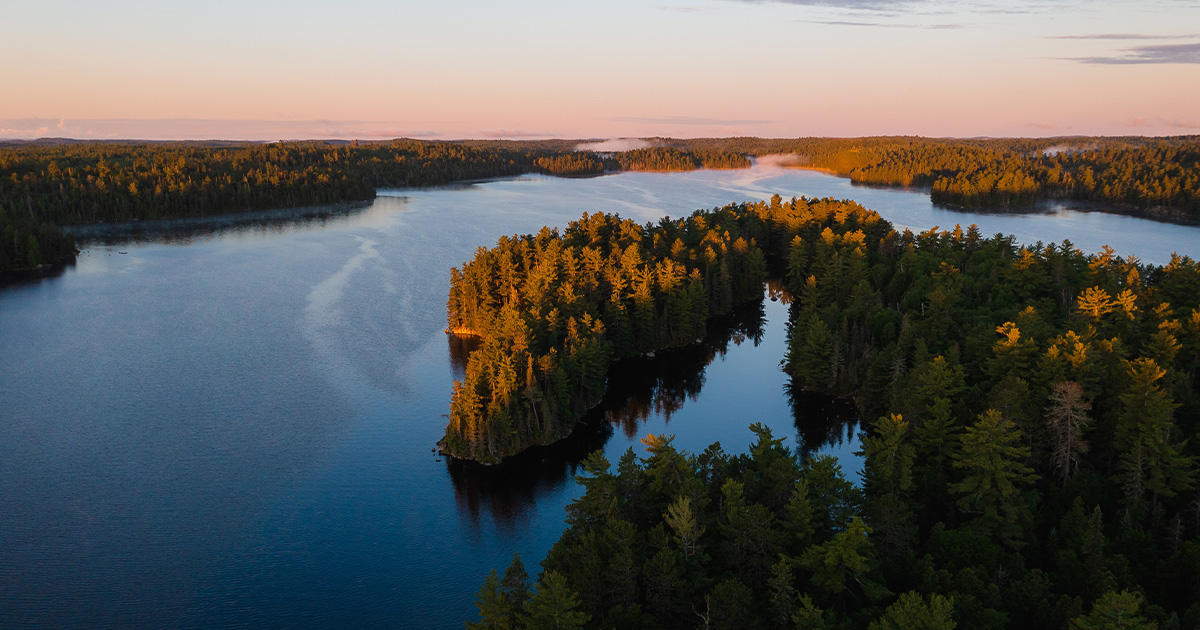 © Regional county municipality of Témiscamingue
In 2023, a precious collection of nearly 80 Indigenous artifacts was unveiled for the first time to the Indigenous communities of the Témiscamingue region.
These artifacts, once discovered during archaeological digs at Obadjiwan–Fort Témiscamingue National Historic Site, were repatriated after being carefully stored in Parks Canada’s national collection facilities.
This year, the artifact exhibit is presented to the general public to share the symbolic value of this collection, which commemorates a part of the rich Indigenous culture.
What to see: tinkling cones, arrowheads, glass beads and projectiles.
Location: room la Dérouine, in the visitor and interpretation centre
Languages: English and French
Accessibility: The exhibit is located on the first floor of the visitor and interpretation centre. The main entrance is accessible, with no external threshold and automatic door opener.
Permanent exhibit: Aki o mikwen'tan—The Land Remembers
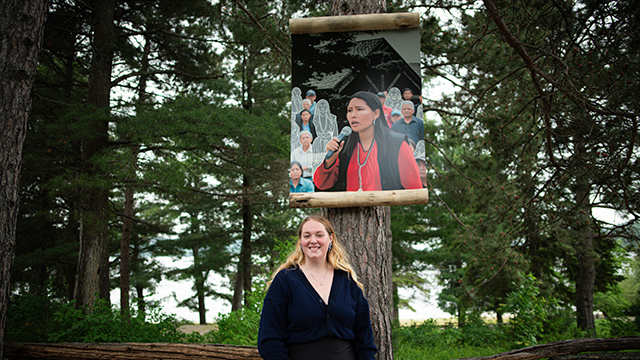
She created this artwork to highlight that Fort Témiscamingue was a gathering place for Indigenous communities long before colonization.
Each of the four paintings represents an important stage of life: birth, youth, adulthood, and eldership. The exhibition was inaugurated in 2025 as part of the Madamikana – The Crossroads project led by the cultural organization Minwashin.
Location: outdoor trail leading to the Indigenous cemetery
Accessibility: the exhibit requires to travel along an outdoor wooden boardwalk with a downward slope, followed by gravel paths. Several benches are available along the route for resting.
- Date modified :