
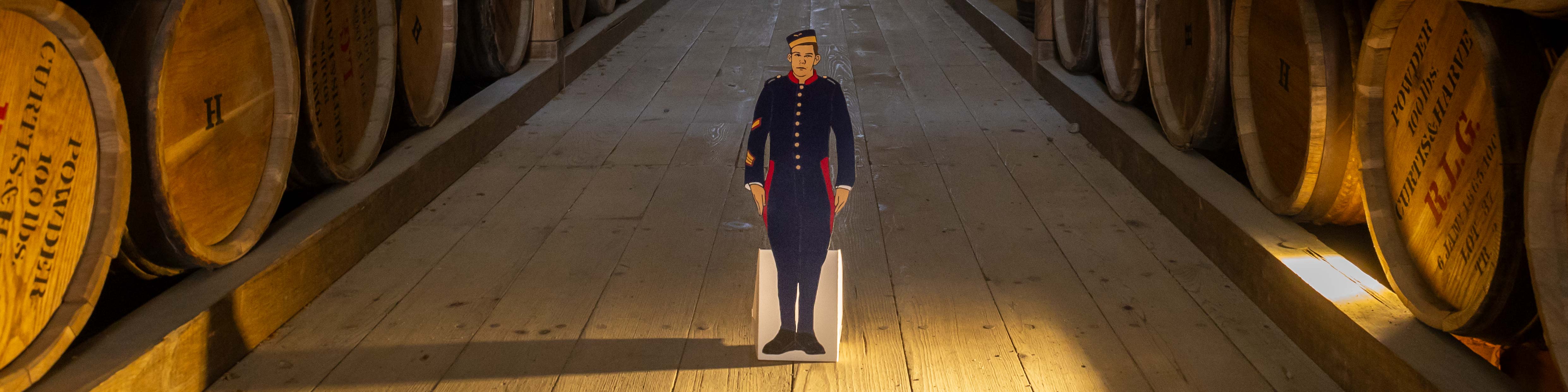
Adventures with Halifax Citadel’s Paper Soldier
Halifax Citadel National Historic Site
Attention kids and families: Cut out, colour, and dress your own Paper Soldier to bring along on adventures throughout the Halifax Citadel!
Ages: 6 to 12
Cost: Free with regular admission
On this page
- Get your copy of the Paper Soldier
- Assemble your Paper Soldier
- Visit the Halifax Citadel
- Share your adventures on social media
- Where's Wallace
- About the soldier's uniform
Get your copy of the Paper Soldier to colour and cut out
There are two ways to get a copy of the Paper Soldier craft:
- download and print the paper soldier at home (PDF, 1.2 MB)
- look inside the 2024 Kids' Guide to Halifax
Assemble your Paper Soldier
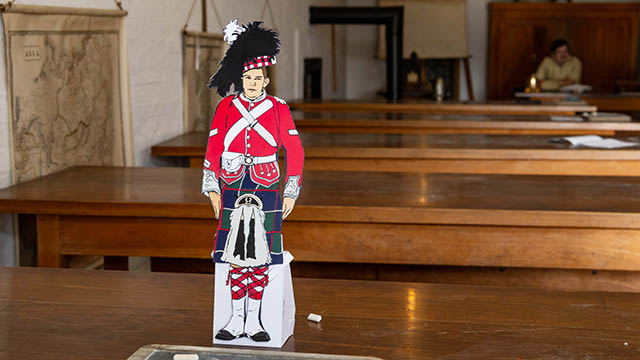
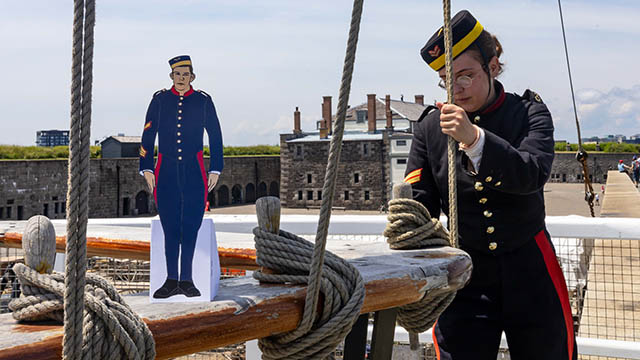
Colour and cut out your Paper Soldier. Then dress your Paper Soldier as a 78th Highlander or as a Royal Artillery soldier.
There were two groups of soldiers stationed at the Halifax Citadel in 1869: the iconic tartan-dressed 78th Highlanders and the Royal Artillery who fired the daily noon gun.
Visit the Halifax Citadel
Once dressed for adventure, your Paper Soldier is ready to visit all the historic period rooms and exhibits at the Halifax Citadel. Explore this historic fort in the centre of Halifax with your Paper Soldier and see where soldiers lived and worked.
Share your adventures on social media
Take a picture of your Paper Soldier's adventures and share it with us on Facebook by tagging @ParksCanadaHalifax or #HFXPaperSoldier
Where's Wallace?
Our Paper Soldier's name is Lance Corporal Wallace. Wallace has been spotted all over the Citadel. We are sharing photos of his whereabouts. Let us know if you can help us find him!
Follow Wallace's adventures online at Facebook.com/ParksCanadaHalifax #HFXPaperSoldier #WheresWallace
About the soldier's uniform
Doublet with rifle gear
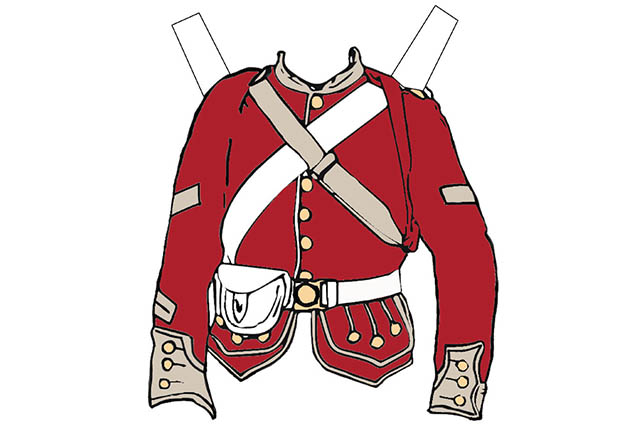
The jacket worn by the soldier is called a doublet.
The upper arm is where the rank badges are placed, so the paper soldier would hold the rank of Lance Corporal. The stripes on the lower arm are awarded for good conduct.
The little pouch in front is known as a ball bag which is used to draw ammunition to be loaded into the rifle.
The two straps making an 'X' over the chest of the highlander are the cartridge box strap (made of leather and connects to the cartridge box which holds more ammunition) and the haversack strap (connects to the haversack which is a cloth bag used to carry provisions etc.)
Finally, there is a belt at the bottom which would have the number '78' on it as well as the name of the regiment the 'Ross Shire Buffs'.
Socks and shoes
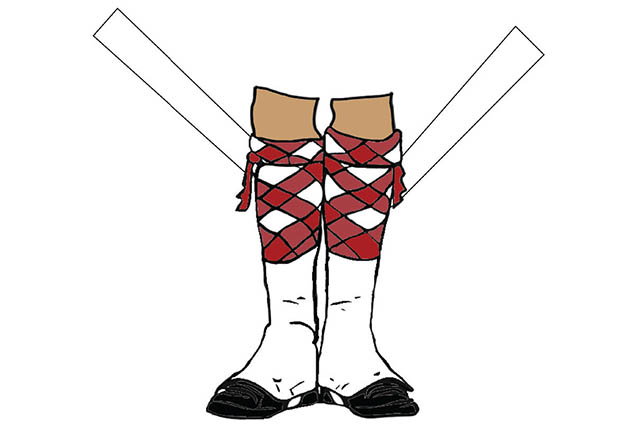
The striped socks worn by the soldier are called half hose and they are held up by flashes which can be seen sticking out from under the fold of the upper sock.
Covering the soldier’s shoes are canvas gaiters (sometimes called spats).
Kilt and sporran
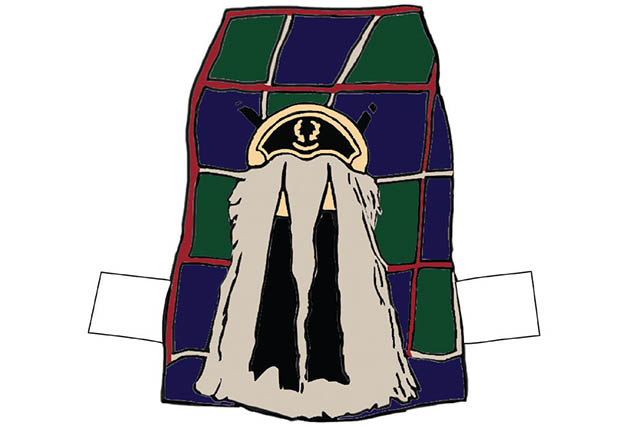
Generally, every regiment would have a unique kilt tartan. The kilt tartan worn by the Halifax Citadel regiment soldier is the Mackenzie tartan and is made of wool.
The pouch worn on top of the kilt is called a sporran and was made of brass, leather, and horsehair. On the front there is a stag head with the Gaelic motto of the regiment 'Cuidich'n Righ' which translates to ‘save the King.’ The sporran functioned as a purse with a pocket on the backside to hold various items.
Hanging from the sporran is decorative beige horsehair and two black horsehair tassels.
Feather Bonnet

The feather bonnet is the formal headdress for highland regiments. The bonnet consists of black ostrich feathers on a wire frame with a white plume made of African vulture feathers.
The cap badge consists of an elephant which was awarded to the regiment (as well as several other British and Indian regiments) after the Battle of Assaye. Also incorporated into the cap badge are a crown, the number of the regiment, the motto, and a wreath of thistles.
Royal Artillery Undress
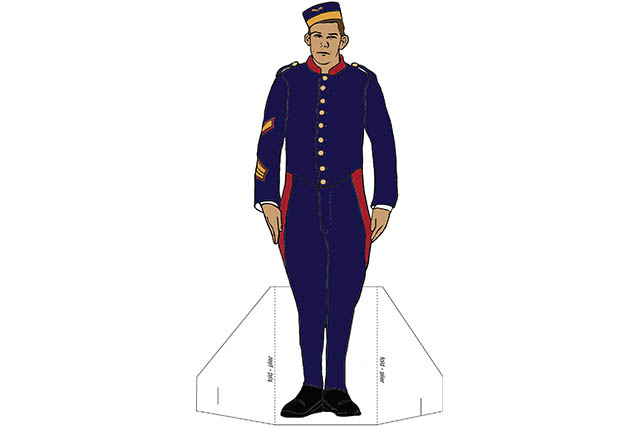
The Paper Soldier is dressed in the uniform of a bombardier in the royal artillery.
On his head is a forage cap which would have a yellow band around it as well as a rank badge in the middle.
On his upper arm is a single stripe indicating that he is a bombardier and on his lower arm are his good conduct chevrons.
The buttons down the front all have three guns (cannons) with a crown on top.
The trousers would have a red stripe down the side and the whole uniform would be dark blue due to its 'royal' status.
- Date modified :