

Wildlife safety
Prince Edward Island National Park
The chance of seeing wildlife is one of the most exciting things about national parks. However, it is important to treat wild animals with the respect they deserve.
Once animals become accustomed to being around people, they are in danger of losing that very thing that makes them special - their wildness. Approaching them too closely threatens their survival and can pose a risk to you as well. Wildlife may act unpredictably and can carry diseases and parasites that can be transmitted to humans and domestic animals
Remember:
- Feeding or enticing wildlife is unlawful (Minimum fine of $250.00)
- Put your food and garbage away. Foxes and other animals may be attracted to your food. Food conditioned animals often end up being killed by vehicle strikes as they lose their fear of cars and humans.
- Never feed wildlife.
- Keep dogs on leashes at all times. Dogs are prohibited on beaches from April 1 - Oct. 15. in order to support the breeding and foraging needs of
- migrating shorebirds.
On this page
Understanding coyote behaviour Coyotes are currently the largest resident mammal on PEI and thrive in forest and agricultural habitats. Coyotes are territorial animals and generally live in small family groups. Coyotes are opportunistic carnivores with a diet consisting of small mammals, rodents, birds, fruits and berries. Coyotes are most active at dawn and dusk but it is not uncommon to see them during the day. In the spring, while coyotes are rearing young, adults may be less tolerant of humans and domestic animals sharing their space. When a human approaches a den site, adult coyotes may demonstrate enhanced curiosity and may even escort you away from this site. Late summer is a time of transition for Eastern coyotes. The young are approaching adult size as the summer ends, becoming more independent as they hone their hunting and foraging skills and explore areas further away from their den. Throughout the fall, young coyotes leave their natal ranges to search for their own territories and mates, testing out hunting techniques and exploring new areas. During this time, coyotes in PEI National Park may approach humans and domestic animals with curiosity as they encounter them for the first time. Generally, this type of behavior is not aggressive and the young coyote will flee with the slightest noise or movement in their direction. As winter breeding season approaches, adult male coyotes become very protective over their home territories, as this space is associated with the availability of breeding females. During this time, adult male coyotes are very intolerant of other canines within their territories and may demonstrate bold, or even aggressive, behavior towards domestic dogs. It is important for visitors to be aware that coyotes are part of the natural PEI National Park ecosystem, and that sightings and encounters may occur more frequently this time of year throughout the trail systems. If you are approached by a coyote, it is important to react in the following way: Please report coyote sightings in the park to Parks Canada Dispatch at 1-877-852-3100.Coyotes (Canis latrans)
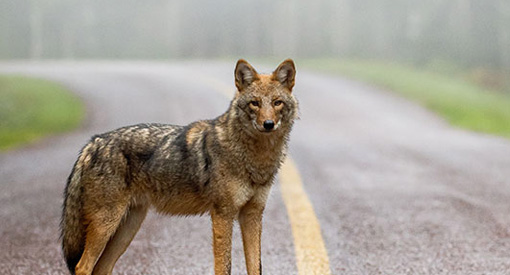
Taking Precautions in Coyote Habitat
Learn more about what to do when encountering coyotes (PDF, 181 KB).
Ticks
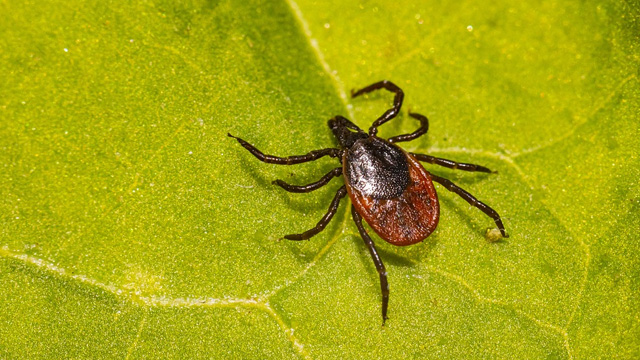 Black legged tick
 Ticks are becoming more common in PEINP, black legged ticks (Ixodes scapularis) may carry Lyme Disease. Learn more about Lyme disease and tick prevention
Ticks live in forests, woodlands, gardens, tall grass and piles of dead leaves. Contrary to what we may think, they do not jump, but rather cling to us when we come into contact with the vegetation on which they are found. Ticks are active as soon as the temperature reaches 4°C and there is no more snow on the ground.
Prevention and protective measures against ticks- Avoid tall grass, stay on the path and the trails.
- Use mosquito repellent on exposed parts of your body.
- Wear a hat, closed shoes and long, light-coloured clothing.
- Tuck the bottom of your pants into your socks and your sweater into your pants.
- Examine your pets, clothing and skin for ticks, especially in hard-to-see areas (e.g., scalp, ears, back of knees, neck, groin, armpits, belly button, lower back and buttocks, between the toes, etc.).
- Dry your clothes in the dryer on high heat.
- Shower as soon as possible (ideally within two hours) following contact with vegetation in risk areas.
Jellyfish
There are two main types of jellyfish that surface in our Prince Edward Island waters: the Arctic Red, or Lion's Mane, Jellyfish and the White Moon Jellyfish. The Arctic Red is larger and more common than the White Moon, which is translucent and lacks the long red tentacles.
The tentacles of the Arctic Red Jellyfish are used to stun their prey (zooplankton) before feeding. These are the same tentacles that may give slight stinging or mild burning sensations when people come in contact with them.
Recommended first aid for jellyfish stings includes:
- Rinse with vinegar to neutralize the sting.
- Use hot water immersion to relieve pain.
- Carefully remove tentacles with tweezers or by scraping the skin using the edge of a card (while wearing gloves if possible).
Take an antihistamine if the swelling and redness don't subside.
Seals
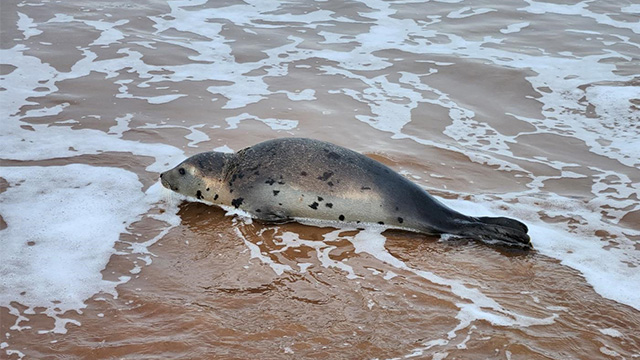 Harbour seal
From December to March, it is seal pupping season in Atlantic Canada. This means you might encounter several different seal species on our shores while walking on the beach.
Some species will give birth on beaches. You can usually tell a seal pup is quite young by the presence of fluffy fur! Mother seals will intensively feed their young with their rich milk for a period of time after birth. However, it is not uncommon for weaned seal pups to be left on the beach until they are ready to seek out food on their own. Sometimes for multiple days in a row. Seal pups need space and rest, please do not approach or disturb them during this important life stage.
If you happen upon a seal on the beach, here are a few things to remember:
- Harbour seals, harp seals, grey seals, and hooded seals all call the waters around PEI home. While seals spend most of their time in the water, it is completely normal for them to come ashore to rest.
- Do not try to “herd” the seal back into the water. This may interrupt natural and necessary resting phases for the animals.
- Keep as much distance as possible from the animal. It is important to remember that seals are wild animals and can act aggressively if they feel threatened.
- If you see evidence of injury or illness, including wounds, crusty eyes or malnourishment, call Parks Canada’s Dispatch Line: 1-877-852-3100
All kinds of wildlife--small and large--live on the beach and visit from offshore. This is one of the reasons keeping your dog on a leash while in PEI National Park is so important…for the safety of the wildlife AND your pet!
Injured Wildlife
If you encounter injured or vulnerable wildlife, please do not attempt to handle any animal as stressed/injured animals are more likely to act aggressively. Call Parks Canada Dispatch at 1-877-852-3100 so that trained staff, such as veterinarians and wildlife officers, can handle the situation. The Dispatch Centre is open 24 hours a day, seven days a week.
Related links
- Date modified :