
Cynobacteria – Blue-green Algae
Pukaskwa National Park
By Svenja Hansen
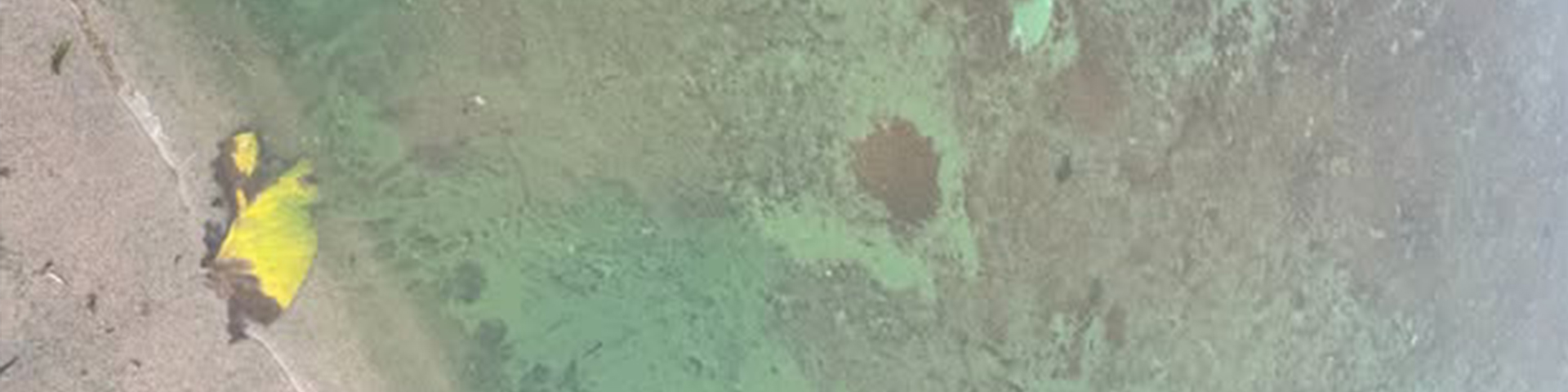
Cyanobacteria, also known as Blue-green algae, are microscopic organisms found naturally in lakes and streams. Usually found in low numbers these bacteria can rapidly increase in warm, shallow, surface water, causing the formation of blooms resembling green pea soup or turquoise paint. One such bloom occurred at Hattie Cove in Pukaskwa National Park during the summer of 2025.
Hattie Cove is a very sheltered and relatively shallow part of Lake Superior, and Pukaskwa’s front-country campground, visitor centre, and trails lie adjacent to the cove. Since some cyanobacteria produce toxins that pose health risks to people and animals, Parks Canada immediately closed the beach and canoe/kayak launch and notified visitors about restrictions regarding water use. The Hattie Cove Campground draws its water from the deep, open part of Lake Superior, so typically the park's drinking water is unaffected and remains potable.
Blue-green algae presence in watersheds is normal, but it becomes problematic when the bacteria rapidly multiply, becoming visible to the naked eye. Some of the cyanobacteria store cyanotoxins in their cells, and these toxins are released into the water when the bacteria die. In large concentrations the toxins cause health problems in humans and animals, including itching, irritation, headaches, fever, diarrhea, nausea and vomiting.
Blue-green algae blooms in Lake Superior have historically been relatively uncommon. However, with climate change and rising air and water temperatures, blooms may become more common. For cyanobacteria to reproduce on mass ideal conditions are required, including warm, calm water and increased nutrients, such as phosphorus, found in fertilizers and detergents. Some ways to help reduce the occurrence of blooms are to:
• use phosphate-free detergents,
• not wash with soaps, even if biodegradable, directly in water,
• not use fertilizers,
• maintain naturalized shorelines populated with native plants, and
• ensure septic system are in good working order.
Because no fertilizers are used in Pukaskwa and wastewater is managed through sewage lagoons that are independent from the watershed, there is no suspicion at this time that the 2025 bloom was caused by park operations. The exact reasons which triggered the bloom remain unknown but for the summer of 2026, Parks Canada is sampling nutrient loads in Hattie Cove and doing daily visual surveys of the beaches to detect any possible blooms early to keep visitors and staff safe.
- Date modified :