
Harnessing the Power of Dialogue
Pukaskwa National Park
By Carly Robillard (Narrator) and Jean Fletcher
It is our job as Interpretation Coordinators to create opportunities that meaningfully connect our many different visitors to our sites. This can be tricky when you include dialogue, especially when you get a group of people who have different views on a topic.
What is dialogic interpretation?
When people asked me what I was going to spend a week learning about in Winnipeg, I described dialogic interpretation as “a fairly new technique for fostering appreciation for a site. You shift the focus to include the visitors’ lived experiences, to make the program you’re delivering more relevant to them.”
If that sounds like a complex juggling act, then you’re not alone. While making a program relevant to your audience has always been an important part of crafting an enjoyable program, the craft has largely been focused on delivering the experience -to- the visitor. Switching to a deeper open-ended dialogue can be a scary prospect. But since we care about creating meaningful connections between visitors and our protected places, it’s hard to ignore the success of other parks and historic sites that have pioneered this approach.
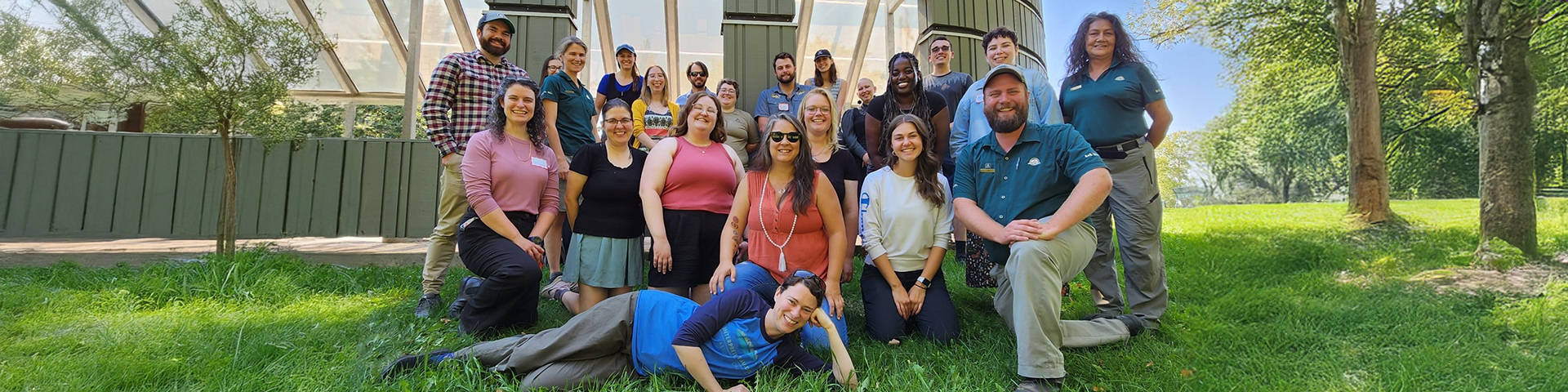
That’s why Jean Fletcher (Lake Superior National Marine Conservation Area) and I, Carly Robillard (Pukaskwa National Park), jumped on the chance to do a deeper dive into this technique. For 3 full days, we joined other interpreters from central Canada to learn and explore what an effective dialogic program looks like, and how to do it well ourselves.
It’s always incredible to be able to spend time with other interpreters from across the country to talk about this work that we’re passionate about. This was especially true of the Dialogic Interpretation 201 course at Lower Fort Garry National Historic Site. Many of us were diving deep into the technique for the first time and had a lot of questions. So, exploring real examples of discussion-based programs was a key theme of the training. One of the very first things we did was serve as the first-ever audience for a new dialogic program at the Lower Fort Garry NHS, focused on the topics of safety and rebellion.
In an age of an increasing amount of online training, it was valuable to be able to check out a high-quality dialogic program in-person. It gave us a better idea of how to weave a challenging conversation into the messages we are trying to share, and how to ask the right questions to encourage thoughtful discussion. We were also able to spend time workshopping our own dialogic programs with our Parks Canada colleagues and receive feedback about them.
We came away from the training feeling inspired and prepared to include more dialogue in programs at our own sites. At Pukaskwa National Park, we’ve already started building our programs around simple discussions with visitors. From here we will be better equipped to dive deeper into the approach going forward.
Big thanks to the hosts from Parks Canada’s National Office and Lower Fort Garry National Historic Site for running such a successful 3-day workshop. The two of us look forward to bouncing our ideas off each other when planning our next interpretive programs.
- Date modified :