
Building Bat Homes Together: How Collaboration Protects Pukaskwa’s Bats
Pukaskwa National Park
By Liana Hryniewicz
In the heart of Pukaskwa National Park, a story of collaboration and conservation unfolded this past year. This spring, a collaborative effort between the Asset and Resource Conservation teams led to the installation of new bat boxes to ensure safe habitat for local bat populations ahead of a scheduled demolition of aging structures.
Pukaskwa’s administration area is home to several sheds constructed in the 1980s. Over the years, structures have become unsafe and no longer effectively protect equipment stored inside. As part of ongoing efforts to clean up the administration area and reduce its environmental footprint, the Asset team planned to demolish these sheds in October 2025.
Before proceeding, an important step was taken. An Impact Assessment was conducted by the Resource Conservation team. This assessment aimed to identify any potential environmental risks or wildlife concerns related to the demolition.
During the Impact Assessment, the Resource Conservation team discovered that bats were using the sheds as shelters. Bats are important members of the ecosystem, controlling insect populations and contributing to biodiversity. Many species of bats, however, are species at risk due to habitat loss and diseases.
To protect these nocturnal creatures, it was necessary to provide alternative habitats to ensure the bats could safely relocate before demolition.
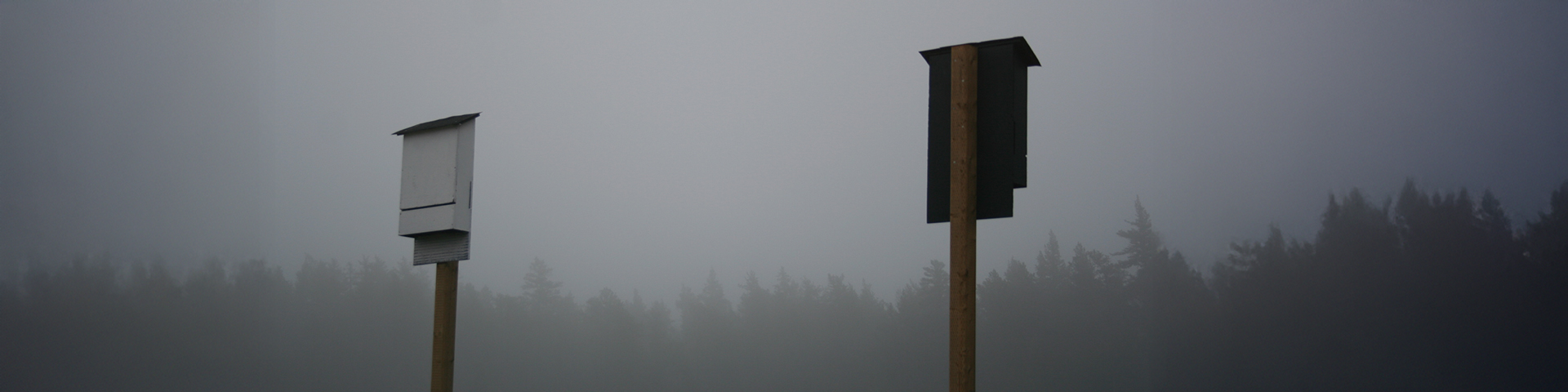
Bat boxes are specially designed wooden shelters that mimic natural roosting sites. They are an effective way to support bat populations, especially in areas where natural habitats have been disturbed, or to replace structures that are being used by bats but are no longer suitable or safe. Parks Canada’s Resource Conservation team planned to install several of these boxes at different locations within the administration area to give the bats a safe new home ahead of demolition.
The bat boxes followed a recognized design recommended by the Canadian Wildlife Federation. A unique aspect of this project was the involvement of a local school in Red Rock, ON. The Asset team collaborated with the school to involve students in their construction during shop class.
This hands-on approach taught students valuable woodworking skills and educated them about bat biology, the importance of protecting species, and broader conservation efforts. By engaging youth directly, Parks Canada fostered a sense of environmental stewardship and connected local communities to the Parks Canada mission.
The bat boxes were completed and installed in early May with small screens below to monitor their usage. This early installation gave the bats time to find and settle into their new homes ahead of the planned demolition. The screens below the boxes show that the bats are using the new bat boxes!
This project at Pukaskwa National Park is a great example of collaboration in action. By combining scientific research, practical conservation, and community involvement, Parks Canada has mitigated the impacts of a demolition project on a species at risk, and inspired the next generation of environmental stewards. This project embodies the agency’s mandate to preserve Canada’s natural heritage for present and future generations.
Interested in learning more about bats, or installing a bat box in your own backyard? Visit https://cwf-fcf.org/en/explore/bats/
- Date modified :