
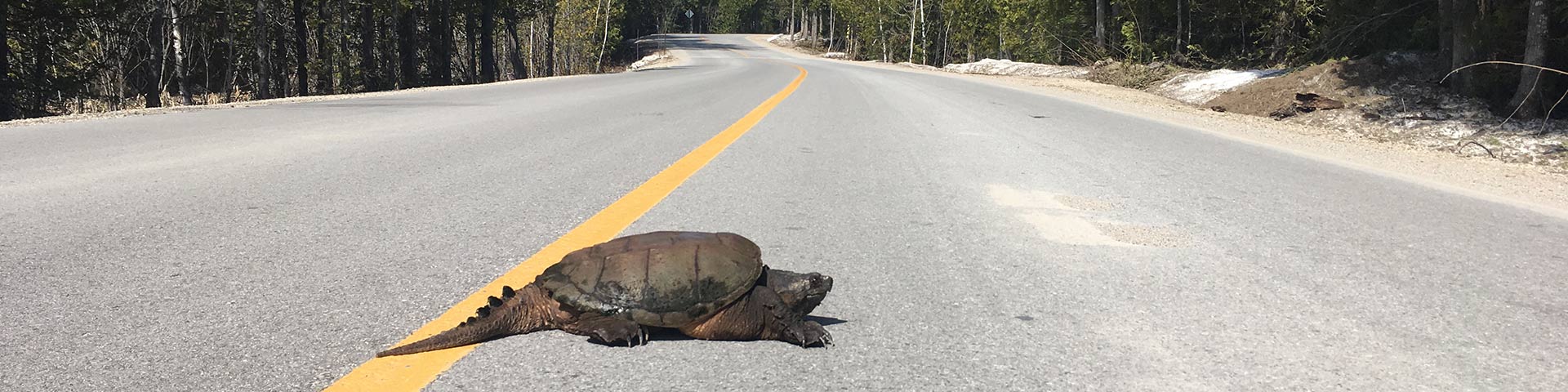
How can you help turtles?
Bruce Peninsula National Park
Turtle conservation for community scientists in and around Bruce Peninsula National Park
If you are spending any time on the Saugeen (Bruce) Peninsula in the spring, summer, or fall, you may encounter a turtle! If the turtle is nesting, crossing a road, or injured, you may be able to help.
What to do when you find a turtle:
-
A nesting turtle
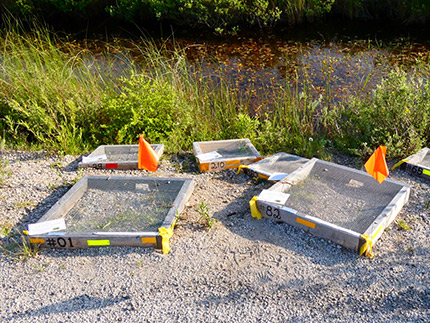
Turtles dig holes, often in gravel, to make their nests from late May to early July. Help a nesting turtle feel safe by giving her lots of space. Wait for her to finish laying eggs from a distance, which can take several hours. If you do not have time to wait for the turtle to finish nesting or you are not interested in protecting the turtle nest, ask a neighbour or contact R2R@pc.gc.ca.
If the turtle walks onto the road when she is finished nesting, help her cross safely before continuing.
You may approach the nest once the female turtle leaves. Take a photo and mark the location.
Nests near Bruce Peninsula National Park should be evaluated by Parks Canada Staff if it is:
- On the shoulder of a highway,
- In an area that is under construction or will be under construction before the following spring,
- Somewhere with too much foot traffic or disturbance (for example, in the middle of a trail),
- Directly on or too close to a road, parking lot, or driveway where it could get hit by a car, or
- In a location with inadequate space for properly securing a nest protector box over the nest (surface too uneven, narrow area, beside another box).
In these circumstances, or if you are unsure, contact the park immediately. Park experts will assess the nest and may bring the eggs to an incubator then release them once they hatch. Note that we are only able to excavate eggs that are on the Saugeen/ Bruce peninsula north of Dyers Bay Road.
It is illegal to disturb a nest and handle eggs. Never dig a nest without a permit under any circumstances. Parks Canada has the proper permits and expertise to assess nests and rescue eggs, if deemed necessary.
If you don’t think the nest needs to be excavated, follow the steps in the link below to install a nest protector box. If you cannot install a nest box, contact us with details about what you saw (a photo helps) and where it was (be as specific as possible).
Report your sightings on iNaturalist!
Contact information: R2R@pc.gc.ca.
-
A turtle crossing the road
First and foremost consider your personal safety, ensure that you are able to pull over to the side of the road and exit your vehicle safely. Be aware of oncoming traffic.
If your find a turtle crossing the road and feel safe providing assistance, please consider the following:
- Approach the turtle from behind
- Consider wearing gloves
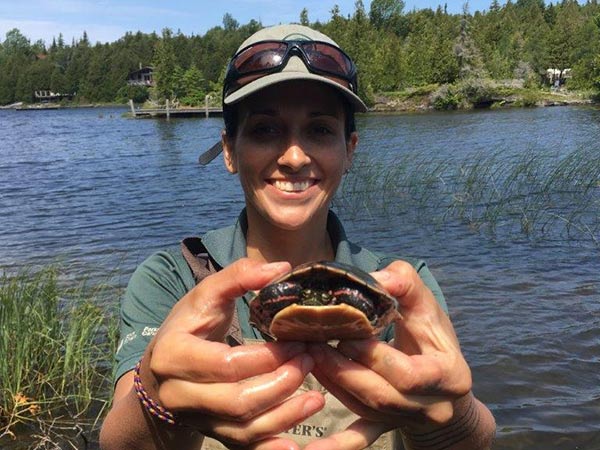
- If it is a painted turtle:
- Pick it up with two hands in the middle of the turtle’s shell like a hamburger.
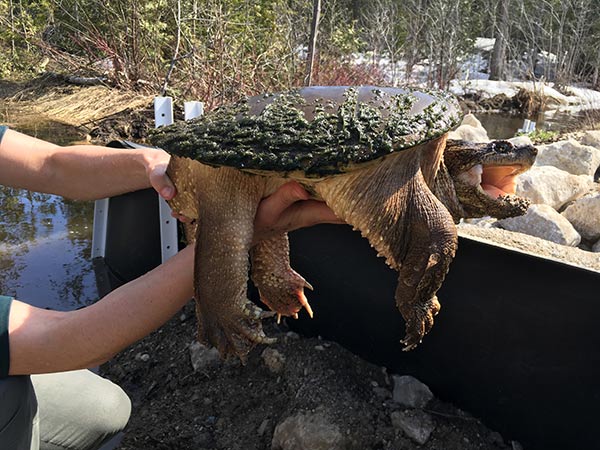
- If it is a snapping turtle:
- lift the turtle up using the ‘pizza pie’ method: stabilize the tail with one hand, slide your other hand underneath the turtle from behind and lift. Keep your hands towards the back half of the turtle. Snapping turtles have long necks that can reach around and snap at you if you are holding it too close to its face. If you don’t feel comfortable picking up a snapping turtle, you can use a small tool like a paddle, car mat or ,shovel from your car to help gently push the turtle from behind to the side of the road.
- If it is a hatchling:
- The shell will be about the size of a toonie, making it easier to pick up and hold. Hatchlings can be gently pinched on either side of the shell. Take a look around you – if the hatchling just emerged from its nest, their siblings may be around! If you have a small container or other vessel to put many turtles in – even a Frisbee will work – you can use it to carry many hatchlings across the road at a time.
- Carry the turtle across the road, holding it close to the ground. Always help turtles cross the road in the direction they are facing, even if you think it looks like there is nicer habitat behind it. There is a reason the turtle is going that direction and if you bring it back to where it already was, it will just try to cross the road again.
- Bring the turtle right off the shoulder of the road and into the ditch to make sure it is completely safe and far from traffic.
- Always wash your hands thoroughly after handling a turtle. Turtles can carry bacteria that aren't harmful to them but may cause issues for humans.
- Report your sighting! Take a photo of the turtle and post it on iNaturalist.
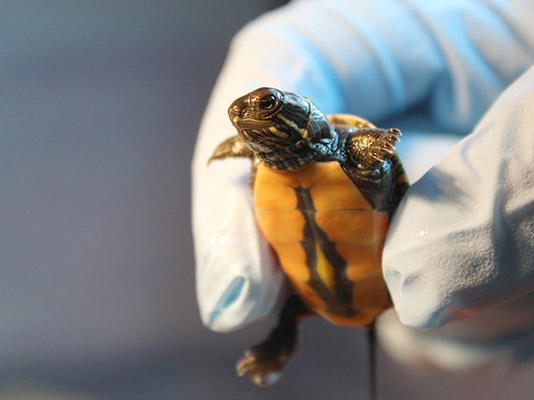
Some more tips for helping a turtle cross the road:
- Look for injuries. If a turtle was hit on the road, it needs help. Call the Ontario Turtle Conservation Center at 705-741-5000.
- Never pick up a turtle by the tail! It can cause serious spinal injuries.
- Avoid handling turtles more than necessary. If the turtle runs across the road when you approach it, you may not need to handle it at all!
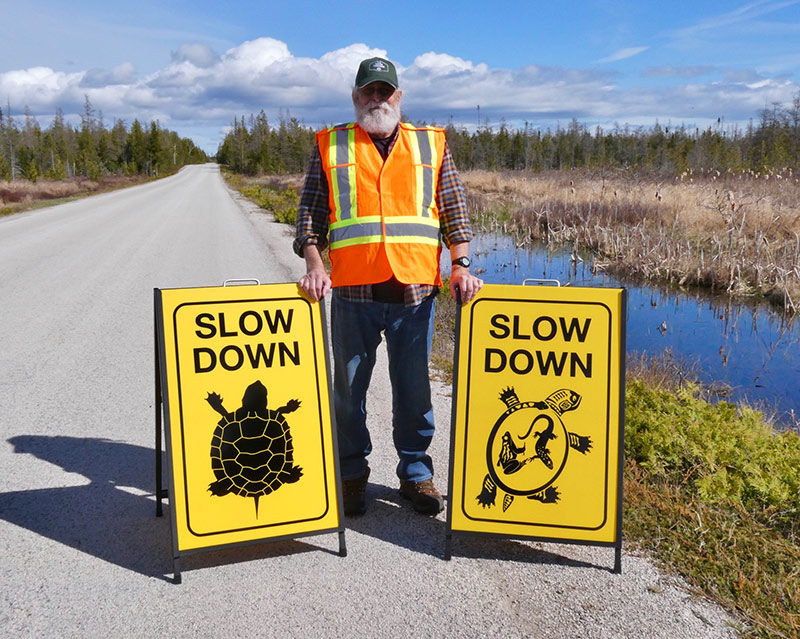
- The best way to save turtles from being hit by cars is by driving carefully. About half of the turtles hit by cars are females on their way to lay eggs, so it is especially important to keep an eye out on the road during nesting season, which is from late May to early July.
-
An injured turtle
- Injured turtles need medical attention, as soon as possible!
- Call the Ontario Turtle Conservation Centre immediately: 705-741-5000.
- Visit this Ontario Turtle Conservation Center web page for more information.
-
Someone interfering with a turtle
Have you seen someone taking a turtle or eggs from the wild or intentionally harming a turtle?These are illegal activities and incidents should be reported to the Ministry of Natural Resources and Forestry tips line: 1-877-847-7667.
If the incident occurred in Bruce Peninsula National Park (including Cyprus Lake Road or Emmett Lake Road), call Jasper Dispatch: 780-852-6155.
If you have found an injured turtle, contact the Ontario Turtle Conservation Centre: 705-741-5000.
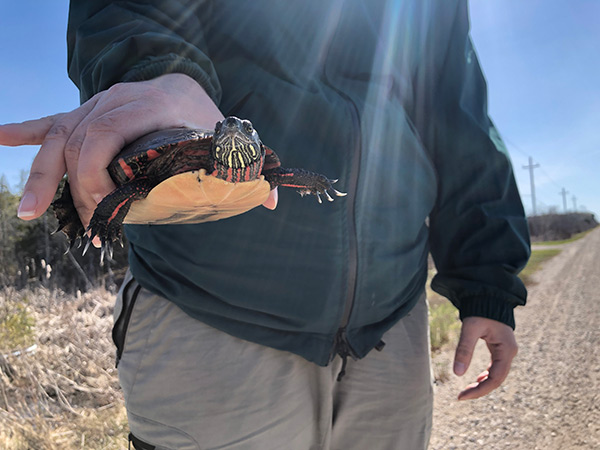
If you find a turtle that is not in danger, give it space and enjoy the sighting from a distance. Turtles should not be handled or moved, unless it is essential to their safety. You can contribute to turtle research and conservation by snapping a photo and reporting your sighting on iNaturalist. We are also always looking for dedicated volunteers to become more involved.
Volunteer with us!
Looking to get more involved? Learn more about becoming involved as a volunteer.
- Date modified :