
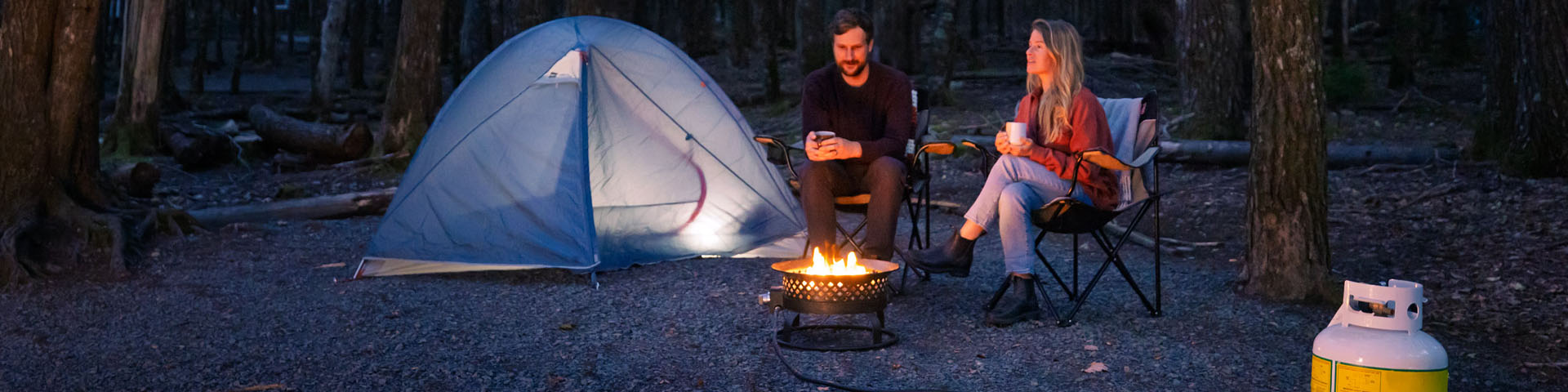
Fire management
Kejimkujik National Park and National Historic Site
Parks Canada prioritizes safety through fire prevention, preparedness and rapid response, in collaboration with regional, provincial and federal partners. Parks Canada wildland fire management personnel are highly trained professionals in wildfire readiness and response. Your safety remains our top priority.
Report any wildfires, illegal campfires or suspicious smoke to Parks Canada Dispatch at 780-852-6155 or call 911.
On this page
- Fire prevention at Kejimkujik
- Campfires and fire bans
- How we prepare during fire weather
- How we respond in the event of a wildfire
- Conservation
Fire prevention at Kejimkujik
Parks Canada takes wildfire prevention very seriously and works closely with partners to reduce wildfire risks to communities and infrastructure. While we cannot eliminate naturally occurring wildfires (for example, those caused by lightning strikes), we can prevent human-caused fires.
All visitors to Parks Canada-administered places play an important role in helping us stop wildfires before they start. Please do your part to keep our communities and first responders safe:
- Do not light illegal campfires
- Stay informed on the current fire danger status and regulations
- Please call Parks Canada at 1-877-852-3100 or call 911 if you see any wildfires, illegal campfires or suspicious smoke
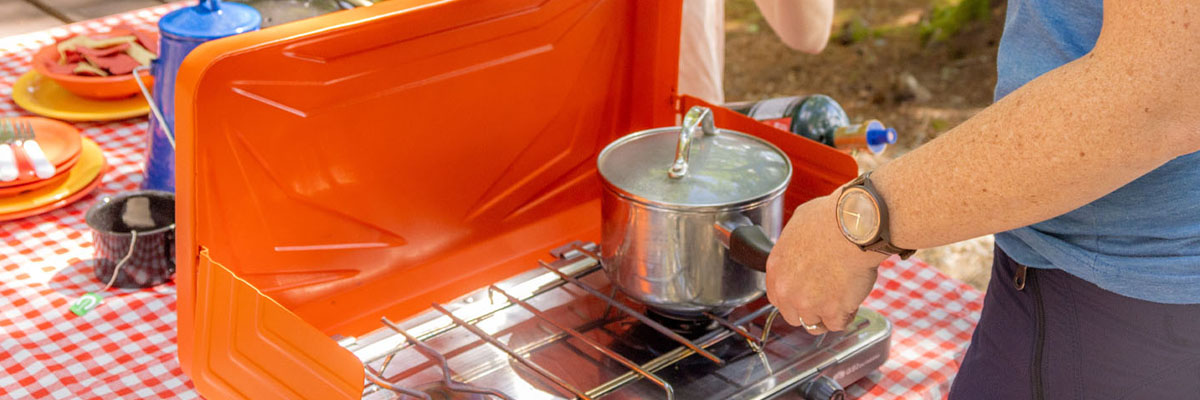
Campfires and fire bans
Be prepared for a fire ban at any time. Please plan ahead and bring a camp stove. Gas camp stoves are always permitted.
Fire bans are based on the local fire danger, current and forecasted weather conditions, the amount of moisture in vegetation, the regional wildfire situation and the availability of responders and equipment.
Campfire safety and fire ban information
Learn how to have a safe campfire and which stoves and other heating devices to use during a fire ban at Kejimkujik.
Visitor guidelines for fire use
To keep your campfire safe for you and the environment, please follow these rules.
Purchase firewood at Kejimkujik
Firewood is available for purchase at the Campground Kiosk and the Visitor Centre from Victoria Day Weekend to October 31.
Firewood importation ban: Don't move firewood – buy local, burn local
Transporting wood from elsewhere may spread invasive insects and disease. All imported firewood is prohibited and only firewood purchased in the park is permitted, with some specific exceptions.
Backcountry firewood changes
Campers who choose to have a campfire must purchase firewood at the Visitor Centre or Campground Kiosk and transport it to their campsite.
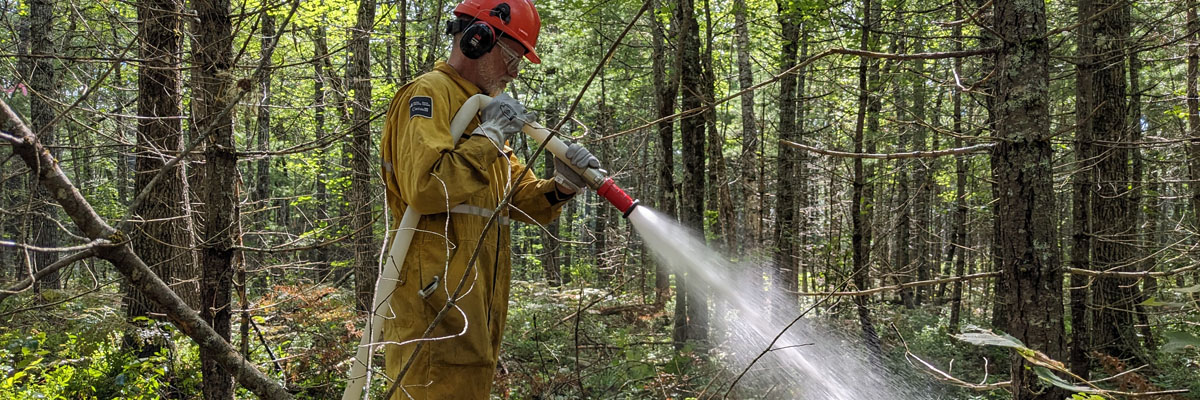
How we prepare during fire weather
Parks Canada proactively prepares for wildfire by anticipating where and when wildfires will start and then ensuring that fire management personnel and equipment are in place and ready to respond. Wildland fire management has been a Parks Canada responsibility since the creation of the first national park in Canada in 1887.
Throughout the fire season, Parks Canada Fire Duty Officers and Nova Scotia Department of Natural Resources (NSDNR) Fire Duty Officers maintain regular communication to stay up to date on local conditions, preparedness levels and resource availability.
Parks Canada's Fire Management Plan
All wildfire-related preparations and decisions at Kejimkujik National Park and National Historic Site are guided by Parks Canada’s Fire Management Plan:
- Rigorous daily fire-risk analysis
- Weather forecasting
- Fire-detection strategies
- Trained and equipped team members
- The use of full or partial fire bans and temporary closures based on risk
Canadian Forest Fire Weather Index System (FWI)
Daily preparedness at Kejimkujik is guided by the Canadian Forest Fire Weather Index System (FWI), with a 5-day forecast used for advanced planning. This allows for timely preparation of equipment and briefing of crews ahead of periods with elevated fire danger. When the FWI reaches very high or extreme levels, Parks Canada activates a local fire crew who are ready for rapid response to any reported wildfires.
More information about the Canadian Forest Fire Weather Index System (FWI)
The people of fire management
Smoke and air quality alerts
- Environment Canada Current Weather Conditions
- Environment Canada Air Quality Model Forecast Maps
- Environment Canada Air Quality Health Index
- FireSmoke.ca
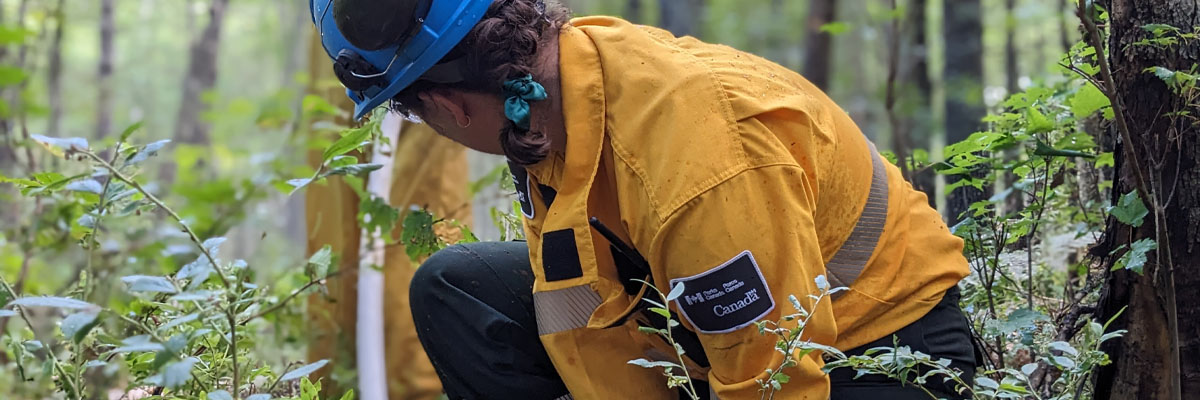
How we respond in the event of a wildfire
Evacuation plan
Parks Canada has a detailed evacuation plan with clear thresholds on when to close or evacuate the area in the event of a fire in or near Kejimkujik. These thresholds are informed by multiple factors used to assess the risk to Kejimkujik and its visitors.
Fire response
In addition to a dedicated fire team, Kejimkujik has access to Parks Canada’s National Incident Management Teams with personnel across the country who are trained to manage complex fires and other incidents.
As a member of the Canadian Interagency Forest Fire Centre, we collaborate with other Canadian fire-management agencies to provide mutual support to partners across the country and internationally. This mutual support includes equipment and highly trained personnel.
The North Queens Fire Department also responds to fires within Kejimkujik.
Conservation
The Wabanaki-Acadian forest sees less frequent wildfires compared with other regions due to the forest’s composition and generally cooler temperatures and higher rainfall amounts.
As our climate changes, climate scientists predict that fire seasons in Nova Scotia will become longer. While overall annual rainfall is predicted to increase, periods of longer and more extreme drought may become more frequent, resulting in more intense and larger wildfires. Parks Canada is working to help the places it administers to adapt to impacts caused by climate change.
Parks Canada is a leader in resource conservation and its primary interest is to maintain the ecological integrity of the protected areas it administers.
The role of fire
Fire is a natural part of forested environments. Learn more about fire ecology and the effects of fire on wildlife here.
Fire protection and restoration projects
Wildfire risk reduction projects, prescribed fires, and how you can help.
- Date modified :