
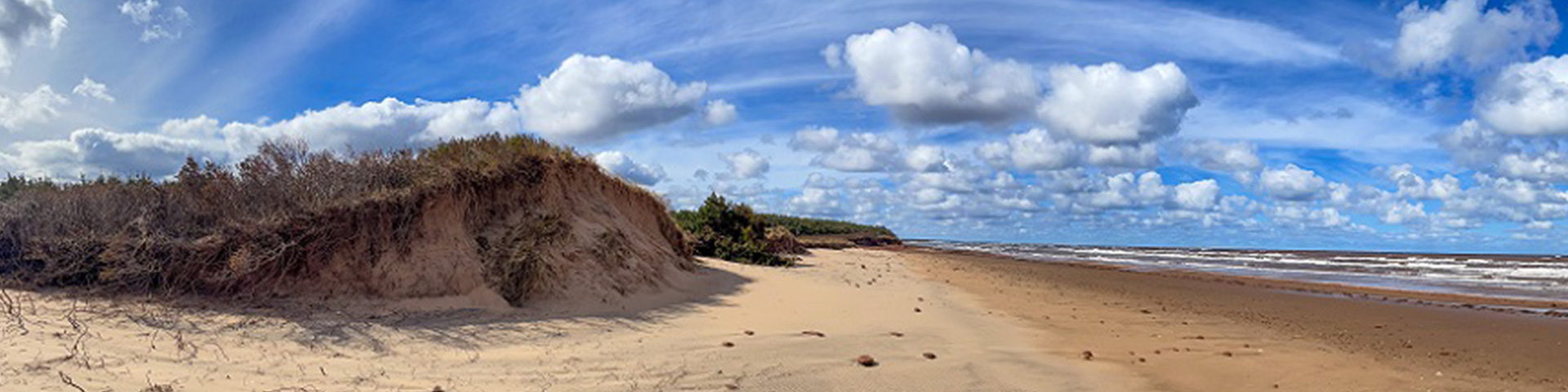
Dune recovery
Prince Edward Island National Park
Excuse the mess. Nature at work.
Dunes are recovering after a severe weather event and can use your help.
When visiting…
Stay out of all dune areas. This includes established dunes as well as “baby dunes” - flat sections of sandy beach where dunes are regenerating around vegetation. (See area outlined in red in photo.)
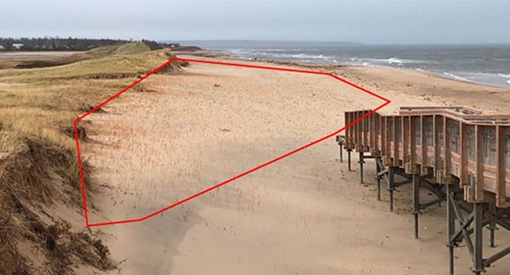
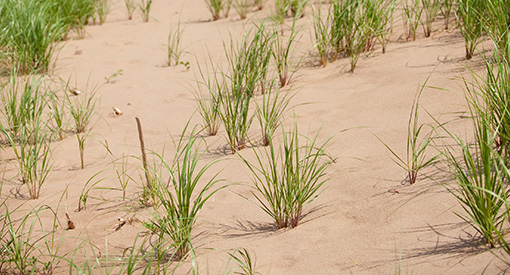
Inside the red outline, new vegetation can be seen growing. In a couple of years, a small fore dune will form if this area is free from foot traffic.
Please respect signage and do not cross any barricaded areas.
Thank you
Sand Dunes: Eco-lessons from the National Parks in Atlantic Canada
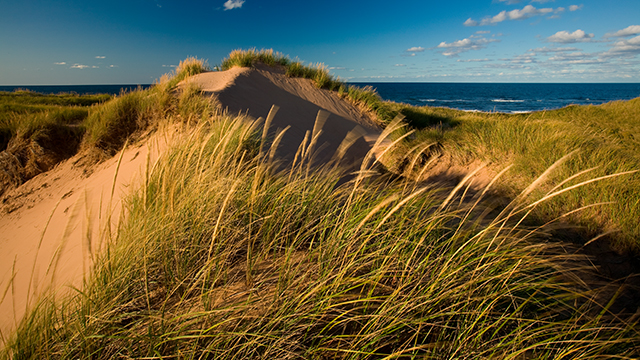
Formed by wind, waves and time and held together by plants, sand dunes are an important habitat that is constantly changing.
The very beginning of a sand dune can be a pile of seaweed, a rock or a piece of driftwood behind which sand has started to fall. As the small mound of sand gets a bit bigger, plants such as sea rocket can colonize it. With a plant or two, the pile of sand gets bigger and it doesn’t take long before marram grass can colonize the beginnings of the dune.
Marram grass is the most important plant on a sand dune. It spreads quickly by its specialized roots, called rhizomes, that grow not only down but sideways and through the sand. These rhizomes form a network that helps hold the sand dune in place.
A very important habitat, sand dunes are home to many plants and animals. Beach pea, bayberry, seaside goldenrod, wild rose and cranberry are just a few of the plants that are able to survive in this harsh environment after marram grass has stabilized the dune. There are many insects, such as leafhoppers, which scurry around the roots and leaves and feed on plants. Birds such as the Savannah sparrow feed on small seeds and berries and sometimes even on the insects! Also near the roots of the plants are small mammals like the meadow jumping mouse. They attract others to this habitat – red foxes will often make their dens in the backside of a dune and northern harriers hunt for food from overhead.
Reasons for dune loss
Storms and strong winds can change the way sand dunes look and even push them inland. One of the major causes of sand dune change is trampling by people. People walking and playing on sand dunes damage the marram grass that holds the dunes together. In fact, it takes only ten footsteps to kill a marram grass plant. This means that the sand is no longer held in place and can be blown away, thus damaging the dune habitat.
Efforts to Conserve the Dunes at PEI National Park
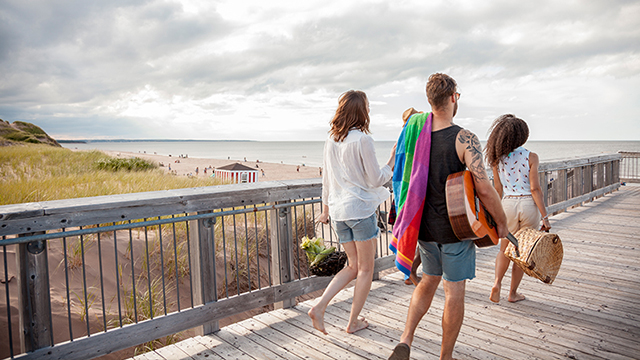
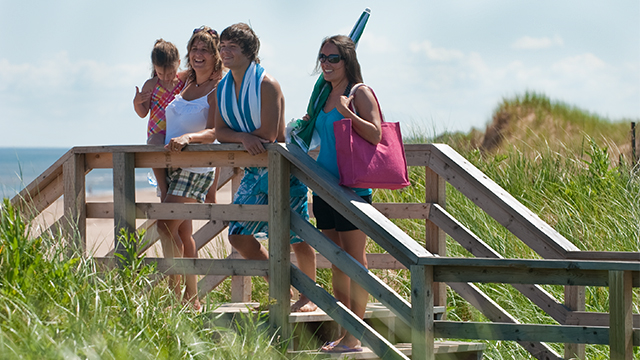
Parks Canada uses a variety of methods for protecting the dunes. Some areas are given special protection and are closed to visitors completely. In other areas, boardwalks have been installed for visitors to use instead of walking on the dunes to get to the beach.
Damaged areas are sometimes restored with the planting of marram grass. Perhaps the best form of protection is education. Many people do not realize the effect their actions are having on the dunes. Park interpretation programs are a fun way to learn, and signs around the beaches and dunes help too!
- Date modified :