
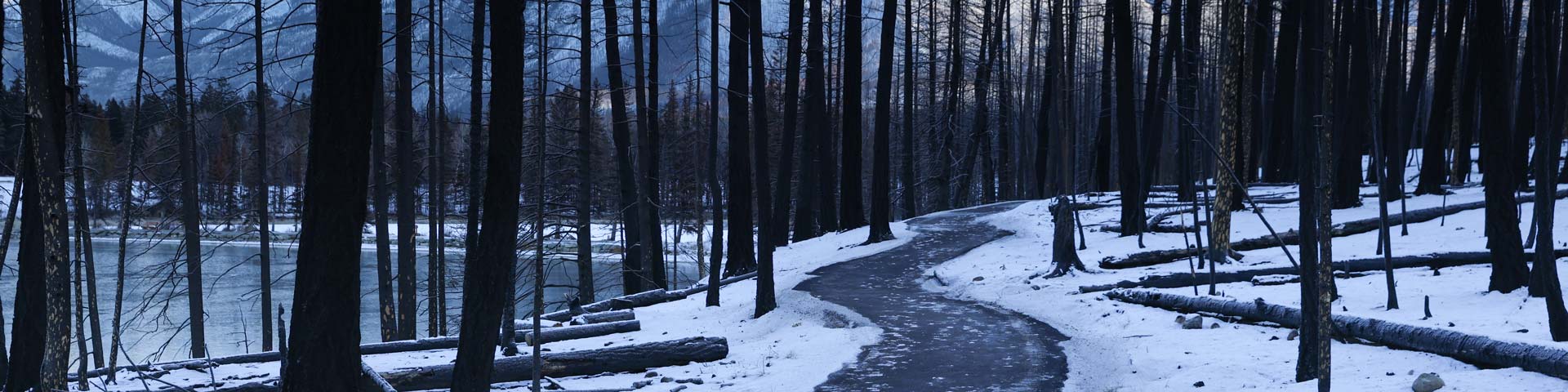
Post-wildfire burn area safety
Jasper National Park
There are a variety of hazards to be aware of in fire-damaged areas.
Do not enter a closure zone
Stay out of areas closed to public access. Entering a closed area is illegal and carries a maximum $25,000 fine. It also puts you and Parks Canada staff at risk. After a wildfire, Parks Canada staff may keep an area closed for weeks or even years to deal with after-effects of the fire and promote ecosystem recovery.
Even when open, entering a fire-damaged area can be dangerous
Minimize your risk. Check the weather before you go. Stay on trails. Travel through burn areas quickly.
Consider these factors to reduce dangers:
Falling trees and branches
Even if a tree looks sturdy, it may be at risk of falling due to damaged root systems and fire-loosened soils. As the years pass, dead trees and root systems rot and the odds of a tree falling increases. Look up and around often (fire crews say “Head on a swivel!”). Watch for fire-damaged trees, snags, and overhead dangling branches. Do not linger or take breaks under burnt or dead trees.
Windy days
Wind increases the hazards of falling trees and branches. Don’t go out in a burnt area when its windy. Leave a burn area immediately if the wind picks up.
Rainy weather and snow melts
Burn areas have less vegetation to absorb water. During rain events and snow melt, water levels can become higher than normal. The risk of flash floods and dangerous stream crossing can rise, even where a bridge exist. Drainages can become clogged with trees, rocks, and other debris. Debris can act like a dam, and release powerful flash floods of water, mud, and debris. Do not linger at water crossings, keep moving.
Unstable ground
When burned soil is stripped of its undergrowth vegetation, boulders and logs become loose and less stable. The risk of landslides and rock falls increases with rain, and during soil freeze-thaw cycles. Check your footing and take care not to knock loose rocks onto people downslope of you.
Hidden burned-out holes in the ground
When stumps, root structures and dead vegetation burns, deep hollow cavities can form below the trail surface. They may not be visible until your foot breaks through. These holes can keep burning for months after the fire is out. White ash may be a sign of extreme heat or potential sinkhole. Stay on designated trails.
Missing signage and infrastructure
Some signs and infrastructure may have burned. Navigation on trails is your responsibility. Bring a map and know how to use it. Maps can be downloaded from the website or obtained at the information centre.
Changing trail conditions
Check the Jasper trail conditions report for a general outlook. Keep in mind that a trail may become challenging or impassable without notice. Be prepared to change your plan.
See something dangerous? Report it.
You are our eyes and ears. Report dangers and hazards to Parks Canada dispatch: 780-852-6155.
- Date modified :