
Fort Lennox National Historic Site
© Parks Canada
Fort Lennox was designated as a national historic site in 1920.
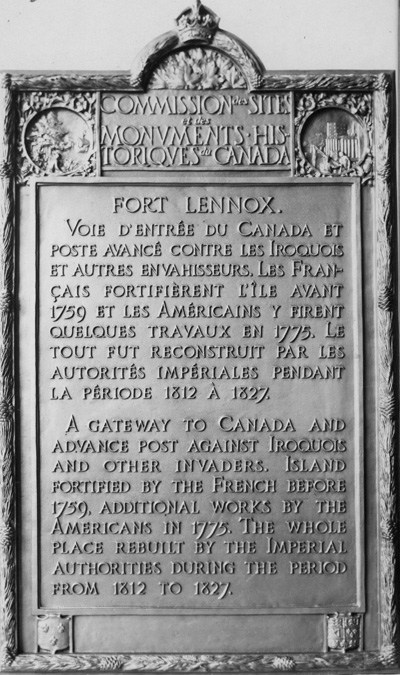
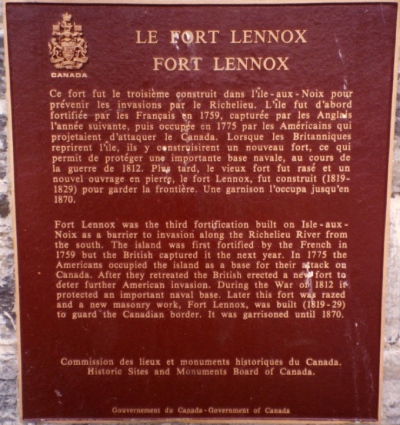
Commemorative plaque: 1, 61st Avenue, Saint-Paul-de-l'Île-aux-Noix, QuebecFootnote 1
Fort Lennox
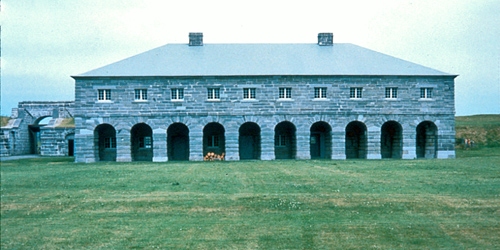
Fort Lennox was the third fortification built on Isle-aux-Noix as a barrier to invasion along the Richelieu River from the south. The island was first fortified by the French in 1759 but the British captured it the next year. In 1775 the Americans occupied the island as a base for their attack on Canada. After they retreated the British erected a new fort to deter further American invasion. During the War of 1812 it protected an important naval base. Later this fort was razed and a new masonry work, Fort Lennox, was built (1819-29) to guard the Canadian border. It was garrisoned until 1870.
© Parks Canada
© Parks Canada
Description of historic place
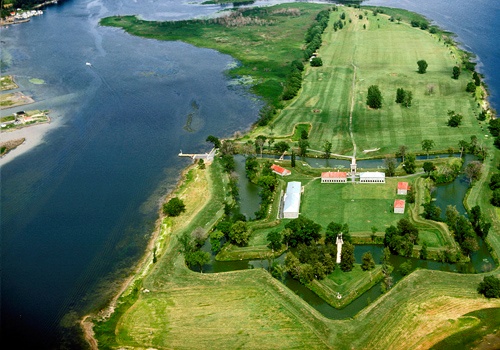
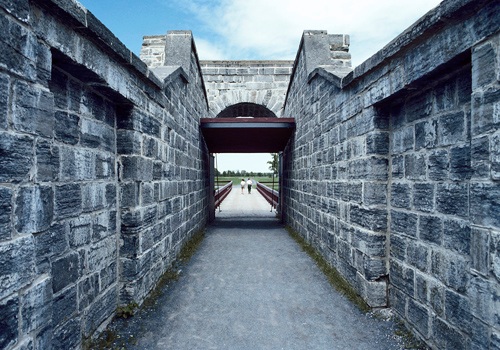
Fort Lennox National Historic Site of Canada is a highly evocative military fortification and landscape covering the full extent of Île aux Noix in the Richelieu River near the city of Saint-Paul-de-l’Île-aux-Noix, Québec. Over a critical period from the end of the French Regime to the 1870s, French, American and British forces exploited the strategic value of the site. The fortifications themselves are framed by a water-filled moat that surrounds the ramparts. Inside is a collection of handsome, classically designed buildings beautifully executed in stone. The designation refers to the entire historic place and the cultural resources it contains.
© Parks Canada
© Parks Canada
Heritage value
Fort Lennox was designated a national historic site of Canada in 1920 because: in preventing invasions via the Richelieu River, one of the gateways to Canada, it was repeatedly fortified from 1759 onwards and was occupied by a garrison until 1870.
Fort Lennox played an important role in the military history of Canada due to its strategic location along the Hudson-Champlain-Richelieu navigation route. The island’s geography, with narrow channels and an elevated southern point, provided a natural defence system that was supplemented by military defensive works. The French first fortified the island in 1759 as a barrier to British invasion along the Richelieu River. In 1760, the British captured the island, just prior to the fall of New France. In 1775, American revolutionary forces used the island as a base for an attack on Canada. After their retreat in 1776, the British began fortifying the island to guard against further invasions. During the War of 1812 the fort was used to secure the border with the United States and to protect the Royal Navy base at Saint-Jean. The present Fort Lennox, the third set of fortifications on the island, was built from 1819 to 1828. It replaced the earlier fort and was garrisoned until 1870. Île aux Noix was also used, but not modified, by British forces during the uprising of the Patriots, the Fenian Raids, and the American Civil War. After the departure of the British garrison in 1870, the Canadian militia used the site for summer training until 1921. From 1940 to 1943 a refugee camp for European Jews was located on the island.
The historic place includes archaeological and built resources associated with each of the following periods of military occupation:
- the French fortifications (1759-1760);
- the period of American occupation (1775-1776);
- the first British occupation and installations (before 1778);
- the first British fortifications (1778-1812);
- the redevelopment of the British fortifications (1812-1819);
- the naval establishment (1812-1834); and
- the establishment and operation of Fort Lennox (1819 to present times).
Sources: Historic Sites and Monuments Board of Canada, Minutes, 1920; Commemorative Integrity Statement, August 2002.
The National Program of Historical Commemoration relies on the participation of Canadians in the identification of places, events and persons of national historic significance. Any member of the public can nominate a topic for consideration by the Historic Sites and Monuments Board of Canada.
- Date modified :