
Parks Canada's 2024-25 Departmental results report
Copyright information
© His Majesty the King in Right of Canada, as represented by the Minister of Canadian Identity and Culture and Minister responsible for Official Languages, 2025
Catalogue Number: R61-108E-PDF
ISSN: 2561-1526
Aussi disponible en français sous le titre : Rapport sur les résultats ministériels 2024-2025
At a glance
This departmental results report details Parks Canada’s actual accomplishments against the plans, priorities and expected results outlined in its Departmental Plan for fiscal year 2024 to 2025. This report covers fiscal year 2024 to 2025. A fiscal year covers the period from April 1 to March 31.
Key priorities
Parks Canada identified the following key priorities this year:

- effectively managing and expanding protection of natural environments

- safeguarding the collection of archaeological and historical objects under the care of Parks Canada and advancing the review of designations

- providing meaningful, inclusive experiences

- Indigenous Peoples’ stewardship is honoured and supported

- pursuing long-term asset sustainability strategies and priorities and advancing alignment and organizational effectiveness

- building and fostering a capable and inclusive Parks Canada team
Highlights for Parks Canada this year
- Total actual spending (including internal services): $1,368,745,848
- Total full-time equivalent staff (including internal services): 6,097
For complete information on Parks Canada’s total spending and human resources, read the Spending and human resources section of its full departmental results report.
Summary of results
The following provides a summary of the results Parks Canada achieved this fiscal year under its main area of activity, called “core responsibility.”
-
Core responsibility: Protecting and presenting Canada’s natural and cultural heritage
- Actual spending: $1,192,453,379
- Actual full-time equivalent staff: 4,947
-
Canadians’ strong support for Parks Canada’s work and the importance of nature in their daily lives continued
- Approximately 92% of Canadians supported Parks Canada’s mandate to protect and present natural and cultural heritage during this fiscal year, consistent with support levels recorded in 2022 and 2023
-
There was a slight dip in visitation from 23.7 million in fiscal year 2023 to 2024 to 23.2 million, attributable to a drop in visitation at Jasper National Park due to the wildfire
- Jasper received 1.2 million fewer visitors this year than in fiscal year 2023 to 2024
- Considering this impact, Parks Canada would have been well on its way to delivering more than 24 million experiences
- As of March 2025, the number of places administered by Parks Canada where Indigenous Peoples use lands and waters according to their traditional and modern cultural practices has increased to 77 places, surpassing the target set for March 2026
- During the devastating wildfires in Jasper in July 2024, Parks Canada worked tirelessly with its partners to protect the residents and town of Jasper and then to re-establish visitor services to support the region’s economic recovery
- Parks Canada made substantial progress to renew its Departmental Results Framework and Program Inventory, which will help better measure its performance and demonstrate results for Canadians
- A series of strategic initiatives to enhance financial integrity, compliance, and operational performance were undertaken, including the renewal of Parks Canada’s internal control framework, modernization of key financial standards and guides, strengthened accounting practices, and the deployment of digital solutions to support decision-making and service delivery
For more information on Parks Canada’s core responsibility, Protecting and presenting Canada’s natural and cultural heritage, read the ‘Results – what we achieved” section of its departmental results report.
From the Minister
As the Minister responsible for Parks Canada, I am pleased to present Parks Canada’s Departmental Results Report for fiscal year 2024 to 2025. Throughout this past year, Parks Canada continued to act as a global leader in natural and cultural conservation and tourism while advancing our government’s ambitious goal to protect 30% of Canada’s lands and waters by 2030. Parks Canada-administered places represent the very best that Canada has to offer, uniting Canadians from coast to coast to coast and fostering a sense of pride for all.
The places Parks Canada has a role in administering are at the heart of our national identity. They support local economies across the country, helping to generate billions of dollars annually for the Canadian economy and employing tens of thousands of Canadians. They also play a crucial role in mitigating the impacts of climate change, support species at risk, and provide opportunities for our government to work in collaboration with Indigenous Peoples to establish and cooperatively manage a system of national historic sites, national parks, and national marine conservation areas that recognizes and honours the historic and contemporary contributions of Indigenous Peoples in Canada.
Parks Canada’s work contributes significantly to Canada’s environmental resilience through its establishment and stewardship of national parks and national marine conservation areas and by safeguarding ecosystems and supporting species at risk. This year Parks Canada and the Mi’kmaw Nation Government of Prince Edward Island reached an agreement to establish Pituamkek National Park Reserve on Prince Edward Island, which became Canada’s 48th national park. Parks Canada also continued to work establish a new national park reserve in the Okanagan-Similkameen in British Columbia and made significant progress on 10 new National Marine Conservation Areas.
Parks Canada acknowledges Indigenous Peoples' longstanding role in caring for their ancestral lands, and the deep historical and cultural connections Indigenous Peoples have to their traditional lands, waters, and ice. By working with Indigenous partners to incorporate Indigenous Knowledge and ways of life into national historic sites, national parks, and national marine conservation areas, these heritage places play an even greater role in shaping Canada's national identity and asserting its sovereignty. These areas reflect Canada's commitment to preserving the ecological, cultural, and strategic significance of Canada in a peaceful, inclusive, and sustainable way.
This year, in an important step in support of the Government of Canada’s commitment to implementing the United Nations Declaration on the Rights of Indigenous Peoples Act, Parks Canada released the new Indigenous Stewardship Policy. This policy, which was co-developed with Indigenous leaders and adopted in ceremony by the Indigenous Stewardship Circle in October 2024, recognizes and supports Indigenous stewardship in all places Parks Canada plays a role in administering and guides implementation of the UN Declaration.
The Jasper wildfire that began in July 2024 was a pivotal moment, prompting swift and coordinated action from responding agencies, including Parks Canada. In the aftermath, Parks Canada prioritized the safe return of residents to Jasper and the restoration of visitor services to bolster the local economy, which relies in large part on tourism. By spring 2025, thanks to tireless work by Parks Canada and its partners, most of Jasper National Park had been reopened, representing an immense amount of work completed in a short period of time. The Government of Canada is investing $160.1 million to support the recovery of Jasper National Park and the town of Jasper.
These are just a few of the accomplishments and milestones you’ll discover while reading this report. I invite you to explore further and learn how Parks Canada is safeguarding Canada’s natural and cultural treasures, helping to offset the impacts of climate change, and creating meaningful connections between Canadians and our collective histories, now and for future generations.

From the President & Chief Executive Officer
I am proud to share this year’s Departmental Results Report and the many accomplishments of the Parks Canada team for this reporting period.
Since its inception in 1911 as the world’s first national parks service, Parks Canada has been entrusted with protecting and presenting the remarkable and unique cultural and natural heritage of Canada, reflecting the country’s rich diversity. I’m continually moved by the dedication, passion, and professionalism shown by Parks Canada team members as they bring the stories of these unique places to life for the more than 20 million visitors we welcome each year to the places Parks Canada administers.
This year brought both significant challenges and impressive achievements. One of the most powerful moments of 2024 was the devastating wildfire in Jasper. Working in close collaboration with the municipality and numerous other partners, the Parks Canada team’s commitment and care ensured the safe evacuation of more than 20,000 residents and visitors and protection of critical infrastructure. Since then, our efforts have focused on supporting the community’s recovery—bringing people home, restoring services, and welcoming visitors back to experience all that Jasper has to offer.
This year, as part of its priority to honour and support Indigenous stewardship, Parks Canada met an important target ahead of schedule. The number of Parks Canada administered places where Indigenous Peoples carry out traditional and contemporary cultural practices has increased to 77 this year, approximately one year ahead of schedule, helping to facilitate Indigenous-led connections and reconnections to lands, waters, ice, and cultures.
Another important milestone realized this year was the establishment of Pituamkek National Park Reserve, the 48th national park in Canada. Comprised of a chain of barrier islands in northwestern Prince Edward Island, the lands of Pituamkek (bee-DOO-um-gek) form one of the most ecologically significant coastal dune ecosystems in eastern Canada and hold great cultural and historical significance for the Epekwitnewaq Mi’kmaq, the Mi’kmaq of Epekwitk, and residents of Prince Edward Island.
This year also marked ten years since Parks Canada and Inuit partners identified the location of the wreck of HMS Erebus, one of the shipwrecks from Sir John Franklin’s legendary 1845 expedition. The confirmation of the wreck’s location was made possible by following Inuit guidance and traditional knowledge, which was passed down through generations over the 170 years after Inuit first observed the disastrous and tragic consequences of the Franklin expedition. The Wrecks of HMS Erebus and Terror National Historic Site is now co-managed by Inuit and Parks Canada.
During this fiscal year, Parks Canada continued to modernize its internal operations to enhance efficiency and ensure that resources are aligned with strategic priorities, reflecting a commitment to innovation, accountability and financial sustainability. In addition to these operational improvements, Parks Canada focused on fostering a more inclusive and supportive workplace by launching the Employment Equity Action Plan, advanced its Pay Equity Plan, and expanded mental health and wellness initiatives, underscoring Parks Canada's dedication to equity, safety, and well-being for its workforce.
I am deeply grateful for the strong support Canadians continue to show for our work. This trust inspires us to do more to safeguard our natural and cultural heritage, to increase access to green spaces for everyone, and to help Canadians and visitors from around the world experience and learn from the more than 450,000 km2 of protected places Parks Canada administers across the country.
I truly feel privileged to lead such an exceptional team and remain committed to advancing the meaningful work outlined in this report. By continuing to collaborate with Indigenous Peoples, partners, and stakeholders, Parks Canada will continue to safeguard national historic sites, national parks, and national marine conservation areas—ensuring they remain places for discovery, learning, and connection for generations to come.

Results – what we achieved
Core responsibilities and internal services
- Core responsibility: Protecting and presenting Canada’s natural and cultural heritage
- Internal services
Core responsibility: Protecting and presenting Canada’s natural and cultural heritage
In this section
Description
Establish national parks and national marine conservation areas; designate places, persons, and events of national historic significance; protect and conserve natural and cultural heritage guided by science and Indigenous knowledge; provide opportunities to visit, experience and enjoy Canada’s natural and cultural heritage; and work with the public, other federal departments, provinces, territories, Indigenous Peoples, and stakeholders to carry out these responsibilities.
Quality of life impacts
Parks Canada’s core responsibility contributes to several domains in the Quality of Life Framework for Canada. With its park expansion and establishment program for new national parks and national marine conservation areas, the designation of new national urban parks, and the protection and conservation of natural environments, Parks Canada contributes to the Environment domain. It also does this through the protection of ecosystems that provide services such as air and water quality, climate change adaptation, conserved areas, species-at-risk work, and conserving natural capital in terrestrial, marine, and coastal environments. Parks Canada has its own indicators related to ecological integrity and tracks the establishment of new heritage places for Departmental Result 1 below.
Parks Canada’s core responsibility also contributes to the Good Governance domain. The sphere of Indigenous self-determination is represented through work to protect and conserve natural and cultural heritage guided by science and Indigenous knowledge, through establishing co-operative management agreements with Indigenous partners for protected national historic sites, national parks, and national marine conservation areas, and through honouring and supporting Indigenous stewardship in natural and cultural heritage conservation. Parks Canada measures confidence in institutions through annual surveys of public support for its mandate. It also makes important contributions to international science, heritage networks and non-government organizations, contributing to Canada’s reputation and Canada’s place in the world. Results, indicators, and targets related to this domain can be seen in departmental results 1, 2, and 3 below.
Finally, through presentation of natural and cultural heritage, Parks Canada also contributes to Prosperity, Health, and Society domains. From its operations of heritage places coast to coast, Parks Canada directly contributes to Prosperity by providing employment, including youth employment, particularly in rural areas, and through rural spending. It also contributes to rural economies through direct and indirect tourism spending. The availability and accessibility of these places for Canadians also contributes to Health, as the benefits from participating in physical activities and being in nature have proven ties to physical and mental health. Those benefits are both at an individual and a societal level, contributing to reducing costs to Canada’s health care system.
At the Society level, the protected areas Parks Canada has a role in administering create a sense of pride, belonging, and community cohesion through Canadians participating in visitor activities offered by Parks Canada, both within places it administers and activities it hosts outside of them. Parks Canada also offers a wide range of volunteer opportunities and provides positive representation of Canadian diversity, and access/exposure to Indigenous languages. Result 3 outlines the number of visitors enjoying cultural and natural visitor experiences as well as the number of places where Indigenous Peoples use land and waters according to their traditional and modern practices. Measures for the other Quality of Life Framework implications are in currently in development.
With the emphasis upon the important relationship between social, environmental, and economic sustainability, Parks Canada’s 2023 to 2027 Departmental Sustainable Development Strategy provides a more comprehensive picture of Parks Canada’s span of work and how it contributes to social, environmental, and economic sustainability and improves the quality of life of all Canadians.
Progress on results
This section details Parks Canada’s performance against its targets for each departmental result under its core responsibility: Protecting and presenting Canada’s natural and cultural heritage.
Table 1: Departmental result 1: Canada’s natural heritage is protected for present and future generations
Summary of Table 1: Departmental result 1: Canada’s natural heritage is protected for present and future generations
Table 1 shows the target, the date to achieve the target and the actual result for each indicator under Canada’s natural heritage is protected for present and future generations in the last three fiscal years.
- Row 1. Departmental result indicator: Percentage of terrestrial regions represented in the national park system
-
- Target: At least 82%
- Date to achieve target: March 2025
- Actual result:
- 2022–23: 79%
- 2023–24: 79%
- 2024–25: 79%
- Row 2. Departmental result indicator: Percentage of marine regions represented in the national marine conservation area system
-
- Target: At least 31%
- Date to achieve target: March 2025
- Actual result:
- 2022–23: 21%
- 2023–24: 21%
- 2024–25: 21%
- Row 3. Departmental result indicator: Percentage of national park ecosystems where ecological integrity is maintained or improved
-
- Target: At least 92%
- Date to achieve target: December 2025
- Actual result:
- 2022–23: 79%
- 2023–24: 80%
- 2024–25: 80%
- Row 4. Departmental result indicator: Number of natural heritage places managed cooperatively with Indigenous Peoples
-
- Target: At least 27
- Date to achieve target: March 2026
- Actual result:
- 2022–23: 22
- 2023–24: 23
- 2024–25: 23
This is the end of the table 1 summary.
Table 2: Departmental result 2: Canada’s cultural heritage is protected for present and future generations
Summary of Table 2: Departmental result 2: Canada’s cultural heritage is protected for present and future generations
Table 2 shows the target, the date to achieve the target and actual result for each indicator under Canada’s cultural heritage is protected for present and future generations in the last three fiscal years.
- Row 1. Number of persons, places and events of importance to Canadians that are formally recognized
-
- Target: 3,955
- Date to achieve target: March 2025
- Actual result:
- 2022–23: 3,934
- 2023–24: 3,950
- 2024–25: 3,965
- Row 2. Percentage of the historical and archaeological collection, cultural landscapes and archaeological sites in Parks Canada’s care that are safeguarded
-
- Target: At least 90%
- Date to achieve target: March 2026
- Actual result:
- 2022–23: 68%
- 2023–24: 68%
- 2024–25: 68%
- Row 3. Number of cultural heritage places managed cooperatively with Indigenous Peoples
-
- Target: At least 15*
- Date to achieve target: March 2026
- Actual result:
- 2022–23: 7
- 2023–24: 8
- 2024–25: 9
- Row 4. Percentage of heritage assets in good or fair condition
-
- Target: At least 62%
- Date to achieve target: March 2025
- Actual result:
- 2022–23: 61%
- 2023–24: 58%
- 2024–25: 56%
This is the end of the table 2 summary.
Table 3: Departmental result 3: People connect to and experience Canada’s natural and cultural heritage in ways that are meaningful to them
Summary of Table 3: Departmental result 3: People connect to and experience Canada’s natural and cultural heritage in ways that are meaningful to them
Table 3 shows the target, the date to achieve the target and actual result for each indicator under People connect to and experience Canada’s natural and cultural heritage in ways that are meaningful to them in the last three fiscal years.
- Row 1. Number of visitors experiencing Parks Canada places
-
- Target: At least 23.7 million
- Date to achieve target: March 2025
- Actual result:
- 2022–23: 22.5 million
- 2023–24: 23.7 million
- 2024–25: 23.2 million
- Row 2. Percentage of Canadians that support the protection and presentation of Parks Canada places
-
- Target: At least 78%
- Date to achieve target: March 2025
- Actual result:
- 2022–23: 92%
- 2023–24: 93%
- 2024–25: 92%
- Row 3. Number of places where Indigenous Peoples use land and waters according to their traditional and modern practices
-
- Target: At least 42
- Date to achieve target: March 2026
- Actual result:
- 2022–23: 39
- 2023–24: 48
- 2024–25: 77
- Row 4. Percentage of contemporary assets in good or fair condition
-
- Target: At least 79%
- Date to achieve target: March 2025
- Actual result:
- 2022–23: 77%
- 2023–24: 77%
- 2024–25: 73%
This is the end of the table 3 summary.
The Results section of the Infographic for Parks Canada on GC Infobase page provides additional information on results and performance related to its program inventory.
Details on results
The following section describes the results for Protecting and presenting Canada’s natural and cultural heritage in fiscal year 2024 to 2025 compared with the planned results set out in Parks Canada’s departmental plan for the year.
Departmental Result 1: Canada’s natural heritage is protected for present and future generations
Results achieved
Expanding protection of natural environments
Relevant departmental result indicators
- Percentage of terrestrial regions represented in the national park system
- Target of at least 82% by March 2025
- Actual result was 79%
- Percentage of marine regions represented in the national marine conservation area system
- Target of at least 31% by March 2025
- Actual result was 21%
Canada’s network of national parks and national marine conservation areas plays an important role in halting and reversing biodiversity loss and fighting climate change by protecting healthy ecosystems and contributing to the recovery of species at risk.
National park and national marine conservation area establishment also supports Parks Canada’s commitment to honouring Indigenous people’s stewardship of lands, waters, and ice. This work is grounded in the recognition of rights, respect, cooperation, and partnership. The creation of new protected areas provides an opportunity to strengthen relationships with Indigenous communities based on principles of shared stewardship, cooperative management, and the implementation of the United Nations Declaration on the Rights of Indigenous Peoples Act.
The creation or designation of new natural protected areas, including national parks, national marine conservation areas, national urban parks and ecological corridors, is a process that involves many steps, including collaboration and cooperation between municipalities, provinces, local governing authorities, Indigenous governments, organizations and communities, key stakeholders, and other interested organizations and individuals. Parks Canada’s establishment processes are essential to supporting Canada’s commitment to protecting 30% of terrestrial areas and inland waters and marine and coastal areas by 2030. Each of these systems help to ensure that protected and conserved areas in Canada are well-connected, ecologically representative, and cover areas of importance for biodiversity.
Establishing new national parks
National parks and national park reserves of Canada are established and managed to protect representative examples of terrestrial regions in Canada. The National Parks System Plan divides Canada into 39 distinct terrestrial regions, each one a natural environment representative of Canada’s natural heritage. The establishment and management of national parks, in collaboration with Indigenous partners, also contributes to connecting broader landscapes to support ecosystem health.
As of March 2025, 79% or 31 of 39 natural regions are represented by 48 national parks and national park reserves along with two freshwater national marine conservation areas. These currently contribute 3.5% to Canada’s commitment to protect at least 30% of terrestrial areas and inland water by 2030. While Parks Canada did not meet its target for 82% of natural regions to be represented in the national parks system by March 2025, significant milestones have been reached to lay the groundwork for future establishments. To reflect this, this indicator’s target date was moved to March 2026 in Parks Canada’s 2025 to 2026 Departmental Plan.
During this fiscal year, in collaboration with Indigenous partners and other levels of government, Parks Canada made significant progress on 10 new national parks representing 3 terrestrial natural regions. In July 2024, Pituamkek National Park Reserve (Prince Edward Island) was established as Canada’s 48th national park.
In March 2025, a negotiator’s agreement was reached with Lower Similkameen Indian Band and Osoyoos Indian Band, an important step in the process to establish a new national park in the South Okanagan – Similkameen region of British Columbia, which is currently unrepresented. Negotiations continue with the two bands of the syilx/Okanagan Nation and the Province of British Columbia to reach a land transfer agreement and final establishment agreement. Establishment of this proposed park will bring the total representation of terrestrial regions to exceed 82%.
Work also continued in several other regions. A feasibility assessment was launched this year for a proposed national park in the Yukon’s Ross River Area, and feasibility assessment work resumed for a national park in the Manitoba Lowlands. Negotiations for establishment are also under way for a national park reserve and Indigenous Protected and Conserved Area in the Seal River Watershed of Northern Manitoba, as well as a national park in the Teetl’it Gwinjik (Peel River) Watershed of northern Yukon. Discussions continue between Parks Canada, Indigenous partners, and provincial/territorial governments about further potential national park designations across Canada.
Establishing Pituamkek National Park Reserve
In July 2024, the Mi’kmaw Epekwitnewaq Kapmntemuow (Mi’kmaq Nation), the government of Prince Edward Island and Parks Canada, announced that they had reached an agreement to establish a new national park reserve on the northwestern shores of Epekwitk (Prince Edward Island), which became Canada’s 48th national park.
Comprised of a chain of barrier islands in northwestern PEI, the lands of Pituamkek (bee-DOO-um-gek) form one of the most ecologically significant coastal dune ecosystems in eastern Canada and hold great cultural and historical significance for the Epekwitnewaq Mi’kmaq, the Mi’kmaq of Epekwitk, and residents of PEI.
Pituamkek, which means “At the Long Sand Dune”, is home to ancient and continuing Mi’kmaw land-use traditions, important cultural and archaeological sites, rare and sensitive ecosystems, and unique geological formations. Pituamkek is a place of remarkable natural beauty due to its coastal dune systems, old-growth forests, and Prince Edward Island’s only igneous rock incursion.
This agreement demonstrates the mutual commitment of the Government of Canada and the Mi’kmaq Epekwitnewaq Kapmntemuow to establish long-term protection for this magnificent place. Over the past few years, an Indigenous Guardians program, entitled the Pituamkek Conservation Project, was established to conserve the natural and cultural resources in Pituamkek National Park Reserve.
Establishing new national marine conservation areas
As of March 31, 2025, the national marine conservation area (NMCA) system remains at 21% complete, with six of 29 marine regions represented. In this fiscal year, progress advanced significantly on 10 new NMCAs representing nine marine regions. While Parks Canada did not meet its target for 31% of marine regions to be represented in the national parks system by March 2025, significant milestones have been reached to lay the groundwork for future establishments. To reflect this, this indicator’s target date was moved to March 2026 in Parks Canada’s 2025 to 2026 Departmental Plan.
Parks Canada and partners completed a feasibility assessment for an NMCA in eastern James Bay (Quebec) and signed a Memorandum of Understanding (MOU) to begin negotiations on an establishment agreement. A feasibility assessment and an agreement-in-principle was also signed towards the establishment of a national marine conservation area reserve (NMCAR) in the Central Coast region of British Columbia. Negotiations continued towards the establishment of the Torngats Inuit Protected Area/NMCA (Newfoundland and Labrador), and the Western James Bay and Southwestern Hudson Bay NMCA (Ontario).
Work continued on feasibility assessments for three proposed NMCAs which cover three unrepresented marine regions:
- the southern Strait of Georgia (British Columbia)
- the South Coast Fjords (Newfoundland and Labrador)
- Mingan-Anticosti (Quebec)
In addition, MOUs were signed with 12 First Nation partners in January 2025 towards a feasibility assessment for a proposed NMCAR in their traditional territories within the Vancouver Island shelf marine region of British Columbia.
Negotiations and discussions with partners to formally begin a feasibility assessment continue for the Hudson Bay marine region (Manitoba).
To support meaningful Indigenous leadership and community involvement in projects in this fiscal year, Parks Canada increased the number of active contribution agreements with Indigenous and community partners from 19 to 29. These agreements support Indigenous participation in feasibility assessments and community engagement.
Establishing new urban parks
During this fiscal year, three candidate sites (Saskatoon, Windsor, and Halifax) moved into the planning phase and three more sites (Victoria, Winnipeg, and St. John’s) continue to advance.
Parks Canada reached an important step in the national urban park designation process this year with the publication of its Interim National Urban Parks Policy in September 2024. This interim policy guides the designation and management of new national urban parks across Canada and enables Parks Canada to designate national urban parks and set parameters for their management. Parks Canada drew on feedback from approximately 2500 individuals and organizations from across Canada in the creation of this interim policy.
Parks Canada is currently exploring options for a legislative framework to establish, designate, manage, and protect federally administered land within national urban parks.
Strengthening ecological corridors
In May 2024, Parks Canada released a national definition, criteria, and guidelines for ecological corridors, developed in collaboration with experts, Indigenous partners, governments, and stakeholders. These tools, which incorporate Indigenous stewardship values, promote a shared understanding of ecological corridors and support their development across Canada. Parks Canada also published a national map of priority areas, highlighting areas where corridors are most urgently needed to restore or maintain ecological connectivity. These connections are key to conserving biodiversity and adapting to climate change. They contribute the qualitative elements of Canada’s commitment to protect 30% of Canada’s land and inland waters by 2030 by helping to ensure ecological connectivity between the administrative “boundaries” of protected areas.
Throughout the fiscal year, the Ecological Corridors program supported 16 new corridor initiatives, including seven led by Indigenous partners. This brings the total number of supported initiatives since the program’s launch to 26, spanning seven provinces. Parks Canada contributed $26.9 million to these efforts, which was partially matched by partners who contributed an additional $19.9 million – resulting in a combined investment of $46.8 million towards ecological corridors across Canada. As a result, at least 80 protected areas, including 11 national parks, are expected to benefit from improved ecological connectivity through projects funded by the program.
Effectively managing natural environments
Relevant departmental result indicator
- Percentage of national park ecosystems where ecological integrity is maintained or improved
- Target of at least 92% by December 2025
- Actual result was 80%
National parks and national marine conservation areas are beautiful and inspiring places that protect nationally significant examples of Canada’s ecosystems. Working with Indigenous partners, Parks Canada manages one of the few national park systems in the world that has a system-wide ecological integrity monitoring and reporting program, using scientific measures to inform park-specific priorities and guide restoration action. Environmental sustainability also is a key contributor to the well-being of present and future Canadians and Parks Canada takes its mandate to protect ecological integrity very seriously.
Ecosystems have ecological integrity when their components, such as native species, biological communities, natural landscapes, and ecological functions, are intact and are likely to endure. As of March 2025, the ecological integrity of 80% of park ecosystems has been maintained or improved. This is consistent with the result in fiscal year 2023 to 2024 and represents a slight improvement over the previous three years. Nine ecosystems stabilized or improved this year, while eight began to decline.
Across the country, national historic sites, national parks, and national marine conservation areas are facing significant environmental challenges. Unprecedented rates of change related to climate impacts and species distribution, including invasive species and loss of biodiversity, are reshaping ecosystems, affecting cultural traditions, threatening infrastructure and resources, and changing how people experience these places. As these changes accelerate, preserving places as they are is unlikely to be possible, practical or appropriate. To adjust to these challenges and build resiliency, Parks Canada is adopting a proactive and flexible approach. This includes regularly assessing new conditions and trends, identifying where action is needed and working with Indigenous Peoples and partners to make and communicate difficult decisions. Through it all, Parks Canada remains deeply committed to ecosystem conservation, cultural heritage, and providing meaningful experiences for current and future generations and will do so in a sustainable manner that recognizes operational, financial, and ecological limitations.
During this fiscal year, several ecological integrity measures were added or enhanced, increasing the total number of measures used by Parks Canada to 525. For example, freshwater and tundra measures were assessed in Glacier National Park (British Columbia), and a new forest measure was added in Mount Revelstoke National Park (British Columbia). These new measures allow Parks Canada to have a more complete picture of the state of ecosystem health within protected areas.
Information from ecological monitoring supports the identification of key conservation activities, helping to guide Parks Canada’s areas of focus. Guided by recommendations from a recent internal program evaluation on the Ecological Integrity Monitoring Program, ongoing work continues to focus on integrating climate change considerations, advancing monitoring of connectivity between ecosystems, strengthening partnerships with Indigenous Peoples and external collaborators, and developing a formal internal coordination mechanism. During this fiscal, Parks Canada enhanced monitoring approaches and added five new monitoring measures. The ecological monitoring program is now 87% complete. In addition, Parks Canada invested $16.2 million in 27 conservation initiatives aimed at improving ecological integrity in 20 places. In Elk Island National Park (Alberta), the grassland ecosystem improved from poor and declining last fiscal year to fair and stable during this fiscal year, in part due to the active removal of invasive plants and a successful prescribed fire program, which were supported by conservation restoration investments.
For more than a decade, Parks Canada’s conservation and restoration investments have played a crucial role in maintaining and restoring the ecological integrity of national parks, ensuring the ecological sustainability of national marine conservation areas, and aiding the recovery of species at risk. This year, $21.2 million was directed to 48 initiatives across 29 Parks Canada-administered places. For example, Point Pelee National Park (Ontario) has achieved remarkable success by removing invasive cattails from wetland habitats, enabling over 19 species at risk to thrive. By creating over 1,413 square metres of open water habitat and more than 300 metres of edge habitat, the project has revitalized the ecosystem and offers new hope for these vulnerable species. Through collaboration with academic partners, local First Nations, and a regional Community of Practice, this project has fostered a spirit of innovation and shared learning, advancing the restoration of native species with inspiring results.
Protecting, managing, and restoring coastal and marine ecosystems
Working with the Department of Justice, Parks Canada is developing general regulations that would apply to all national marine conservation areas (NMCAs) established under the Canada National Marine Conservation Areas Act. Pre-publication of the draft regulations in Part 1 of the Canada Gazette is scheduled for 2026, with final publication and coming-into-force of the regulations planned for 2027. The regulations will help to protect and manage an expanding network of NMCAs, strengthen protection of natural and cultural resources, and support the sustainable use and enjoyment of NMCAs.
Parks Canada works in collaboration with Indigenous partners, federal departments, provincial/territorial governments, and organizations to manage activities in NMCAs, including commercial activities such as fisheries and marine transportation. This year, collaborative research and monitoring efforts supported effective management of NMCAs. These included sharing knowledge through peer-reviewed publications, leading ecosystem-based management assessment workshops to inform the management of fisheries in Gwaii Haanas (for example, sea urchin and crab fisheries), and finalizing the ecological sustainability monitoring framework to report on the status of habitat and species, environmental stressors, and marine use in NMCAs.
During this fiscal year, Parks Canada continued to support natural heritage protection through marine ecosystem and scientific mapping. Underwater archaeologists used Parks Canada’s research vessel (RV) David Thompson to support a hydrophone marine acoustic baseline survey related to whale habitat at Saguenay-St. Lawrence Marine Park.
Parks Canada’s Report on Conservation from 2018-2023
In February 2025, Parks Canada completed and released its comprehensive Report on Conservation from 2018 to 2023, summarizing the impact of the organization’s conservation work. The report covers highlights from more than 450 nature conservation projects, supporting the more than 250 species at risk located across the 450,000 square kilometres of protected areas Parks Canada administers.
Illustrated through a set of featured projects, this report highlights how Parks Canada conservation priorities are being actioned, and how Parks Canada is committed to managing protected areas in an effective and equitable way. It demonstrates how Parks Canada is working with Indigenous Peoples and other partners using collaborative and innovative approaches to conservation, from coast to coast to coast and illustrates Parks Canada’s commitment to the establishment of protected areas, ecosystem restoration and species at risk recovery, Indigenous leadership in conservation, landscape-scale conservation, and climate change adaptation.
The Report on Conservation was designed from the ground up with a digital-first approach, to be fully accessible to all Canadians who need assistive technology or strategies. It presents Parks Canada’s conservation results in a concise, non-technical way to be easily understood by a broad range of audiences, while providing links to Parks Canada’s website for those who wish to access more detailed and complex information.
Those interested in the report can browse by subject area or location and Parks Canada has created a short YouTube video titled Why Conservation Matters—for All of Us.
Protecting and recovering species at risk
This year, Parks Canada published one multi-species action plan and advanced the development of 18 more. These plans consider opportunities for Indigenous-led conservation, landscape-scale conservation, ecological connectivity and climate-smart actions. Parks Canada is on track to complete 85% of recovery measures identified in current multi-species action plans. Parks Canada also published one five-year implementation report on the recovery strategy for Bolander’s Quillwort, a rare aquatic plant that signals changes in its environment found in western lakes and ponds, outlining contributions to species recovery.
Parks Canada is a lead agency in the Bison Integrated Genomics (BIG) project, working to protect the Plains and Wood Bison populations, which are each species at risk. Project partners are working to develop a combined vaccine for Brucella and bovine tuberculosis and develop a better test for bovine tuberculosis. They also strive to sequence DNA and develop a test to distinguish the Wood and Plains bison species to be able to establish conservation herds for each subspecies. This distinction between the species will help to develop and refine techniques for collecting genetic material and to create a bison genome biobank to help ensure the continuation of the species. To date, more than 180 ancient bison DNA samples have been sequenced at a whole genome level, six candidate vaccines have been experimentally tested in bison and demonstrate moderate efficacy to protect vaccinated bison from both diseases, and techniques have been developed and validated to allow collection of germplasm (i.e. genetic material such as sperm, eggs, embryos) from conservation herds of bison. Multiple Indigenous communities have been engaged in the development of governance structures for access and benefit sharing for a bison genome biobank. Two peer-reviewed research papers demonstrating vaccine efficacy and validation of tests for bovine tuberculosis have also been recently published.
During this fiscal year, Parks Canada continued to collaborate on a research project to investigate Bison genomic adaptation and resilience to climate change. The project will analyze samples collected from 12 herds of bison in Canada to look at environmental contaminants in bison, the performance of bison forage in drought conditions, and the development of methods to detect priority pathogens.
Supporting the return of bison to the landscape
Through Elk Island National Park’s renowned bison transfer program, endangered Plains and Wood Bison raised as part of the breeding program at the national park have helped start new herds, bolster conservation projects across their historic ranges, and restore Indigenous stewardship of two species that play an important role in many Indigenous cultures. In the past century, more than 3,300 bison have been transferred from Elk Island National Park to numerous locations including Indigenous communities, other national parks in Canada and worldwide – some Elk Island bison have even travelled as far as Russia and down to Montana to the American Prairie Reserve and to the Blackfeet Indian Nation.
Parks Canada continued this important work to protect two key species at risk during this reporting year. In February 2025, 163 Plains Bison raised in Elk Island National Park were transferred to eight Indigenous communities in Alberta and Saskatchewan. These transfers support rematriating Footnote 1 (returning) or strengthening healthy buffalo herds back onto the landscape in Indigenous communities and help to bring the culturally significant animal back to their traditional rangeland, while also facilitating cultural or socio-economic opportunities for Indigenous Peoples.
More information on bison and bison conservation work done by Parks Canada over more than a century can be found on its website.
Managing fire in the places Parks Canada administers
Science tells us climate change is leading to longer, hotter, and dryer fire seasons. Wildfires are bigger, hotter, and faster-moving than ever. Parks Canada is the only federal organization that manages and responds to wildfire on the ground, with a national cadre of 300 trained wildland fire management personnel, including wildland firefighters, support firefighters, and incident management personnel.
This year, 93 wildfires burned more than 108,000 hectares in 18 Parks Canada administered places. Parks Canada led the early response and assumed a Unified Command structure between Parks Canada and the Municipality of Jasper. Working together with many partners more than 20,000 people were safely evacuated and more than 70% of the municipality’s structures were protected. During the 2024 to 2025 fire season, 264 Parks Canada team members from across the country were deployed to assist with the wildfire response in seven Parks Canada administered places, as well as externally to six provinces and territories.
During this fiscal year, Parks Canada conducted 13 prescribed fires in seven Parks Canada administered places. A total of 1,022 hectares were burned for restoration and risk reduction purposes. In addition, Parks Canada conducted 37 initiatives to manage vegetation to reduce the risk of wildfire at 20 sites. A total of 412 hectares were treated, in part by creating fire guards around communities. This work included 89 hectares treated in Jasper, 70 hectares in Banff and a 70-hectare fire guard providing protection to the community of Lake Louise.
Fostering conservation cooperation and engagement
Parks Canada continued to support the Pan-Canadian Parks and Protected Areas Research Network this year. This network builds on the Canadian Parks, Protected and Conserved Areas Leadership Collective and connects researchers, independent professionals, and practitioners in their pursuit of knowledge sharing and innovation. The fifth annual Research Summit, held virtually in 2025, included 500 registrants and 50 presentations with bilingual interpretation.
Parks Canada also completed and released its Report on Conservation from 2018 to 2023, summarizing the impact of the organization’s conservation work from coast to coast to coast. In addition, multiple stories and products were shared with Canadians through the #ParksCanadaConservation communications campaign, demonstrating Parks Canada’s leadership in ecosystem science, conservation, restoration and climate change adaptation. Products included five web articles, 17 videos, and four articles in the Parks Canada Newsletter, and #ParksCanadaConservation reached 4.7 million people through social media.
Parks Canada law enforcement developed and implemented information sharing agreements with three provincial and one territorial Conservation Officer Service this year. These agreements support the continued development of an intelligence capability to enhance enforcement response and coordination across Parks Canada-administered places.
Advancing climate adaptation through multilateral action at Point Pelee National Park
Launched in fall 2023, the Pelee Coastal Resilience Committee represents a landmark collaboration involving more than 20 partners from federal, provincial, municipal, Indigenous, non-profit, and academic sectors, including Point Pelee National Park and Caldwell First Nation. The committee is developing a Coastal Resilience Action Plan to address the severe erosion and flooding threatening Point Pelee National Park and the surrounding region.
With support from Environment and Climate Change Canada and a $1 million grant from Natural Resources Canada, the committee has completed a coastal vulnerability assessment, hosted public and Indigenous consultations, and identified six adaptation concepts—including shore-perpendicular habitat shoals and marsh protection. Caldwell First Nation has played a leadership role, securing $180,000 from Crown-Indigenous Relations and Northern Affairs Canada and contributing both knowledge and funding to the effort. This initiative exemplifies how Parks Canada is a key leader and collaborator for climate adaptation at a landscape scale, rooted in reconciliation and backed by science and community.
Building climate change knowledge and capacity
Parks Canada is increasingly including climate change considerations in management planning, establishment, and conservation actions, including as part of programs like ecological monitoring, species at risk action planning, and conservation and restoration. This year, Parks Canada conducted three adaptation planning exercises and produced six new climate summaries, which concisely present how the climate is changing in Parks Canada sites along with anticipated risks, impacts and potential adaptation actions. Significant strides were also made to develop tools to assess ecosystem vulnerability to climate change and extreme climate events and further integrate climate considerations into the establishment and management of national parks. This included producing climate data, profiles on climate change trends, and projections for 225 Parks Canada sites.
Parks Canada also expanded its Carbon Atlas Series to include forest peatland, coastal and grassland carbon. An interactive, map-based carbon atlas will be released publicly in 2026. In the Hudson Bay-James Bay Lowlands, Parks Canada collaborated with external partners to jointly assess biodiversity and ecosystem carbon using scientific and Indigenous knowledge. Further, Parks Canada measured and mapped carbon in one northern permafrost peatland national park, five southern peatland national parks, and the Hudson Bay-James Bay Lowlands. Results show that peatlands in and around national parks store vast amounts of carbon in deep soils, which helps to regulate climate.
Sharing knowledge and collaborating on ecological monitoring in Thaıdene Nëné
In September 2024, an ecological monitoring camp, jointly developed by Parks Canada and the Łutsël K'é Dene First Nation (LKDFN), took place at Timber Bay (Ɂedacho Tł'ázı̨) on Artillery Lake within Thaıdene Nëné National Park Reserve. In 2023, a community workshop focused on integrating Dene knowledge with ecological science identified this collaborative camp as a priority.
The camp welcomed 46 participants, including Elders, Ni Hat’ni Dene guardians, LKDFN members and Parks Canada staff. Guided by Elder knowledge and leadership, participants engaged in wildlife, water and vegetation monitoring alongside traditional practices such as fishing, berry picking and working with meat and hides.
Indigenous Peoples’ stewardship is honoured and supported
Relevant departmental result indicator
- Number of natural heritage places managed cooperatively with Indigenous Peoples
- Target of at least 27 by March 2026
- Actual result was 23
Parks Canada recognizes the historic and ongoing responsibilities of Indigenous Peoples in the stewardship of the natural heritage of their ancestral territories and homelands. It works to advance cooperative management arrangements with Indigenous Peoples at the heritage places it has a role in administering.
As of March 31, 2025, Indigenous Peoples participated in decision-making as part of 23 active cooperative management structures in natural heritage places administered by Parks Canada. While there is no change from the result reported the previous year, during 2024 to 2025, together with Crown-Indigenous Relations and Northern Affairs Canada, Parks Canada concluded Rights Reconciliation Agreements and Rights Implementation Agreements with Mi'gmaq of New Brunswick, Mi'kmaq of Prince Edward Island, and Mi'kmaq of Nova Scotia. These agreements established new cooperative management boards at national parks and national historic sites in these provinces are expected to become active in fiscal year 2025 to 2026, making them eligible to be counted towards the indicator target.
Establishing new cooperative management arrangements on Prince Edward Island (PEI)
In July 2024, a co-management agreement was signed between the Mi’kmaq Epekwitnewaq Kapmntemuow (Mi’kmaq Nation Government of PEI) and the Government of Canada. The agreement, called Toquktmekl (doh-gook-t-may-gul – “tackling projects together”), outlines the intention and provides the framework for Parks Canada and the Epekwitk Assembly of Councils to cooperate in the planning, management, operation, and monitoring and evaluation of Parks Canada-administered lands on Prince Edward Island.
Parks Canada and the Mi’kmaq Epekwitnewaq Kapmntemouw also signed an agreement to establish Pituamkek National Park Reserve. Parks Canada and L’nuey are working together to advertise, select board members, and operationalize both the Toquktmekl and the Pituamkek co-management board
In December 2024, the Haida Nation and Canada signed the Chiixuujin/Chaaw Kaawgaa Big Tide (Low Water) Haida Title Lands Agreement. The agreement includes Canada’s recognition of Haida Aboriginal title to lands on Haida Gwaii and marks a significant milestone in the journey to reconciliation. The Haida-Canada Archipelago Management Board will continue to co-operatively manage Gwaii Haanas National Park Reserve, National Marine Conservation Area Reserve, and Haida Heritage Site through a transition period, during which both governments will work to reconcile jurisdictions and laws. In addition, Parks Canada is working in consultation and cooperation with the Haida Nation to support the application of Haida laws in Gwaii Haanas, in keeping with the Chiix̲uujin/Chaaw K̲aawgaa “Big Tide (Low Water)” Haida Title Lands Agreement.
Parks Canada continued to develop governance models and seek out opportunities to enable conversation and reconciliation across Parks Canada for co-managed national parks, national marine conservation areas, and national urban parks. During the reporting year initial engagement was developed to work with key Indigenous partners to validate proposed governance models.
Parks Canada contributes to the implementation of the United Nations Declaration on the Rights of Indigenous Peoples Act (UNDA) at Parks Canada administered heritage places. It is currently seeking legislative authorities and reviewing, updating, and developing policy and operational practices that support Indigenous Peoples’ exercise of rights and responsibilities. Parks Canada provides annual updates on the Government of Canada’s UNDA Action Plan progress.
This year, the Indigenous Stewardship Circle and the Minister responsible for Parks Canada formally endorsed the Indigenous Stewardship Policy, which is now in effect. The policy recognizes and supports Indigenous stewardship in all places Parks Canada plays a role in administering and guides implementation of the UN Declaration. The Indigenous Stewardship Policy was co-developed with the Indigenous Stewardship Circle, a diverse group of Indigenous leaders who will continue to guide its implementation. Significant work to support Indigenous stewardship is ongoing in both the natural and cultural heritage domains of Parks Canada’s work.
Potential models for Indigenous Protected Conservation Areas (IPCA) supported by Parks Canada were developed this year. An engagement session was held with L'Nuey, representing the rights of the Epekwitnewaq Mi’kmaq (Mi’kmaq of Price Edward Island), and the members of the Indigenous Stewardship Circle. A Parks Canada IPCA think tank analyzed the proposed models to identify next steps. A revised engagement approach that considers shared governance options is now underway.
Wood Buffalo National Park (Northwest Territories and Alberta) is a UNESCO World Heritage Site recognized for its Outstanding Universal Value. During this fiscal year, Parks Canada continued to implement key conservation actions from the Wood Buffalo National Park World Heritage Site Action Plan in collaboration with Indigenous partners, other federal departments, provincial and territorial governments, and key stakeholders to ensure that the park’s Outstanding Universal Value is maintained for future generations. As the World Heritage lead for Canada, Parks Canada submitted a State of Conservation Report for Wood Buffalo National Park to the World Heritage Committee this year for consideration at its July 2025 meeting.
Parks Canada also continued to implement the Wood Buffalo National Park World Heritage Site Action Plan. This year the work included completion of initial assessments of the health of the Peace-Athabasca Delta ecosystems, based on two-eyed seeing (incorporating both western and Indigenous scientific practices and perspectives) and focused on 23 ecological and cultural indicators. The assessment was the result of a co-developed Integrated Research and Monitoring Program involving Government of Canada and Indigenous government partners. The Integrated Research and Monitoring Program provides a new way of assessing the ecological health and Indigenous cultural values of the area.
In Gulf Islands National Park Reserve (GINPR) Parks Canada is working collaboratively with W̱SÁNEĆ First Nations to re-establish and strengthen Indigenous land stewardship and cultural practices in the Salish Sea through the co-development and implementation of harvesting and native plant restoration programs. This work enabled the recovery of almost 2000 pounds of deer meat for local communities this year, as well as the planting of nearly 2000 native trees and shrubs to support the harvesting of traditional foods, medicines, and materials, and inter-generational and cross-cultural knowledge sharing. Staff from the park reserve benefitted from its first Elder-in-Residence program and the project team is working with W̱SÁNEĆ representatives to determine how best to support Indigenous stewardship, cultural practices, and the preservation and application of Indigenous knowledge in park reserve management over the longer term.
Departmental Result 2: Canada’s cultural heritage is protected for present and future generations
Results achieved
Advancing the review of designations
Relevant departmental result indicator
- Number of places, people and events of importance to Canadians that are formally recognized
- Target of at least 3,955 by March 2025
- Actual result was 3,965
Parks Canada supports the designation and commemoration of cultural heritage through formal recognition programs at the national level. Commemoration of cultural heritage can include designations of persons, places, and events of national historic significance, heritage railway stations, heritage lighthouses, prime ministers’ grave sites, Canadian World Heritage Sites, federal heritage buildings, and Canadian heritage rivers. Each designation under the National Program of Historical Commemoration makes a unique contribution to the tapestry of stories that make up our past and collectively contribute to our identity.
During this fiscal year, Parks Canada exceeded its target for total designations for places, people, and events of importance to Canadians with a total of 3,965, an increase of 15 designations from the previous year. This includes 1329 Federal Heritage Buildings, 1013 National Historic Sites, 520 National Historic Events, 748 National Historic Persons, 114 Heritage Lighthouses, 22 Canadian World Heritage Sites, 42 Canadian Heritage Rivers, 17 Grave Sites of Canadian Prime Ministers, and 160 Heritage Railway Stations.
Supporting cultural heritage designation
As part of the many designation programs within its responsibility, Parks Canada organized 18 Historic Sites and Monuments Board of Canada plaque-unveiling ceremonies this year. These included the commemoration of the Celebrations of Emancipation Day National Historical Event, the designation of Olympian Ethel Catherwood as a person of national historic significance, and Amos Indian Residential School, as part of the Residential School System National Historic Event (see highlight box).
Parks Canada continues to research and share the history and stories associated with cultural and natural heritage in Canada, and to expand Canadians’ access to and understanding of cultural heritage using digital tools. This year, Parks Canada used its social media channels to promote public understanding of the history of Canada and its cultural heritage with an average of 21,000 people viewing each post.
Parks Canada continues to strengthen ties, partnerships, and collaborations with the international communities of heritage registries, data sciences, and analytics for cultural heritage conservation, while embracing innovation in digital technology. To support its heritage designation work, and to make up-to-date heritage designation data and cultural heritage information accessible and available to Canadians, Parks Canada has partnered with the Getty Conservation Institute (GCI) to implement the platform Arches as a modernized cultural heritage registry.
Recognizing the Amos Residential School (1955-1973)
This year, Parks Canada organized 18 Historic Sites and Monuments Board of Canada plaque-unveilings, including the designation of the Amos Indian Residential School, which was commemorated on September 30, 2024, under the Residential School System National Historic Event.
The Amos Residential School was part of the residential school system for Indigenous children officially put in place by the federal government in the 19th and 20th centuries. This system stretched across Canada in the 1880s and was in existence until the late 1990s. According to estimates, at least 150,000 First Nations, Inuit and Métis children attended the schools. The system, described in 2015 by the Truth and Reconciliation Commission as “cultural genocide,” was imposed on Indigenous Peoples as part of a broad set of deliberate assimilation efforts designed to destroy their rich cultures and identities and suppress their histories.
Between 1955 and 1973, Anicinapek children from southwest Quebec and Atikamekw Nehirowisiw children from the Mauricie region, aged 6 to 17, were uprooted from their families and placed in the Amos Indian Residential School. The Canadian government built the school in the municipality of Saint-Marc-de-Figuery, Quebec, on the traditional territory of the Anicinape Nation and appointed the Oblates of Mary Immaculate to administer the school with the assistance of the Soeurs de Saint François d’Assise.
Children at the school were mistreated and subjected to abuse, strict discipline, and severe punishment. They were not allowed to speak their native language at any time, even when their parents visited them. By the time they left the residential school, many children had forgotten how to speak their native language, which had been spoken for generations. During this period, parents also suffered destructive repercussions, struggling to recover and rebuild their families.
Commemorating the diversity of Canada and the contribution of Indigenous Peoples to the history of Canada
This year, Parks Canada continued work to ensure designations reflect the diversity of Canadian society and foster public understanding of the complex history of Canada through the implementation of the Framework for History and Commemoration: National Historic Site System Plan. Implementing this framework also contributes to Parks Canada’s priorities to enhance cultural heritage protection by holding space for Indigenous Peoples and equity-deserving communities to tell their stories.
To support this, Parks Canada is collaborating with local Indigenous communities to tell their stories in a way that reflects Canada’s diversity and ensures that Indigenous history is reflected in the national historic sites, national parks, national marine conservation areas, and national urban parks that Parks Canada administers. This work supports Parks Canada’s implementation of the United Nations Declaration on the Rights of Indigenous Peoples Act (UNDA) Action Plan Measure 110: Acknowledgements and Apologies.
During this fiscal year, Parks Canada continued to develop training and programs to guide internal processes focusing on telling the stories of Canada from a more diverse perspective. This year, an approach for training Parks Canada team members on how to address controversial history at heritage places was completed. In addition, oral history training was delivered to some team members at Parks Canada-administered places, as well as to Indigenous partners, and advice was provided on how to manage these projects.
Parks Canada also continued to seek new nominations of persons, places, and events that align with the strategic priorities outlined in the Framework for History and Commemoration and gave presentations upon request to support the public in making these nominations. During this year, as part of the framework’s strategic priority to increase the diversity of designations, new nominations were received from diverse communities, building on work done in targeted workshops in previous years. Eligible nominations now are moving forward for designation.
During this year, several existing designations were reviewed by the Historic Sites and Monuments Board of Canada (HSMBC) to ensure that the designations reflect what is known or important to say about the country’s history today. These reviews remain in progress. Other reviews of existing designations that have been requested by the public are being processed as time and resources permit. Results of reviews of designations are posted at the HSMBC website following the completion of the review process. In this fiscal year, results for 36 reviews were posted on the website.
As part of its work to highlight diverse histories within its designation program, Parks Canada completed 28 Stories of Canada projects this year. The Stories of Canada Program supported place-based approaches to building relationships and formalizing working partnerships that respect the unique cultures, rights, and responsibilities of Indigenous partners. Completed projects include the installation of traditional place name signs and outdoor historical interpretive panels, as well as supporting Indigenous research, art installations, videos, and interpretive exhibits. Projects were completed at:
- Yukon: Klondike National Historic Site
- British Columbia: Gwaii Haanas National Park Reserve, National Marine Conservation Area Reserve and Haida Heritage Site and Fort Langley National Historic Site
- Alberta: Cave and Basin National Historic Site
- Saskatchewan: Motherwell Homestead National Historic Site
- Ontario: Fort St. Joseph National Historic Site, HMCS Haida National Historic Site, and Laurier House National Historic Site
- Quebec: Forillon National Park
- Nova Scotia: Kejimkujik National Park/National Historic Site
- Prince Edward Island: Province House National Historic Site
- Newfoundland and Labrador: Ryan Premises National Historic Site
Celebrating success: the Stories of Canada program
When we have guests in this place, we want them to know the history of this place. It is part of reconciliation to be able to tell our history, our story.
In support of the goals of the Framework for History and Commemoration and in response to the Commission on Truth and Reconciliation’s Call to Action 79, from 2018 to 2025 Parks Canada collaborated with more than 60 Indigenous communities on 70 multi-component projects as part of the Stories of Canada program. This program aimed to centre Indigenous Peoples’ voices in reclaiming, sharing and celebrating Indigenous cultures, histories and languages as part of the time-limited funding through the Government of Canada’s horizontal initiative “Implementing the Federal Framework to Address the Legacy of Residential Schools.”
Through the Stories of Canada program Parks Canada provided support for projects prioritized by Indigenous partners, including historical research, oral history projects, Indigenous knowledge studies, writing and publishing of books, interpretive trail panels, visitor center exhibit renewal, cultural continuity programs (e.g. traditional canoe building mentorship program and carving apprenticeships), land acknowledgement panels, cultural camps, Indigenous cultural programming, video projects, and traditional place name projects).
Over the course of the program, Parks Canada provided funding through more than 80 contribution agreements with Indigenous communities leading projects, helping to increase capacity within partner organizations for engagement, leadership, or participation in projects and to support skills and knowledge building related to the project.
The Stories of Canada program underlines the importance of engagement, co-development, the building of meaningful relationships between Parks Canada and Indigenous Peoples, providing support for their time, leadership, and innovation. Via its field units, Parks Canada worked with many Indigenous communities across the country to reconsider the perspectives of the history and stories presented at heritage places and to integrate culturally specific ways of experiencing these places.
Advancing reconciliation through commemoration
Parks Canada’s commemoration programs contribute to the Government of Canada’s commitment to reconciliation with First Nations, Inuit, and Métis in Canada. These programs play a key role in carrying out the Truth and Reconciliation Commission’s (TRC) Calls to Action related to commemoration (79 and 80). Parks Canada’s cultural heritage programs are working to ensure that Indigenous Knowledge is respected, reflected, and honored in the management of cultural and natural resources.
This year, Parks Canada met with Indigenous Advisory groups for its work on renewing criteria and guidelines that support the HSMBC and the National Program of Historical Commemoration. This work is targeted to be completed by 2026 and will improve public understanding of and better reflect Indigenous histories and values within the National Program of Historical Commemoration.
Work also continued, in collaboration with Indigenous partners, to support new designations through community engagement. During the year, Parks Canada had 15 meetings with communities, elders, and survivor groups who have nominated or have shown interest in making nominations under the National Program of Historical Commemoration. During the reporting year, the program received 10 new nominations pertaining to Indigenous history and the history of residential schools. The current percentage of national historic designations related to Indigenous history is 13% of all designations. Parks Canada continues to work towards increasing this percentage.
During the year, Parks Canada provided support to community-led efforts to commemorate the legacy of residential schools, including engagement with:
- Long Plains First Nation (FN), Muskowekwan FN, and Tk̓ emlúps te Secwépemc for the Kamloops Indian Residential School [IRS]
- Conseil de la Première Nation Abitibiwinni for the Amos IRS
- Yukon IRS Missing Children Project for the Carcross/Choutla IRS
- Ⱡkamnin̓tik Children’s Truth and Reconciliation Society for St. Eugene’s IRS
- Métis Nation of Saskatchewan for Ile-a-la-Crosse school)
To promote collaboration on the history of residential schools and their legacy, Parks Canada also held five engagement workshop sessions with Indigenous scholars and scholars working in Indigenous history.
With the funding from the Federal Framework to Address the Legacy of Residential Schools ended on March 31, 2025, Parks Canada’s capacity to advance this important work will be affected. The ability to review existing designations will be reduced. Likewise, opportunities to engage Indigenous organizations, communities and survivor groups is new designations related to Indian Residential Schools, their legacies, and Indigenous histories in Canada will be more limited. While this may slow the pace of work, Parks Canada remains committed to advancing new designations and related engagement activities as resources allow.
Supporting Canada’s world heritage
Parks Canada is a leader in the designation and management of Canada’s natural and cultural world heritage. This year, it provided advice and guidance to two nomination teams for sites seeking world heritage status, including Wanuskewin National Historic Site (Saskatchewan) and the Transatlantic Cable Ensemble, a trans-national site nomination with components in Heart’s Content, Newfoundland and Valentia, Ireland.
Parks Canada also continued to support Canada’s world heritage program. This year, it provided advice to managers of designated world heritage sites as well as to managers of sites on Canada’s tentative list. It also participated in the 46th session of the World Heritage Committee, which was held in New Delhi (India).
Safeguarding the collection of archaeological and historical objects under Parks Canada’s care
Relevant departmental result indicator
- Percentage of the historical and archaeological collection, cultural landscapes and archaeological sites in Parks Canada’s care that are safeguarded
- Target of at least 90% by March 2026
- Actual result was 68%
Parks Canada maintains cultural resources through monitoring and conservation work at the national historic sites, national parks, and national marine conservation areas it administers, and in the facilities that house the collection of archaeological and historical objects under its care. This work ensures that cultural resources are safeguarded and conserved and that their heritage value is shared for the understanding, appreciation, and enjoyment of present and future generations of Canadians.
This year, construction of the future Parks Canada Collections and Curatorial Centre in Gatineau, Quebec will contribute significantly to the achievement of this target of safeguarding the collection. Construction completion was delayed due to unmet safety and maintenance requirements, affecting the timing of achieving the target, now set for March 2027. The consolidation and move of the collection to the new facility was anticipated to occur in autumn 2024 but, due to the delay, is now planned to start in September 2025. To date, Parks Canada has prepared 60% of the collection for the move. Operations at the new facility will be net zero carbon, which will also contribute to the Government of Canada’s greening government targets.
Protecting and conserving Canada’s cultural heritage places
During this fiscal year, cultural resource management and conservation work continued to contribute to the safeguarding of cultural resources and gains made in cultural heritage conservation. Parks Canada continues its work to advance the implementation of Indigenous values and protocols into the protection and conservation of cultural and natural resources under its care. During the past year, Parks Canada continued work to renew policies related to the protection and conservation of heritage places, and its cultural heritage experts contributed to 1000 individual projects at heritage places across the country.
Parks Canada continued to develop and review policy instruments, tools, and training related to the management of cultural resources this year, including the conservation of national historic sites and built heritage. The new Policy on the Management of Cultural Resources, Archaeological Sites, Heritage Lighthouses, and World Heritage Sites received Ministerial approval in September 2024 and will come into effect on September 1, 2025.
In line with the principles of the Parks Canada Indigenous Stewardship Framework and the UNDA Action Plan, Parks Canada developed the Cultural Resource Management Policy through ongoing dialogue with Indigenous partners. This dialogue was essential to ensure that First Nations, Inuit, and Métis perspectives, protocols, values, and practices are respected and reflected and that they guide approaches to the conservation and sharing of cultural heritage at places that Parks Canada administers.
Parks Canada started initial work on the draft of the Cultural Resource Management Directive during this reporting year, which will support the new Cultural Resource Management Policy and guide its implementation. In March 2025, Parks Canada held a workshop on topics related to the directive in Vancouver with the Indigenous Cultural Heritage Advisory Council. It also began initial work on the review and update to the Cultural Resource Impact Assessment and Commemorative Integrity Assessment processes and completed a draft standard on geographic names.
During this fiscal year, Parks Canada conducted 416 cultural resource impact assessments nationally to identify and mitigate potential impacts of activities on the heritage value of cultural resources at heritage places and the commemorative integrity of Parks Canada-administered national historic sites. Among these were risk assessments of The Fur Trade at Lachine (Québec), Murney Tower (Ontario), Fort Anne (Nova Scotia), and Grosse Ile (Québec) national historic sites and Gros Morne National Park (Newfoundland and Labrador) as part of its strategy of preventative conservation of historical and archaeological objects through the assessment of 35 sites by 207. It also conducted condition monitoring projects to assess the state of and provide expert advice on the management of select archaeological sites. Collaborative data analysis and reporting work continued with local Indigenous partners continued on a multi-year coastal erosion monitoring and assessment project at Gulf Islands National Park Reserve (British Columbia) and in association with the Living Landscapes of SGang Gwaay Project (British Columbia). Parks Canada also continued its collaboration with local Indigenous partners on a multi-year coastal erosion monitoring and assessment project at Gulf Islands National Park Reserve (British Columbia).
Parks Canada’s underwater archaeologists completed extensive repair and remediation this year on the 16th century Basque whaling wreck site reburial mound at Red Bay National Historic Site and World Heritage Site (Newfoundland and Labrador). They also undertook various similar projects at Rideau Canal National Historic Site & World Heritage Site (Ontario), Trent-Severn Waterway National Historic Site (Ontario), La Mauricie National Park (Québec), and Sable Island National Park Reserve (Nova Scotia) to document and assess underwater cultural resources.
This year, Parks Canada continued to lead ongoing underwater archaeological research at the Wrecks of HMS Erebus and HMS Terror National Historic Site (Nunavut) and supported artefact transfer, interpretation, and exhibit design for the opening of the Nattilik Heritage Centre in Gjoa Haven. Underwater research was conducted at both wreck sites, including excavation and updated high-resolution multi-beam mapping at HMS Erebus, and current modelling, 3D photogrammetry, and a sedimentation study at HMS Terror.
Celebrating Success – Wrecks of Erebus and Terror
Parks Canada received special funding for its underwater archaeology team to conduct more intensive investigation work at the Wrecks of Erebus and Terror. This initiative, which sunset in March 2025, was one of the most logistically complex underwater archaeological projects in Canadian history with many unique archaeological discoveries over the last 10 years.
The Underwater Archaeology Team’s fieldwork and research in search of Erebus and Terror began in 2008. There were 14 archaeological projects to date since the confirmation of the locations of the Erebus in 2014 and Terror in 2016, most of which involved Inuit participation, including by Guardians. In total, the Underwater Archaeology Team made 747 individual dives at the wrecks, undertaking targeted excavations at Erebus over four field seasons (2019, 2022 to 2024), using the RV David Thompson and Qiniqtiryuaq (a diving and excavation support barge). In total, 1,558 artefacts were recovered from Erebus since 2014. However, no artefacts have been recovered from Terror to date.
Parks Canada’s Underwater Archaeology Team has contributed to the interpretation of the sites by making public presentations to the local Inuit community and throughout Canada, including hosting site visits for community members, Inuit organizations, and Parks Canada team members, as well as media interviews and participation in conferences. Parks Canada also began to publish its archaeological reports on the Open Government website (in English, French and Inuktitut) and content on its website (text, photos and videos) and helped facilitate the Nattilik Heritage Centre expansion in Gjoa Haven.
Parks Canada, through its Underwater Archaeology Team, will support future site monitoring, give ongoing functional support to the Field Units and the Inuit Impact and Benefit Agreement Implementation Committee, such as with the management plan and a research strategy, and carry out further research and publications.
Leading and partnering for cultural heritage conservation
In addition to its work managing the cultural heritage resources in its own care, Parks Canada plays a key leadership role in the cultural heritage conservation of Canada’s heritage places. Parks Canada provides support to departments responsible for protecting and conserving federal heritage properties in their own asset portfolios and provides guidance and funding to other owners of heritage places of national significance.
During the reporting year, Parks Canada assessed the heritage value of 230 federally owned buildings and responded to requests from multiple federal departments for advice and recommendations. Parks Canada also completed 82 reviews of intervention at federal heritage properties across the country, including the major redevelopment project from Block 2 within the Parliamentary Precinct in the National Capital Region. For the third consecutive year, Parks Canada also increased financial assistance through the National Cost-Sharing Program for Heritage Places, which allowed it to support 13 federally recognized heritage places not administered by the federal government through 15 contribution agreements.
Parks Canada continues to collaborate with provinces and territories by meeting with the Federal, Provincial, Territorial, Cultural Heritage Table (FPTCH) through its role as co-chair of bi-monthly meetings of the Federal-Provincial-Territorial Heritage Resource Working Group. This working group collaborates to advance common goals related to cultural heritage protection and conservation. Options for a new collaborative framework for the conservation of historic places in Canada were presented to provincial and territorial deputy ministers at the annual meeting of ministers and deputy ministers responsible for culture and heritage in Whitehorse, in May 2024. During the year, Parks Canada continued an ongoing dialogue at the FPTCH on priority issues that reflect areas of common interest with federal, provincial, and territorial partners.
As part of its international leadership in cultural heritage conservation and its role as Canada’s representative for world heritage, this year Parks Canada provided a voluntary contribution of $50,000 to support UNESCO’s activities related to the World Heritage Convention. This contribution supports the continued efforts of the World Heritage Centre to recognize the role of Indigenous Peoples in identifying, managing, protecting and presenting world heritage.
Supporting Indigenous stewardship of cultural heritage
During this fiscal year, Parks Canada worked to foster Indigenous stewardship of the cultural heritage places it administers and continued work to reconnect Indigenous Peoples to the historical objects and artifacts in its care. During this reporting period, there were engagements with 17 Indigenous nations to share two-way knowledge on collections. Parks Canada collaborated with nations in Northern Ontario, Manitoba, and Alberta to share information about objects and archeological sites at Fort St. Joseph (Ontario), York Factory and Riel House (Manitoba) national historic sites and Jasper National Park (Alberta). Continued support and discussions were held with Inuit Heritage Trust (Nunavut), Timiskaming First Nation (Quebec) and the U'mista Cultural Centre (British Columbia).
Parks Canada also engaged with Indigenous communities to share knowledge and collaborate on cultural resource management at heritage places during this year. The Kejimkujik (Nova Scotia) Archaeology committee met monthly, bringing together Mi'kmaw and Parks Canada representatives to discuss projects. First Nation elders and youth were engaged during field work on the Huron Trail Archaeology project at Beausoleil Island National Historic Site (Ontario).
During this reporting year, Parks Canada worked to develop, update, and create new policy tools, processes, and practices that honour and hold space for Indigenous voices, support Indigenous leadership and self-determination, and respect Indigenous rights and Indigenous knowledge and knowledge systems in cultural heritage conservation. Under the direction of the Indigenous Stewardship Circle, a sub-circle was created aimed at identifying and examining gaps in Parks Canada’s relevant policies, processes and procedures relates to overall project and construction management and project archaeology. Provisions for Indigenous engagement were incorporated into the draft Federal Archaeology Guide and the Federal Heritage Review of Intervention templates.
Indigenous Peoples’ stewardship is honoured and supported
Relevant departmental result indicator
- Number of cultural heritage places managed cooperatively with Indigenous Peoples
- Target of at least 15 by March 2026
- Actual result was 9
Parks Canada recognizes the historic and ongoing responsibilities of Indigenous Peoples in the stewardship of cultural heritage of their ancestral territories and homelands. Parks Canada continues to collaboratively advance cooperative management with Indigenous Peoples at cultural heritage places by establishing new cooperative management structures and by including Indigenous roles in existing relationship-building structures to support the stewardship of heritage places, in accordance with Recognition of Rights and Self-Determination processes and Rights Reconciliation Agreements.
This year, St. Croix Island International Historic Site, located on the border between New Brunswick and Maine, USA (Peskotomuhkati Interim Agreement on Matters Pertaining to Parks Canada) was added to the total number of cultural heritage places managed cooperatively with Indigenous Peoples.
A significant step was taken that will increase the result for this indicator in future years: Parks Canada, together with Crown-Indigenous Relations and Northern Affairs Canada, concluded Rights Reconciliation Agreements/Rights Implementation Agreements with Mi'gmaq of New Brunswick, Mi'kmaq of Prince Edward Island, and Mi'kmaq of Nova Scotia. New cooperative management boards at national parks and national historic sites in these provinces will be established and are expected to become active in fiscal year 2025 to 2026, making them eligible to be counted towards the indicator target.
Ajipjuwaluke’k Maljewe’jk – Encouraging our Youth
From an idea that came out of a Mi'kmaq Youth Roundtable committee initiated by partners with the Confederacy of Mainland Mi'kmaq Guardians program, Parks Canada worked with partners to create Ajipjuwaluke’k Maljewe’jk – Encouraging our Youth (EOY) – a program devoted to creating a space that nurtures creativity, imagination, ideas, and leadership skills of L’nu youth.
EOY was supported by organizations who are invested in empowering Mi’kmaw youth through opportunities for ongoing capacity development, including Parks Canada, Confederacy of Mainland Mi’kmaq, the Union of Nova Scotia Mi’kmaq, Ulnooweg Education Centre, Asitu’lisk, Mi'kmaw Kina'matnewey, and The Howl Experience. The gathering, including 14 youth and five Elders, was held March 27-30, 2025, at Asitu’lisk, where L’nu youth were invited to come with a dream for what Mi’kmaw cultural revitalization looks like to them. Parks Canada looks forward to continuing its collaboration with the Mi’kmaq of Nova Scotia on this important initiative, which will help shape the future of indigenous youth programming.
Throughout the fiscal year, Parks Canada and Indigenous partners continued to work together to negotiate other agreements, which may create new or enhance existing cooperative management structures at places Parks Canada has a role in administering. These management structures support Indigenous stewardship of cultural resources and collaboration on the management of cultural heritage places.
During the reporting year, intensive learning sessions were held to enhance understanding of cooperative management across Parks Canada. Sessions included a deep dive on lessons learned in cooperative management. In addition, focused interviews were held to gather examples of tools, tips, and techniques to build and work with management boards in collaboration with Indigenous partners, as these are a key component of shared governance agreements. Lessons learned, words of advice, and strategies to support strong working relationships have been analyzed and summarized into key themes and areas of focus. These will be made available to all Parks Canada staff in the form of new internal guidance, which will be finalized in fiscal year 2025 to 2026.
The Indigenous Stewardship Circle and the Minister responsible for Parks Canada formally endorsed the Indigenous Stewardship Policy this year. This policy, which is now in effect, was co-developed by Parks Canada and the Indigenous Stewardship Circle, a diverse group of Indigenous leaders who will continue to guide its implementation. It recognizes and supports Indigenous stewardship in all places Parks Canada plays a role in administering, guides implementation of the UN Declaration, and supports capacity-building for team members to build and maintain effective relationships with Indigenous partners. The Indigenous Stewardship Policy will support management and governance of natural and cultural heritage places that are respectfully aligned with Indigenous ways of knowing and Indigenous leadership of stewarding lands, waters, and ice. This year Parks Canada also advanced work on several related policy tools, including guidelines for shared governance agreements, Indigenous knowledge and intellectual property, as well as a template for Indigenous Confidentiality and Use Agreements.
Pursuing long-term asset sustainability strategies and priorities
Relevant departmental result indicator
- Percentage of heritage assets in good or fair condition
- Target of at least 62% by March 2025
- Actual result was 56%
During this fiscal year, the percentage of built heritage assets in good or fair condition declined to 56%, decreasing from 58% in fiscal year 2023 to 2024. The sunset of temporary funding for Parks Canada’s built assets overall has led to this decline, resulting in a level of investment in asset maintenance or improvements that is below the pace of deterioration. Within available funding, Parks Canada has prioritized interventions to protect the health and safety of visitors and staff and prevent the immediate failure of assets. As a result, fewer projects aimed at improving heritage asset condition were completed.
This year, 15 heritage assets, with a current replacement value of $198M or 2% of Parks Canada’s heritage Portfolio’s overall current replacement value, were improved from “very poor or poor” condition to “fair to good” condition. An additional 19 heritage assets were designated this fiscal year and added to the Heritage Portfolio with no significant impact on the results due to their relatively small current replacement value.
Over the course of the reporting year, 32 heritage assets deteriorated to “poor or very poor” condition, representing 10% of the total current replacement value of Parks Canada’s heritage portfolio. There were 18 heritage assets that were either transferred or otherwise disposed over the course of the fiscal year, representing 3% of the current replacement value of the heritage portfolio.
The following are examples of work carried out during the reporting year that has improved the condition of built heritage assets; most projects this year focused on improvements within individual heritage assets:
- rehabilitation of masonry components at both the Jones Falls and Kingston Mills Locks on the Rideau Canal (Ontario)
- restoration of the cistern filtration chamber at the Halifax Citadel National Historic Site (Nova Scotia)
- replacement of the Lower Brewers Swing Bridge, abutments, and approaches at the Rideau Canal National Historic Site (Ontario)
- restoration and replacement of masonry, doors, and windows for the Fort Henry National Historic Site (Ontario)
- rehabilitation of the historic South Entrance Gate at Kootenay National Park (British Columbia)
Prioritizing investments in health and safety at Rideau Canal National Historic Site
On the Rideau Canal National Historic Site there are 206 manually operated sluice valves on the 49 operational locks between Ottawa and Kingston. For many years, these sluice valves were the highest cause of staff injuries, as lock station operators open and close the sluices to let visitors through the canal. Between 2021 and 2022 alone there were a total of 13 disabling injuries caused by sluice handle strikes.
To address this critical occupational health and safety situation, Parks Canada prioritized investments at Rideau Canal National Historic Site in the development and installation of a braking mechanism on all sluices in 2023 and 2024. As a result of this work, disabling injuries caused by sluice operation were reduced to zero during the 2024 navigation season.
Departmental Result 3: People connect to and experience Canada’s natural and cultural heritage in ways that are meaningful to them
Results achieved
Providing visitors with meaningful, inclusive experiences
Relevant departmental result indicator
- Number of visitors experiencing Parks Canada places
- Target of at least 23.7 million by March 2025
- Actual result was 23.2 million
Parks Canada continued its efforts to keep heritage places top of mind as Canadians and international visitors planned their getaways this year. Through integrated media, communications, and collaborative efforts, Parks Canada highlighted the wide range of experiences it offers to millions of current and potential travellers, facilitating memorable experiences for millions of people from Canada and around the world.
Parks Canada welcomed 23.2 million visitors from 100 places around the world this year. Total visitation was just 2% below the previous year’s figure of 23.7 million—a notable outcome given the year’s challenges. National historic sites welcomed 8.2 million visitors, a 7% increase over fiscal year 2023 to 2024, marking their highest attendance since 2019, when visitation reached 8.7 million.
National parks welcomed 15 million visitors, a 7% decrease from last year. The Jasper wildfire was a defining event and the decline in visitation is largely attributable to the wildfire response and safety-related closures in the national park. In a typical year, Jasper National Park is the second most visited national park in Canada. The park was closed from late July 2024 through mid-October with limited services post October 2024. While there was a slow and manageable return of local visitors during the winter season (e.g., for skiing or the town’s winter festival), this year, Jasper National Park welcomed 1.3 million (53%) fewer visitors than the previous year. Other parks in the region saw a corresponding boost in visitation through the autumn and winter seasons (for example, Waterton Lakes, Mount Revelstoke Glacier), which suggests visitors were heeding requests to seek alternative destinations to give Jasper residents and businesses the space and time to recover. Overall, Alberta saw the most significant decline, with visitation down 16% compared to the previous year. Regionally, Newfoundland and Labrador and Nova Scotia experienced the largest year-over-year increases in visitation; up 16% and 13%, respectively.
Jasper National Park wildfire and recovery
Jasper National Park is internationally renowned as a defining symbol of Canada. In the days following July 2024 wildfire, there was an outpouring of support from people sharing cherished memories of Jasper National Park—from family vacations and weddings to first jobs. Notably, when surveyed as part of Parks Canada’s quarterly audience measurement survey, 44% of Canadians expressed having a personal connection to the national park, having lived, worked, or visited there.
Jasper National Park and the Jasper townsite make a significant contribution to the economy of Alberta. According to 2019 estimates on the economic impacts of tourism in the Alberta Rocky Mountains, the Municipality of Jasper and Jasper National Park contributed $523 million in tourism spending. Footnote 2 This spending generated an estimated $450 million in GDP, supported 5,100 jobs, and produced $69 million in taxes. According to a survey by the Tourism Industry Association of Alberta, businesses in Jasper estimated that their daily cumulative revenue losses to be as high as $4.5 million per day during the 2024 peak summer months, a period that typically accounts for most of the annual revenue for many businesses.
Following the wildfire, Parks Canada worked tirelessly to re-establish visitor offers to support the economic recovery of Jasper. By mid-September 2024, services were re-established for all areas outside of the fire impacted zone. Throughout the autumn, trails and day use areas within the fire impacted areas were opened incrementally as debris was removed and hazards were eliminated. Parks Canada was able to welcome visitors for winter activities by early December 2024, including re-opening Hwy 93A for access to Marmot Basin downhill ski hill and flat packing trails and grooming cross country ski trails in fire-impacted areas. By spring 2025 Parks Canada had reopened most of Jasper National Park, including 75% of front county campsites and 100% of backcountry campsites, a temporary south gate, and the full re-establishment of trail networks.
Jasper National Park is open and welcoming Canadians and visitors from around the world. Parks Canada worked diligently to open the majority of Jasper National Park impacted by the wildfire to support local businesses and residents whose livelihoods rely on tourism, completing an immense amount of work in a short period of time.
Parks Canada’s high standards and the quality experiences it delivers to visitors yielded strong results. Among domestic visitors surveyed:
- 93% reported enjoying their visit
- 95% expressed overall satisfaction
- 80% or more of respondents were satisfied with key aspects of their visit, including wayfinding, staff welcome, grounds maintenance, and information on responsible interactions with wildlife
- 91% of domestic visitors indicated they plan to return the following year, reflecting strong visitor loyalty and advocacy
- 95% said they would recommend Parks Canada places to others
Parks Canada continued to facilitate memorable experiences across the country for millions of people through its high-quality services, programming, and experiences. Online tools and services, which act as the gateway for many visitors’ experiences, continued to undergo improvements. This included efforts to improve the usability of Parks Canada’s website using robust user experience testing data to determine which portions of the website to focus efforts on. During testing, trip planning was the top task completed by users and improving this section was a focus of this year's efforts. Parks Canada also continued a multi-year project to highlight and improve information about accessibility on its website that relates to visitor experiences and services. Additionally, a new feature was introduced on the Parks Canada Reservation System that permits people to sign up and receive an email notification when their desired front country campsite or other accommodation becomes available (i.e., due to a cancellation). Further work to advance improvements and add new features to Parks Canada public facing systems like the reservation system continues. For example, a new feature launching soon will support travel trade companies with the purchase of Discovery Passes, export‐ready experiences and on‐account payment options.
Ongoing development and enhancement of the Parks Canada App contributed to a milestone of 1.8 million page views, reflecting strong user engagement and content relevance. The app includes mobile guided tours, maps, images, orientation, fun facts, and accessibility features. During the reporting year Parks Canada issued five editions of its e-newsletter (one for each of the four seasons, plus one holiday edition), reaching approximately two million domestic and international subscribers. The blend of stories (travel, non-travel, and operations) helps seasonally connect people with Parks Canada-administered heritage places. Periodic engagement with subscribers helped the newsletter team enhance customer experience, deliver more relevant content and manage costs wisely; for example, through re-engagement campaigns that removed inactive subscribers. Parks Canada also consistently published content on its national Facebook and Instagram channels to highlight visitor experiences and promote trip planning, with Instagram posts regularly featuring inspirational photos of Parks Canada-administered heritage places submitted by visitors.
Parks Canada’s national photo and video collection continues to be renewed to represent a greater diversity of Canadians experiencing heritage places, services, and offers. Thousands of images and hours of footage have been captured, edited, and added to Parks Canada’s National Image Bank, enriching the ability of national historic sites, national parks, and national marine conservation areas to effectively communicate and engage with the public with imagery that is just as diverse as visitors are. Parks Canada’s Brand Standards for UNESCO World Heritage in Canada were also updated to more clearly identify some of humanity’s most outstanding achievements and nature’s most inspiring creations across Canada. These standards help ensure consistent storytelling and recognition, reinforcing the global significance of World Heritage sites while strengthening Canadians’ connection to these irreplaceable places.
During this fiscal year, key Parks Canada tourism destinations and activities were the subject of travel media pitches and familiarization tours with targeted tourism and lifestyle journalists, resulting in thousands of on-line and print publications. Continued relationships with journalists and outlets result in important domestic and international reach. An example that yielded very high visibility was The New York Times inclusion of the Mingan Archipelago National Park Reserve (Québec) in their list of top 52 destinations of 2025. Parks Canada also participated in tourism marketplaces to connect with travel writers and influencers to showcase Parks Canada, its offers, and stories. This work resulted in articles on traditional and digital platforms across the globe. These tourism marketplaces, such as Rendez-vous Canada and Bienvenue Québec, promote and sell Parks Canada destinations and experiences to international markets. This process helps influence when and where visitation occurs, highlights lesser-known destinations, promotes collaboration with industry stakeholders, and explores ways to improve alignment with tourism industry standards.
Supporting the growth of Canada’s tourism sector
As a key player in and supporter of Canada’s tourism industry, Parks Canada invests strategically in marketing and advertising initiatives. Parks Canada’s national advertising campaign, 450,000 km2 of Stories, was launched ahead of the 2024 summer travel season, encouraging people to visit and find their own amazing story in Canada’s national historic sites, national parks, and national marine conservation areas. With the campaign reach almost doubling its target and 11 million Canadians recalling the ads, awareness of Parks Canada increased as along with intention to visit. Parks Canada also continued its collaboration with Tim Hortons for their annual Roll up to Win® contest by providing Parks Canada Discovery Passes as prizes, granting annual national entry to all the places Parks Canada administers across the country.
Parks Canada collaborated with Destination Canada and Expedia to promote Parks Canada destinations and to leverage the attraction of these places to support four-season regional tourism economies for local communities adjacent to these places. This year, Parks Canada’s investment achieved over 19 million impressions and approximately $144 million in gross accommodation bookings. These bookings originated from traffic coming from Parks Canada’s content on the Expedia platform.
Parks Canada continues to collaborate with its travel tourism partners to make visits to the places it administers more top-of-mind and convenient to them as they work to put together packages for their clients. This year, Parks Canada continued its secure online payment portal and printable Discovery Pass pilot program to support travel trade companies who provide digital packages to their domestic and international clients. Parks Canada delivered a webinar series to members of the Tourism Industry Association of Canada (TIAC) and Indigenous Tourism Association of Canada (ITAC) with the aim of demystifying engagement tools and processes that enable collaboration with Parks Canada.
Parks Canada was a proud sponsor of the Rendezvous Canada Marketplace, Tourism Industry Association of Canada Congress, and the International Indigenous Tourism Conference this year. Involvement at these events provides economic support and leadership to the tourism sector while facilitating engagement and collaboration with sector partners and stakeholders. Parks Canada also continued to participate in Destination Canada’s Tourism Corridor strategy program, which focuses on intentional destination development and cross-boundary and sector collaborations to create a more resilient Canadian tourism industry.
Parks Canada continued its support of the Trans Canada Trail in year three of a five-year contribution agreement. This contribution agreement funds the Trans Canada Trail Foundation’s work to expand links to local/regional trails, strengthen the Trans Canada Trail’s accessibility and inclusivity, and strengthen its role in supporting tourism across Canada.
Extending cycling pilot in Banff National Park
From 2022 to 2024, Banff National Park piloted a three-year cycling offer along the 17-kilometre eastern section of the Bow Valley Parkway. This pilot offer included restricting public vehicles in the spring and the fall on the Bow Valley Parkway to allow cyclists the opportunity to travel the scenic parkway without vehicle traffic. The initial pilot was successful in demonstrating the significant demand for a vehicle-free cycling experience within Banff National Park, resulting in positive public feedback.
Parks Canada is extending the Bow Valley Parkway Cycling Pilot for an additional five years, until 2030. The extended pilot presents an opportunity for Parks Canada to take an adaptive management approach to this unique cycling offer. Over the next five years, Parks Canada will continue to monitor and collect data to address visitor experience, accessibility, safety, enforcement, and wildlife management considerations. Adaptive management adjustments may be made to mitigate issues over the course of this extended pilot phase and to inform long-term management planning.
Meaningful and inclusive experiences for all
Relevant departmental result indicator
- Percentage of Canadians that support the protection and presentation of Parks Canada places
- Target of at least 78% by March 2025
- Actual result was 92%
Parks Canada continued its efforts to keep the importance of heritage conservation at the forefront this year. Through multimedia outreach, in-person engagement, and collaborative initiatives, Parks Canada connected people to the tapestry of heritage, the richness of the work being done to fulfill its mandate, and the benefits of shared conservation values.
Despite a year marked by uncertainty, two things remained constant: Canadians’ strong support for Parks Canada’s work and the continued importance of nature in their daily lives. Approximately 92% of Canadians supported Parks Canada’s mandate to protect and present natural and cultural heritage this year, consistent with support levels recorded in 2022 and 2023. Support also remained strong among key demographic groups, including young adults aged 18 to 34, Canadian residents born abroad, and residents of Canada’s three largest urban centers. In terms of nature, 95% of Canadians agreed that protected natural areas are important to their quality of life as Canadians, a sentiment that has remained stable since 2022.
Creating relevant, inspiring, and informative content for Canadians requires passion and dedication, clearly reflected in this year’s results. Parks Canada reached and engaged with audiences through a wide range of communication channels. It also continued to expand its presence in popular formats such as video and podcasts. This year, Parks Canada produced video content on a range of topics including wildlife etiquette, glaciers (in recognition of the International Year of Glaciers’ Preservation), Indigenous leadership in conservation, and the significance of historical commemorations.
Sharing the cultural landscape of Beausoleil Island
The Fairy Lake Mobile Tour was launched in July 2024 at Georgian Bay Islands National Park. Developed in collaboration with Indigenous partners and the National New Media team, the self-guided tour on the Parks Canada App features the voices of Anishinaabe Knowledge Holders, sharing cultural teachings and deep connections to the land. These knowledge holders work with Parks Canada as guardians of the land, as their ancestors have for generations before them. Their stories speak to a relationship with the land, water, plants, and animals that can be found on Beausoleil Island.
This innovative tool allows users to explore the Fairy Lake Trail in person or remotely, offering a flexible, accessible, and inclusive experience. The guided tour supports Truth and Reconciliation by amplifying Indigenous voices and fostering deeper understanding of cultural heritage. The project’s success demonstrates how mobile technology can sustainably increase access to traditional Indigenous stories and practices.
This year, Parks Canada shared stories of cultural and natural history through its innovative podcasts. Throughout 2024, episodes of Parks Canada’s history and archeology podcast ReCollections / ReTrouver were available on Air Canada’s in-flight entertainment system. During this time, they had 33,500 listens, resulting in ReCollections making Air Canada’s Top 100 audio files list. Parks Canada’s ecology podcast Connected also released new episodes this year. Parks Canada also provided financial support for the production of The Woven Spirit Podcast, a youth-led podcast on resilience and intergenerational healing available on the Indian Residential School Survivor Society’s YouTube channel.
In a digitally enabled world, Parks Canada still recognizes the importance of in-person engagement. This year it delivered 967 Learn to Camp events for Canadians interested in developing their camping skills. Parks Canada also held community events to celebrate Canadians for their contributions to Canada and their communities under the Hometown Heroes Program. It also continued to work in collaboration with education-oriented organizations to deliver in-person and virtual programming to develop understanding and appreciation of nature and history among youth of all ages.
Reaching Canadians in their communities
This reporting year, Parks Canada produced and shared over 200 videos highlighting its stories and beautiful places. On social media, these videos reached 6.1 million people and were watched for 1.2 million minutes. On Instagram alone, they generated 10 million total views (plays and replays). The Parks Canada YouTube channel now has over 38,000 subscribers (between its English and French profiles) with 67,000 hours of watch time. In addition, three new interactive mobile tours were published, and 27 existing tours were made available on the Parks Canada App, driving over 10,000 downloads and enhancing visitor engagement through rich media storytelling and interactive features.
Parks Canada continued to leverage new historical designations to tell the stories of people, places, and events in Canada’s history, amplifying each through consistent social media across all channels. Collaboration continued with the film, television, and multimedia industry in the production of content that aligns with Parks Canada’s mandate and priorities. The projects included Canada’s National Parks Season 3, available on TVO’s platforms for no charge, FlyOver Immersive Experience and Secret of a Forest on TVOKids, and Season 2 of Canada’s Ultimate Challenge hosted on CBC, with three episodes featuring Parks Canada administered locations. Broadcasting contributes to Parks Canada’s ability to deliver on its mandate by reaching millions of Canadians while contributing to local economies through tourism promotion and localized spending by industry members on services such as accommodation and food.
Collaborations continued with the Royal Canadian Geographical Society, Espace pour la vie, and École en Réseau to connect with youth through live virtual programming this year. Parks Canada also collaborated with Learning for a Sustainable Future to support virtual and in-person climate change forums and community action projects in schools, which reach thousands of students per year.
Parks Canada collaborated with National Trust for Canada in the delivery of Historic Places Days, which are events highlighting heritage conservation that reached approximately 779,000 Canadians this year. One veteran was honoured under the Hometown Heroes program this year for his contributions to the Canadian military and dedication to preserving and promoting Canada’s natural and cultural heritage. Parks Canada also collaborated with Immigration, Refugees and Citizenship Canada on Citizenship Ceremonies, hosting 13 citizenship ceremonies at 12 Parks Canada locations, welcoming 455 new Canadian citizens this year.
Indigenous Peoples’ stewardship is honoured and supported
Relevant departmental result indicator
- Number of places where Indigenous Peoples use land and waters according to their traditional and modern practices
- Target of at least 42 by March 2026
- Actual result was 77
Parks Canada recognizes the important and ongoing roles and responsibilities of Indigenous Peoples as stewards of the heritage places it administers and is committed to a system of national historic sites, national parks, and national marine conservation areas that recognizes and honours the historic and contemporary contributions of Indigenous Peoples, their histories, and cultures, as well as the stewardship relationships Indigenous Peoples have with ancestral lands, waters, and ice. Most, if not all, of the natural and cultural places administered by Parks Canada have been traditionally used by Indigenous Peoples long before Canada became a country. Supporting Indigenous Peoples’ connections to traditional territories contributes to repairing connections that in many instances were severed when heritage places were created.
Parks Canada continued to work with Indigenous Peoples to pursue opportunities to connect meaningfully with their traditional territories, such as through collaborative projects, agreements, or mechanisms that support Indigenous leadership in the stewardship of lands, waters, and ice in places administered by Parks Canada.
As of March 2025, the number of places administered by Parks Canada where Indigenous Peoples use lands and waters according to their traditional and modern cultural practices has increased to 77. This substantial increase, surpassing the target set for March 2026, is the result of work by Parks Canada and Crown-Indigenous Relations to conclude Rights Reconciliation Agreements/Rights Implementation Agreements with Mi'gmaq of New Brunswick, Mi'kmaq of Prince Edward Island, and Mi'kmaq of Nova Scotia. These agreements include provisions to facilitate traditional or modern cultural practices on lands and waters at 29 additional places.
Parks Canada and Indigenous partners continue to work towards finalizing agreements that will facilitate Indigenous Peoples’ access to and use of land, waters, and ice at protected heritage places administered by Parks Canada across the country.
This year, the Indigenous Stewardship Circle and the Minister responsible for Parks Canada formally endorsed the Indigenous Stewardship Policy, which is now effect. The policy recognizes and supports Indigenous stewardship in all places Parks Canada plays a role in administering and guides implementation of the UN Declaration. It was co-developed with the Indigenous Stewardship Circle, a diverse group of Indigenous leaders, who will continue to guide its implementation.
Restoring connections to the land in Kluane National Park and Reserve
The cultures and identities of Indigenous Peoples are rooted in ties with their traditional lands, waters and ice. In Yukon Territory, Kluane First Nation citizens have been historically excluded from their traditional homelands in the Kluane Game Sanctuary, which later became Kluane National Park and Reserve in 1976.
Over the past several years, Parks Canada has worked with Kluane First Nation to restore connections between Kluane First Nation citizens and their traditional lands. One step in that journey is the implementation of Kluane First Nation’s right to commercially trap in Kluane National Park and Reserve in accordance with the Kluane First Nation Final Agreement, a modern treaty.
In December 2024, the Minister responsible for Parks Canada accepted a recommendation from the Kluane Park Management Board to establish a commercial trapping area for Kluane people in Kluane National Park and Reserve. To implement this recognized right, Parks Canada worked closely with Yukon Government officials to develop a permitting approach under the Yukon Trapping Regulations. As a result, during the winter of 2024/2025, Kluane First Nation citizens were able to establish a trapline in Kluane National Park and Reserve for the first time in generations.
Parks Canada supported the Indigenous Tourism Association of Canada (ITAC) for the third year in a three-year contribution agreement. ITAC’s accreditation program for Indigenous-led businesses in the tourism sector helps to build capacity among Indigenous tourism businesses who work in and near Parks Canada administered places. Parks Canada’s digital and in-person platforms continued to be leveraged to share Indigenous stories, perspectives and culture. Collaboration continued with the Students on Ice Foundation this year, connecting Indigenous youth and elders with the land, waters, and ice of Northern Canada. Parks Canada also continued to work with Wapikoni Mobile, an indigenous-led Canadian non-profit that raises awareness and educates the public about Indigenous culture through educational workshops and films. Two Parks Canada-administered places hosted screenings attended by visitors, curated by Indigenous artists. Wapikoni ambassadors facilitated cross-cultural exchange with the audiences.
Pursuing long-term asset sustainability strategies and priorities
Relevant departmental result indicator
- Percentage of contemporary assets in good or fair condition
- Target of at least 79% by March 2025
- Actual result was 73%
The percentage of contemporary assets in good or fair condition declined to 73% this fiscal year, from 77% in fiscal year 2023 to 2024. The completion of major capital projects contributed to improvements in the condition of some of Parks Canada’s assets, focusing in particular on high-value roadway assets. However, these targeted investments were not sufficient to address the decrease in the condition of this portfolio.
This year, 290 contemporary assets, representing 4% of the current replacement value of the contemporary portfolio, deteriorated from "good or fair" to "poor or very poor" condition. In addition, 137 contemporary assets saw their condition improve this year, representing 1% of the contemporary current replacement value. There were 525 contemporary assets added this reporting year, without any considerable impact on the results. There were also 194 contemporary assets disposed of this year. However, these disposals had no material impact on the overall results because of low current replacement value.
In addition to the construction of new assets, such as a Caribou Breeding Facility at Jasper National Park, work carried out this year improved the condition of several existing contemporary assets, including:
- rehabilitation of the Lake Louise Wastewater Treatment Plant in Banff National Park (Alberta)
- rehabilitation of washrooms, improved park safety signage, redesigned exhibits, and a repaired lookout tower at the Point Pelee National Park southern tip (Ontario)
- construction of shoreline protection measures and re-vegetation along the break walls of the Niagara shoreline at Fort Mississauga National Historic Site (Ontario)
- rehabilitation of 2.4 kilometers of Highway 436 near L’Anse aux Meadows National Historic Site (Newfoundland and Labrador)
Reducing human impacts on remote ecosystems in Nahanni National Park Reserve
Managing human waste in remote backcountry areas, especially in cold, northern climates, remains a significant logistical and financial challenge and one that persists in many remote, northern national parks in Canada. Addressing this difficult problem is crucial to reducing human impacts on ecosystems and reducing financial costs for Parks Canada.
This year, at Nahanni National Park Reserve in the Northwest Territories, Parks Canada developed and began testing a new low maintenance human waste system for day-use areas, modelled after proven solutions used in other remote sites in Alaska and Canada. The initiative has shown promising results to date, which will result in enhanced visitor experience, reduced operational costs for complex logistics and evolving realities in remote operations. It serves as a practicable example for application in other national parks in Canada. The success of the pilot also allowed for the removal of two high-cost, high-maintenance toilet systems from backcountry locations.
Key risks
Environmental and climate resilience
Parks Canada continued efforts to mitigate environmental risks, particularly those driven by climate change, affecting its ability to deliver on its priorities and mandate. This year, it advanced climate change risk assessment work, deepening its understanding of impacts and identifying feasible adaptation measures across the sites it plays a role in administering. This included three adaptation planning exercises and six new climate summaries, which clearly outline how climate conditions are changing at Parks Canada locations, along with anticipated risks, impacts, and potential adaptation actions.
Parks Canada also continued to review its emergency management approaches, particularly to prepare for and respond to the challenges of wildfires, flooding, erosion, and other climate change-related natural disasters. It initiated the replacement of the Avalanche Forecasting System, a platform used to collect, analyze, and communicate avalanche risk information, with a system that will enhance real-time data integration, decision support capabilities and operational reliability in mountainous national parks. This is critical for managing public safety and the flow of traffic along the Trans-Canada Highway and CP Rail line, themselves components of Canada’s trade-enabling infrastructure. Advancements were also made to the Computer-Aided Dispatch system, a core component of Parks Canada’s emergency response infrastructure, that will improve response coordination, system integration, and overall public safety support.
Moreover, Parks Canada conducted 13 prescribed fires in seven administered places and implemented 37 initiatives to manage vegetation to reduce the risk of wildfire at 20 sites. It also continued collaboration with local Indigenous partners on a multi-year coastal erosion monitoring and assessment project at Gulf Islands National Park Reserve (British Columbia) and conducted 416 cultural resource impact assessments nationally to identify and mitigate potential impacts of activities on the heritage value of cultural resources.
Reconciliation and Indigenous partnership
Parks Canada continued to build relationships with Indigenous Peoples this year. It advanced projects, agreements, and mechanisms that facilitate Indigenous connections with traditionally used lands, waters, and ice, including Rights Reconciliation Agreements and Rights Implementation Agreements with Mi'gmaq of New Brunswick, Mi'kmaq of Prince Edward Island, and Mi'kmaq of Nova Scotia, establishing new cooperative management boards for national parks and national historic sites in these provinces.
In addition, Parks Canada reached a negotiator’s agreement with Lower Similkameen Indian Band and Osoyoos Indian Band, an important step in the process to establish a new national park in the South Okanagan – Similkameen region of British Columbia, which is currently an unrepresented natural region in Parks Canada’s national parks systems plan.
An important step to mitigating this risk was the coming into effect of the Indigenous Stewardship Policy. Created in collaboration with the Indigenous Stewardship Circle, the Policy recognizes and supports Indigenous stewardship in all places Parks Canada plays a role in administering, guides implementation of the UN Declaration, and supports capacity-building for team members to build and maintain effective relationships with Indigenous partners. A Sub-Circle of the Indigenous Stewardship Circle was created to provide input to gaps related to Parks Canada project processes and their impacts on Indigenous Communities.
This year Parks Canada collaborated with Indigenous Advisory groups when renewing criteria and guidelines that will improve public understanding of and better reflect Indigenous histories and values within the National Program of Historical Commemoration. It completed 28 Stories of Canada projects, which support place-based approaches to building relationships and formalizing collaborative partnerships that respect the unique cultures, rights, and responsibilities of Indigenous partners. It also held 15 meetings with Indigenous communities, elders, and survivor groups who have nominated or have shown interest in making nominations under the Program. Parks Canada reached new agreements with Indigenous communities to increase the number of places administered by Parks Canada where Indigenous Peoples use lands and waters according to their traditional and modern cultural practices to 77 places.
Workforce and organizational capacity
Within the last year, Parks Canada addressed its recruitment and retention risk by focusing on supporting its current team members and reaching new potential employees to build the future of the organization. It exceeded its Youth Employment and Skills Strategy (YESS) program targets, serving 1,358 youth with strong representation from equity-deserving groups.
Parks Canada also invested in initiatives such as the Sponsorship Program and the Indigenous Career Navigator Program to strengthen internal leadership readiness. The Indigenous Career Navigator directly supported more than 100 Indigenous employees and hiring managers across Parks Canada by offering tailored career advice and culturally informed support and served as a source of information for participants in the Indigenous Student Employment Opportunity program under the Indigenous Centre of Expertise. Equitable access to professional development was reinforced through initiatives such as the Indigenous Employee Training Fund.
To improve internal processes and policies, Parks Canada completed the review of its policy on the prevention and resolution of workplace harassment and violence, as well as a review of its service delivery model in the realm of harassment and violence prevention, leading to improved timelines for case resolution and appropriate action. It also conducted a methodology review of the HR-to-Pay process and completed initial design work for additional HR-to-pay features that will further enhance the system.
The Agency implemented internal measures to support its team members. It continued to implement the Mental Health Strategy, promoted wellness resources through the Wellness Ambassador Network and The Working Mind training, and collaborated with the Occupational Health and Safety community to ensure the inclusion of psychological safety in the updates to the Hazard Prevention Directive and Standard. It supported equity-deserving employees through targeted development programs like the Mosaic Leadership Development Program and the Mentorship Plus Program.
To identify future areas of focus and mitigation strategies, Parks Canada conducted a survey to assess employee perspectives on the implementation of the 2022 to 2025 Accessibility Action Plan. It also completed the review of its Duty to Accommodate service delivery model, focusing on a coordinated and integrated approach to accommodations for team members with disabilities, along with a centre of expertise, centralized funding and supply arrangement.
Digital and service modernization
To mitigate its service and digital risk, Parks Canada advanced its digital modernization agenda and strengthened the foundations of its digital service delivery, with key improvements in technology infrastructure, cybersecurity, service management, and data governance. Internal communication and collaboration were strengthened by improving network and telecommunications infrastructure. Foundational work began to align digital projects with organizational priorities through its Digital Investment Plan, focusing on organization-wide modernization, workflow automation, stability through digitization, and introducing the ethical and responsible use of artificial intelligence tools.
Visitation and relevance to Canadians
This year, as part of its efforts to mitigate its risk in the area of visitation and relevance to Canadians, Parks Canada targeted nationally identified markets and audiences to diversify and build visitation and to enhance public awareness and support, welcoming 23.2 million visitors from 100 places around the world. It facilitated memorable experiences through high-quality services and programming and continued to improve online tools and services to support an integrated client experience.
Parks Canada advanced promotional efforts over digital channels, including its website, mobile app, e-newsletter, and social media presence. It expanded its online presence in video and podcast formats and collaborated with the film, television, and multimedia industry in the production of content aligned with the Agency’s mandate. Relationships with journalists and outlets were fostered, resulting in broad domestic and international reach.
Finally, Parks Canada targeted specific audiences through special initiatives and outreach. It continued a multi-year project to improve information about accessibility on its website and leveraged key anniversaries to offer enhanced programming and special events, including hosting citizenship ceremonies and a collaboration with National Trust for Canada for Historic Places Days.
Financial and asset sustainability
As available funding to support its assets continued to decrease, Parks Canada prioritized investments in critical infrastructure, high-use visitor infrastructure, and nationally significant built heritage assets to prevent asset failure and ensure the delivery of public services and safety. It continued to analyze, plan, and forecast capital, operational, and maintenance needs to support its built assets. This work was supported by ongoing improvement of the asset management information system to increase data quality for portfolio analysis and evidence-based decision making, and to ensure complete information on the scope and condition of heritage properties and contemporary assets.
Parks Canada addressed its business innovation risk by advancing initiatives to modernize and integrate its asset, financial, investment, and project management regimes. It enhanced financial and resource management functions, strengthened internal controls, and implemented a robust integrated business and financial planning process. Resource allocations were aligned with strategic priorities with appropriate governance and oversight.
The Agency strengthened its expenditure control mechanism for managing multi-year investments and projects by implementing a modernized project management framework. It undertook initiatives to enhance financial integrity, compliance, and operational performance, including the renewal of the internal control framework, modernization of key financial standards and guides, strengthened accounting practices, and deployment of digital solutions to support decision-making. Significant progress was made on a revised Investment Management Framework to strengthen investment governance and align investments to advancing corporate priorities and results.
In addition, Parks Canada mitigated its workforce, equity, accessibility, inclusion and diversity, and well-being risk by focusing its work on long-term planning. It created the Employment Equity Action Plan outlining strategic objectives and measures to remove systemic barriers and improve workforce representation. Substantial progress was also made on its Pay Equity Plan, with the job evaluation process nearing completion.
Resources required to achieve results
Table 4: Snapshot of resources required for Protecting and presenting Canada’s natural and cultural heritage
Summary of Table 4: Snapshot of resources required for Protecting and presenting Canada’s natural and cultural heritage
Table 4 provides a summary of the planned and actual spending and full-time equivalents required to achieve results.
- Row 1. Resource: Spending
-
- Planned spending: $1,094,039,432
- Actual spending: $1,192,453,379
- Row 2. Resource: Full-time equivalents
-
- Planned full-time equivalents: 4,885
- Actual full-time equivalents: 4,947
This is the end of the table summary.
The Finances section of the Infographic for Parks Canada on GC Infobase page and the People section of the Infographic for Parks Canada on GC Infobase page provide complete financial and human resources information related to its program inventory.
Related government priorities
This section highlights government priorities that are being addressed through this core responsibility.
Gender-based Analysis Plus
As an operating agency of the Government of Canada, Parks Canada seeks to adopt an inclusive lens when developing policies and implementing programs to continuously improve its services to Canadians. Parks Canada strives to make inclusion and accessibility part of the fundamental principles in the development and delivery of visitor services and experiences and by eliminating barriers to the use and enjoyment of national historic sites, national parks, and national marine conservation areas. Parks Canada increasingly uses Gender-Based Analysis Plus (GBA Plus) concepts in its policy and programs by challenging assumptions, considering diverse recommendations during consultations and review steps, and identifying possible issues.
Parks Canada continued advancing GBA Plus commitments across the organization this year. Three GBA Plus Case Studies were completed, and an internal compressed Training Blitz was held to increase the completion rate of the Introduction to GBA Plus mandatory training. Throughout the year, Parks Canada continued to track the completion rate for the Introduction to GBA Plus mandatory training for executives and managers. It also provided, for the second year, small amounts of seed funding to three projects to support Parks Canada teams in breaking barriers and towards creating more inclusive interpretive plans and developing further GBA Plus skills competencies amongst employees.
As part of its Inclusion, Diversity, Equity, and Accessibility strategy, Parks Canada reviewed its staffing processes to reduce bias and remove barriers. Using a GBA Plus approach, Parks Canada introduced new tools, updated guidance, implemented mandatory training for hiring committee participants, revised forms and procedures, and required positive attestations for all hires. The goal was to foster a more inclusive, healthy, and representative workplace culture.
United Nations 2030 Agenda for Sustainable Development and the Sustainable Development Goals
Information on Parks Canada’s contributions to Canada’s Federal Implementation Plan on the 2030 Agenda and the Federal Sustainable Development Strategy can be found in its 2023 to 2027 Departmental Sustainable Development Strategy.
Program inventory
Parks Canada’s core responsibility: Protecting and presenting Canada’s natural and cultural heritage, is supported by the following programs:
- Heritage places establishment
- Heritage places conservation
- Heritage place promotion and public support
- Visitor experience
- Heritage canals, highways and townsites management
Additional information related to the program inventory for Protecting and presenting Canada’s natural and cultural heritage is available on the Results page on GC InfoBase.
Internal services
In this section
Description
Internal services refer to the activities and resources that support a department in its work to meet its corporate obligations and deliver its programs. The 10 categories of internal services are:
- Management and Oversight Services
- Communications Services
- Legal Services
- Human Resources Management
- Financial Management
- Information Management
- Information Technology
- Real Property
- Materiel
- Acquisitions
Progress on results
This section presents details on how Parks Canada performed to achieve results and meet targets for internal services.
Management and oversight services
In June 2024, Parks Canada received approval from Treasury Board for the renewal of its delegated project management authorities and its fiscal year 2024 to 2025 to fiscal year 2028 to 2029 Investment Plan. Parks Canada also made significant progress on its revised Investment Management Framework. Commencement of an annual investment planning process aligned to Parks Canada’s integrated business planning is planned for implementation in autumn 2025.
Parks Canada also made substantial progress on the renewal of its Departmental Results Framework and Program Inventory, building stronger ties to performance measurement and results for Canadians. Work was completed for the Departmental Results and Program Inventory proposal. Finalization of Parks Canada’s Program Information Profiles was begun and will be completed in fiscal year 2025 to 2026. Parks Canada’s renewed Departmental Results Framework will come into effect for the 2026 to 2027 fiscal year and will frame the Departmental Plan for that year.
Human resources management services
This year, Parks Canada remained committed to advancing equity, inclusion, accessibility, reconciliation, and anti-racism. While broader integration across the organization continues to evolve, the organization took meaningful steps within available resources to address systemic barriers, confront racism, and foster a more inclusive and respectful workplace.
Parks Canada took a significant step forward this year with the creation of its Employment Equity Action Plan in December 2024. This document outlines strategic objectives and actionable measures to remove systemic barriers and improve workforce representation. The action plan was supported by strategic engagement efforts within target groups at Parks Canada. To engage the organization’s leadership, Parks Canada held presentations and engagement sessions with management committees to build awareness, support implementation, and strengthen inclusive leadership and reconciliation efforts. Parks Canada continued to explore and implement complementary actions—such as inclusive recruitment practices, training initiatives, and policy reviews—to sustain momentum in addressing racism and advancing reconciliation and accessibility, even within existing resource constraints.
To measure progress toward the goals outlined in the Employment Equity Action Plan and establish accountability across the organization, Parks Canada established representation objectives at the directorate level to address gaps and provide regular status updates on achievement of the action plan’s goals to senior management. It also implemented a performance tracking system with clear timelines and structured engagement to ensure accountability across all pillars of the plan. Parks Canada will continue to build on this progress by re-establishing multi-year goals with a focus on measurable, practical actions that reflect both organizational values and operational realities.
Parks Canada’s 2024 Accessibility Action Plan Progress Report highlighted steady progress across all key goals. At the same time, it underscored the need to strengthen efforts to ensure that accessibility initiatives more effectively reach and benefit employees with disabilities and visitors with accessibility needs. To support ongoing improvement, a survey was conducted to assess employee perspectives on the implementation of the 2022 to 2025 Accessibility Action Plan. While there has been meaningful progress under this pillar, the results reinforce the importance of ensuring that accessibility efforts are inclusive, impactful, and reaching those they are intended to support. Parks Canada remains committed to improving accessibility and will continue to adapt its approaches to better respond to the needs and experiences of persons with disabilities.
Following significant internal and external consultations, Parks Canada completed a review of its Duty to Accommodate service delivery model. The updated approach emphasizes coordination and integration, aiming to remove workplace barriers and provide solutions through a centre of expertise, centralized funding, and a streamlined supply arrangement.
A digital tracking software has been implemented for more efficient processing of accommodation requests while allowing for continuous improvement of accommodation services via tracking and monitoring of service requests. This year Parks Canada also adopted the Accessibility Passport and began to raise awareness of the tool through various departmental communication vehicles, including the human resources community of practice and in internal duty to accommodate training.
Parks Canada’s Inclusion, Diversity, Equity, and Accessibility (IDEA) council continued to play a key role in advancing organizational change at Parks Canada by bringing together leaders from across the organization to support alignment, accountability, and meaningful dialogue on IDEA priorities. Through regular meetings, the council helps embed these principles into all aspects of operations and workplace culture. During this fiscal year, discussions focused on the importance of Indigenous self-identification as a foundation for developing inclusive programs and practices, addressing systemic barriers faced by racialized employees, promoting psychological safety, and identifying emerging challenges and opportunities to further equity, diversity, and inclusion across the organization.
In December 2024, Parks Canada released its multi-year Employment Equity Action Plan to advance IDEA goals. A targeted communication strategy ensured that all team members, including those who work seasonally, were informed through accessible formats. A monitoring framework with clear milestones, timelines, and stakeholder roles was established to track progress across each plan pillar. Additionally, management engagement sessions were conducted to promote understanding and support implementation. Various management committees received guidance on integrating IDEA into team practices.
Parks Canada remained committed to advancing equity and inclusion in leadership this year by supporting equity-deserving employees through targeted development programs. The organization continued to provide full support to participants of the Mosaic Leadership Development Program and the Mentorship Plus Program. Parks Canada is also committed to the continued success of past participants by offering tailored guidance and support in securing appointments at the PCX-2 (executive) level. This commitment is reflected in the recent success of one participant, who was appointed to a PCX-2 position in March 2025—an encouraging milestone that highlights the impact of the organization’s sustained efforts.
To strengthen internal leadership readiness, Parks Canada continued to invest in initiatives such as the Sponsorship Program and the Indigenous Career Navigator Program. In March 2025, the organization welcomed its second cohort of the Sponsorship Program, pairing six protégés with executive sponsors. The program is designed to support career development by fostering a safe and inclusive environment, expanding access to professional networks, and helping protégés acquire the skills and visibility needed to access leadership opportunities.
These efforts—through mentorship, experiential assignments, and individualized guidance—aim to prepare more employees to meet the eligibility requirements for future leadership roles across the organization. Nominations for Executive Leadership Development Programs (ELDP) are based on talent management discussions and self-identification information from the talent management questionnaire maybe used for prioritization.
Parks Canada exceeded its Youth Employment and Skills Strategy (YESS) program targets this year, serving 1,358 youth with strong representation from equity-deserving groups: 17% Indigenous youth, 15% visible minorities, and 15% persons with disabilities. Through partnerships with organizations like Live Work Play and Wavemakers, and a focus on Indigenous communities, Parks Canada provided these youth with employment experience and supported their return to school or other employment with new skills. This work aligned with government priorities to support youth from equity-deserving communities and build a more inclusive workforce.
During the reporting year, Parks Canada took significant and strategic actions to break down barriers, support Indigenous employees, and advance reconciliation. The Indigenous Career Navigator, an Indigenous team member whose role it is to provide advice and guidance on recruitment, retention, and career advancement, directly supported more than 100 Indigenous employees and hiring managers across Parks Canada by offering tailored career advice, culturally informed support, and served as a source of information for participants in the Indigenous Student Employment Opportunity program under the Indigenous Centre of Expertise.
The Indigenous Career Navigator leads key initiatives to enhance Indigenous employee inclusion, including a project to support a policy discussion of official languages in the context of reconciliation and strategic advice on Indigenous housing challenges in collaboration with the National Housing Strategy Coordinator. Additionally, the navigator attended multiple Indigenous career fairs and community events across the country, actively promoting opportunities within Parks Canada and helping to build trust with Indigenous communities. The navigator continues to play a key leadership role in the advancement of Indigenous representation, increasing cultural competence, and serving as both a resource and an advocate within the organization.
Equitable access to professional development was reinforced through initiatives such as the Indigenous Employee Training Fund, an $86.5K learning fund that provides Indigenous employees with the opportunity to advance their professional development or cultural learning goals. Parks Canada supported 33 Indigenous employees on their learning journeys this year.
During the operational season, Parks Canada hosted a series of five Indigenous onboarding sessions aimed at cultivating a welcoming, inclusive, and culturally safe environment for Indigenous employees. In parallel, an Indigenous Cultural Competency Living and Learning Series is being co-developed under the framework of the Indigenous Stewardship Policy. These efforts are designed to advance reconciliation by deepening awareness of Indigenous histories, cultures, and worldviews, while supporting identity reclamation and fostering meaningful inclusion. Collectively, these initiatives demonstrate Parks Canada’s ongoing commitment to equity, reconciliation, and transformative organizational change through culturally grounded engagement and learning.
This year, Parks Canada launched the Youth Employee Network, the Parks Canada Managers’ Community, and the Jewish Employee Network as part of its ongoing efforts to build a more inclusive and supportive workplace. With these additions, Parks Canada now supports 11 employee networks, each contributing to a stronger, more inclusive workplace by creating community, amplifying diverse voices, and encouraging dialogue and learning across the organization.
Mental Health Champions were onboarded and provided executive leadership to the wellness ambassador network this year. The champions helped promote The Working Mind (TWM) training across the organization and launched a wellness group called the Bold Beaver, which promotes physical activity on the Strava platform and now has 266 members.
Important progress was made this year to advance the implementation and reinforcement of compliance with the modernized Official Languages Act. Building on foundational efforts, including clarification of Parks Canada’s obligations and central agency requirements, discussions with senior management, and the establishment of an official languages task team, the official languages program finalized Parks Canada’s multi-year Official Languages (OL) Action Plan, which is now in its final phase of governance approval. This year, Parks Canada also adopted and implemented the Treasury Board Secretariat’s new CBC language requirements for supervisory positions in bilingual regions, as well as completed the Official Languages Review and Reporting Exercise.
Parks Canada has secured an extension from the Office of the Pay Equity Commissioner for its Pay Equity Plan, now due in February 2026. Substantial progress was made this year on the most time-consuming step of the project: the job evaluation process to determine the value of work. Work will continue toward the new deadline.
Following a detailed position-by-position analysis, Parks Canada assigned a work profile to each role to assess its suitability for telework. The review concluded that 65% of positions require employees to be onsite at least three days per week. To support its hybrid work model, Parks Canada launched the My Work Arrangement application, which was promoted organization-wide with 81% of eligible team members registering a hybrid work arrangement through the app. To ensure compliance with health and safety standards in the hybrid work model, Parks Canada also implemented a first aid strategy that incorporates the consideration that not all employees may be in the office on any given day. First aid attendants were identified, trained, and their responsibilities were clearly communicated across national and satellite offices.
To continue the emphasis on harassment and violence prevention, Parks Canada completed the review of its policy on the prevention and resolution of workplace harassment and violence this year. A standard to strengthen the policy and address prevention of harassment and violence, including sexual harassment, in all aspects of work related to Parks Canada was also developed. In addition, Parks Canada reviewed its service delivery model in the realm of harassment and violence prevention, leading to improved timelines for case resolution and appropriate action. Parks Canada also tabled its first ‘Years in review’ to showcase ongoing efforts of the Centre of Expertise in Harassment and Violence (CEHV) to support a healthy, respectful working environment free of harassment and violence at Parks Canada. The CEHV held an intensive in-person training tour attended by over 2,000 team members, and two awareness campaigns were conducted to emphasize anti-bullying and the importance of peaceful conflict resolution.
These efforts are aligned with the Parks Canada Mental Health Strategy and played a significant role in fostering a culture of respect. In addition, there was a focus on both the promotion of wellness resources through the Wellness Ambassador Network and The Working Mind training, as well as collaborative work with the Occupational Health and Safety (OHS) community to ensure the inclusion of psychological safety in the updates to the Hazard Prevention Directive and Standard.
Parks Canada advanced its OHS Accountability Framework implementation, focusing on its foundational programs. Significant efforts were put toward the OHS dashboard, resulting in improved mandatory training completion. Following this change, uptake of mandatory OHS training by all team members increased by 13%, by supervisors increased by 21%, and by OHS committee members/representatives training by 8%.
Following the revitalization of its values and ethics code in 2023, Parks Canada began delivering new mandatory values and ethics training for all employees in 2024. The Living our Values workshop is interactive and incorporates scenarios to which Parks Canada employees can easily relate. Participants have reported that this approach makes the learning experience more meaningful and instills a real sense of what it means to live by the values and ethics code in everyday actions and decisions. Employee participation and engagement is high, with more than 2,900 employees having completed the training. Training for indeterminate employees is planned to be completed by the end of the 2025 to 2026 fiscal year, with ongoing delivery planned for new and seasonal staff. These efforts support a respectful, inclusive, and healthy workplace and align with the Clerk of the Privy Council’s prioritization of a renewed dialogue on values and ethics within the Public Service.
Parks Canada completed actions to finalize the Human Resources (HR) Regime Review 2015-2020 commitments, including the assessment of risks in the Compliance and Monitoring Framework and the development of an implementation plan. Parks Canada addressed roles and responsibilities by embedding clear accountabilities and leads in its action plans and frameworks and the development and delivery of high-quality online content related to HR and services where authorities are clearly indicated.
In the second year of the HR Modernization Strategy, Parks Canada focused on enhancing the quality of HR services while introducing new service channels and automation. It expanded use of the JIRA system tracking system for online submission and approval, so it now covers official languages, accommodations, departures, learning & development, and staffing requests. It also completed a methodology review of the HR-to-Pay process, with recommendations to further streamline HR practices. This year Parks Canada also mapped over 30,000 HR online assets across digital platforms, enabling teams to archive or redesign outdated or duplicate content and developed a digital HR product management framework, including defined roles, responsibilities, and guidelines for managing online resources.
Parks Canada successfully launched a centralized staffing portal that directly connects to the pay system, processing over 14,000 transactions in its first year. The portal incorporates new national staffing procedures and service standards, offering stakeholders a single point of access for all HR-to-pay processes. Initial design work was also completed for additional HR-to-pay features that will further enhance the system. This modernization streamlined staffing operations, improved organizational efficiency, and enabled better tracking of HR-to-pay transaction timeliness. By raising awareness of its role in pay stabilization, Parks Canada improved its timeliness performance by 11% this year, achieving a 12-month average of 83%.
Financial management services
This year Parks Canada worked to further enhance its financial and resource management functions, thereby strengthening its internal controls and its program and business management framework by implementing a robust integrated business and financial planning process. This approach enables effective resource allocation aligned with strategic priorities, with appropriate governance and oversight that ensures funds are directed to where they are most needed. Through improved budget management, including comprehensive forecasting and timely reporting, Parks Canada strengthened its ability to anticipate financial needs within the organization and respond proactively to changes. These measures have collectively reinforced the internal control framework that governs financial activities, promoting transparency and compliance within the federal government’s financial management regime.
By implementing an updated, modernized project management framework, Parks Canada strengthened its expenditure control mechanism for managing multi-year investments and projects, thereby ensuring a process is in place to demonstrate value for money in the organization’s investments and projects.
Parks Canada also began reviewing and better aligning its financial recording/accounting structure with the renewal of its Departmental Results Framework. This process will be completed in fiscal year 2025 to 2026 with the implementation of an enhanced program inventory that reflects current operations, mandate and priorities. This implementation will position Parks Canada to provide enhanced financial accounting and reporting on resource and budget allocation, and effective spending against its approved programs and priorities.
Parks Canada also undertook a series of strategic initiatives to enhance financial integrity, compliance, and operational performance. Key achievements include the renewal of its internal control framework, modernization of key financial standards and guides, strengthened accounting practices, and the deployment of digital solutions to support decision-making and service delivery. Critical functions were improved, and concrete measures were implemented in response to recommendations from central agencies and oversight bodies, such as Parks Canada’s external audit committee, reinforcing accountability and continuous improvement.
Information management and technology services
This year, Parks Canada made measurable progress toward enhancing digital collaboration with and consultation of partners, stakeholders, and Canadians. Upgrades included enhanced bandwidth, improved platform interoperability, and accessibility features such as real-time captioning. These improvements supported virtual engagement sessions and consultations on key initiatives, such as park management plans, Indigenous cooperative agreements, and visitor experience enhancements, increasing options for participation and reducing geographic barriers to engagement.
During the reporting year, Parks Canada also advanced its efforts to enable a flexible and mobile workforce by expanding digital infrastructure and deploying secure, cloud-based tools tailored to the needs of a hybrid workforce and the unique regional and operational diversity of the work it does. Given that much of Parks Canada’s work takes place outside of traditional office settings, these initiatives were essential to supporting frontline staff, field operations, and remote collaboration. Implementation of SharePoint Online as Parks Canada’s enterprise information management system continued, as well as the rollout of Microsoft 365 applications, providing staff with mobile-enabled tools and supporting real-time collaboration across locations with improved access to files and communications on the go. Access to internal systems on mobile devices was expanded, improving productivity and reducing barriers for employees working in remote or field locations. Some key achievements undertaken this year included:
- enhanced network and telecommunications infrastructure, upgraded network connectivity at 28 remote sites, modernized phone systems at 7 locations, and deployed enhanced video conferencing systems to over 12 sites across the country
- these improvements strengthened internal communication and collaboration while enhancing digitally enabled services for Canadians
- preliminary work began for the transition from legacy phone systems to modern cloud-based voice solutions, with the aim of improving reliability, mobility, and integration with collaboration tools
- improved network connectivity in high-priority remote areas and enabled better access to online services, collaboration tools, and internal systems for employees working in national parks, historic sites, and marine conservation areas
- enhanced video conferencing capabilities across desktop and mobile platforms, enabling more consistent, high-quality virtual communication for internal collaboration and external stakeholder engagement and contributing to greater productivity and a reduced need for travel
- strengthened its cybersecurity and mobile device management through multi-factor authentication and conditional access policies, helping to safeguard data and systems while enabling remote access
- transitioned mobile email from built-in mobile email apps to the Outlook mobile application with improved features and a secure communication experience
- deployed secure and adaptable communications tools, ensuring business continuity and supporting Parks Canada’s increasingly hybrid and distributed work environment
Through these efforts, Parks Canada has reinforced its ability to maintain operational continuity, foster collaboration, and support team members in delivering their mandates, regardless of work location. These improvements also align with the broader goals of the Government of Canada’s Digital Ambition by fostering seamless, secure, and modern communications across all levels of the organization.
During this fiscal year, Parks Canada advanced its digital modernization agenda in alignment with the Government of Canada’s Digital Ambition. Its focus this year was strengthening the foundations of its digital service delivery, with key improvements in technology infrastructure, cybersecurity, service management, and data governance. This year, Parks Canada initiated the replacement of the Avalanche Forecasting System, a platform used to collect, analyze, and communicate avalanche risk information that is critical to managing public safety and the flow of traffic along the Trans-Canada Highway and CP Rail line, critical components of Canada’s trade-enabling infrastructure. The new system will enhance real-time data integration, decision support capabilities, and operational reliability in mountainous national parks. There were also advancements towards the modernization of the Computer-Aided Dispatch system, a core component of Parks Canada’s emergency response infrastructure. The upgraded system will improve response coordination, system integration, and overall public safety support.
This year, by focusing on organization–wide modernization, workflow automation, and stability through digitization and promoting the ethical and responsible use of artificial intelligence tools, Parks Canada began to lay the foundational work to align its digital projects with organizational priorities through its Digital Investment Plan.
Real property management services
Parks Canada is steward of one of the largest and most diverse portfolios of built heritage and contemporary assets in Canada, with a current replacement value of $32.7 billion (in 2024 dollars). During this fiscal year, Parks Canada prioritized investments in its critical infrastructure, high-use and high-profile visitor infrastructure, and nationally significant built heritage assets, contributing to the safety of local community members, visitors and other users, and to prevent asset failure or impact to delivery of services and programs to the public. Parks Canada has also been improving its operational support facilities, including staff housing, and increasing its capacity to advance portfolio sustainability and facilitate asset rationalization, where needed.
As Parks Canada undertakes renewal of its Departmental Results Framework, asset segments that have direct links to program outcomes and are foundational to service delivery to Canadians will be reflected in the results sections of future departmental plans. It is important that the role and criticality of these segments is profiled distinctly from the asset and real property identified as Internal Services
In all projects, Parks Canada seeks to protect cultural heritage value, reduce carbon footprint, increase accessibility and inclusiveness of assets and sites, and enhance climate change resilience. Budget 2024 provided $545.1 million over four years in new temporary funding for capital investments in Canada’s national historic sites, national parks, and national marine conservation areas to deliver priority work through to fiscal year 2027 to 2028. Parks Canada also continues to analyze, plan, and forecast capital, operational, and maintenance needs to support built assets and the responsible management of the real property portfolio under its stewardship. During the fiscal year, improvement of its asset management information system continued, increasing the data quality to support portfolio analysis and evidence-based decision making.
Parks Canada has a land acquisition strategy to guide the priority acquisition of real property in support of the establishment and expansion of protected areas. A new suite of technical standards that apply to realty transactions (e.g. acquisitions, disposals, leases, licences of occupation) is nearing completion. These standards facilitate national consistency and compliance with applicable policies, legislation, regulations and other legal requirements regarding how realty transactions are executed.
Parks Canada also continues its leadership in adopting innovative approaches to land management within existing legislation in support of the United Nations Declaration on the Rights of Indigenous Peoples Act (UNDA) Action Plan commitments. For example, transfers and other real property transactions with Indigenous governments and communities can be important actions to support Indigenous economic opportunities, access to land, and diverse shared governance arrangements. Collaborative efforts among Parks Canada’s community of functional experts have resulted in the development of an internal land transfers toolkit to guide and support work in this area, as it relates to National Historic Site land transfers.
In fiscal year 2024-2025, Parks Canada completed the transfer of the Red Feather Saloon and Former Territorial Courthouse National Historic Site, part of the Klondike National Historic Sites located in Dawson City, to the Government of Yukon. While not central to delivery of Parks Canada’s mandate, these properties will continue to be conserved, appreciated and enjoyed as they support delivery of territorial services and visitor programming.
Restoring stewardship of Tsikatsinakwahere (Cairn Island) to Akwesasne
Tsikatsinakwahere, known in English as Cairn Island, is a small, acre-sized island nestled in the St. Lawrence River in Ontario. It lies within the traditional territory of the Mohawks of Akwesasne, and its original name—Tsikatsinakwahere—evokes the image of a bird’s nest, reflecting the island’s unique shape and deep cultural resonance.
In 1842, a monument was erected on the island to commemorate service in the Upper Canada Rebellion. This led to its designation as a national historic site in the 1920s, and in 1922, the island was expropriated. Over the decades, Cairn Island became a place visited by generations of locals and tourists alike, under the stewardship of Parks Canada.
However, in the 1990s, a meaningful shift occurred. In recognition of the island’s cultural and spiritual significance to the Mohawks of Akwesasne, and out of respect for their enduring connection to the land, the island was closed to visitors. This marked an important step toward honoring Indigenous heritage and stewardship.
The journey came full circle in August 2024, when Tsikatsinakwahere was formally returned to the Mohawks of Akwesasne. This historic transfer was the result of a collaborative partnership between the Mohawks of Akwesasne, Indigenous Services Canada, and Parks Canada, using the Additions to Reserve process. The return included both the land and the Glengarry Cairn National Historic Site.
Today, the Township of South Glengarry, Akwesasne, and Parks Canada continue to work together to develop thoughtful and inclusive interpretation for the broader public—sharing the rich and layered history of Tsikatsinakwahere, and honoring the stories of both Indigenous and settler communities.
Despite extensive efforts to prioritize investment and rationalize the asset portfolio, current funding levels are insufficient to keep pace with the accelerating rate of asset depreciation. The situation is further exacerbated by the growing impacts of climate change, which increasingly affect infrastructure in ways that far exceed, or occur much faster than, traditional cycles of maintenance, deterioration, and recapitalization. These pressures are no longer theoretical; they are manifesting in real and costly ways.
For example, the wildfire that occurred in Jasper in July 2024 had a significant impact on the critical assets in Jasper National Park, with approximately 25% needing to be replaced entirely. The Government of Canada provided over $160 million to address immediate needs in Jasper during this fiscal year and subsequently announced $187 million over 2 years to continue to repair and rebuild infrastructure in the national park. This underscores the urgent need for resilient infrastructure and sustained investment to mitigate future risks.
Rebuilding Jasper
The Jasper Wildfire that started in July 2024 destroyed 358 structures in Jasper, resulting in the loss of many homes and staff accommodations. In recognition of the importance of bringing displaced residents home, and of the foundational role of housing in supporting Jasper’s economic recovery, Parks Canada provided interim housing units for more than 500 residents.
As the community starts to rebuild, Parks Canada is seeing an exponential increase in planning permit applications from residents and businesses. Where normally the permitting team would review 150 permit applications in a year, team members approved more than 500 permits since August.
To help Jasper residents return home safely and quickly, Parks Canada worked with the Municipality of Jasper to streamline the permitting process. As a result, average timelines for permit issuance have gone down. Parks Canada also added 20 staff to support planning and development review. Working with partners, the focus remains on returning residents to safe, permanent homes as quickly as possible.
The National Parks of Canada Land Use Planning Regulations (SOR/2024-230) were successfully published in the Canada Gazette Part II and came into force on December 4, 2024. This new regulation modernizes and consolidates all land use planning and development authorities under the Canada National Parks Act into one place, whereas previously these authorities existed across several 1960s-era regulations under the Act.
Materiel management services
Parks Canada manages a large and diverse portfolio of materiel assets distributed across its extensive network of national historic sites, national parks, national marine conservation areas, and one national urban park. It includes cultural heritage resources, such as historical objects and artifacts, contemporary materiel, such as fleet (land and marine) and specialized materiel, which enables law enforcement, wildlife immobilization, avalanche control, visitor safety, and search and rescue. Parks Canada’s portfolio of materiel is key to the delivery of its mandate for Canadians.
Parks Canada is continuing to make progress on shifting its light-duty fleet to zero-emission vehicles a Government of Canada commitment in the Greening Government Strategy. As a result, 77% of new light-duty purchases this fiscal year were Hybrid (HEV) or Zero-Emission Vehicles (ZEV). Furthermore, as of March 31, 2025, 19% of Parks Canada’s total light-duty fleet is ZEV (compared to 12% in fiscal year 2023 to 2024), which includes 286 ZEVs (158 Battery Electric Vehicles and 128 Plug-in Hybrids).
Acquisition management services
This year Parks Canada continued work to mature its procurement function and make connections with potential suppliers to build capacity among equity-deserving groups. Throughout the fiscal year, Parks Canada attended several summits and networking events dedicated to networking with Indigenous vendors across various regions of Canada, including the Canadian Council for Aboriginal Business Networking Event and the Rouge National Urban Park Indigenous Advisory circle engagement, in support of the Rouge Beach Reclamation project. Parks Canada collaborates with Indigenous associations and councils, Procurement Assistance Canada, other federal government departments, and different levels of government.
Parks Canada also participated in several trade shows for small and medium businesses, including Indigenous businesses, hosted by Public Services and Procurement Canada that took place in Western and Eastern Canada. These trade shows helped to inform participants of anticipated Parks Canada procurement needs in the regions and supported participants in learning how to do business with the Government of Canada.
Parks Canada remains committed to maximizing opportunities for Indigenous businesses by implementing various procurement strategies, under the Procurement Strategy for Indigenous Business, including Indigenous Procurement Plans, and Indigenous streams on procurement tools. These strategies are promoted across Parks Canada, through Indigenous procurement training sessions, delivered to professional buyers as well as to program and operational staff. This year, Parks Canada organized a learning session on Indigenous procurement for construction with its Highway Engineering Services team, which aimed to explore solutions for enhancing federal business opportunities with Indigenous-owned enterprises operating in this field of expertise. In June 2024, to share its growing expertise in contracting with Indigenous businesses, Parks Canada also delivered a session entitled Indigenous Participation Plans for Construction Services – Practical Examples and Best Practices at the 2024 National Workshop of the Canadian Institute for Procurement and Materiel management. This session was attended by procurement professionals across Government of Canada organizations.
Parks Canada also fosters positive interdepartmental relationships and information exchanges through participation in socially responsible networking groups, such as the Greening Government Assistant Deputy Minister Steering Committee, the Green Procurement Working Group, Agents of Change for Accessible Procurement, and the Director General Interdepartmental Indigenous 5% Procurement Working Group. Through these groups, Parks Canada can both share its own successes in these areas as well as learn from the experiences of others.
Resources required to achieve results
Table 5: Resources required to achieve results for internal services this year
Summary of Table 5: Resources required to achieve results for internal services this year
Table 5 provides a summary of the planned and actual spending and full-time equivalents required to achieve results.
- Row 1. Resource: Spending
-
- Planned spending: $135,167,536
- Actual spending: $1,192,453,379
- Row 2. Resource: Full-time equivalents
-
- Planned full-time equivalents: 1,129
- Actual full-time equivalents: 1,150
This is the end of the table summary.
The Finances section of the Infographic for Parks Canada on GC Infobase and the People section of the Infographic for Parks Canada on GC Infobase provide complete financial and human resources information related to its program inventory.
Contracts awarded to Indigenous businesses
Government of Canada departments are required to award at least 5% of the total value of contracts to Indigenous businesses every year.
Parks Canada results for 2024 to 2025
Table 6: Total value of contracts awarded to Indigenous businesses Footnote 3
Summary of Table 6: Total value of contracts awarded to Indigenous businesses
As shown in Table 6, Parks Canada awarded 4.79% of the total value of all contracts to Indigenous businesses for the fiscal year.
- Row 1. Contracting performance indicators: Total value of contracts awarded to Indigenous businesses Footnote 4 (A)
-
- 2024-25 results: $19,755,065.51
- Row 2. Contracting performance indicators: Total value of contracts awarded to Indigenous and non‑Indigenous businesses Footnote 4 (B)
-
- 2024-25 results: $433,466,568.82
- Row 3. Contracting performance indicators: Value of exceptions approved by deputy head (C)
-
- 2024-25 results: $20,786,032.10
- Row 4. Contracting performance indicators: Proportion of contracts awarded to Indigenous businesses [A / (B−C) × 100]
-
- 2024-25 results: 4.79% Footnote 5
This is the end of the table summary.
In its 2025 to 2026 Departmental Plan, Parks Canada estimated that it would award 5% of the total value of its contracts to Indigenous businesses by the end of fiscal year 2024 to 2025. This year, Parks Canada awarded 4.79% of its contracts to Indigenous businesses according to the Indigenous Services Canada definition. Instances where contracts were awarded to Indigenous-owned business that were not yet registered on the Indigenous Business Directory, either at the time of contract award or by the end of the fiscal year were also tracked.
During the reporting year 60 contracts, totaling approximately $8.9 million, were with Indigenous businesses not yet listed on the directory. Widening the definition of Indigenous business in the calculation of the minimum 5% target to include Indigenous-owned businesses that are not yet registered on the Indigenous Business Directory, Parks Canada’s total for contracting with Indigenous businesses was 6.93%. Of note, due to the expedited nature of emergency contracting valued at $22.2M for the 2024 Jasper Wildfire, Indigenous considerations were not incorporated into the procurement process for those contracts.
Most of the contracts awarded to Indigenous-led or Indigenous-owned enterprises during the reporting year were in the construction and services sectors. Parks Canada remains committed to integrating Indigenous considerations, particularly in long-term, multi-year service, and construction contracts, aiming to strengthen and build capacity within Indigenous communities.
Parks Canada functional specialists continue to compile and share lists of Indigenous businesses across Parks Canada with various business units and promote the availability of these businesses to meet Parks Canada’s program and operational needs during monthly national meetings. It also made updates to the internal procurement reporting system to enhance data accuracy and capture the value of subcontracts awarded to Indigenous businesses.
Parks Canada continues to participate in collaborative networks (ex. Director General Interdepartmental 5% Working Group, Article 24 Network related to the Nunavut Agreement and the United Nations Declaration on the Rights of Indigenous Peoples Act (UNDA) Action Plan network with Environment and Climate Change Canada, etc.) sharing knowledge and leveraging the success of other departments.
Complementing its strong procurement metrics with Indigenous-owned businesses, Parks Canada has also successfully promoted Indigenous procurement approaches and supported socioeconomic benefits to Indigenous communities through other means such as:
- grants and contributions with Indigenous recipients, with 307 signed agreements totalling $33.3M
- realty agreement for the Tunnel Toe Wildfire Risk Reduction project within the Shuswap Band’s traditional territory which provided business opportunities, partnering, and capacity building valued at $4.85 million directly to Kenpesq’t Territorial Operations, a 100% Indigenous owed business
Spending and human resources
In this section
Spending
This section presents an overview of Parks Canada's actual and planned expenditures from fiscal year 2022 to 2023 to fiscal year 2027 to 2028.
It is important to note that Parks Canada's planned spending for future years may evolve following the publication of this plan. Changes can result from new government priorities, the reallocation of resources, time-limited funding for special initiatives, unforeseen circumstances addressed through supplementary estimates, or longer-term funding requests to support government priorities and ensure program integrity. As part of the federal government's ongoing financial cycle, Parks Canada's operations and services to Canadians often rely on funding that is time-bound and subject to change.
Refocusing Government Spending
In Budget 2023, the government committed to reducing spending by $14.1 billion over five years, starting in fiscal year 2023 to 2024, and by $4.1 billion annually after that.
As part of meeting this commitment, Parks Canada identified the following spending reductions.
- 2024 to 2025: $23,694,000
- 2025 to 2026: $26,834,000
- 2026 to 2027 and after: $34,555,000
During this fiscal year, Parks Canada worked to realize these reductions through the following measures:
Internal efficiencies
In support of the Government of Canada’s objective to make the best use of taxpayer dollars and direct spending toward key priorities for Canadians and continuing to work toward Parks Canada’s long-term asset sustainability objectives, savings were realized from targeted internal services and infrastructure program administration efficiencies as well as cost reductions in areas such as professional services, travel, and information technology. These reductions, internal to Parks Canada, did not impact Canadians.
Heritage places establishment and conservation
While maintaining the Government’s direction and contributing to its commitments for conservation and reconciliation, savings were achieved through strategic reductions and efficiencies across the Enhanced Nature Legacy programming portfolio as well as the refocusing of cultural resource management services supporting Parks Canada. Targeted reductions had limited impact on Canadians.
Heritage places promotion and public support
While continuing to ensure that histories communicated at Parks Canada heritage places are reflective of the diversity of Canada, savings were realized by modernizing approaches to commemoration. Targeted reductions had limited impact on Canadians.
Visitor experience
While ensuring a smooth transition to long-term asset sustainability, savings were realized from targeted reductions from efficiencies to the administration of the infrastructure investment program.
Budgetary performance summary
Table 7: Actual three-year spending on core responsibility and internal services (dollars)
Summary of Table 7: Actual three-year spending on core responsibility and internal services (dollars)
Table 7 shows the money that Parks Canada spent in each of the past three years on its core responsibility and on internal services.
- Row 1. Core responsibility and internal services: Protecting and presenting Canada’s natural and cultural heritage
-
- 2024–25 Main Estimates: $1,094,039,432
- 2024–25 total authorities available for use: $1,361,648,783
- Actual spending over three years (authorities used):
- 2022–23: $1,004,574,706
- 2023–24: $1,270,388,410
- 2024–25: $1,192,453,379
- Row 2. Core responsibility and internal services: Internal services
-
- 2024–25 Main Estimates: $135,167,536
- 2024–25 total authorities available for use: $148,762,039
- Actual spending over three years (authorities used):
- 2022–23: $152,034,335
- 2023–24: $182,160,023
- 2024–25: $176,292,469
- Row 3. Core responsibility and internal services: Total
-
- 2024–25 Main Estimates: $1,229,206,968
- 2024–25 total authorities available for use: $1,510,410,822
- Actual spending over three years (authorities used):
- 2022–23: $1,156,609,041
- 2023–24: $1,452,548,433
- 2024–25: $1,368,745,848
This is the end of the table 7 summary.
Analysis of the past three years of spending
The increase in spending between fiscal years 2022 to 2023 and 2023 to 2024 was partially due to additional funding received partway through the fiscal years for the approval of the collective agreement and the resulting increased salary expenditures, including retroactive payments. In fiscal year 2023 to 2024, Parks Canada also incurred additional costs when responding to an unprecedented number of wildfires threatening lands and critical infrastructure in national parks and other protected areas and received $37.9 million in additional funding to support these efforts.
Although additional costs were incurred this year in response to wildfires, particularly in Jasper National Park, the total spending has decreased compared to the previous year. This is primarily due to lower investments in capital assets, as well as reductions stemming from measures under the Refocusing Government Spending initiative. Furthermore, fiscal year 2023 to 2024 spending included one-time costs related to the approval of collective agreements and associated retroactive payments, which did not recur this fiscal year.
The Finances section of the Infographic for Parks Canada on GC Infobase offers more financial information from previous years.
Table 8: Planned three-year spending on core responsibility and internal services (dollars)
Summary of Table 8: Planned three-year spending on core responsibility and internal services (dollars)
Table 8 shows Parks Canada’s planned spending for each of the next three years on its core responsibility and on internal services.
- Row 1. Core responsibility and internal services: Protecting and presenting Canada’s natural and cultural heritage
-
- 2025–26 planned spending: $1,112,091,542
- 2026–27 planned spending: $1,022,538,480
- 2027–28 planned spending: $800,502,952
- Row 2. Core responsibility and internal services: Internal services
-
- 2025–26 planned spending: $155,804,428
- 2026–27 planned spending: $141,352,684
- 2027–28 planned spending: $122,959,050
- Row 3. Core responsibility and internal services: Total
-
- 2025–26 planned spending: $1,267,895,970
- 2026–27 planned spending: $1,163,891,164
- 2027–28 planned spending: $923,462,002
This is the end of the table 8 summary.
Analysis of the next three years of spending
The planned spending above reflects approved funding by Treasury Board at the time of the Departmental Plan publication to support Parks Canada’s programs. The decrease in planned spending from fiscal year 2025 to 2026 to fiscal year 2027 to 2028 is primarily due to the end of temporary funding received by Parks Canada for specific initiatives.
In fiscal years 2025 to 2026 and 2026 to 2027, this includes the end of time-limited funding for the Enhanced Nature Legacy initiative, which supports the conservation of Canada’s lands and freshwater, protects species, advances Indigenous reconciliation, and increased access to nature. Another decrease is anticipated in fiscal year 2027 to 2028 due to the end of a portion of the time-limited funding Parks Canada received for capital asset investments in national parks, national marine conservation areas, and national historic sites, as well as the sunset of funding for the preliminary recovery and rebuild of Jasper National Park.
The Finances section of the Infographic for Parks Canada on GC Infobase offers more detailed financial information related to future years.
Funding
This section provides an overview of Parks Canada's voted and statutory funding for its core responsibility and for internal services. Consult the Government of Canada budgets and expenditures for further information on funding authorities.
Graph 1 summarizes the Parks Canada's approved voted and statutory funding from 2022-23 to 2027-28.
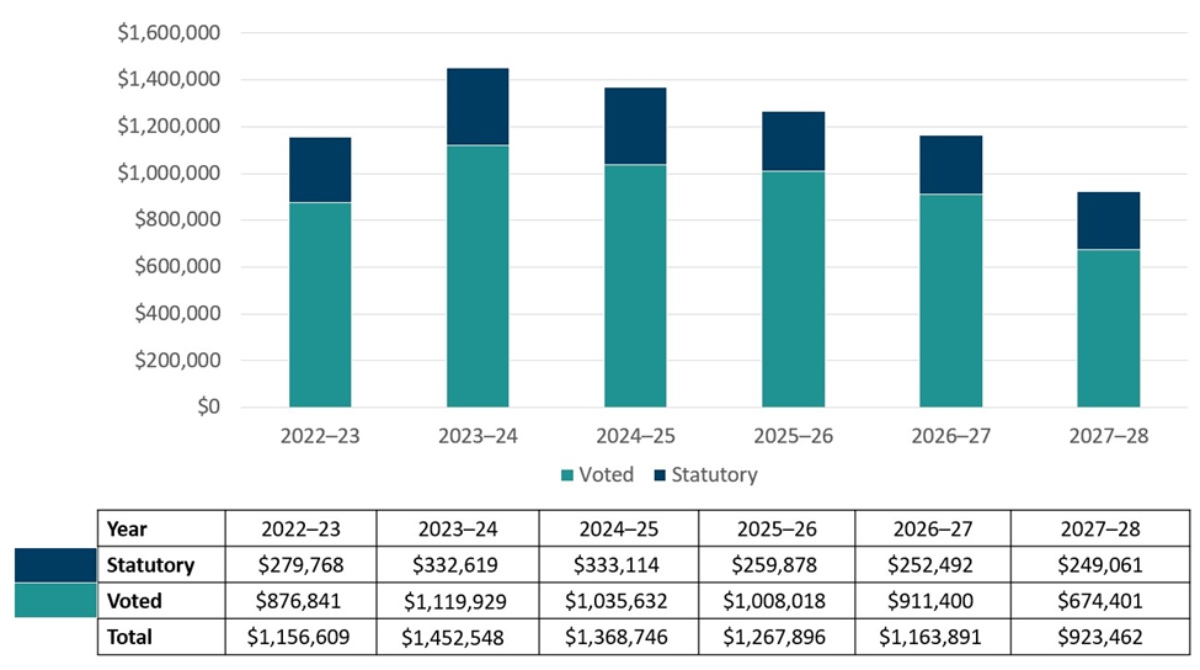
Graph 1: Approved funding (statutory and voted) over a six-year period
Graph 1: Approved funding (statutory and voted) over a six-year period
Summary of Graph 1: Approved funding (statutory and voted) over a six-year period
Graph 1 summarizes the Parks Canada's approved voted and statutory funding from 2022-23 to 2027-28.
- Row 1. Fiscal year: 2022-23
-
- Statutory: $279,768
- Voted: $876,841
- Total: $1,156,609
- Row 2. Fiscal year: 2023-24
-
- Statutory: $332,619
- Voted: $1,119,929
- Total: $1,452,548
- Row 3. Fiscal year: 2024-25
-
- Statutory: $333,114
- Voted: $1,035,632
- Total: $1,368,746
- Row 4. Fiscal year: 2025-26
-
- Statutory: $259,878
- Voted: $1,008,018
- Total: $1,267,896
- Row 5. Fiscal year: 2026-27
-
- Statutory: $252,492
- Voted: $911,400
- Total: $1,163,891
- Row 6. Fiscal year: 2027-28
-
- Statutory: $249,061
- Voted: $674,401
- Total: $923,462
This is the end of the graph summary.
Analysis of statutory and voted funding over a six-year period
The chart above reflects Treasury Board approved funding to support Parks Canada’s programs over a six-year period. The decrease in planned spending from fiscal year 2025 to 2026 to fiscal year 2027 to 2028 is primarily due to the end of temporary funding received by Parks Canada for specific initiatives. In fiscal years 2025 to 2026 and 2026 to 2027, this includes the end of time-limited funding for the Enhanced Nature Legacy initiative, which supports the conservation of Canada’s lands and freshwater, protects species, advances Indigenous reconciliation, and increased access to nature. Another decrease is anticipated in fiscal year 2027 to 2028 due to the end of a portion of the time-limited funding Parks Canada received for capital asset investments in national parks, national marine conservation areas, and national historic sites, as well as the sunset of funding for the preliminary recovery and rebuild of Jasper National Park.
Consult the Public Accounts of Canada for further information on Parks Canada’s departmental voted and statutory expenditures.
Financial statement highlights
Parks Canada’s financial statements (unaudited) for the year ended March 31, 2025, are available online.
Table 9: Condensed Statement of Operations (unaudited) for the year ended March 31, 2025 (dollars)
Summary of Table 9: Condensed Statement of Operations (unaudited) for the year ended March 31, 2025 (dollars)
Table 9 summarizes the expenses and revenues for fiscal year 2024 to 2025 which which together determine the net cost of operations prior to applying government funding and transfers.
- Row 1. Financial information: Total expenses
-
- 2024–25 actual results: $1,409,848,000
- 2024–25 planned results: $1,221,785,000
- Difference (actual results minus planned): $188,063,000
- Row 2. Financial information: Total revenues
-
- 2024–25 actual results: $225,008,000
- 2024–25 planned results: $209,942,000
- Difference (actual results minus planned): $15,066,000
- Row 3. Financial information: Net cost of operations before government funding and transfers
-
- 2024–25 actual results: $1,184,840,000
- 2024–25 planned results: $1,011,843,000
- Difference (actual results minus planned): $172,997,000
This is the end of the table 9 summary.
Analysis of expenses and revenues for fiscal year 2024 to 2025
Actual expenses were higher than planned by $188.1 million which is primarily due to the additional costs incurred in response to wildfires, particularly in Jasper National Park.
Actual revenues were higher than planned by $15.0 million. This includes revenues received during the year from inflation-indexed fees and an unplanned increase in concession revenues, reflecting changes in visitor behaviour.
The 2024 to 2025 planned results information is provided in Parks Canada’s Future-Oriented Statement of Operations and Notes 2024 to 2025.
Table 10: Condensed Statement of Operations (unaudited) for fiscal year 2023 to 2024 and 2024 to 2025 (dollars)
Summary of Table 10: Condensed Statement of Operations (unaudited) for fiscal year 2023 to 2024 and 2024 to 2025 (dollars)
Table 10 summarizes actual expenses and revenues and shows the net cost of operations before government funding and transfers.
- Row 1. Financial information: Total expenses
-
- 2024–25 actual results: $1,409,848,000
- 2023–24 actual results: $1,479,306,000
- Difference (2024-25 minus 2023-24): $(69,458,000)
- Row 2. Financial information: Total revenues
-
- 2024–25 actual results: $225,008,000
- 2023–24 actual results: $213,844,000
- Difference (2024-25 minus 2023-24): $11,164,000
- Row 3. Financial information: Net cost of operations before government funding and transfers
-
- 2024–25 actual results: $1,184,840,000
- 2023–24 actual results: $1,265,462,000
- Difference (2024-25 minus 2023-24): $(80,622,000)
This is the end of the table 10 summary.
Analysis of differences in expenses and revenues between fiscal year 2023 to 2024 and 2024 to 2025
Expenses declined by $69.5 million, largely due to non-recurring costs from prior collective agreement ratifications and last year’s asset review, which adjusted depreciation. Despite the overall decline, professional services and rental fees increased, notably due to wildfire-related expenditures in Jasper.
Revenues rose by $11.2 million, supported by inflation-indexed fees and other items such as concession revenues, reflecting changes in visitor behaviour.
Table 11: Condensed Statement of Financial Position (unaudited) as at March 31, 2025 (dollars)
Summary of Table 11: Condensed Statement of Financial Position (unaudited) as at March 31, 2025 (dollars)
Table 11 provides a brief snapshot of the amounts Parks Canada owes or must spend (liabilities) and its available resources (assets), which helps to indicate its ability to carry out programs and services.
- Row 1. Financial information: Total net liabilities
-
- Actual fiscal year (2024–25): $539,418,000
- Previous fiscal year (2023–24): $541,439,000
- Difference (2024-25 minus 2023-24): $(2,021,000)
- Row 2. Financial information: Total net financial assets
-
- Actual fiscal year (2024–25): $280,692,000
- Previous fiscal year (2023–24): $277,262,000
- Difference (2024-25 minus 2023-24): $3,430,000
- Row 3. Financial information: Departmental net debt
-
- Actual fiscal year (2024–25): $258,726,000
- Previous fiscal year (2023–24): $264,177,000
- Difference (2024-25 minus 2023-24): $(5,451,000)
- Row 4. Total non-financial assets
-
- Actual fiscal year (2024–25): $4,740,765,000
- Previous fiscal year (2023–24): $4,719,045,000
- Difference (2024-25 minus 2023-24): $21,720,000
- Row 5. Departmental net financial position
-
- Actual fiscal year (2024–25): $4,482,039,000
- Previous fiscal year (2023–24): $4,454,868,000
- Difference (2024-25 minus 2023-24): $27,171,000
This is the end of the table 11 summary.
Analysis of department’s liabilities and assets since last fiscal year
The net debt is calculated as the difference between total liabilities and total net financial assets. It represents liabilities for which Parks Canada will require future appropriations. Parks Canada’s net debt declined by $5.5 million, which resulted from a decrease in accounts payable and accrued liabilities following the payment of the prior collective agreement ratifications. This was offset by an increase in environmental liabilities following the re-evaluation of contaminated sites as well as an increase in the appropriations due from the Consolidated Revenue Fund.
The net financial position is calculated as the difference between net debt and total non-financial assets and consists mainly of tangible capital assets, such as roads and bridges, equipment, land, and buildings. The increase of $21.7 million under non-financial assets is largely due to the acquisition of tangible capital assets, which aligns with long-term asset renewal strategies and supports operational resilience and a decrease in amortization following last year review of adjust depreciation.
Human resources
This section presents an overview of Parks Canada’s actual and planned human resources from fiscal year 2022 to 2023 to fiscal year 2027 to 2028.
Table 12: Actual human resources for core responsibility and internal services
Summary of Table 12: Actual human resources for core responsibility and internal services
Table 12 shows a summary in full-time equivalents of human resources for Parks Canada’s core responsibility and for its internal services for the previous three fiscal years.
- Row 1. Core responsibility and internal services: Protecting and presenting Canada’s natural and cultural heritage
-
- 2022–23 actual full-time equivalents: 4,834
- 2023–24 actual full-time equivalents: 4,977
- 2024–25 actual full-time equivalents : 4,947
- Row 2. Core responsibility and internal services: Internal services
-
- 2022–23 actual full-time equivalents: 1,067
- 2023–24 actual full-time equivalents:1,160
- 2024–25 actual full-time equivalents : 1,150
- Row 3. Core responsibility and internal services: Total
-
- 2022–23 actual full-time equivalents: 5,901
- 2023–24 actual full-time equivalents: 6,138
- 2024–25 actual full-time equivalents : 6,097
This is the end of the table 12 summary.
Analysis of human resources for the last three years
The full-time equivalent increase in fiscal year 2023 to 2024 is primarily related to the need for new full-time equivalents to address key priorities such as supporting additional business planning capability, as well as increasing capacity for monitoring and governance to support Parks Canada's real property and asset functions and new national protected area establishments. It also includes temporary increased capacity to comply with new policy requirements.
The slight full-time equivalent decrease in fiscal year 2024 to 2025 reflects a strategic staffing approach aligned with the Refocusing Government Spending initiative measures.
Table 13: Human resources planning summary for core responsibility and internal services
Summary of Table 13: Human resources planning summary for core responsibility and internal services
Table 13 shows the planned full-time equivalents for Parks Canada’s core responsibility and for its internal services for the next three years. Human resources for the current fiscal year are forecast based on year to date.
- Row 1. Core responsibility and internal services: Protecting and presenting Canada’s natural and cultural heritage
-
- 2025–26 planned full-time equivalents: 4,897
- 2026–27 planned full-time equivalents: 4,425
- 2027–28 planned full-time equivalents: 4,300
- Row 2. Core responsibility and internal services: Internal services
-
- 2025–26 planned full-time equivalents: 1,133
- 2026–27 planned full-time equivalents:1,031
- 2027–28 planned full-time equivalents: 985
- Row 3. Core responsibility and internal services: Total
-
- 2025–26 planned full-time equivalents: 6,030
- 2026–27 planned full-time equivalents: 5,456
- 2027–28 planned full-time equivalents: 5,285
This is the end of the table 13 summary.
Analysis of human resources for the next three years
The decrease in planned full-time equivalents from fiscal year 2025 to 2026 to fiscal year 2027 to 2028 is primarily due to the end of temporary funding received by Parks Canada for specific initiatives. In fiscal years 2025 to 2026 and 2026 to 2027, this includes the end of time-limited funding for the Enhanced Nature Legacy initiative, which supports the conservation Canada’s lands and freshwater, protection of species, advancement of Indigenous reconciliation, and increased access to nature.
An additional decrease is anticipated in fiscal year 2027 to 2028 due to the end of a portion of the time-limited funding Parks Canada received for capital asset investments in national parks, national marine conservation areas, and national historic sites, as well as the sunset of funding for the preliminary recovery and rebuild of Jasper National Park. Parks Canada remains committed to engaging early and collaboratively with labour partners to manage workforce impacts responsibly and to support affected employees through this transition.
Supplementary information tables
The following supplementary information tables are available on Parks Canada’s website:
Federal tax expenditures
The tax system can be used to achieve public policy objectives through the application of special measures such as low tax rates, exemptions, deductions, deferrals and credits. The Department of Finance Canada publishes cost estimates and projections for these measures each year in the Report on Federal Tax Expenditures. This report also provides detailed background information on tax expenditures, including descriptions, objectives, historical information and references to related federal spending programs as well as evaluations and GBA Plus of tax expenditures.
Corporate information
Departmental profile
Appropriate minister(s):
The Honourable Steven Guilbeault, P.C., M.P.
Institutional head:
Ron Hallman, President & Chief Executive Officer
Ministerial portfolio:
Canadian Identity and Culture
Enabling instrument(s):
- Parks Canada Agency Act
- Canada National Parks Act
- Rouge National Urban Park Act
- Historic Sites and Monuments Act
- Canada National Marine Conservation Areas Act
- Saguenay-St. Lawrence Marine Park Act
- Historic Canal Regulations pursuant to the Department of Transport Act
- Heritage Railway Stations Protection Act
- Heritage Lighthouse Protection Act
- Species at Risk Act
Year of incorporation / commencement:
1998
Departmental contact information
Mailing address
Parks Canada National Office
30 Victoria Street
Gatineau, Quebec
Canada
J8X 0B3
General Inquiries (within Canada):
888-773-8888
General Inquiries (International):
819-420-9486
TTY:
866-787-6221
Email:
Website:
Definitions
List of terms
- appropriation (crédit)
- Any authority of Parliament to pay money out of the Consolidated Revenue Fund.
- budgetary expenditures (dépenses budgétaires)
- Operating and capital expenditures; transfer payments to other levels of government, departments or individuals; and payments to Crown corporations.
- core responsibility (responsabilité essentielle)
- An enduring function or role of a department. The departmental results listed for a core responsibility reflect the outcomes that the department seeks to influence or achieve.
- Departmental Plan (plan ministériel)
- A report that outlines the anticipated activities and expected performance of an appropriated department over a 3-year period. Departmental Plans are usually tabled in Parliament in spring.
- departmental priority (priorité)
- A plan, project or activity that a department focuses and reports on during a specific planning period. Priorities represent the most important things to be done or those to be addressed first to help achieve the desired departmental results.
- departmental result (résultat ministériel)
- A high-level outcome related to the core responsibilities of a department.
- departmental result indicator (indicateur de résultat ministériel)
- A quantitative or qualitative measure that assesses progress toward a departmental result.
- departmental results framework (cadre ministériel des résultats)
- A framework that connects the department’s core responsibilities to its departmental results and departmental result indicators.
- Departmental Results Report (rapport sur les résultats ministériels)
- A report outlining a department’s accomplishments against the plans, priorities and expected results set out in the corresponding Departmental Plan.
- Full-time equivalent (équivalent temps plein)
- Measures the person years in a departmental budget. An employee's scheduled hours per week divided by the employer's hours for a full-time workweek calculates a full-time equivalent. For example, an employee who works 20 hours in a 40-hour standard workweek represents a 0.5 full-time equivalent.
- Gender-based Analysis Plus (GBA Plus) (analyse comparative entre les sexes plus [ACS Plus])
- An analytical tool that helps to understand the ways diverse individuals experience policies, programs and other initiatives. Applying GBA Plus to policies, programs and other initiatives helps to identify the different needs of the people affected, the ways to be more responsive and inclusive, and the methods to anticipate and mitigate potential barriers to accessing or benefitting from the initiative. GBA Plus goes beyond biological (sex) and socio-cultural (gender) differences to consider other factors, such as age, disability, education, ethnicity, economic status, geography (including rurality), language, race, religion, and sexual orientation.
- government priorities (priorités pangouvernementales)
- For the purpose of the 2024 to 2025 Departmental Results Report, government priorities are the high-level themes outlining the government’s agenda as announced in the 2021 Speech from the Throne.
- horizontal initiative (initiative horizontale)
- A program, project or other initiative where two or more federal departments receive funding to work collaboratively on a shared outcome usually linked to a government priority, and where the ministers involved agree to designate it as horizontal. Specific reporting requirements apply, including that the lead department must report on combined expenditures and results.
- Indigenous business (entreprise autochtones)
- For the purposes of a Departmental Result Report, this includes any entity that meets the Indigenous Services Canada’s criteria of being owned and operated by Elders, band and tribal councils, registered in the Indigenous Business Directory or registered on a modern treaty beneficiary business list.
- non budgetary expenditures (dépenses non budgétaires)
- Net outlays and receipts related to loans, investments and advances, which change the composition of the financial assets of the Government of Canada.
- performance (rendement)
- What a department did with its resources to achieve its results, how well those results compare to what the department intended to achieve, and how well lessons learned have been identified.
- performance indicator (indicateur de rendement)
- A qualitative or quantitative measure that assesses progress toward a departmental-level or program-level result, or the expected outputs or outcomes of a program, policy or initiative.
- plan (plan)
- The articulation of strategic choices, which provides information on how a department intends to achieve its priorities and associated results. Generally, a plan will explain the logic behind the strategies chosen and tend to focus on actions that lead to the expected result.
- planned spending (dépenses prévues)
- For Departmental Plans and Departmental Results Reports, planned spending refers to the amounts presented in Main Estimates. Departments must determine their planned spending and be able to defend the financial numbers presented in their Departmental Plans and Departmental Results Reports.
- program (programme)
- An Individual, group, or combination of services and activities managed together within a department and focused on a specific set of outputs, outcomes or service levels.
- program inventory (répertoire des programmes)
- A listing that identifies all the department’s programs and the resources that contribute to delivering on the department’s core responsibilities and achieving its results.
- result (résultat)
- An outcome or output related to the activities of a department, policy, program or initiative.
- statutory expenditures (dépenses législatives)
- Spending approved through legislation passed in Parliament, other than appropriation acts. The legislation sets out the purpose and the terms and conditions of the expenditures.
- target (cible)
- A quantitative or qualitative, measurable goal that a department, program or initiative plans to achieve within a specified time period.
- voted expenditures (dépenses votées)
- Spending approved annually through an appropriation act passed in Parliament. The vote also outlines the conditions that govern the spending.
- Date modified :