
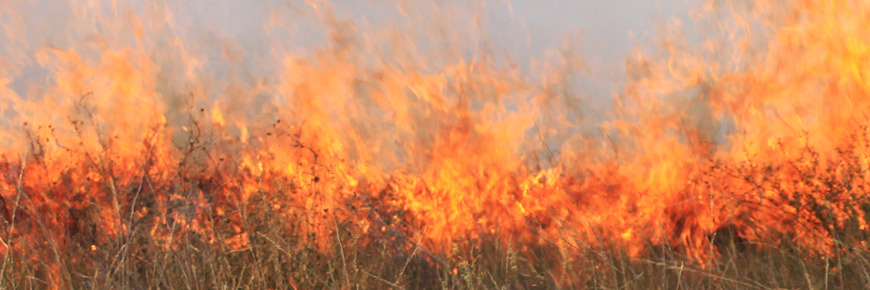
Wildfire
Grasslands National Park
The role of fire
Fire has been part of grassland, brush and forest ecosystems in Canada for as long as they have existed. Like storms, avalanches, and floods, fire is a powerful force of change in nature. It renews and recycles ecosystems.
Many ecosystems have evolved with fire and depend on it for survival. A recently burned area may seem lifeless, but many species survive and thrive, giving rise to new, healthier ecosystems. Fire kick-starts regeneration by providing ideal growing conditions for sun-loving plant species. Wildlife search out these recently burned areas, searching for the nutritious plants and grasses that are the first to pop up.
Over time, fires create a mosaic of vegetation, with different ages and types. This provides a rich variety of habitats that support many species of insects, mammals and birds. This is biodiversity — it indicates a thriving ecosystem that is likely to survive in the future.
Prairie grassland ecosystems
Fire is an important part of the grassland ecosystem. Fires help reduce the buildup of dead plant materials on top of the soil, allowing light and heat to penetrate the ground. This can help native plant species, like sagebrush grow.
However, fire can also be used to manage invasive and non-native plant species. In Grasslands National Park, prescribed fire is used to reduce the crested wheatgrass population. Crested wheatgrass is an aggressive non-native species that prevents native prairie plants from growing. Without native prairie plants, like sagebrush, the greater-sage grouse has lost much of its habitat in Canada.
You have a role to play in helping prevent the spread of wildfires.
Campfires
When a fire ban is not in effect, you can safely enjoy a campfire in Grasslands National Park by following these guidelines:
- Keep campfires in designated fire pits or boxes only.
- Always attend the fire.
- Use only firewood provided in the park. Firewood should not be brought in from outside the park to prevent the spread of invasive insect species or disease.
- Completely extinguish campfires with water.
Report any wildfires, illegal campfires or suspicious smoke to Parks Canada Emergency Dispatch: 1-877-852-3100
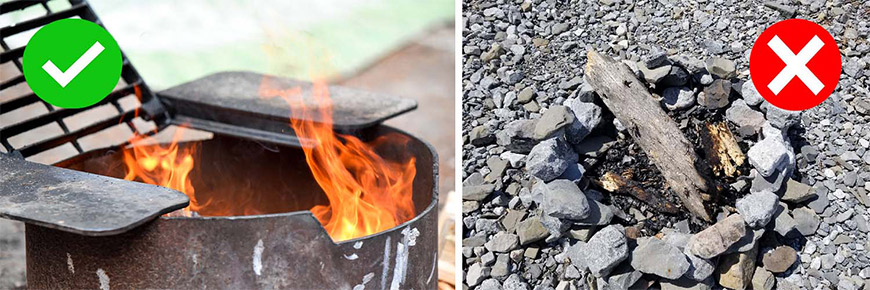
NEVER leave your fire unattended!
Before you go to bed for the night, or any time you leave your campsite, douse the fire with water and make sure it is out.
- Be prepared for sudden weather changes such as strong winds and electrical storms.
- Lightning frequently ignites grass fires – avoid high ground and barbed wire fences
- Report sightings of smoke or flames to the park office or call 9-1-1
- Grass fires travel quickly! Be prepared to evacuate!
If fire traps you, head for low vegetation areas (e.g. gravel roads, Prairie Dog colonies) or burned areas (e.g. the ‘black zone’)
- Date modified :