
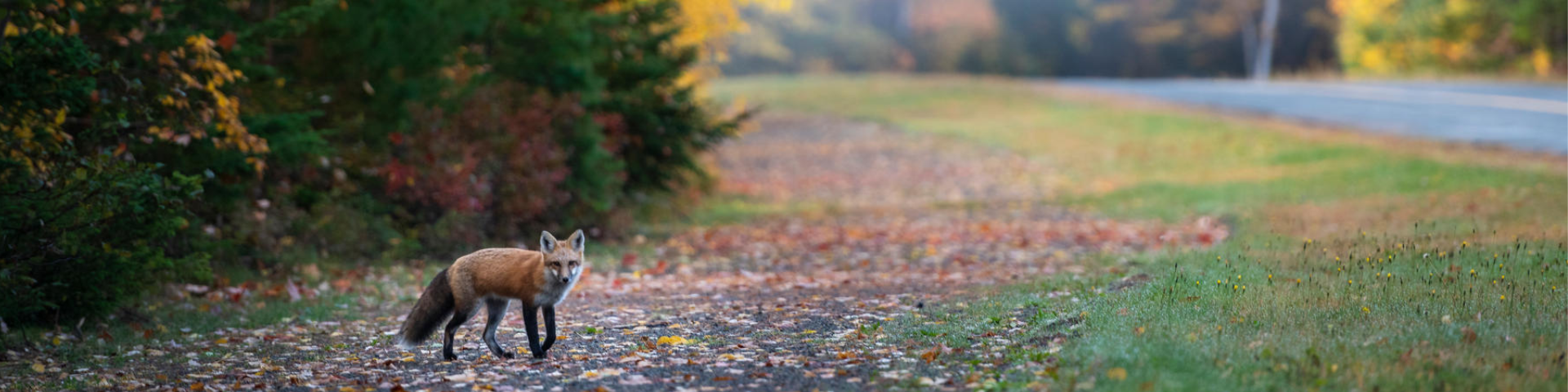
Road safety
Forillon National Park
To report a road incident involving medium or large wildlife or a bird of prey, call the Parks Canada Dispatch Service at any time at 1-888-762-1422
Respect, caution, reporting
Road users in the park are subject to the same rules as those on the Quebec road network. It is important to always follow the traffic regulations, be cautious and courteous to other users, and report any accident or incident involving wildlife. Unfortunately, risks do not take vacations.
Keep these few guidelines in mind when driving to the most beautiful places in the park. You will have peace of mind to enjoy them.
Safer roads for wildlife

Photo: Getty Images
The park's roads or those bordering it are not without risk for the wildlife that roams freely on the territory. This is what we found following a study we conducted in 2021 and 2022 on local wildlife mortalities.
The data are conclusive: during the 2021 and 2022 open seasons, from May to October, nearly 3,000 animals perished each year on road sections around and within the park.
Small mammals (chipmunks, mice, squirrels, shrews) and birds account for 71% of road mortality cases. Amphibians and reptiles represent 24%. For medium wildlife (fox, coyote, lynx, black bear) and large wildlife (moose and white-tailed deer), the mortality rate is 6%. What we see the most, medium and large wildlife, unfortunately only represents the tip of the iceberg...
The cause: speed
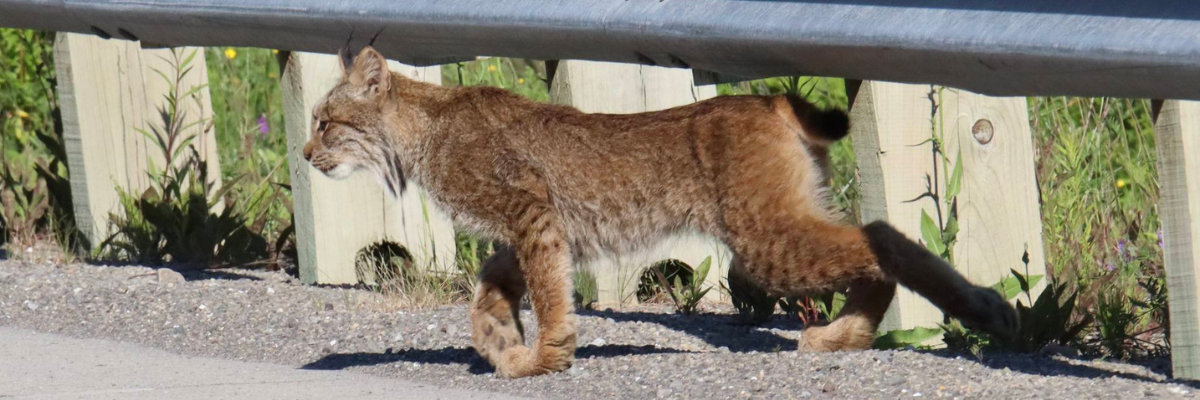
Photo: Diane Jalbert
A large majority of road users around and within the park drive above the speed limit. This behavior puts park wildlife at risk, as well as other motorists. This situation is more problematic from July to August, when the park hosts an increased number of visitors.
Unsurprisingly, the results also confirmed a strong correlation between the number of vehicles on park roads and the number of wildlife mortalities.
Education matters
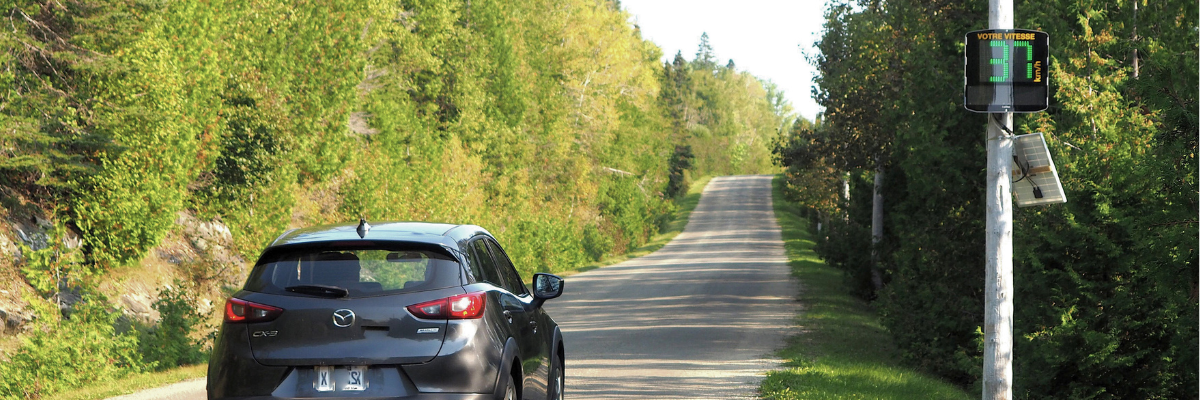
Photo: Roger Saint-Laurent
Education is key. That is why we conducted an education and awareness project to encourage drivers to respect speed limits on the road network around and within the park.
In addition to large signs at area entrances, we installed educational radars that indicate their speed to approaching motorists and motorcyclists. On the educational radar's electronic panel, the respected speed is displayed in green. When a driver exceeds the speed limit, it is displayed in red.
Most importantly, reducing our travel speed increases the chances of survival for animals that venture onto the roads, as they have more time to avoid a vehicle.
By becoming aware of these risks, adapting our driving, and reducing our speed, we can all make a difference and help preserve wildlife while ensuring our own safety and that of other park visitors.
Reporting injured or dead animals
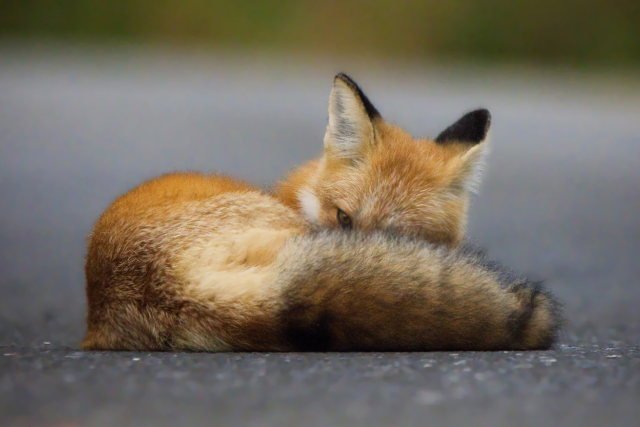
Photo: Christophe Gagnon
Some animals injured or killed in a road accident must be reported. This is the case for large wildlife, birds of prey, and medium wildlife. Here are some examples:
- Accident with large wildlife (bear, deer, moose): must be reported to the Sûreté du Québec or the park. Notify your car insurance company.
- Accident with birds of prey (eagles, hawks, ospreys, owls, falcons, etc.): must be reported to the park.
- Accident with medium wildlife (coyote, fox, lynx, cat, dog): report to the park.
Ethical Driving in the presence of wildlife
Stopping on the road or verge poses a risk to you, other drivers, and wildlife. Some animals become accustomed to the presence of vehicles to the point of no longer considering them a danger, which exposes them to increased risks. Additionally, vehicles parked along roads impair the visibility of other users.
- If you see wildlife near the road, slow down and continue on your way.
- If you need to stop to let an animal pass, park on the verge at a reasonable distance. Turn on your hazard lights and stay in your vehicle until the animal clears the way. Do not attempt to interact with it and do not get out to photograph it.
- If you notice a traffic jam due to the presence of wildlife, contact the Parks Canada Dispatch Service.
Encouraging ecological connectivity
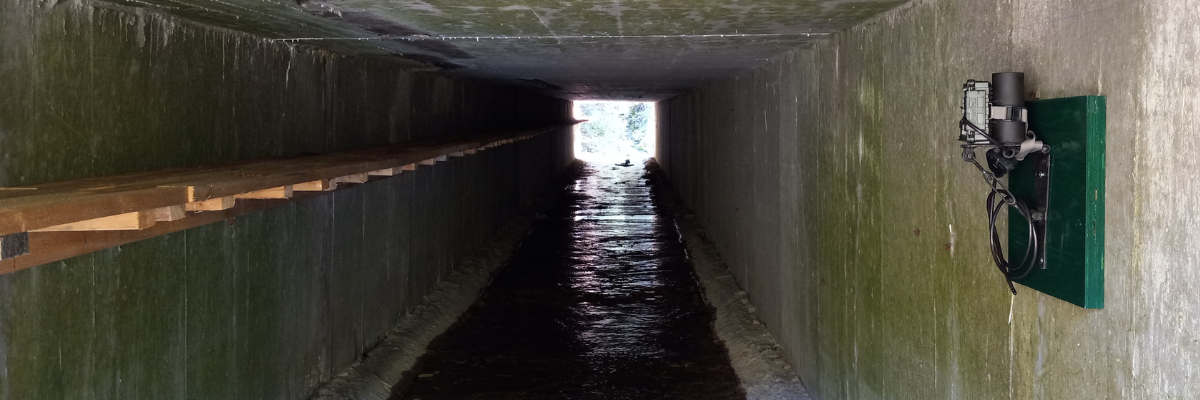
Photo: Parks Canada
What is ecological connectivity?
Ecological connectivity is the "unhindered movement of animal and plant species through the environment." On the ground, we encourage ecological connectivity by establishing ecological corridors or creating wildlife crossings. The intention is to connect natural habitats to ensure the health of ecosystems.
Due to its geographical location, the Forillon Peninsula is bordered by natural boundaries such as the sea and cliffs. To the west, Route 197 also acts as an obstacle to the free movement of terrestrial, avian, or aquatic wildlife in their natural environment.
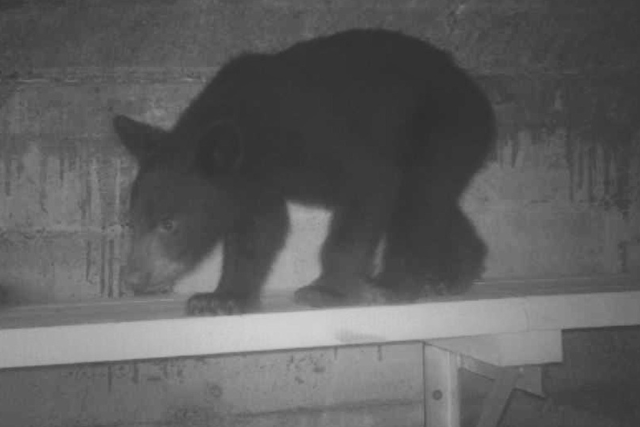
Young black bear
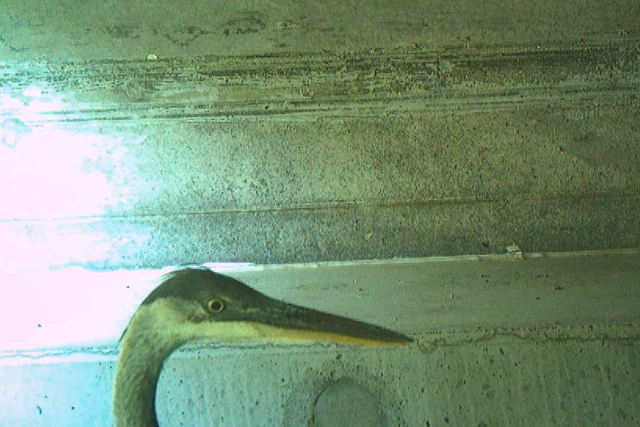
Great blue heron
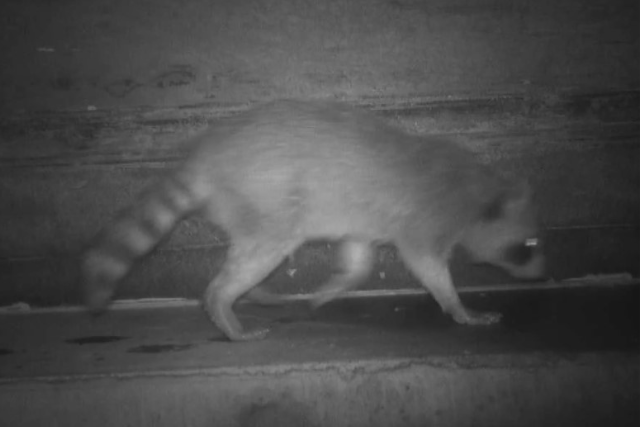
Racoon
To reduce the effects of man-made obstacles in the environment, we have put in place a number of concrete measures. By installing crossing shelves in road culverts, for example, we encourage the safe movement of small and medium-sized mammals from one area to another. Our automatically triggered surveillance cameras also enable us to observe animals passing through these underground passageways.
- Date modified :