
Camping safety
Forillon National Park
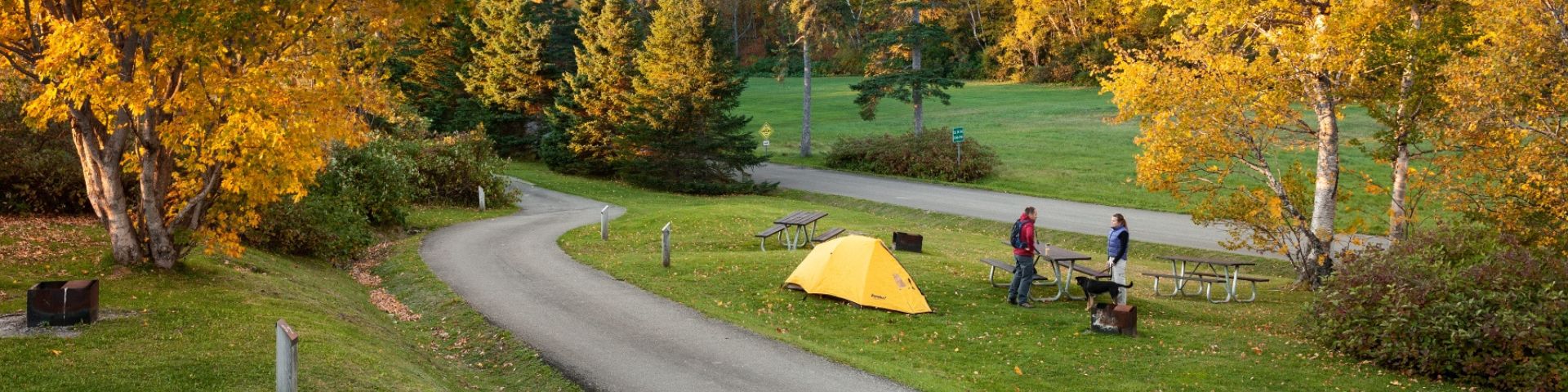
Camping in Forillon gives you the opportunity to experience nature while enjoying a certain level of comfort! However, staying in a changing environment and sharing the territory with wildlife come with responsibilities. One of these is staying informed before and during your visit to Forillon.
Here, visitors will find information to help them enjoy a safe camping experience.
Stay informed
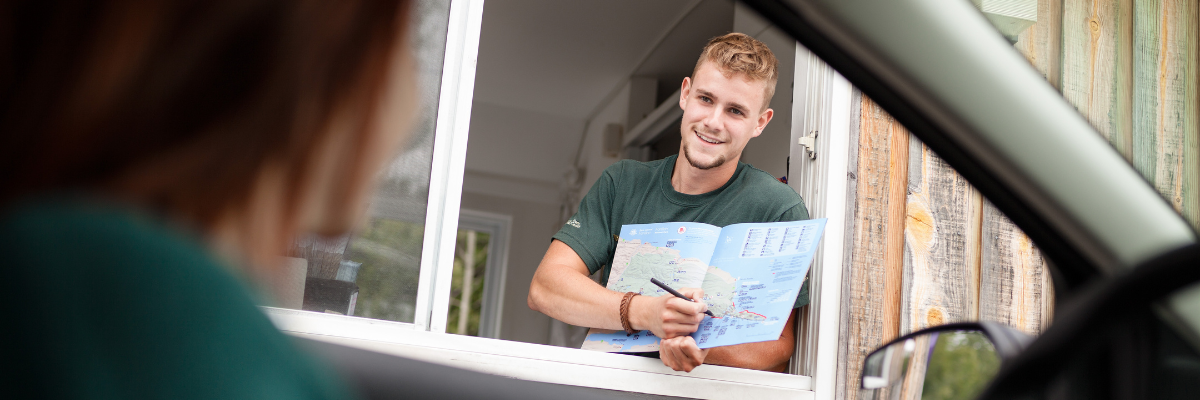
Being informed is key—and we're here to help!
At times, the water may be declared non-drinkable, a storm warning may be issued, or a campfire ban may be in effect. These important updates are quickly communicated to campers in several ways:
- Staff members circulate through the campgrounds to inform campers directly.
- Notices are posted at area entrances.
- Messages are shared online and on social media.
Forillon National Park important bulletins
Forillon National Park Facebook page
Inspect before you set up!
Before settling comfortably into your campsite, it’s recommended to inspect the area. We suggest scanning your site from bottom to top and paying close attention to any potential safety risks.
- At ground level, look for objects that could cause you to trip (branches, logs, rocks, ditches, roots, etc.). If permitted, remove these hazards by moving the objects and pointing them out to your companions.
- At body and head level, assess whether any long branches could reach, scratch, or injure you.
- Above your head, check for large branches that show signs of weakness or leaning trees that could fall toward your campsite.
- Be alert to signs of wildlife or insects (moose or black bear droppings, bumblebee or wasp nests).
If you have any concerns about your safety or that of your companions, contact us right away. We’ll make sure to eliminate any risks.
Remember that in a national park, it is prohibited to pick, damage, or destroy any natural or cultural element. Please do not take any actions that go against this regulation.
Keep your campsite clean

When camping, do not throw dishwater on the ground. Instead, use a sink at a nearby service building.
Remember that you are sharing a protected area with other visitors and wildlife. Keeping your campsite clean helps ensure you do not attract animals. By following these simple guidelines, you contribute to the safety of your fellow campers and those who come after you.
Storing food properly
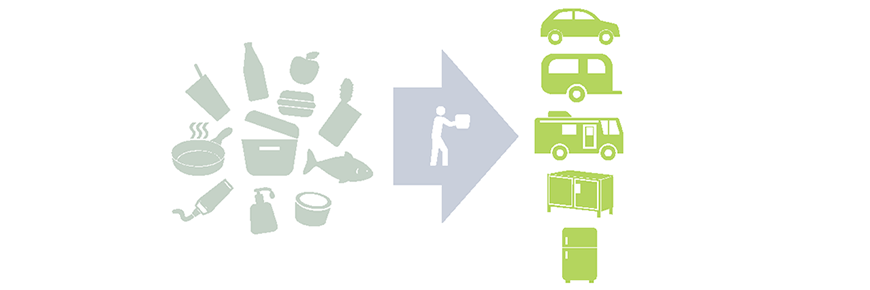
As a camper, it is your responsibility to properly store all food and scented items before nightfall or when you leave your site. These items must be kept in a vehicle, a hard-sided trailer or RV, or in a campground food locker.
Items that must never be left unattended include:
- Food
- Garbage and food scraps
- Coolers
- Dishes and cookware
- Pet food and bowls
- Bottles and cans (full or empty)
- Barbecues and camping stoves
- Toiletries (soap, shampoo, toothpaste, deodorant, etc.)
- Anything used for meal preparation
Sorting waste
At home or while camping, waste sorting is important. Non-recyclable waste goes in the green bin, recyclables in the blue bin, and compostable materials in the brown bin. Bins are clearly visible in camping loops and day-use areas.
Do not throw dishwater or grey water on the ground or your campsite. Their scent can attract wildlife. Dispose of dishwater or other liquid waste in the sinks at service buildings, in toilets, or at a dump station. Grey water dump stations are located at the North and South area entrances.
A fire pit is not a garbage bin! Do not burn plastic, metal, or food. Our maintenance staff thanks you!
Do not feed wildlife
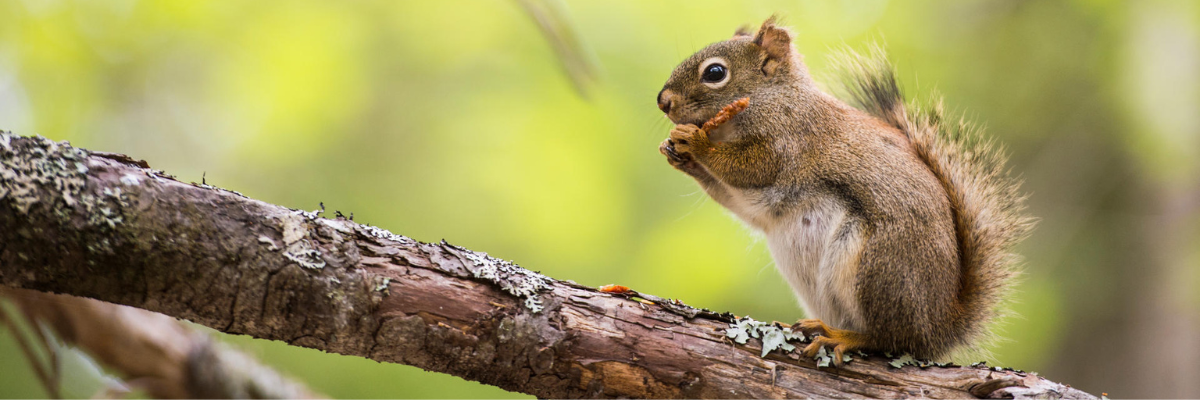
Wild animals find their own food in nature.
Feeding wildlife is strictly prohibited in the park. In the wild, animals do not need our help to eat. Human food, often high in calories, does not meet their nutritional needs. Even if you mean well, keep your peanuts to yourself and not for the squirrels!
Animals that become accustomed to human food pose a safety risk to campers. Some animals may become persistent and require intervention from Conservation staff to remove them from campsites. This is particularly problematic when it involves a black bear.
More information on wildlife safety
Campfires and fire danger index
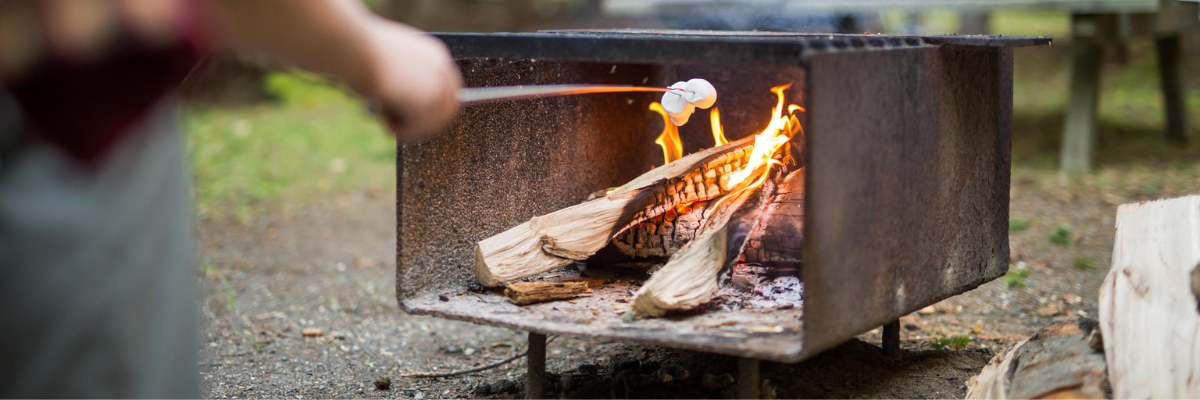
Never leave a campfire unattended.
A campfire is often the heart of a camping experience—it brings together singers, storytellers, and marshmallow roasters! At Forillon, each frontcountry campsite has a designated fire pit. Fires are only permitted in park-provided fire pits. If you light a fire, someone must always be nearby and attend it. Campers must ensure that they extinguish their fire before going to bed or leaving.
It is strictly forbidden to leave a fire unattended.
Burn local!
Firewood is available at the North and South area entrances. It is harvested from the Gaspé Peninsula and cut to the ideal size for park fire pits.
Transporting firewood may seem harmless, but it can spread harmful insects, invasive plants, or diseases.
Protecting Canada’s forests is a shared responsibility. Here’s how you can help:
- Buy firewood on-site or nearby.
- Leave unused firewood behind.
- Just because you don’t see pests doesn’t mean they aren’t there.
- Insects, insect eggs, and fungal spores are often hidden in firewood.
Fire danger index
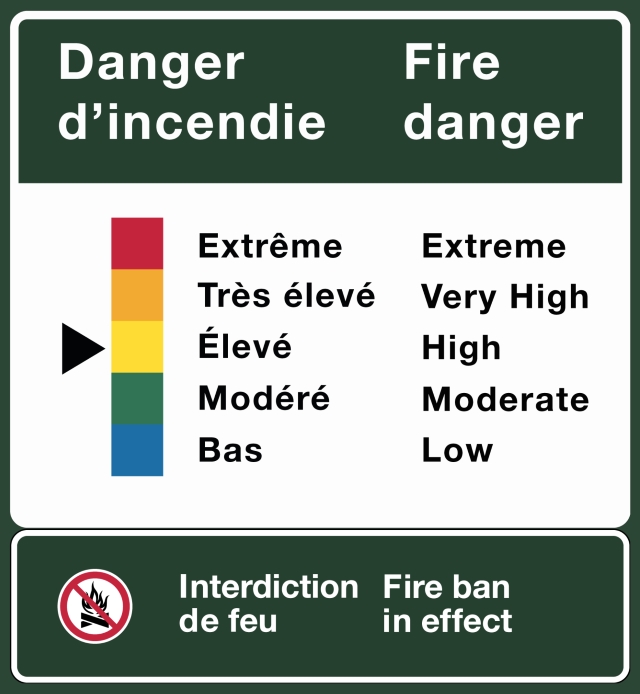
The forest fire danger index fluctuates throughout the summer. During dry conditions, the park may prohibit open fires to reduce the risk of wildfires. You must comply with all fire bans.
Failure to comply with a fire ban may result in a statement of offence being issued by the park authorities.
Park staff circulate through campgrounds to inform campers when a fire ban is in effect. Notices are also posted at the North and South area entrances.
If your camping neighbour is unaware of a fire ban, kindly remind them. You can also report violations to park staff. This is a matter of everyone’s safety!
Fire bans are announced on our website and Facebook page.
- Date modified :