
The history of HMS Investigator and McClure’s Cache
Aulavik National Park
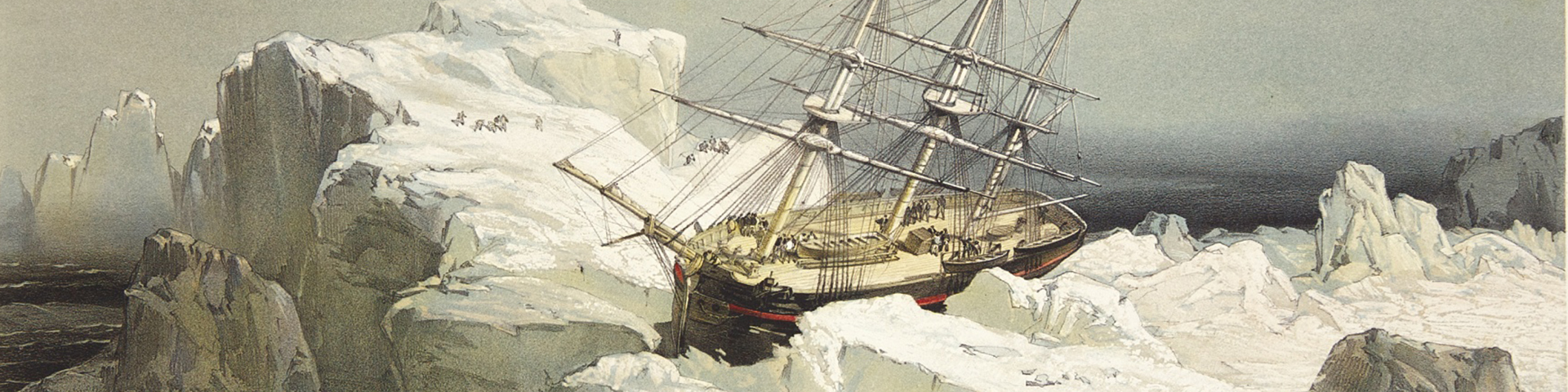
HMS Investigator is a British Royal Navy vessel that contributed to the search for the lost Franklin Expedition and the mapping of the Northwest Passage. Its legacy is also deeply connected to Inuvialuit. While HMS Investigator entered the Arctic as part of a British naval expedition, Inuvialuit had lived on, travelled through, and stewarded this Arctic landscape for generations.
Sir John Franklin and crew disappeared in the Arctic in 1847. After 2 years with no news of the Franklin expedition, the British government sent out the first search parties. Decades of expeditions followed, and searchers scoured the Arctic, at first hoping to find the men and ships, and later simply trying to find surviving documents and piece together what had happened. In 1850, HMS Investigator set out as part of the search.
The vessel entered the Northwest Passage from the Pacific Ocean and travelled eastward through the Canadian Arctic. As worsening ice conditions halted the expedition's progress, Captain Robert McClure and his crew sought refuge in Mercy Bay. For more than two years they endured isolation, harsh Arctic winters, and dwindling supplies while waiting for the ice to release its hold on the ship. During this time, crew members undertook long sledge journeys across the frozen landscape to explore the region and search for contact with other expeditions.
To communicate their situation, the crew left messages in cairns along their routes. In 1853, one such message was discovered on Dealy Island by a sledge party led by Lieutenant Bedford Pim of HMS Resolute. The discovery led to contact with the stranded crew and ultimately their rescue. Following the rescue, McClure and his men abandoned HMS Investigator in Mercy Bay. The crew cached items from the ship on the shore of Mercy Bay before they abandoned HMS Investigator.
For decades after its abandonment, Inuvialuit travelled to Mercy Bay to salvage materials from the ship's abandoned shoreline cache—resources that were incorporated into daily life and influenced travel routes throughout the region. Artifacts associated with HMS Investigator have since been documented at sites across the western Arctic.
The wreck lies outside the boundary of Aulavik National Park. However, it remains closely connected to important cultural resources within the park, including McClure's Cache and the graves of three HMS Investigator crew members who died during the expedition. Together, these places form a remarkable cultural landscape that tells a story of exploration, survival, and the enduring connection between people and the Arctic.
Although the vessel never completed its voyage, McClure and his crew were later credited as the first to successfully traverse a Northwest Passage, completing part of the journey overland. More than 170 years later, HMS Investigator remains a remarkable link to Inuvialuit history, Arctic exploration and Canada's northern heritage.
- Date modified :