
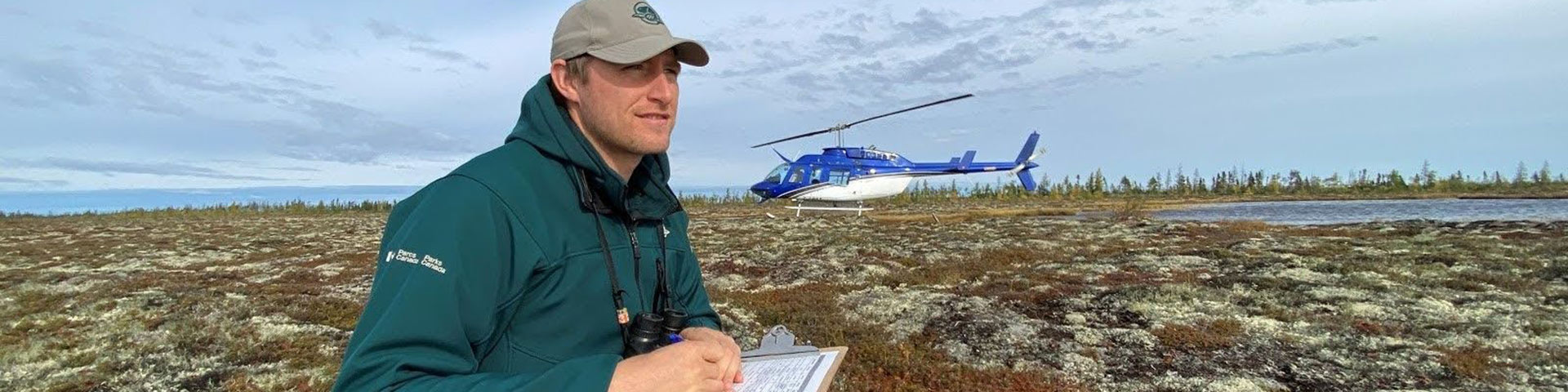
Interviews with our scientists
Wapusk National Park
We asked our team in Wapusk about their work with caribou! Here’s what they had to say:
Russell Turner
Russell Turner, an Ecosystem Scientist, passionate about wildlife conservation and the Arctic is responsible for Species at Risk Monitoring with a current focus on caribou. He is also lucky enough to be one of the few to often go into Wapusk National Park. Russell has seen animals such as polar bears, caribou, wolves, beluga whales, golden eagles, snowy owls and many more critters that call Wapusk home.
What was your first encounter with a caribou in Wapusk? Were you close? How many were there?
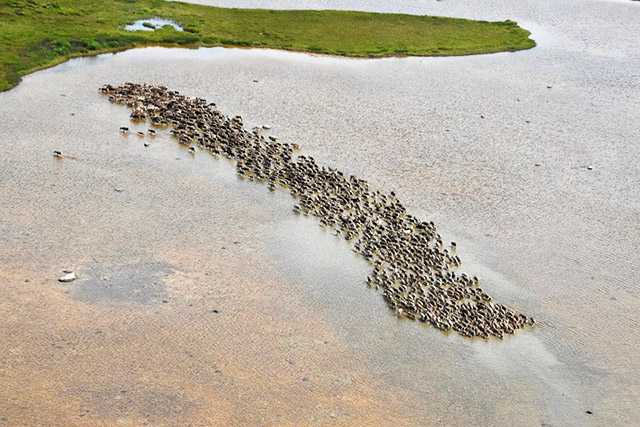
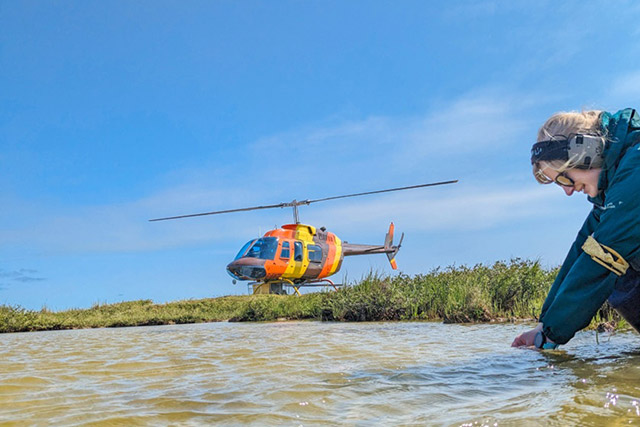
My first encounter with caribou in Wapusk was a memory I will never forget. It was my first trip into Wapusk in July 2020, to conduct our lake hydrology water sampling project. It was mid day just after lunch and we were in a helicopter flying to our next pond. When out of the corner of my eye I saw something large and unknown moving in a pond a couple kilometers away. I had no idea what it was. My brain did not comprehend what I was looking at because it was so big! It was the size of a hockey rink moving on the landscape. I quickly took a photo with my camera and zoomed in on the screen to see what it was. Sure, enough it was an entire herd of caribou moving. With excitement I shrieked into the headset “caribou at three o’clock” and asked the pilot to fly a bit closer. The next couple of minutes we witnessed a large group of roughly 700 caribou move across the tundra in and out of ponds.
What was the largest herd you have seen? How many caribou do you think there were?
The largest herd that I have ever seen was around 1,000 caribou. They were all standing in a pond face into the wind and not really moving. We circled the herd, from a safe distance in our helicopter to capture photos. Then later counted the photo to get an exact count. This photograph is our most recent best estimate at a minimum number of animals for the Cape Churchill Caribou herd.
Have caribou ever gotten close?
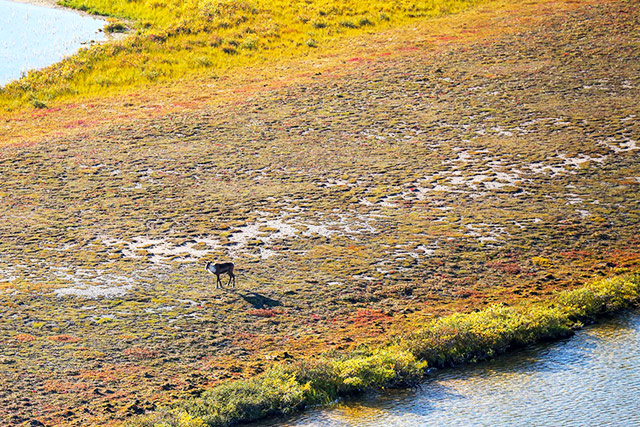
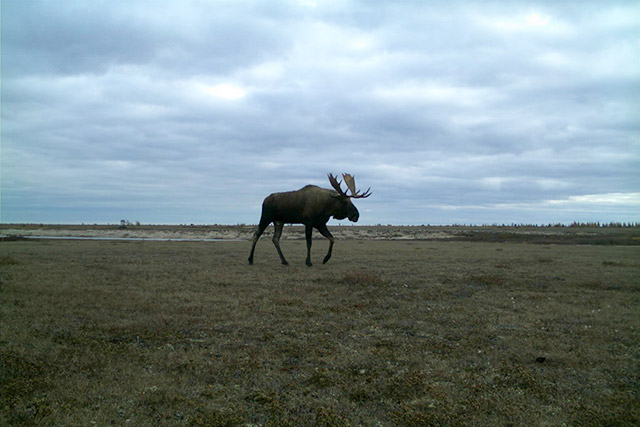
Yes, one instance stands out to me. In summer 2021, I was part of the team that was deploying trail cameras throughout the Cape Churchill herd’s summer range. Three of us were dropped off by helicopter along a beach ridge to install a trail camera. The helicopter had to leave us to go refuel back at camp. After we installed the camera, we all sat down in the middle of the ridge to have our lunch knowing that the helicopter would not return for at least 30 minutes. While we were eating lunch, we watched a huge bull from 3 km away begin to walk directly towards us and I took a picture. We remained silent and did not move. The large bull walked right down the middle of that beach ridge about 20 metres from us. What really stands out to me was the sounds this caribou made, the huffing and puffing from this bull as he trotted by completely unfazed by our presence.
Are you ever scared if you see caribou?
No, almost never. The only time I have ever been scared by caribou was one morning at 4 am I crawled out of my tent to use the bathroom at Broad River Compound, where we conduct research. It was so early, a little foggy and very little light out. I turned towards the washroom and could feel a set of eyes watching me. I quickly turned around and just on the other side of our bear proof fence was a group of five caribou, also half asleep, watching my every move. I had to rub my eyes thinking I was still dreaming, and in the instant, the group of caribou jumped up and ran away. My heart was beating so fast as I heard the group galloping away. I was no longer half asleep.
To you, why are caribou so important to the park and to Canada?
To me, caribou are iconic. They are so important to Canadians we have them on our 25-cent coin. They are important to Wapusk because I feel that the health of caribou help us understand the health of the park. If we have a healthy thriving caribou population, we can expect that all the other ecosystems and plants and animals are also healthy.

Parka Fact
Caribou are chionophile (Kie-AHN-oh-file) animals which means they love and thrive in the snow and cold weather! While the thought of warmer weather may be fun for you, warmer temperatures across both winter and summer is harmful for caribou.
What’s your favourite fact about caribou?
That both male and female caribou grow antlers.
If we’re not in the park, or an area near caribou, what can we do to help protect them?
Learn about caribou. Discovery why they are so unique and understand the important role that caribou play for northern communities and ecosystems that they are found. Advocate for protected areas that protect caribou and their habitat. And finally, share what you love about caribou with friends, family and social media so others can discover what makes them so unique.
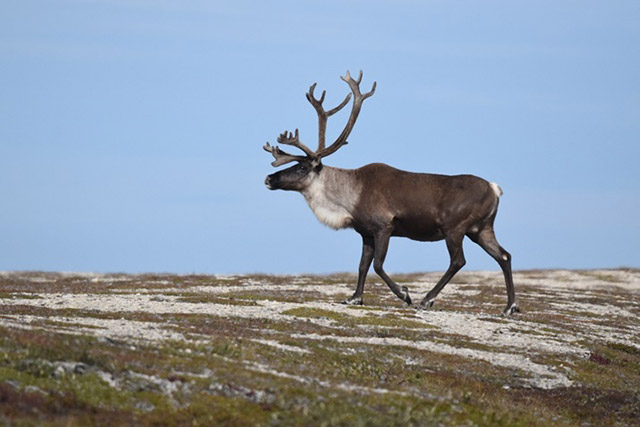
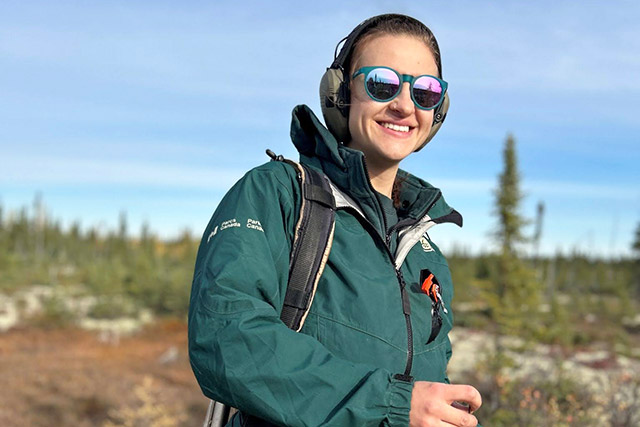
Nicole Rogowsky
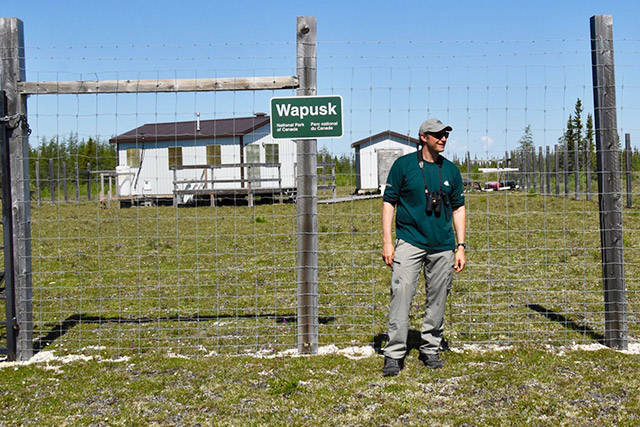
Nicole Rogowsky, currently a Resource Management Officer, has played a large role in processing trail camera pictures of caribou. She has also worked in visitor safety, monitoring fires and ensuring safety precautions are met in the park by planning for emergencies.
What was your first encounter with a caribou in Wapusk? Were you close? How many were there?
My first encounter with a caribou in Wapusk was in late winter 2023. There was a single caribou running along the snowmobile tracks we had made previously. Once it saw us, it did a cute little jump and ran off.
Have you ever seen a large herd? How many do you think there were?
I have seen herds with maybe 20 to 30 caribou. Usually in the spring time when they are starting to migrate to Cape Churchill.
Have caribou ever gotten close?
The closest I have been to a caribou is when I was in one of the compounds in Wapusk. There was a male caribou that was hanging around, maybe 100 m away from the fence. I’ve also had caribou in close proximity other places in the park. They are curious animals and tend to watch from a distance.
Are you ever scared if you see caribou?
Nope! I am more excited when I see caribou.
To you, why are caribou so important to the park and to Canada?
Caribou are important because they are part of an intricate ecosystem. A healthy ecosystem has a variety of animals that each have unique roles in keeping the environment healthy. It is important that we protect the animals that live on the land consider how our choices as humans may affect them.
What’s your favourite fact about caribou?
The Cape Churchill caribou migrate over 200 km every year from the boreal forest to the tundra every spring to have their babies and access better food.
If we’re not in the park, or an area near caribou, what can we do to help protect them?
The best thing people can do to protect caribou is to learn about the work being done to protect them and their habitat and play your role in reducing your carbon footprint and waste to help address the effects of climate change.
Emily Hunt
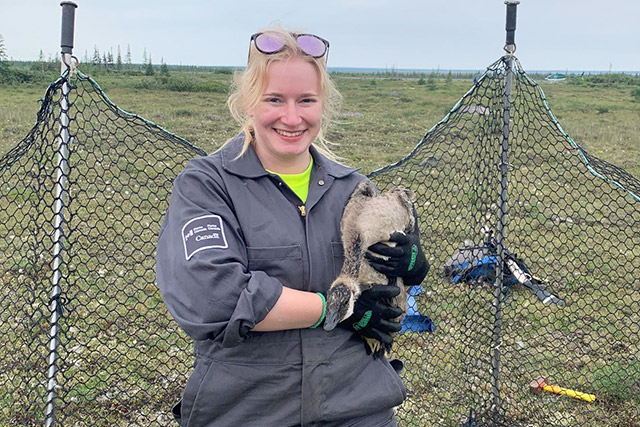
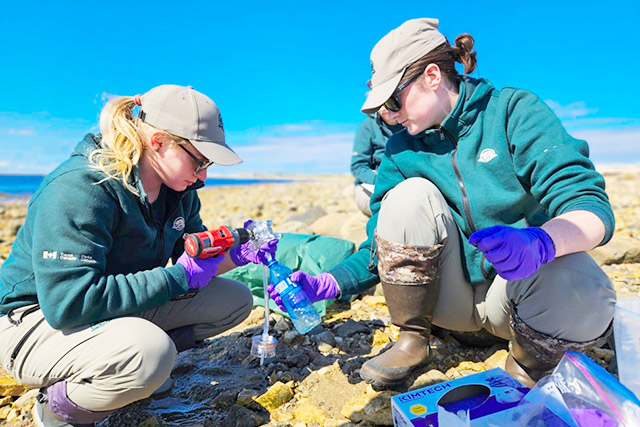
Emily Hunt, a Resource Management Technician, is responsible for hands-on tasks like collecting samples at the park. She first began her journey at Parks Canada as a student at Lower Fort Garry National Historic Site!
What was your first encounter with a caribou in Wapusk? Were you close? How many were there?
My very first encounter was seeing a group of about 10 caribou from a helicopter in the air. The first time I saw caribou on the ground was on a hike in the park, we sat down on the ground and one brave young female slowly got closer and closer to us, sniffing us and checking us out. She stopped about 50 feet away.
Have you ever seen a large herd? How many do you think there were?
Yes! The biggest herd I’ve ever seen was around 300 caribou.
Have caribou ever gotten close?
Yes! If you sit down and are very still and quiet, or if you put your arms over your head and bend up and down (like if you pretend to be a caribou eating lichen), they will often come closer to figure out what you are.
Are you ever scared if you see caribou?
No. They’re very curious, but they spook easily. If they are nervous, they’ll just run away.
To you, why are caribou so important to the park and to Canada?
Caribou are beautiful creatures, and they play an important part of the ecosystems in Wapusk and across Canada. They’re also an important traditional food source for Indigenous peoples.
What’s your favourite fact about caribou?
Caribou can see UV light, something human eyes can’t do. In the winter when the ground is covered with snow, the snow reflects UV light and looks very bright. But the lichen buried under the snow absorbs UV light and looks like big black patches in the bright snow. That’s how caribou find their food in the winter!
If we’re not in the park, or an area near caribou, what can we do to help protect them?
Keep learning about caribou and sharing what you know! The more people who are aware and want to help protect them, the better!
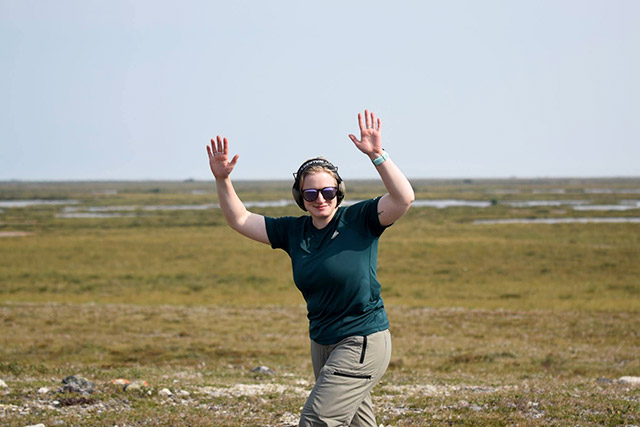
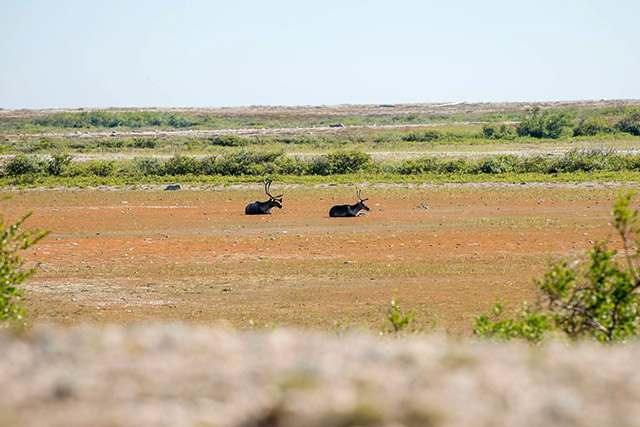
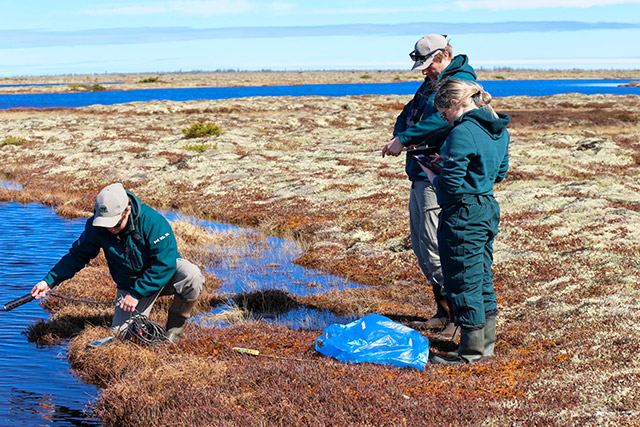
Our scientists at work
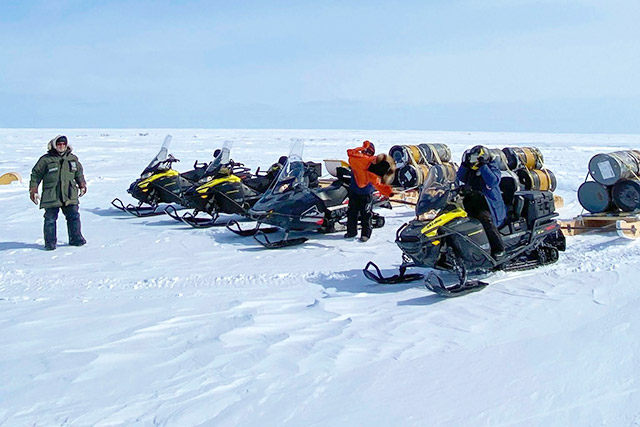
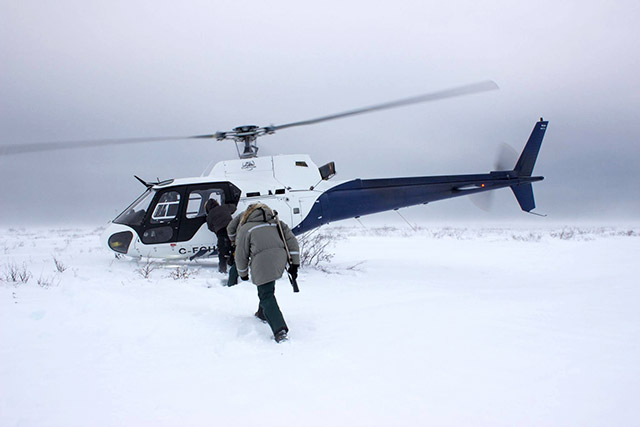
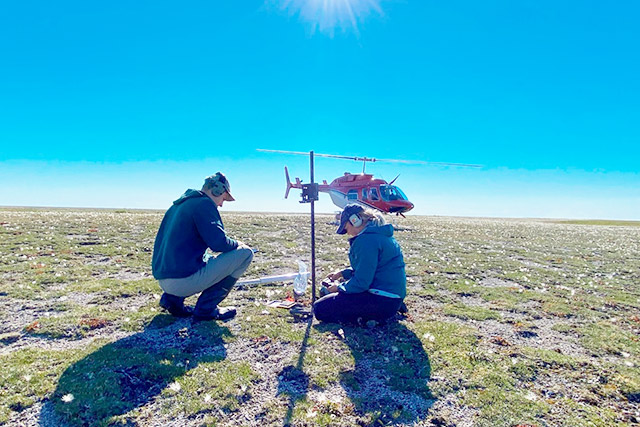
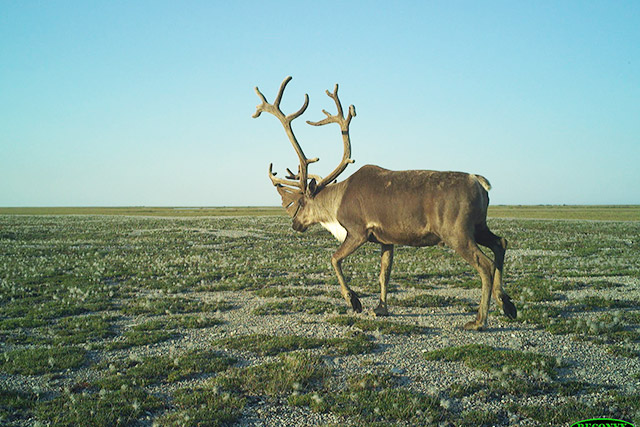
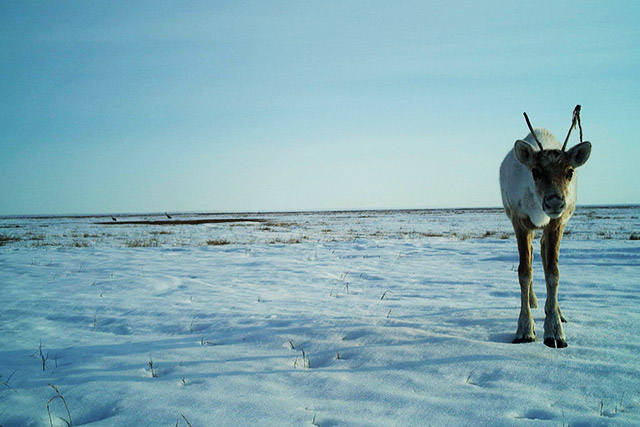
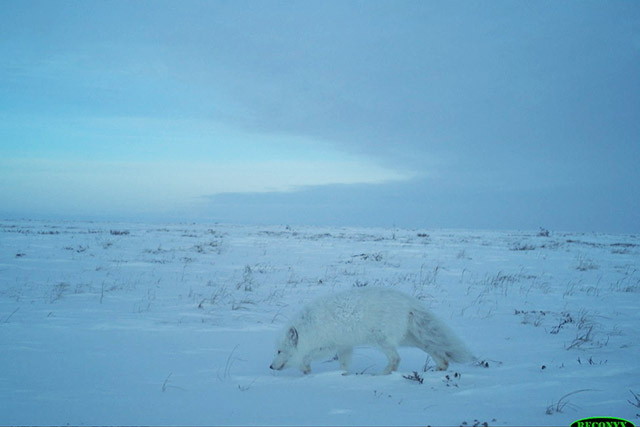
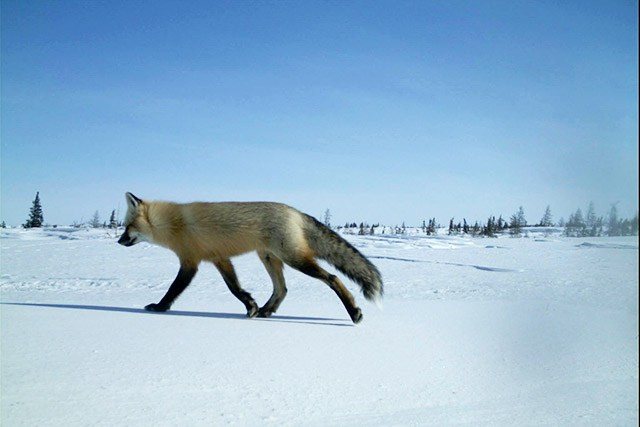
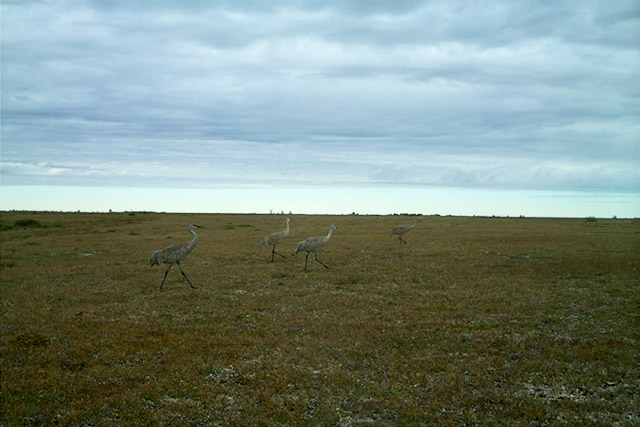
Snaps from trail cameras
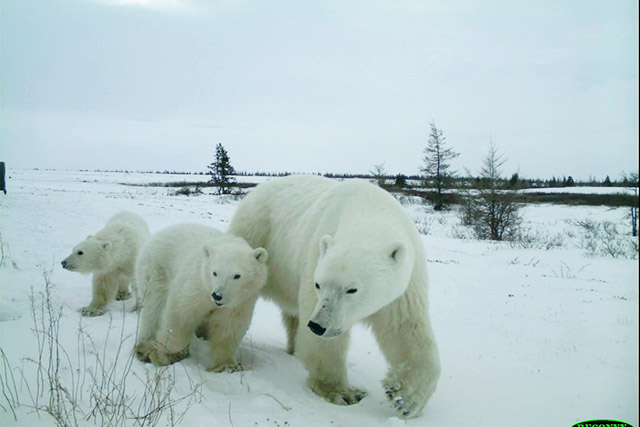
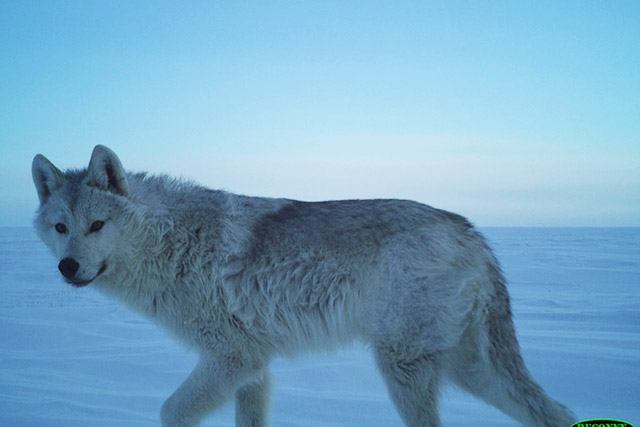
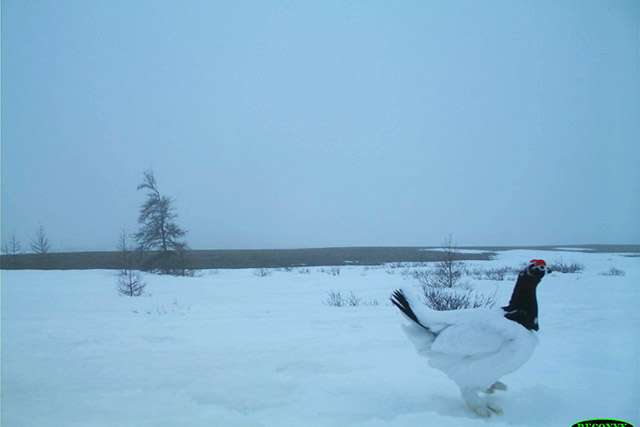
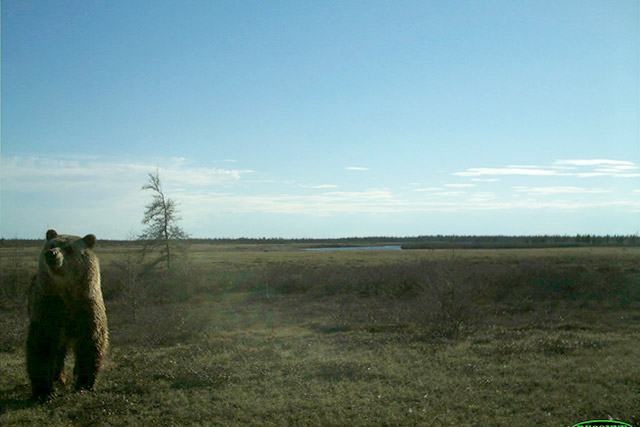
The trail cameras in Wapusk National Park have allowed us to view many different animals that roam the park. What animals do you see?
Quiz: Interview Questions
Having read the interviews with our scientists, answer the questions below.
Where was Russell when he encountered his first herd? What was he doing?
Were the scientists ever scared if a caribou got close? Why or why not?
The scientists all had favourite facts about caribou, describe one of them.
How does Emily mimic a caribou and gain their attention?
What was Nicole’s favourite fact? From what you’ve learnt about caribou, what is your favourite fact?
How can we protect the caribou if we’re not in the park or a scientist?
Activity: Aerial survey
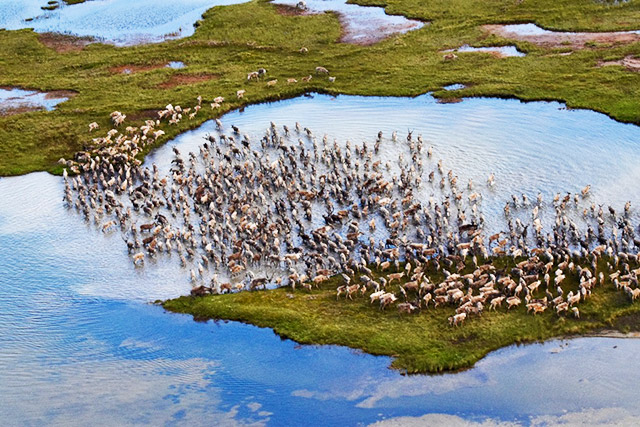
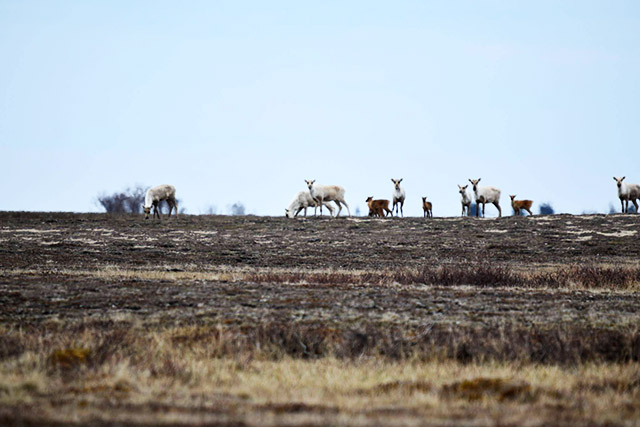
Aerial surveys are conducted with a helicopter by our team in Wapusk National Park. These surveys are done to estimate population size and look over the activity of caribou. By counting the number of caribou they see, scientists can count the number of males, females, and calves which help in understanding how the caribou population is changing.
Below is a picture of a herd. How many caribou do you think are pictured?

Activity: Habitat diorama
Use a small box, like a shoebox, to make a caribou habitat. Search the web for the different plants you can find, animals nearby, and landscapes caribou live in. Perhaps you’d like to recreate Wapusk National Park.
You can use anything! Paper, magazine cut outs, clay, toys, drawings, craft materials, etc.
You’ll present this to the class and share how the habitat you’ve created helps caribou survive and how it mimics caribou current habitats.
Here’s what should be included:
- One habitat: tundra, boreal forest or wetlands.
- Plants that live in this habitat. Label them!
- A threat to the caribou. For example, human structures, climate change or predators. Label them!
- Two animals should be present, one caribou and another animal you learnt lives in the same habitat.
- And finally, write a paragraph (at least 5 sentences), explaining your diorama, where this diorama is based on, why you designed it the way you did, what the threats are, what plants and animals you included, and how this diorama portrays the real habitat of a caribou.
Activity: A world without caribou
Search the web and learn about the caribou food chain and their benefits to the ecosystem.
Four caribou herds in Canada are extirpated, which means that though the species no longer exist in Canada, they still live in in other areas in the world. How do you think extirpation of the four caribou herds affected the animals in their habitat? How is it all connected?
Find out who and what would be affected if the entire caribou species became extinct.
Here are some things to think about:
- Wolves are the main predator for the Cape Churchill caribou. How would the extinction of caribou affect wolves and other animals wolves may eat more of as a result?
- Other animals also prey on caribou, will they be affected? How?
- How will their extinction affect the tundra ecosystem?
- Without caribou, will national parks and protected wildlife areas still exist?
- How will their extinction affect nearby Indigenous communities that harvest the caribou?
- How will the extinction of reindeer (domesticated caribou) affect communities that thrive with them?
<< Conservation || Value of the Caribou >>
- Date modified :