
Conservation
Wapusk National Park
Endangerment
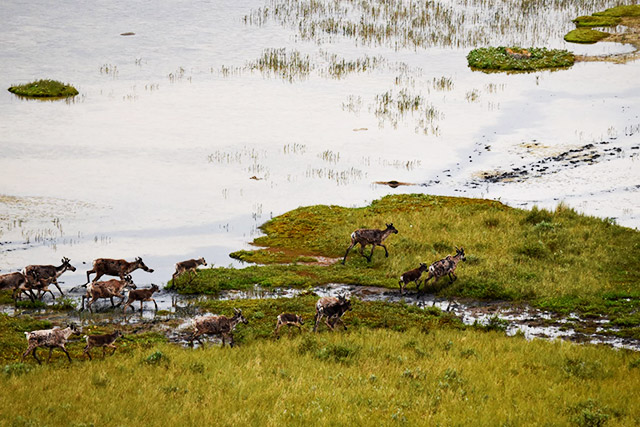
The Cape Churchill herd is classified as Endangered.
What does the term “endangered species” mean?
Brainstorm and write it down.
Answer: “Endangered” is the term to describe species (which are any living thing including plants, insects, animals and even humans) that could become extinct in Canada or throughout the world if the threats to their survival are not removed or decreased.
Threats to caribou
How many caribou are within the Cape Churchill herd?
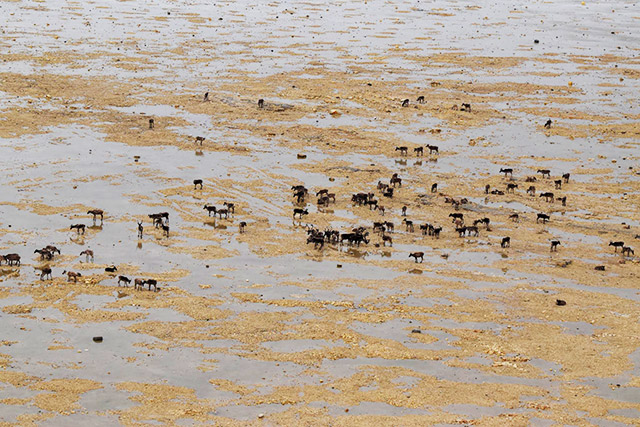
Exact numbers are hard to confirm, but data suggests the population varies between 1,000 and 3,000 caribou over the past 25 years. Unfortunately, it is believed that the population is declining.
Why do you think the population is declining?
Have you HERD?
Calves born in June can walk and travel within hours of their birth! This is an adaptation that protects them from predators.

Habitat loss
- Habitat loss is thought to be one of the main reasons we see a decline in caribou populations across Canada.
- How is caribou habitat being lost? Human activities like mining, logging, oil and gas development, power lines, building homes, cabins, roads and trails cause caribou to avoid areas where these activities happen. Researchers have found that caribou will avoid these different types of disturbances on the landscape for up to 16 km!
- Human structures on the land can also disrupt caribou migration routes. Roads, trails and power lines are roadblocks for caribou and can force them to take different routes. This often requires caribou to spend more energy moving to safer areas.
Saving the caribou, it’s up to YOU!
Brainstorm ways in which humans can change their actions to protect caribou, rather than disturbing them.
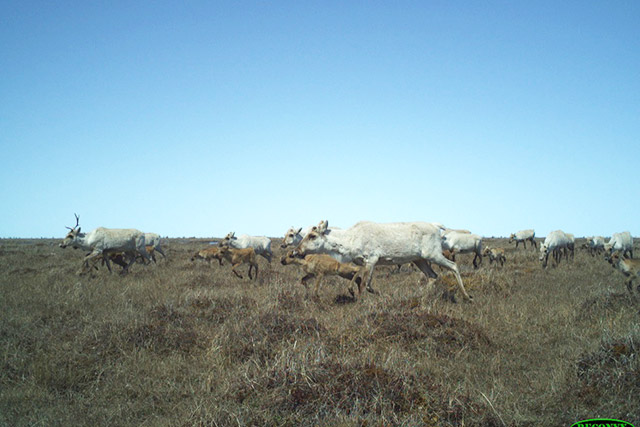
Climate change
- Although caribou are resilient and have adapted to living in harsh climates, they are still affected by climate change.
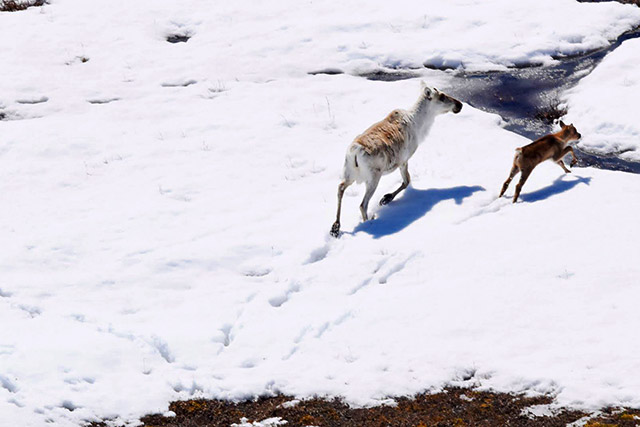
- Changes that are currently affecting caribou include earlier snowmelts, later winters, and warmer temperatures.
- These changes affect their ability to travel on land, retrieve their favorite food source and increases the potential of parasites.
- As time goes by, climate change will continue to pose a threat to caribou populations.
Before continuing, brainstorm how climate change can affect caribou!
- Lichen, caribou’s favourite food, is affected by climate change. Climate change increases the presence of plants like shrubs, which can decrease the presence of lichen.
- Rising temperatures usually increase the duration and intensity of insect life. This means caribou will likely have a harder time protecting themselves from biting insects.
- Flies also lay their eggs on and in caribou fur and attempt to enter their nostrils. As we learned earlier, when caribou are bothered by insects, they tend to form larger groups, and/or try to escape by moving to windy locations where they can be safer. This behaviour can have a negative impact as caribou spend more energy trying to avoid insects rather than feeding.
- Climate change is likely to lead to an increase in wildfires. Wildfires can cause significant harm to the caribou by eliminating lichen and tree cover, which act as a “roof” when it snows.
- Drier lands due to climate change also reduces the winter range that is available for caribou.
Have you HERD?
During the summer season, caribou can be spotted huddled in the ocean, attempting to escape from biting insects!
Predators
- As part of the cycle of life, caribou are affected by the presence of predators.
- Wolves are the main predator of caribou across Canada. Polar bears, grizzly bears, black bears, lynx and wolverines in Wapusk are also known to kill caribou or scavenge caribou killed by other factors.
How is climate change affecting wolves, and other animals’ food sources? Partner up and brainstorm.
Have you HERD?
Not all stressors are human-caused stressors. Stressors like predators, insects, and wildlife are examples of natural stressors.
Activity: Spot the differences
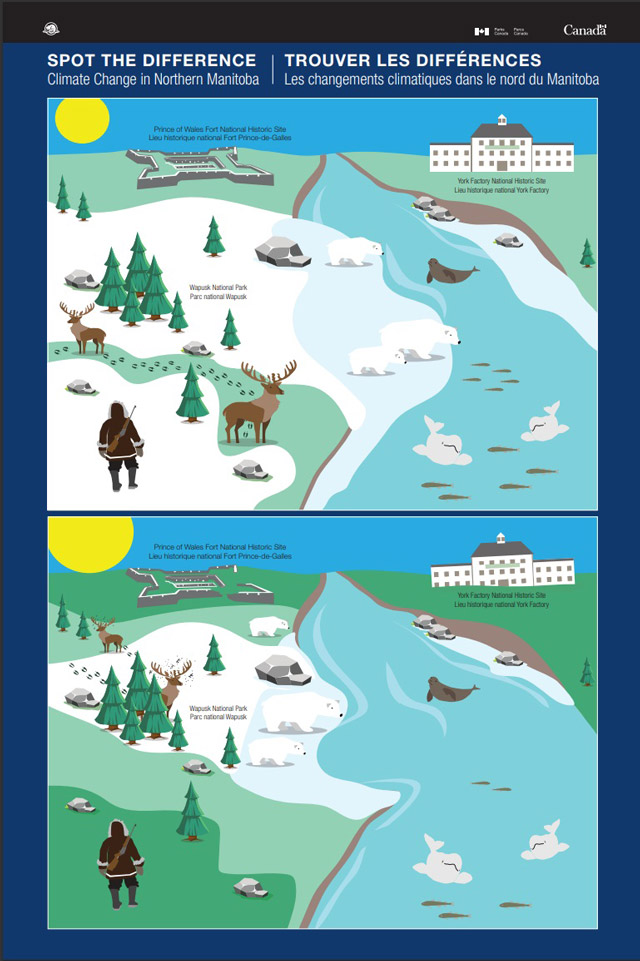
In addition to caribou, climate change is affecting northern Manitoba in a number of ways. These pictures demonstrate effects of climate change on Parks Canada administered sites and animals that live in and near northern Manitoba.
Can you spot the differences?
Write down what you think they represent.
Answer Key
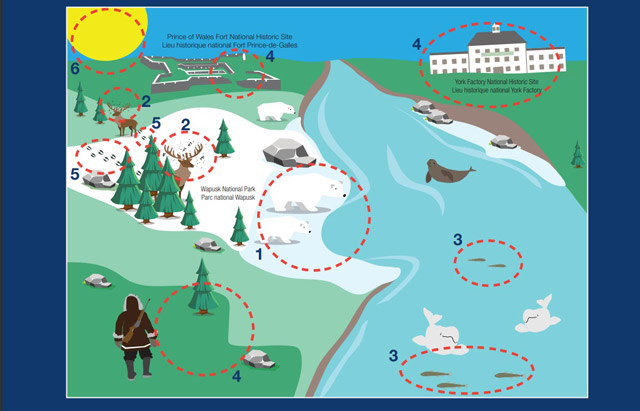
1. Polar bears are being forced onto land as the sea ice is decreasing because of warmer temperatures. This changes their migration patterns, their ability to hunt and to eat enough fat to store in their bodies during ice-free periods.
2. Caribou are being swarmed and bitten by insects as temperatures get warmer which causes the caribou to form larger groups and move to windy locations to hide from these insects. During normal, cool weather, about 10 to 12 caribou group together. As temperatures rise, hundreds will stick together. This disrupts their usual migration patterns.
3. The fish population in the Hudson Bay is seeing a loss of biodiversity as the warming water results in fewer fish species which is affecting the food source for belugas.
4. The thawing of permafrost in northern Manitoba is the source of ground instability affecting York Factory and Prince of Wales Fort national historic sites.
5. Indigenous peoples are having to adjust to changing caribou migration patterns which affects their traditional hunting routines. Their food sources are also being affected by this change.
6. Churchill’s nature is changing as temperatures increase, causing the snow melting season to last longer.
Activity: Riddles
Here are some descriptions of some of the threats to caribou. Read the clues and guess what they are.
1. I travel in a pack to get to my favourite snack. They may hear me howl and growl, but caribou will not easily throw in the towel. When they see me, caribou often let out a smell, warning others as they stick together and to wish me farewell. I stay back behind their herd as they migrate, I prey on the slow, the weak, the old and the calves left alone on a silver plate. Who am I?
2. I’m very hot. The bigger I get, the harder it is to get me to stop. You may use me when camping to make delicious s’mores, but I’m not safe when left alone in the outdoors. When I touch a tree, I often make them go down. To caribou, I can be a real let down. I affect caribou by putting them in danger and ruining their food. Turns out, they don’t like when lichen is barbecued. Who am I?
3. I create a lot of buzz around town, but caribou don’t seem to like the gossip. What a letdown! Whenever they hear or feel me, caribou tend to run away or even take a dip in a pond. What a weird way to respond… Yes, I may lay eggs on the caribou from time to time, no one told me it was a crime! I also like to bite caribou here and there, which to them, is a complete nightmare. Who am I?
4. I’ve made caribou life a little harder. Because of me, they are finding new, weird plants, must walk further, and their days are so much warmer. If a herd needs to cross ice to migrate – forget it, the water won’t freeze! I also make it harder for lichen to grow, sorry, but I will make sure there are even more fleas! Who am I?
5. I’ve created roads, dams and I’ve cut down some trees, and I’ll continue to do so as I please. Though I may be harming the home of caribou, I care more about new roads and buildings, boo-hoo! We’re not all bad though, many of us recognize these new developments affect caribou habitat, and if you do as well, pat yourself on the back. We have a huge role in protecting caribou, it’s about time we see it through. Who am I?
Answer Key
1. Wolves; 2. Forest Fire; 3. Flies/Mosquitoes; 4. Climate Change; 5. Humans
Conservation Efforts
Check out this video to see our scientists at work in the park!
There is a lot of work happening in Wapusk National Park!
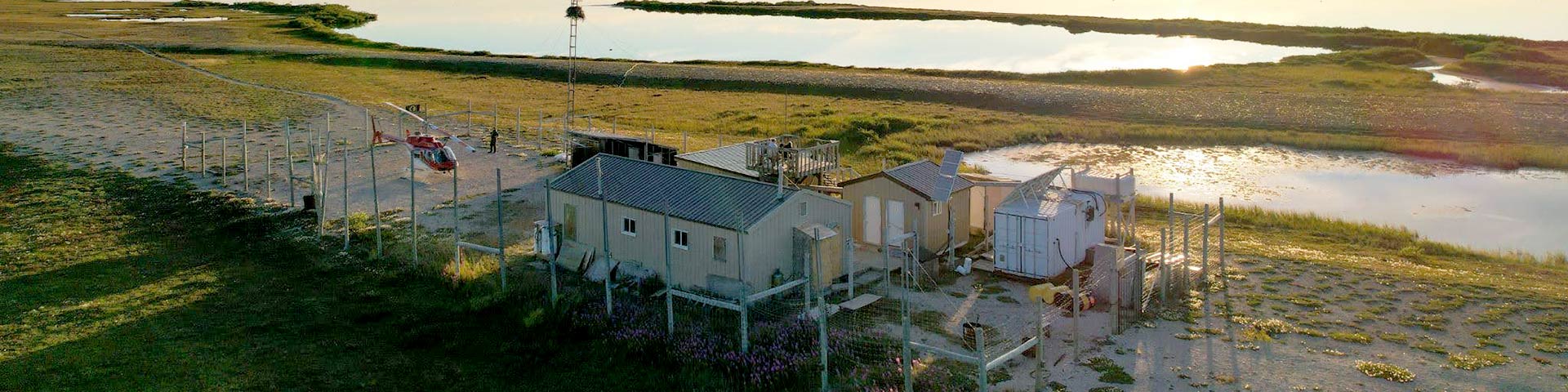
Wapusk National Park protects an area of northeastern Manitoba from development and human disruption. Over these 11,475 square kilometres, the park assists in the protection of the Cape Churchill Caribou calving grounds and summer habitat. The scientists in the park are key to its protection.
Here are some examples of the caribou research happening in Wapusk:
- Collecting and analyzing caribou scat (poop!), to learn about their diet and physical health.
- Installing 92 trail cameras to capture images that can teach us about caribou migration and health.
- GPS collars on adult caribou to better understand their migration patterns.
- Aerial surveys (in a helicopter!) to count the herd which can tell us about the population.
Have you HERD?
Remote field cameras are used for both monitoring and research activities. They are found all around Wapusk National Park.
Though they help with monitoring caribou, the cameras have also captured polar bears, grizzly bears and black bears, moose, wolves, arctic hare, red foxes, wolverines, sandhill crane, and many other animals!
Here’s the scoop on caribou poop:
- To assess which areas have scat, scientists took to the sky in a helicopter to look for signs of caribou. These signs can be tracks, areas where caribou have dug through the snow, or caribou craters that were formed when caribou have sat or laid down to rest.
- Once these traces were found, the team began collecting pellet samples, about 20 to 30 samples per person, and stored them in a cooler to keep them frozen until they can be sent to a lab.
- The scat samples are sent from Churchill to Ottawa to learn about their DNA. Once analyzed, we’ll be able to know so much more about the caribou that call Wapusk National Park home.
What are other ways that researchers could survey caribou safely?
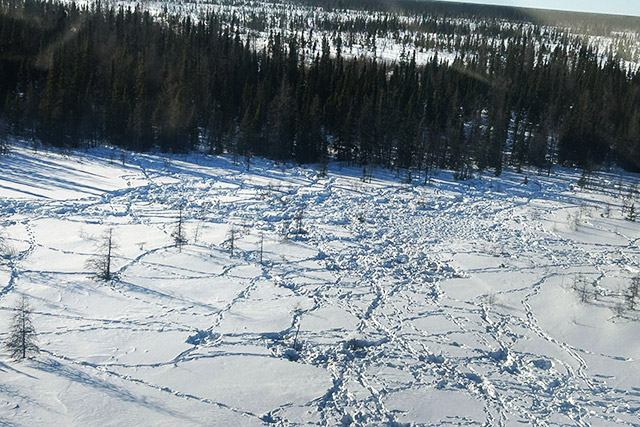
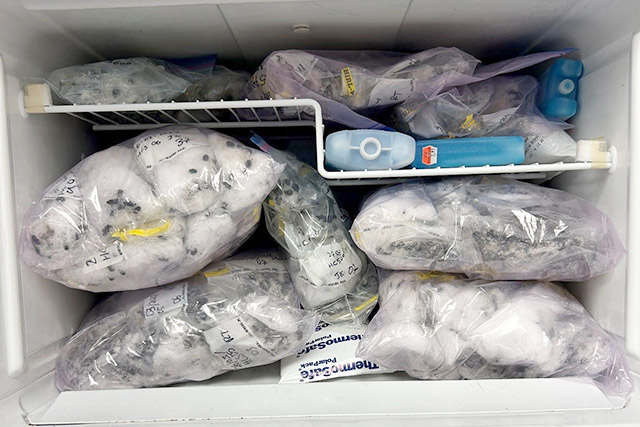
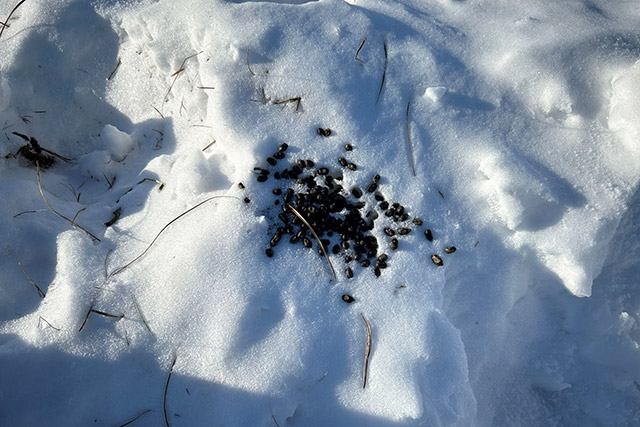
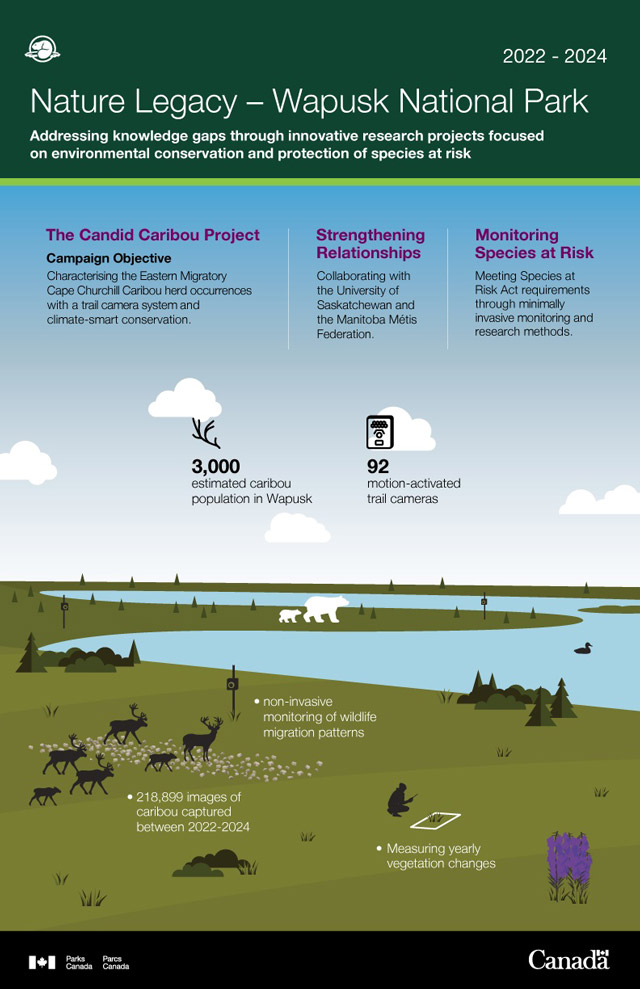
Image description
Nature Legacy 2022-2024
Addressing knowledge gaps through innovative research projects focused on environmental conservation and protection of species at risk.
The Candid Caribou Project
Campaign Objective
Characterising the Eastern Migratory Cape Churchill herd occurrences with a trail camera system and climate-start conversation.
Strengthening Relationships
Collaborating with the University of Saskatchewan and the Manitoba Métis Federation.
Monitoring Species at Risk
Meeting Species at Risk Act requirements through minimally invasive monitoring and research methods.
3,000 estimated caribou population in Wapusk
92 motion- activated trail cameras
Non-invasive monitoring of wildlife migration patterns
218,899 images of caribou captured between 2022 and 2024
Measuring yearly vegetation changes
Activity: Concentrated caribou
Unfortunately, caribou face many disturbances. Pesky biting and noisy insects, human structures like roads and powerlines, hungry preying wolves, and warmer temperatures decreasing the presence of their favourite meal – lichen, many factors disrupt their normal routine. Through it all caribou try to stay cool and concentrated as they focus on migrating, eating and raising their calves.
Now it’s your turn to see if you can stay cool, calm and caribou! In teams of 3, you’ll test yourselves.
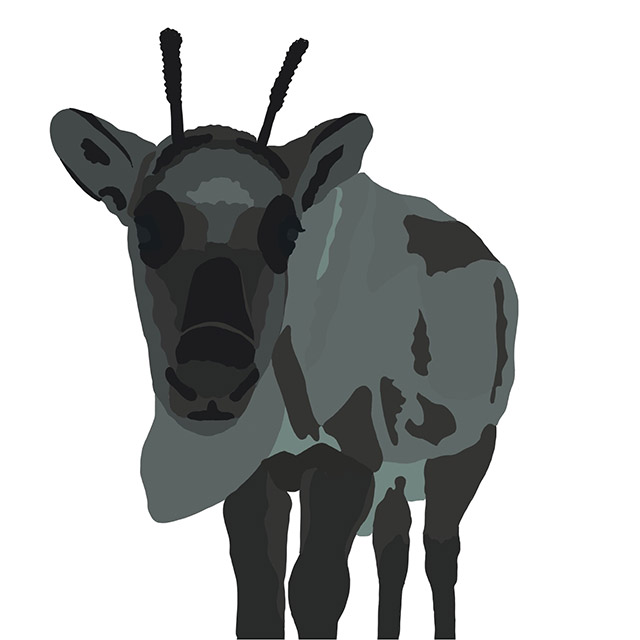
Player 1: The caribou
- Your job is simple… Eat! There’s lichen everywhere, you just need to get your hooves on it.
- With a blindfold on (you’ve closed your eyes because the bugs keep getting it), put 1 spoon in your hand (your antlers), and the other hand behind your back. You’ll dig through lichen (fuzzy pom pom balls) that are at a bottom of a bowl. However, you’ll have to get the snow out of the way first (cotton balls).
- You have 45 seconds to try and dig all the snow out.
- Sounds easy? Well, there are also disturbances around…
Player 2: Insects
- Insects often follow caribou around and lay eggs in their fur.
- Your job is to make buzzing sounds to throw the caribou off.
- You’re also a powerful insect. With a paper plate in hand, fan the player all around to mimic the constant buzzing of flies all around them. Your powerful wings may also affect how much snow the caribou can remove from their bowl.
Player 3: Snow
- It’s snowing! The caribou is a strong digger, but the lack of trees in the area due to foresting results in a much heavier snowfall than usual.
- As the caribou takes out their snow from their bowl, put them back in their sneakily, but only one-by-one and with only one hand!
Take turns switching roles!
The caribou with the most amount of lichen and least amount of snow in their bowl wins!
- Date modified :