
Permitted exterior building materials and colours
Jasper National Park
All exterior building materials and colour changes in the Jasper townsite must comply with the Town of Jasper Land Use Policy (LUP) and Architectural Motif Guidelines (AM).
These requirements are in place to preserve the natural character of the townsite, ensure buildings blend with the surrounding landscape, and improve wildfire resilience.
This page outlines the minimum policy requirements, recommended FireSmart best practices, when a development permit is required and how to apply.
Please note: There is currently no fee for a Development Permit application.
When is a development permit required?
Parks Canada Development Permit is required if you are:
- changing exterior siding material
- changing exterior roofing material
- changing the colour of roofing or siding
- changing exterior cladding texture or finish
- changing exterior window or door material or colour
A permit is not required if you are:
- replacing materials with the exact same material and colour; and
- not altering texture, profile, or appearance
If you are unsure whether your project requires a permit, please contact the Jasper Development Office at jasperdevelopment@pc.gc.ca before starting work.
Exterior siding or roofing material and colour change requirements
The following standards apply to all buildings in the Jasper townsite, whether approved automatically or through development staff review.
Where FireSmart best practices exceed minimum policy requirements, applicants are strongly encouraged to follow FireSmart guidance where feasible.
Technical standards and specification sheets
Many building materials are tested against standardized criteria to understand how fire-resilient they are. In some instances, using materials that meet technical standards is required (e.g. exterior roof cladding requires Class A, or CAN/ULC rating). If your material needs to meet a specific standard, you might be required to provide proof (like a material specification sheet provided by the manufacturer.)
Key terms
- Non-combustible: Materials that do not ignite or burn when exposed to fire, such as concrete, brick and most metals. Non-combustible products should meet CAN/ULC S114 or ASTM E136 standards.
- Fire Resistant: Materials or structures designed to withstand fire for a period of time without losing structural integrity. Heavy timber is considered fire-resistant.
- Heavy Timber: Large-dimensioned wood construction where no dimension is less than 150 mm thick.
Minimum material requirements and FireSmart best practices
Below is a summary of policy requirements. Where technical ratings are required, applicants may need to submit manufacturer specification sheets.
| Building component | Requirements | Additional recommended FireSmart best practices | Acceptable standards |
|---|---|---|---|
| Exterior roof cladding |
Non-combustible materials such as metal, cement, fibre-cement, slate or Class A rated asphalt or rubber shingles in subdued natural colours. Tiles must be flat (not “Spanish” or “Mediterranean” style). |
All material gaps in metal roof products should be sealed with non-combustible material or 3 millimetre non-combustible metal screening. Chimneys connected to a solid-fuel burning appliance are fitted with a mesh screen with perforations not larger than 12mm, to prevent sparks. |
Required: Class A (ULC S107/ASTM E108/UL790) |
| Exterior siding |
Non-combustible materials such as stone, stucco, brick, fibre-cement designed to emulate wood, pre-cast concrete panels, stone veneer, or metal (excluding aluminum) in subdued, natural colours. Non-combustible siding must extend all the way to the base of the building, at least 15 cm above grade. Heavy timber is acceptable. Wood (other than heavy timber), acrylic stucco, vinyl, and aluminum siding are not permitted. |
Non-combustible siding, with no exceptions. | Recommended: CAN/ULC S114 or ASTM E136 |
| Foundations | Refer to Exterior Siding requirements. |
The exposed foundation and covering should be made of non-combustible material. Cover any Insulating Concrete Form (ICF) foundation with cement board and parging, or non-combustible veneer. Any material gaps over 3mm must be sealed or a 3mm metal (non-combustible) screen is to be placed over it. |
Recommended: CAN/ULC S114; ASTM E136 |
| Gutters and downspouts | N/A | Non-combustible materials such as metal, with metal gutter screens or covers to prevent debris buildup. | Recommended: CAN/ULC- S135, CAN/ULC- S114 |
| Roof flashing | Metal flashing only, painted or finished to blend with the roof colour. | N/A | N/A |
| Fascia | Fascia must be non-combustible. | Aligns with policy. | Recommended: ASTM E2957, CAN/ULC S114 |
| Eaves and soffits | N/A |
Use non-combustible soffit materials such as metal, fibre cement and stainless steel or aluminum. Soffits should have perforations less than 3 mm in diameter. |
Recommended: ASTM E2957 |
| Decorative Trim |
Trim must be non-combustible, with the exception of heavy timber. Decorative trim can incorporate brighter, contrasting colours for variety and interest. |
Non-combustible trim, with no exceptions. | Recommended: CAN/ULC S114 or ASTM E136 |
| Windows (frames, mullions and trim) |
Non-combustible materials such as metal, aluminum, fibreglass and thermally broken steel. Metal-clad wood and metal-clad fibreglass are acceptable. Fire-resistant materials like uPVC (unplasticized Polyvinyl Chloride), also known as Rigid PVC, are also acceptable for frames and mullions. Unclad wood is not permitted. |
Use at least double-pane (triple pane is better) glass with a minimum of one tempered pane for enhanced resistance to heat and embers. | Recommended: CAN/ULC-S104 SCM 12-7a-2 |
| Building attachments (e.g. decks, steps, porches) | Within 1.5 metres of a building, attachments such as decks, steps and porches must be surfaced with fire-resistant materials, such as composite that meet Class A standards. | The spaces under decks, steps and porches should be kept clear of debris and should be enclosed with non-combustible material. Screening should not have perforations larger than 3mm. |
Required: Recommended: |
| Mobile Home Skirting | Non-combustible skirting such as metal or fibre cement board, in neutral colours. | N/A | Required: CAN/ULC S114 ASTM E136 |
| Fencing |
Within 1.5 metres of a building, fencing must be non-combustible, such as metal and stone. Wooden fences are permitted beyond this 1.5m buffer. If using metal, the design and finish must not be overly industrial; chain link is unacceptable.
|
N/A | N/A |
| Exterior doors |
Exterior entry doors should be finished with non-combustible material such as steel.
|
Aligns with policy. | Recommended: If cladding with fire resistant material, look for CAN/ULC-S104 or SCM 12-7a-2 |
| Garage doors |
Garage doors attached to or closer than 10 metres of a dwelling must be finished with non-combustible material. |
Window and door frames should be a non-combustible finish (e.g.: metal clad wood, fiberglass, thermally broken steel). Ensure all door seals are tight, with no gaps or cracks. This includes the garage doors. |
Recommended: CAN/ULC-S104 SCM 12-7a-2 |
| Venting (e.g. roof vents, dryer vents, etc.) | N/A |
All roof/external vents are made of non-combustible material such as aluminum or stainless steel. Install 1/8-inch (3mm) stainless steel or aluminum mesh at vents and openings to reduce ember intrusion. |
Recommended: ASTM E2886 or ASTM E2886M20 |
| Accessory buildings | N/A |
Use non-combustible materials such as fibre cement, stone veneer or metal for siding and roofing. Maintain 1.5m non-combustible perimeter surrounding buildings > 9 m2. |
Recommended: CAN/ULC- S114 |
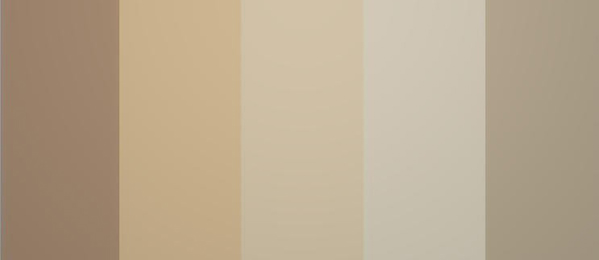
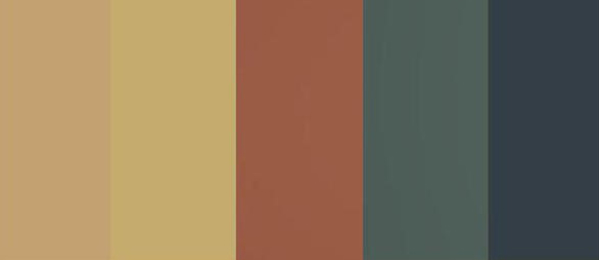
Acceptable exterior colours
Colours in the built environment in Jasper should blend with nature and allow the setting to dominate. Colour is an attribute that - if not skillfully handled - can cause a building to appear out of place.
Examples of acceptable colours for exterior materials


How to apply for a permit
1. Automatic Development Permit (Residential Only)
You can apply for an automatic permit if:
- the project is in-town residential
- the project does not trigger the Building Code through structural changes; and
- the project fully complies with all policy requirements with no variances required.
Commercial, industrial, institutional, and out of town properties are not eligible for automatic permits and must apply through the standard review process.
Automatic Permit
If eligible, you can apply here and receive your permit instantly:
2. Standard Development Permit (Staff Review Required)
You must apply for a standard development permit if:
- The project is commercial, industrial, institutional or out of the townsite
- The project includes structural alterations
- The proposal varies from Land Use Policy and/or Architectural Motif requirements
Please submit the following to jasperdevelopment@pc.gc.ca:
1. Parks Canada Development Permit Application
Please submit the signed Parks Canada development permit application (PDF, 168 KB). Include the property address, lessee name, applicant name, and contact information.
2. Exterior Renovation Checklist
Please submit the completed Exterior Renovation Checklist (PDF 271 KB). All fields are required to properly review your submission.
After review, you will be notified if the permit is approved or if revisions are needed.
If you have any questions regarding your application, please contact the Development Office at jasperdevelopment@pc.gc.ca or 780-852-6123.
The information above is intended to assist with your application. In the event of any conflict between this information and the Town of Jasper Land Use Policy, the Policy takes precedence.
- Date modified :