
Honouring Black Ash
Fort St. Joseph National Historic Site
By Liana Hryniewicz
Black ash holds deep cultural significance for the Métis Nation of Ontario (MNO), as was recognized during engagement sessions for the Multi-species Action Plan (MSAP) for Pukaskwa National Park, Fort St. Joseph, and Sault Ste. Marie Canal National Historic Sites. Valued for generations as a source material for traditional weaving and cultural practices, black ash connects people to land, knowledge, and identity. Its inclusion as a priority species in the MSAP reflects both its ecological importance and its role in sustaining cultural traditions.
Using Conservation and Restoration funding for the 2025-2026 fiscal year, the Pukaskwa Resource Conservation team began advancing actions identified in the proposed MSAP in collaboration with Indigenous communities. One of these actions was a targeted survey of black ash trees at Fort St. Joseph. The survey aimed to assess the current condition of black ash stands and identify any surviving trees that might be candidates for treatment to protect them from the invasive emerald ash borer.
The survey was conducted from February 22 to February 27 by Candace Deschamps with assistance from Karson Ball. Regrettably, all black ash trees at the site were found to be dead, dying, or significantly stressed due to emerald ash borer infestations. This invasive insect continues to threaten ash populations across the region, demonstrating the urgency for conservation efforts.
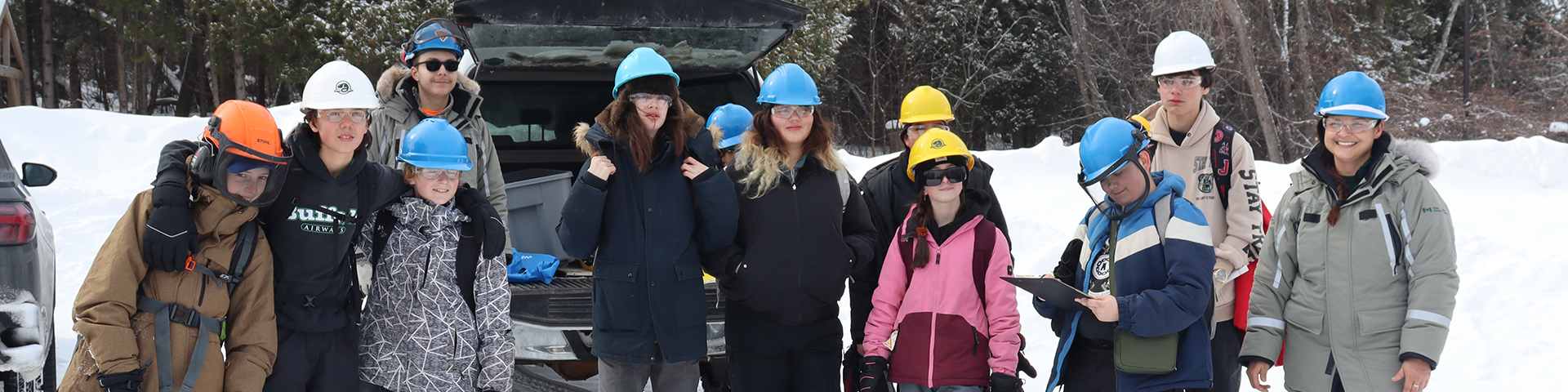
While conducting the survey, a meaningful opportunity for cultural connection and knowledge sharing was created. Steve Gjos, Captain of the Hunt for MNO Region 4, emphasized the importance of involving youth and incorporating ceremony into conservation activities. On the last day of the survey, he helped facilitate a field visit by a Grade 7/8 outdoor education class from White Pines Collegiate & Vocational School in Sault Ste. Marie.
During the visit, students participated in a ceremony led by Steve Gjos to honour the water and the trees, reinforcing the cultural and spiritual relationships tied to black ash. Guided by Parks Canada staff, students snowshoed along survey routes, learning to identify black ash trees and recognize signs of emerald ash borer damage. Field guides were provided so they could continue their learning beyond the site visit.
By integrating cultural teachings, ecological science, and place-based learning, the initiative demonstrated how conservation can foster both environmental stewardship and stronger connections to heritage. This work demonstrates an important path forward, rooted in collaboration, respect for Indigenous knowledge, and engagement of future generations.
Related links
- Date modified :