
A Look at the Powerhouse Stabilization Progress
Sault Ste. Marie Canal National Historic Site
By Brendan Hodgson
This fall marks a major milestone in the ongoing restoration of the Powerhouse at the Sault Ste. Marie Canal National Historic Site. The latest phase of construction has officially wrapped up, bringing us closer to stabilizing and preserving this remarkable piece of Canadian engineering heritage.
One of the most critical accomplishments in this phase was the installation of a passive water management system. Building next to water always carries the risk of flooding and erosion, and the Powerhouse—situated beside the canal—has long faced these challenges. The new system redirects groundwater safely around the structure, helping to protect the foundation from infiltration and long-term damage.
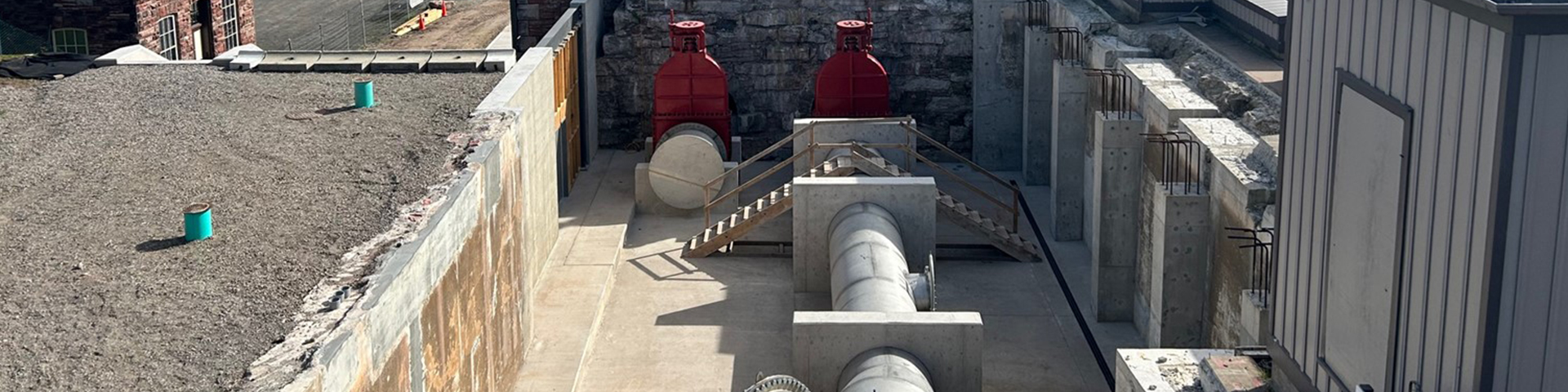
Visitors may notice something new and something old: two original gate valves, once used to control the flow of water into the hydro-electric generating equipment, have been carefully restored and reinstalled in their original positions. These historic components, which lift a metal disc within a protective housing, now sit alongside a modern butterfly valve. This newer addition regulates water flow by rotating a metal disk 90 degrees, offering improved control while respecting the site's legacy.
Another key feature of this phase is the installation of stainless steel penstock piping. These pipes replicate the original penstock system that once carried water from Lake Superior through the Powerhouse to generate electricity for the lock and site lighting. The new design improves upon the original while maintaining its historical footprint—an elegant blend of past and present.
As work continues, the penstock reservoir—once hidden underground—remains exposed, offering a rare glimpse into the inner workings of this historic site. Eventually, the reservoir will be covered again, but for now, visitors can peer through the construction fence to see the infrastructure that powered the canal over a century ago.
Planning is already underway for the next phase of construction, which is expected to be awarded in late fall. Work will continue through summer 2026, and we’ll be sharing more updates as the project progresses.
While the site is currently closed for the season, we look forward to welcoming you May through October. Come discover the technology that was cutting-edge 130 years ago – and is now being carefully preserved for generations to come.
- Date modified :