
A nomad pollinator under threat
Sault Ste. Marie Canal National Historic Site
By Heidi Michalski Ribeiro
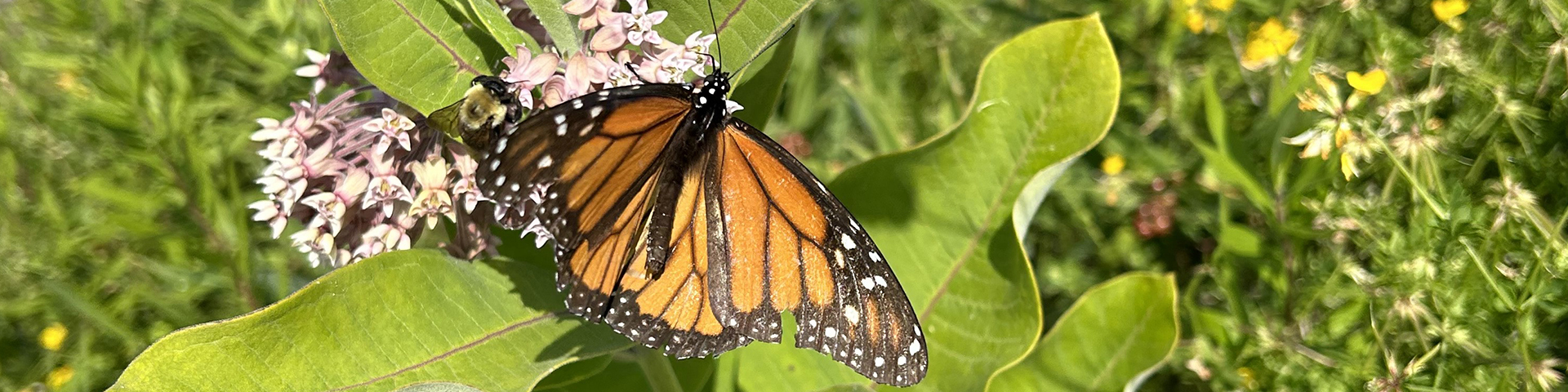
Monarch butterflies (Danaus plexippus) are fascinating nomadic pollinators. They are the only butterfly species known to undertake a two-way migration, similar to that of birds. In 2023, their status in Canada was upgraded from Special Concern to Endangered, highlighting the urgent need for habitat recovery and conservation to protect them.
Monarch butterflies are a migratory species that have four generations in their annual cycle. Every fall, monarchs migrate to overwinter in Mexico and come back to Canada for breeding the next spring. The first, second, and third generations are known as summer generations, living from 2 to 5 weeks, and their main goal is to reproduce. The fourth generation is known as the migratory generation, and these butterflies live up to 9 months. This generation will fly from Canada and the United States to the high mountain region in Mexico, a journey of more than 4,000 kilometers!
Milkweed (Asclepias spp.) is the only host plant for monarch caterpillars, and so is crucial to the monarch life cycle. The caterpillar feeds on milkweed species due to the cardenolide toxins present in the plant. The toxicity is transferred to the caterpillar and shields it from predators. Some of the threats to the species are loss of breeding habitat in the US and Canada; climate-change and adverse weather events (available in English only), and exposure to pesticides(available in English only). With the butterfly’s status upgrade to Endangered, urgent solutions are needed to protect the species.
At the Sault Ste. Marie Canal National Historic Site, all Parks Canada employees are committed to the protection of monarchs, their habitat, and the promotion of public awareness about their importance to the environment and scientific significance. The Assets Team carefully manages the site grounds to preserve habitat, and the Visitor Experience Team raises visitors’ awareness through educational programs that aim to promote the importance of monarchs and milkweed.
Last year, I worked as a Student in Visitor Experience at Fort St. Joseph National Historic Site, where I collected data on all life stages of monarchs and their behaviour. This data is important to understand reproduction patterns, number of individuals, and their habitat needs. This year I am working at the Sault Ste. Marie Canal with the same mission: to protect nomad pollinators!
- Date modified :