
Sensory map
Fort Langley National Historic Site
This sensory map was created in collaboration with the Canucks Autism Network, which helps visitors navigate the site with comfort and confidence.
Look for unique icons marking areas with strong sensory experiences, as well as quiet zones where you can pause and recharge.
Sensory information by location: 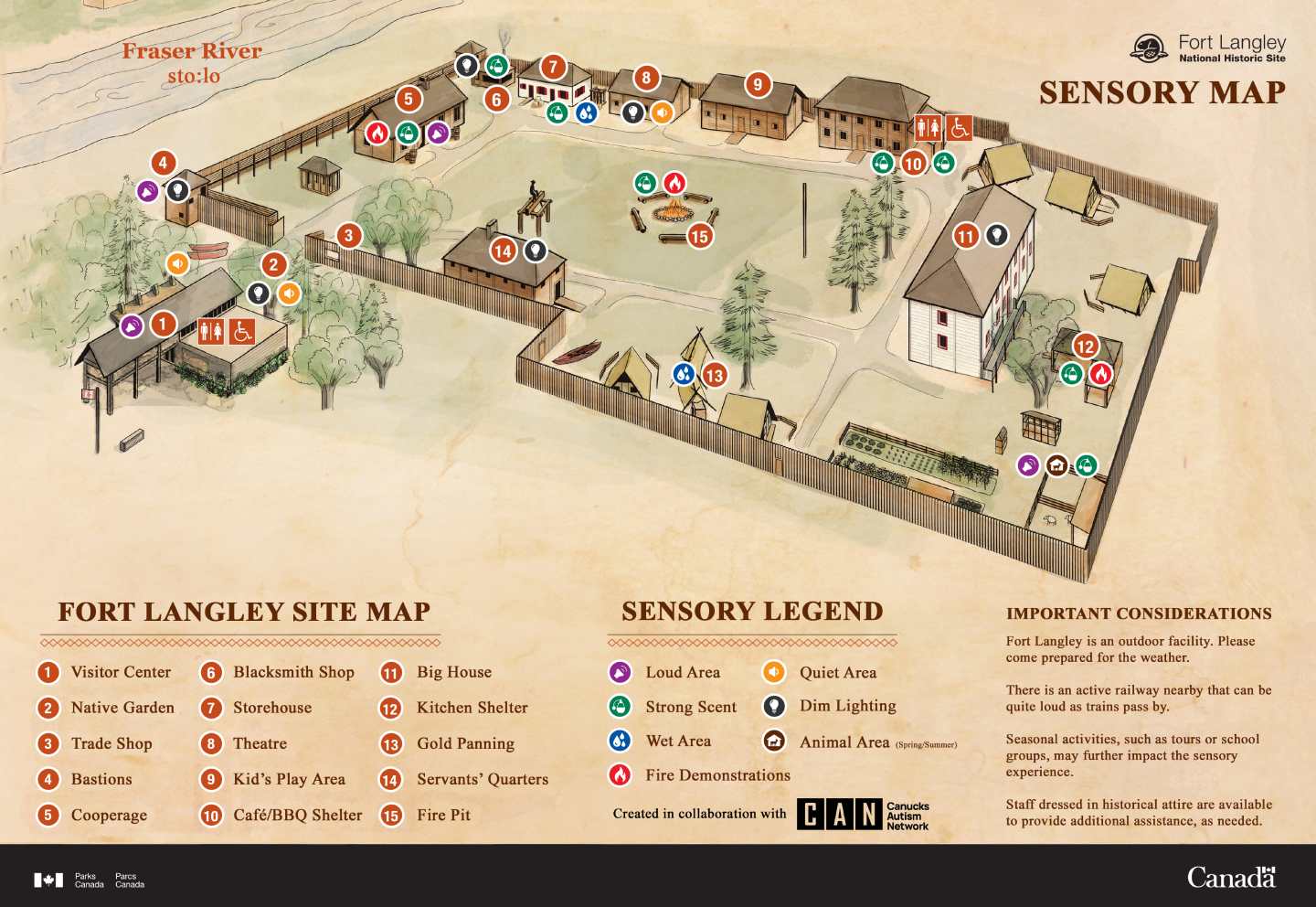
Text version
Tips for Visitors
Fort Langley is an outdoor facility. Please come prepared for the weather.
There is an active railway nearby that can be quite loud as trains pass by.
Seasonal activities, such as tours or school groups, may further impact the sensory experience.
Check the Sensory Map ahead of time
- Review the map to identify areas with strong sensory input (e.g., noise, lights, crowds) and calm zones for breaks.
Consider visiting during quiet hours
- Weekday afternoons tend to be less busy.
Bring sensory aids if needed
- Visitors are welcome to bring noise-cancelling headphones, fidget tools, sunglasses, or comfort items. Noise-reducing headphones are available to borrow at the visitor center.
Plan rest breaks
- Use calm areas marked on the map for quiet time, breaks, or decompression.
Ask for help anytime
- Staff dressed in historical attire are available to provide additional assistance, as needed.
Looking for more resources?
- Check out our visual guide, which is designed in collaboration with Canucks Autism Network to help prepare visitors by increasing predictability and reducing anxiety in a new environment. Use this guide to know what to expect on your first visit to Fort Langley National Historic Site.
Related links
- Date modified :