
Nahnebahwequay National Historic Person (1824-1865)
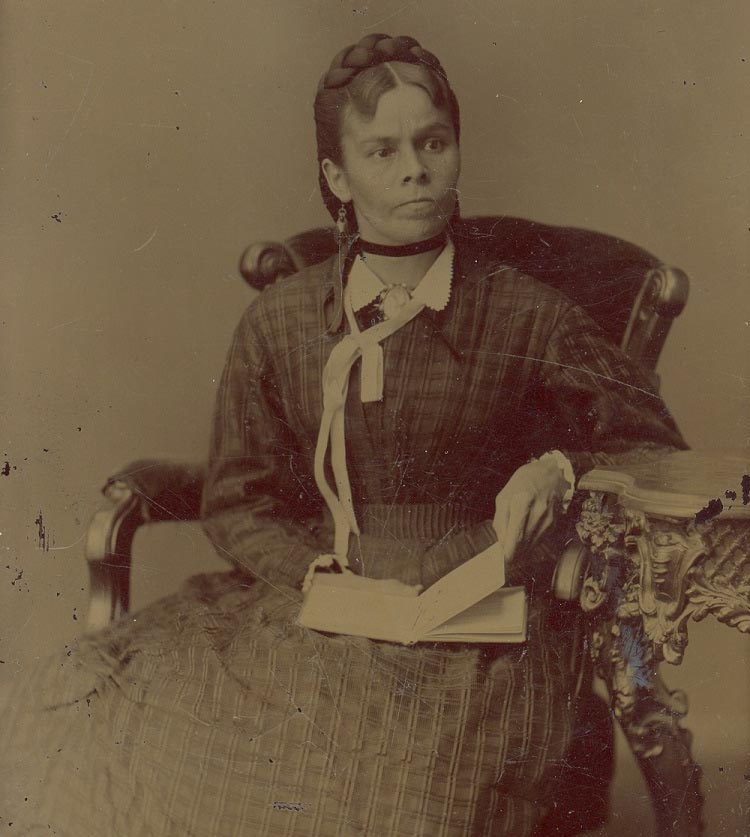
© The Grey Roots Archival Collection
Nahnebahwequay was designated as a national historic person in 2021.
Historical importance: Leader and activist in the fight for First Nation land rights in the mid-19th century.
Commemorative plaque: no plaque installedFootnote 1
Nahnebahwequay (1824-1865)
In the mid-19th century, Nahnebahwequay was a Mississauga activist who fought against colonial policies that dispossessed First Nations from their lands. As a child, she travelled to England with Kahkewaquonaby (also known as Reverend Peter Jones), who petitioned the Crown for First Nations land rights. This trip influenced her later advocacy.
In the late 1850s, she became involved in a land dispute between the Indian Department and Anishinaabe at Nawash, which led to her being elected by community leaders to travel to England to present their case directly to Queen Victoria. On the way, she established international support through public lectures. In 1860, she met with the Queen, who did not act on her request. Upon Nahnebahwequay's return to Canada, she continued to be a voice against colonial land policies, and pushed back against additional legal restrictions placed on Indigenous women.
Early years
Nahnebahwequay was a voice in the fight for First Nations land rights in the mid-19th century, a time when colonial policies sought to forcibly remove and dispossess Indigenous peoples of their lands. Her lifelong leadership and activism was all the more remarkable as she had to contend with the additional legal restrictions colonial governments placed on Indigenous women. Her experience is representative of the efforts of First Nations to gain support and present their grievances to the Crown during the mid-Victorian era. Recognized for her oratory skills, she established international support through public lectures while travelling to London where she advocated for First Nation land rights, taking her appeal directly to Queen Victoria in 1860. By challenging colonial conceptions of Indigenous women, including by refusing to portray Indigenous stereotypes during public lectures, she fought for recognition of Indigenous women's agency in economic and political matters, as was the case in Anishinaabe society.
Land settlement and inequality
In 1824, Nahnebahwequay was born on the Credit River flats to Myawekeshigoqua (Mary or Polly) of the Otter clan and Tyatiquob (Bunch Sunegoo) of the Eagle clan. From the age of two, she lived in the newly established Credit Mission, a settlement of around 200 people which included Ojibwe who had converted to Methodism, missionaries, interpreters, and teachers. Nahnebahwequay, which means Upright Woman, was also given the Christian name Catherine Brown. In 1839 she met and married William Sutton, a Methodist lay preacher from Lincolnshire. Together they started a family, but by the mid-1840s, with the Crown refusing to acknowledge Credit Mission title, they moved to the Saugeen Peninsula along Georgian Bay on Lake Huron, where the Nawash Band allocated her 200 acres (81 hectares) and provided title to the land.
Petitioning to Queen Victoria
The family moved around between 1852 and 1857 to support missions in northern Ontario and Michigan. During that time, however, the Nawash Band faced increasing pressure from the government to cede its land. In 1857, some Band members ceded title to the lands, which the Indian Department prepared to sell. Nahnebahwequay protested the action, along with some other Band members, by claiming that those who signed the treaty had no authority to surrender the land. The Department responded by offering Nahnebahwequay and other families in similar situations the opportunity to purchase their land. When she did this, however, the Indian Department invalidated the purchase by citing a rule preventing the sale of land to “Indians”, while claiming at the same time that her marriage to a white man made her ineligible to claim annuities for the land.
Nahnebahwequay travelled across the Atlantic in the hopes of directly petitioning Queen Victoria. In her writing and speeches following the meeting, she was complimentary of the Queen, but frustrated that there was no resolution to her and her peoples' grievances. Following her return to North America, Nahnebahwequay continued to advocate for First Nations land and fishing rights. Her family was eventually permitted by the Indian Department to purchase the land, but only in the name of William Sutton.
Nahnebahwequay was frustrated by this as other members of the Nawash Band were not granted the same opportunity and she viewed it as the government's attempt to silence her. If that was part of the government's motivation, it was ultimately unsuccessful and she continued to advocate for Indigenous land rights. Following the birth of her last child in 1864, her health steadily declined and she died from an asthma attack in September 1865.
This press backgrounder was prepared at the time of the Ministerial announcement in 2021.
The National Program of Historical Commemoration relies on the participation of Canadians in the identification of places, events and persons of national historic significance. Any member of the public can nominate a topic for consideration by the Historic Sites and Monuments Board of Canada.
- Date modified :