
Everett Baker (1893–1981) National Historic Person
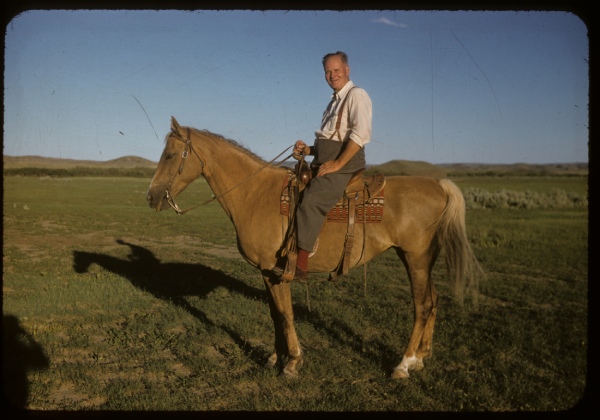
© Saskatchewan History & Folklore Society, Everett Baker Collection
Everett Baker was designated as a national historic person in 2025.
Historical importance: ardent promoter of the co-operative movement in Saskatchewan and early leader for Prairie history and heritage, his photographs remain a valuable visual record of Prairie Canada in the mid-20th century.
Commemorative plaque: no plaque installedFootnote 1
Everett Baker (1893–1981)
An ardent promoter of the co-operative movement in Saskatchewan, Everett Baker served as a “field man” for the Saskatchewan Wheat Pool from 1937–1957, educating communities about co-operatives, and helping them to organize producer and consumer co-operatives and credit unions. Baker took over 10,000 colour slide photographs, illustrating the social fabric of everyday life in rural and small-town Saskatchewan and in Indigenous communities. These were displayed in slide shows across the province, helping to shape the co-operative movement. His photographs remain a valuable visual record of Prairie Canada in the mid-20th century. An early leader for Prairie history and heritage, Baker helped establish the Saskatchewan History and Folklore Society in 1957 and served as its first president until 1963.
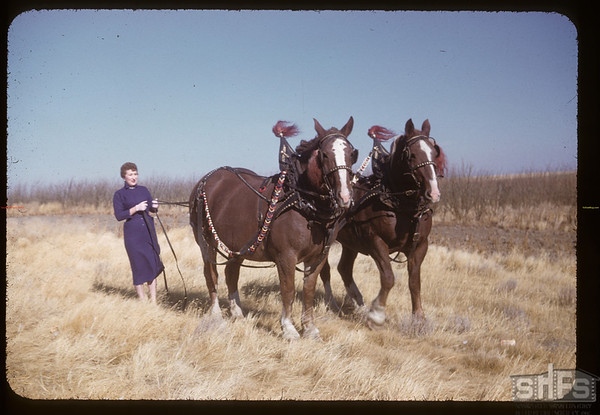
© Saskatchewan History & Folklore Society, Everett Baker Collection / Bracken. Accession # SHFS_0502-M

© Saskatchewan History & Folklore Society, Everett Baker Collection / Admiral. Accession # SHFS_0030
Born in Minnesota and raised on a farm before earning a bachelor’s degree in science at Hamline University, Baker and his wife, Ruth Hellebo, moved to a farm near Aneroid, Saskatchewan in 1918. Baker soon began to play a role in the development of the culture of co-operation in Saskatchewan. That year, he was secretary for the local Grain Growers’ Association, and the following year he was a delegate to the Saskatchewan Grain Growers’ Association. In 1923 he was invited to be a constituency organizer for the Saskatchewan Wheat Pool. In 1924 he sold his farm and helped found the Aneroid Co-operative Association, working as manager of its grocery store. He promoted co-operative organization in his book, Working Together: Each for All and All for Each published in 1930. In 1937 the Saskatchewan Wheat Pool hired Baker as a field representative or field man. Baker and other field men organized new co-operatives, from stores to credit unions to insurance operations. As part of their educational operations, field men showed films from the Wheat Pool collection to communities throughout Saskatchewan.
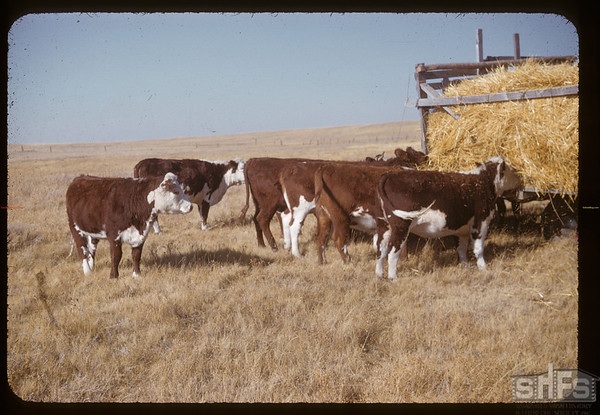
© Saskatchewan History & Folklore Society, Everett Baker Collection / Bracken. Accession # SHFS_0505

© Saskatchewan History & Folklore Society, Everett Baker Collection / Canuck. Accession #SHFS_0715
Starting in 1939 Baker took over 10,000 colour slide photographs of the people and landscapes of Saskatchewan with an intent to document the co-operative movement. His photographs include images of co-operative businesses, organizations, and events, historic sites, agricultural fairs, and small towns, and rural, First Nations, and Métis communities. Baker started showing colour slideshows at his community meetings, which the Wheat Pool adopted as a new form of media presentation. Based at the Wheat Pool headquarters in Regina as the photographer for the Country Organization Department from 1945 to 1948, Baker travelled to other districts in the province to take slide photos and built sets of slides for field men to use in their talks.
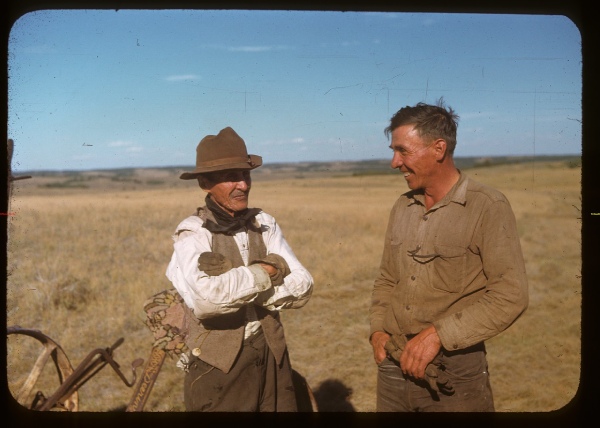
© Saskatchewan History & Folklore Society, Everett Baker Collection / Cypress Hills. Accession # SHFS_1423-X2

© Saskatchewan History & Folklore Society, Everett Baker Collection / North Battleford. Accession # SHFS_5102
Baker also played a leading role in historical commemoration in Saskatchewan. In 1955 he published some of his photographs in Bits of Saskatchewan in Color: Trails and Traces of Rupert’s Land and the North-West Territories as seen from 1940-1955. After retiring from the Wheat Pool in 1957 he served as the first president of the Saskatchewan History and Folklore Society until 1963. In that role, he left an enduring legacy by organizing an initiative to preserve and mark the historical North-West Mounted Police Patrol Trail from Wood Mountain to Fort Walsh, Saskatchewan. Baker died in April 1981 and is buried at Swift Current, Saskatchewan.
“Everett Baker was a master at capturing people and everyday life, whether it was farming, ranching, local communities, landscapes, or the people of Saskatchewan. His colour slides, carefully annotated with the names and places he photographed, are a rare glimpse into everyday life in our province. A consummate organizer, he championed the Co-operative movement, based on his belief that community collaboration was an essential way to improve the economic lives of Saskatchewan people. We are delighted that Mr. Baker is being recognized for his outstanding contributions."
This press backgrounder was prepared at the time of the Ministerial announcement in 2025.
The National Program of Historical Commemoration relies on the participation of Canadians in the identification of places, events and persons of national historic significance. Any member of the public can nominate a topic for consideration by the Historic Sites and Monuments Board of Canada.
- Date modified :