
Hôpital-Général de Québec Monastery National Historic Site
© Ramsay Traquair / Le Monastère des Augustines / Fonds Monastère des Augustines de l'Hôpital Général de Québec / HHG-A-26.23.11.1.21
The Hôpital-Général de Québec monastery was designated as a national historic site in 2025.
Commemorative plaque: no plaque installedFootnote 1
Hôpital-Général de Québec Monastery
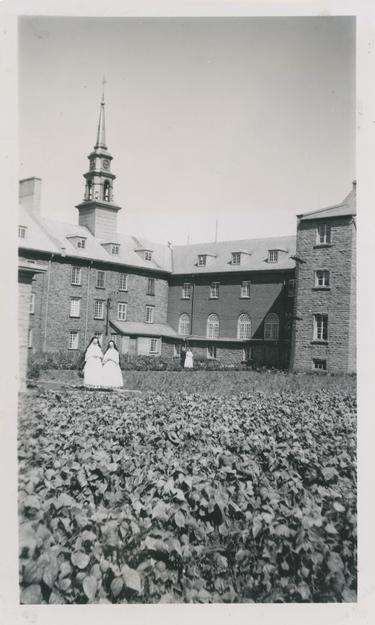
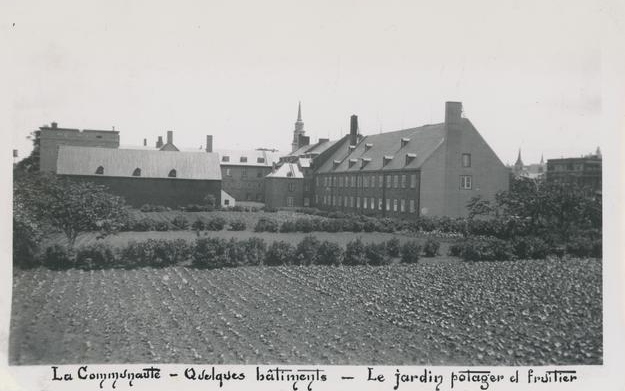
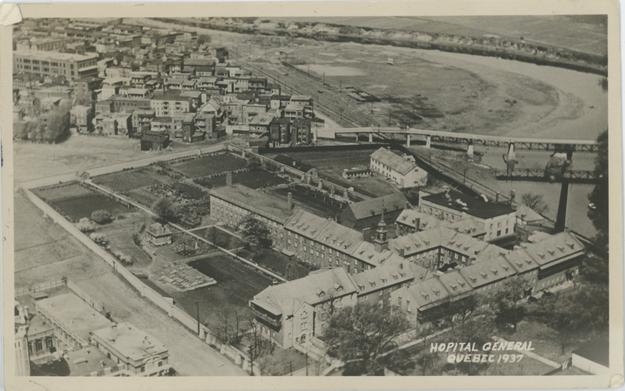
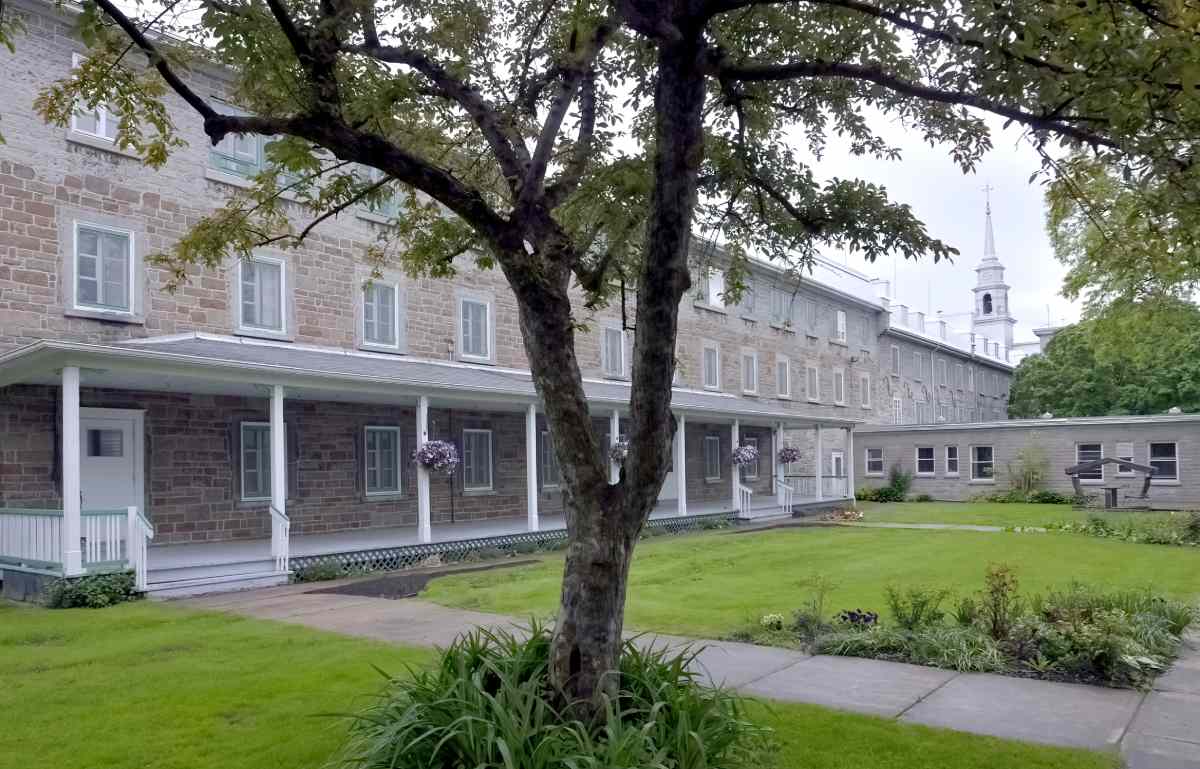
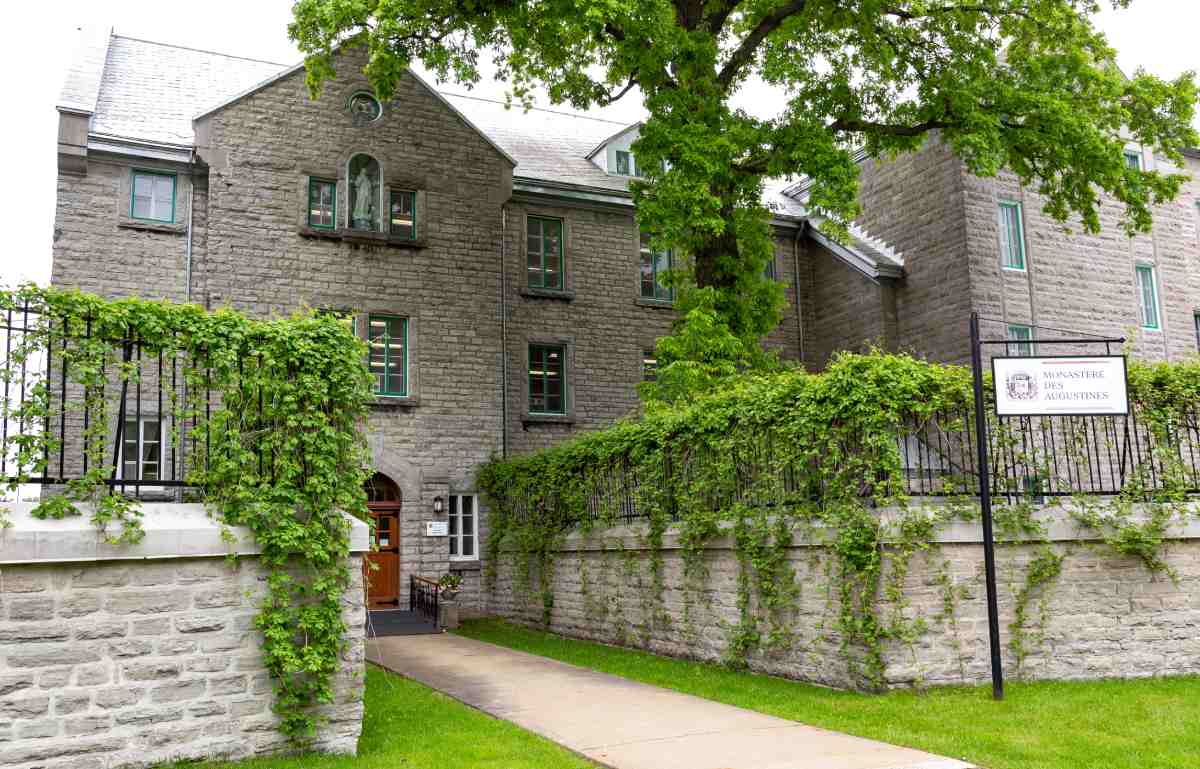
The Hôpital-Général de Québec monastery, located at the intersection of the Saint-Roch and Saint-Sauveur neighbourhoods, is a large convent complex dating back to the 17th century built on the former property of the Récollets. Located on the traditional territories of several First Nations, this convent complex was occupied continuously by the Augustines since 1693 and is an excellent example of their hospital work. The oldest convent in the country, it is of vital importance to Canada’s medical, religious and social history. Inspired by European tradition, the Augustines’ monastery buildings are a remarkable illustration of the evolution of architecture and building techniques in Canada since the second half of the 17th century. Having been spared the bombardments of the Siege of Québec of 1759 and having never experienced a major fire, the buildings are still in their original condition. The ensemble of buildings is in a remarkable state of conservation, constituting a site of architectural and artistic heritage preservation of outstanding importance.
The Hôpital-Général de Québec monastery was built on the former domain of the Récollets. After arriving in New France in 1615, the Récollets established their convent on the bank of the Saint-Charles River in 1620. After an exile forced by the capture of Québec by the Kirke brothers on behalf of England, the Récollets retook possession of their property in 1670 and built a church (1671–1673) and a new stone monastery (1680–1684). In 1692, Bishop Jean-Baptiste de La Croix de Chevrières de Saint-Vallier (1653–1727) acquired the Récollets’ monastery and founded a general hospital, open to the poor, the sick, the infirm, and the aged. In 1693, he entrusted management of this hospital to the Augustines de la Miséricorde de Jésus, a community of cloistered nursing sisters who were already responsible for the Hôtel-Dieu de Québec. The Hôpital-Général de Québec monastery served as a military hospital during the Seven Years’ War, particularly during the Siege of Québec (1759) and the Battle of Sainte-Foy (1760), treating all injured soldiers, allies and enemies alike. In addition, the monastery was occupied by New England revolutionaries in 1775 and became a place of refuge for victims of large fires in the adjacent neighbourhoods of Saint-Roch (1845) and Saint-Sauveur (1866).
© Le Monastère des Augustines / Fonds Monastère des Augustines de l'Hôpital Général de Québec / HG-A-26.22.11.1.10
© W. B. Edwards / Le Monastère des Augustines / Fonds Monastère des Augustines de l'Hôpital Général de Québec / HG-A-26.22.11.1.6
© Le Monastère des Augustines / Fonds Monastère des Augustines de l'Hôpital Général de Québec / HG-A-26.25.0.2.20
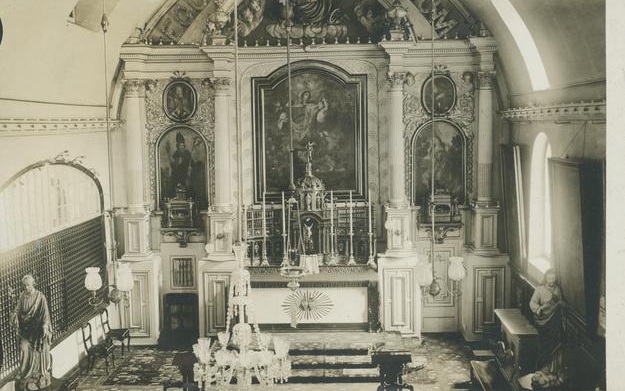
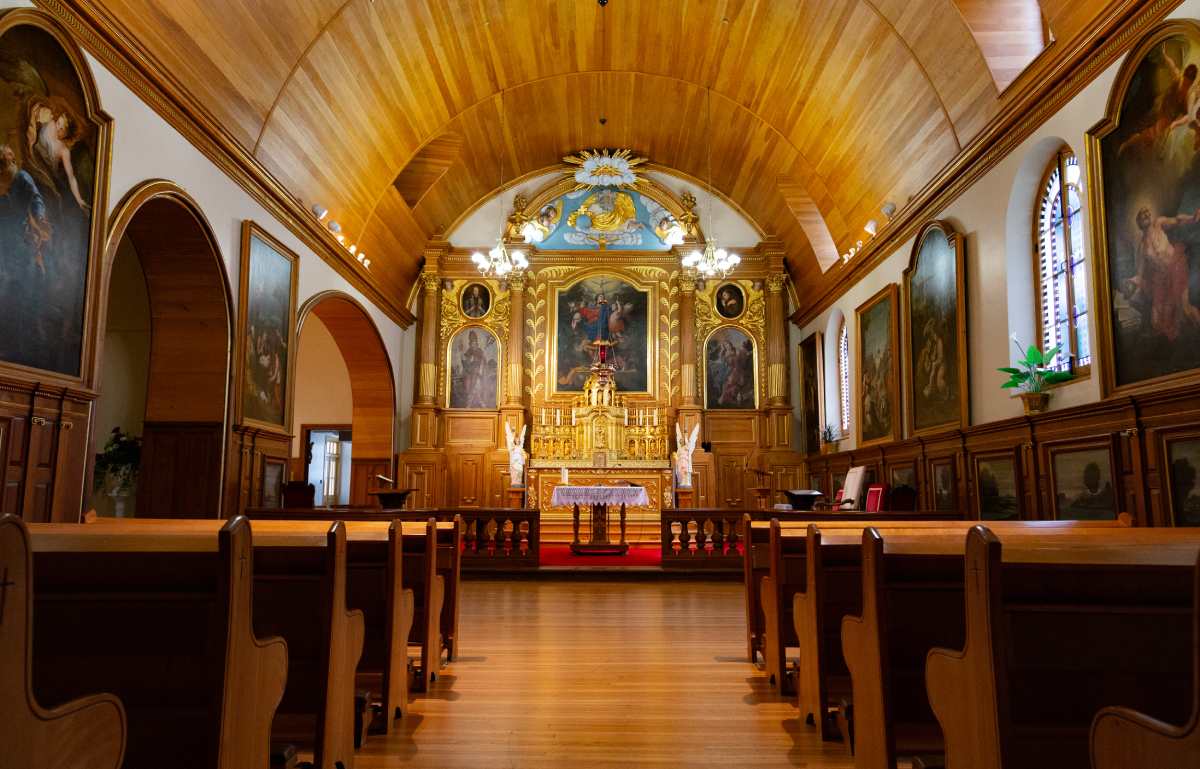
The complex consists of the 11 wings of the convent built between 1671 and 2002 along with the gardener’s house (1840) and its outbuilding. In addition to these buildings, there are several large landscaped areas, a garden, and three cemeteries. The irregularly-planned architectural complex comprises several wings corresponding to the former Hôpital-Général and the Augustines’ monastery: only the part corresponding to the monastery, still owned by the Augustines, has been designated. Certain parts of the complex reflect the original convent decor, including the Récollets’ refectory building, with its pine panelling, and the Notre-Dame-des-Anges chapel, with its wooden arched ceiling, its retable (behind which are the remains of a half-timbered wall, a very rare illustration of the layout of Récollet churches), and its wooden panels decorated with painted landscapes and works of art.
In 1999, the nuns divested themselves of the section of the building used as a general hospital. The location became a long-term care home managed by the Government of Quebec.
© Monastère MSA / Monastère de l'Hôpital-Général de Québec
© Étienne Richard / Monastère de l'Hôpital-Général de Québec
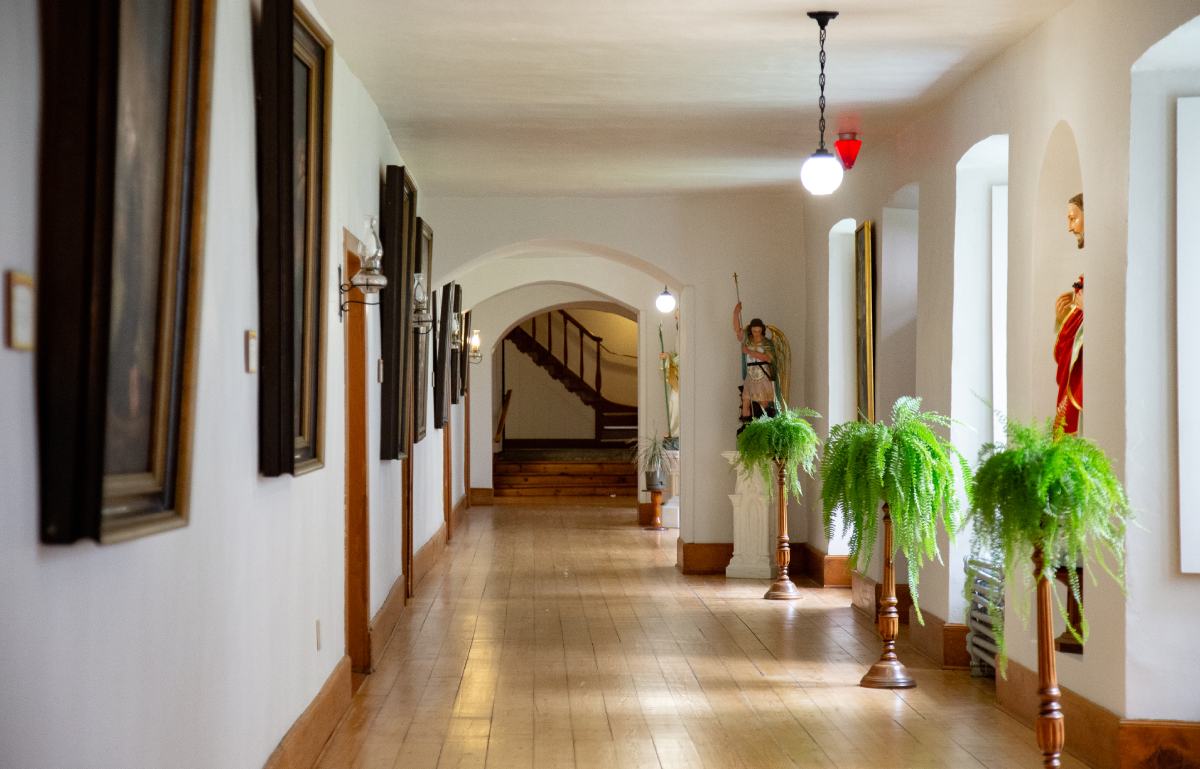 First wing of the community, 2019
© Étienne Richard / Monastère de l'Hôpital-Général de Québec
© Étienne Richard / Monastère de l'Hôpital-Général de Québec
“Recognizing the Hôpital Général de Québec monastery as a national historic site of Canada salutes the perseverance and commitment of the many generations of Augustines who have cared for the most disadvantaged members of our society since 1693. As its builder and guardian, our community of caregivers is conscious of the tremendous historical and heritage value of the monastery, which began as a Récollet convent. This recognition is essential to preserve the site for future generations."
This press backgrounder was prepared at the time of the Ministerial announcement in 2025.
The National Program of Historical Commemoration relies on the participation of Canadians in the identification of places, events and persons of national historic significance. Any member of the public can nominate a topic for consideration by the Historic Sites and Monuments Board of Canada.
- Date modified :