
Queenston-Chippawa Hydro-Electric Development National Historic Site
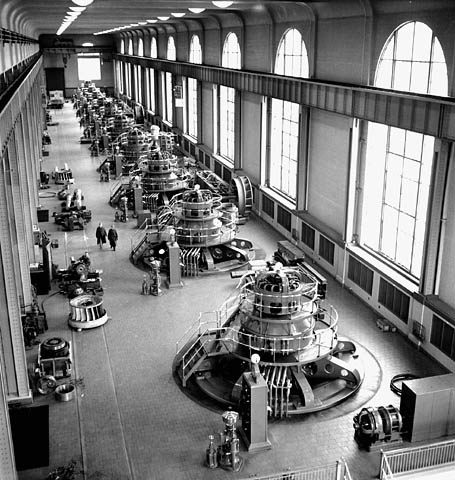
© Ronny Jacques / National Film Board of Canada. Photothèque / Library and Archives Canada
The Queenston-Chippawa Hydro-Electric Development was designated as a national historic site in 1990.
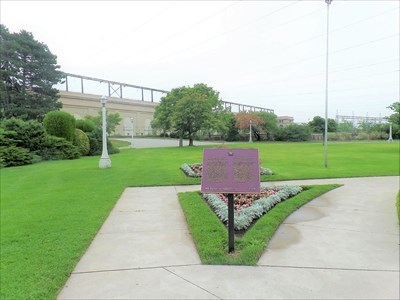
Commemorative plaque: Queenston, Ontario
Queenston-Chippawa Hydro-Electric Development
This generating station, built between 1917 and 1922, was considered the world’s first true hydroelectric megaproject. Its massive scale required the use of construction equipment, power conversion units, and a power canal of an unprecedented magnitude. The Hydro-Electric Power Commission of Ontario was responsible for this feat of engineering. Under the chairmanship of Sir Adam Beck, it expanded the plant’s capacity to supply inexpensive power to towns and cities, fuelling the growth of industry, while supporting rural electrification. The Queenston-Chippawa Development was renamed the Sir Adam Beck Generating Station in 1950.
Description of historic place
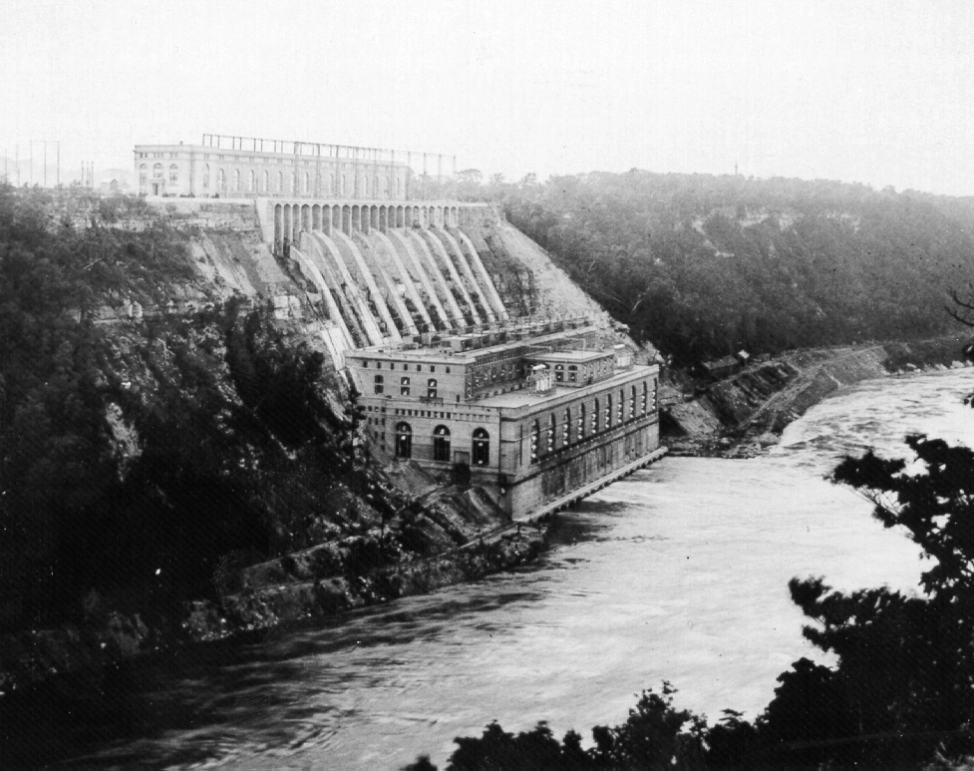
Queenston-Chippawa Hydro-Electric Development National Historic Site of Canada is located at Queenston, Ontario, at the Niagara Falls. Built between 1917-1925, it was the first large hydro-electric project in the world, and was created by Ontario’s Hydro-Electric Power Commission (HEPC). The HEPC created the project in response to increasing urban and industrial demands for more electrical power in Toronto and southwestern Ontario. The site consists of a very large crescent-shaped site stretching approximately 22 kilometres from the mouth of the Welland River where it meets the Niagara River, through the city of Niagara Falls to the hydro-electric generating station situated on the Niagara River between the Whirlpool and Queenston. Official recognition refers to the entire development associated with the power project from its intake at the junction of the Welland River and Niagara River to the outtake at the Sir Adam Beck No. 1 Generating Station near Queenston including the gatehouse, penstocks, and powerhouse on their footprints.
© Parks Canada
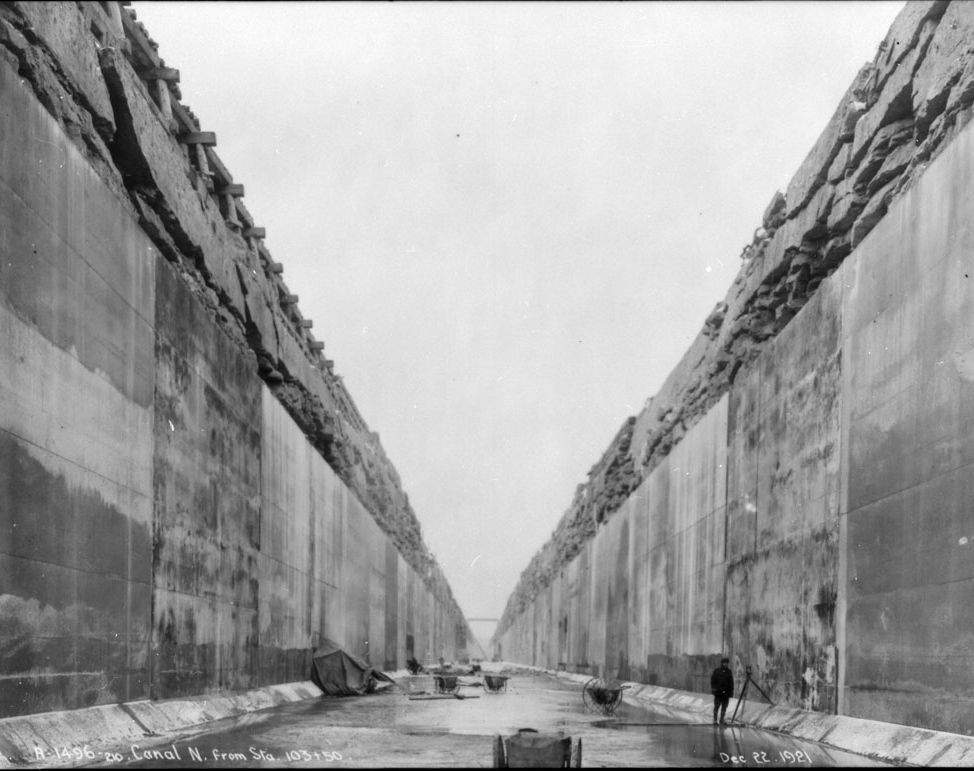
© Canada Department of Interior / Library and Archives Canada / PA-043427
Heritage value
Queenston-Chippawa Hydro-Electric Development was designated a national historic site of Canada in 1990 because:
- it claimed to be the first true hydro-electric mega-project in the world the design of the Queenston-Chippawa installation presented unique problems and required construction equipment, power conversion units, and a power canal of a size not seen prior to their use at Queenston-Chippawa.
© Parks Canada
By 1913, there was an increasing industrial and urban demand for more electrical power in Toronto and southwestern Ontario. As a result, Ontario’s Hydro Electric-Power Commission began to consider proposals for a possible generating station at Niagara Falls. After consideration, the HEPC agreed to a proposal that utilized the watercourse of the Welland River, the building of a power canal around the city of Niagara Falls, and the building of a generating station on the Niagara River between the Whirlpool and Queenston. The project began in 1917 with the passing of “The Ontario Niagara Development Act” and the first unit of the development went into service in 1922.
The design of the Queenston-Chippawa Hydro-Electric Development presented many unique challenges. The size of the development required construction equipment and power conversion units of a size not seen prior to their use at Queenston-Chippawa. In addition, the 13.2 kilometre long power canal had to meet specific design characteristics rarely found in ship canals. When the installation was completed in 1925, the Queenston-Chippawa Hydro-Electric Development was the largest hydroelectric generation project in the world.
Sources: Historic Sites and Monuments Board of Canada, Minutes, November 1990; September 2009.
The National Program of Historical Commemoration relies on the participation of Canadians in the identification of places, events and persons of national historic significance. Any member of the public can nominate a topic for consideration by the Historic Sites and Monuments Board of Canada.
- Date modified :