
The 1931 Estevan Strike and Black Tuesday National Historic Event
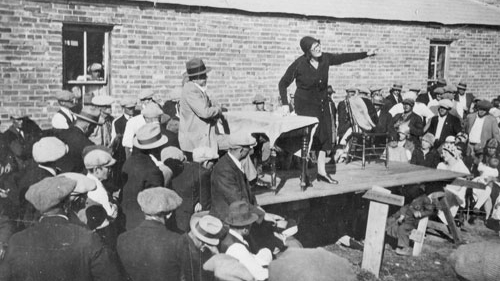
© The Provincial Archives of Saskatchewan, R-A32584
The 1931 Estevan Strike and Black Tuesday was designated as a national historic event in 2026.
Historical importance: 30-day strike emblematic of the deep divide between Canada’s struggling workers and company owners during the 1930s and the barriers to unionization; riot in the polarized context of the Depression that endures as a tragic legacy of this decade.
Commemorative plaque : no plaque installedFootnote 1
The 1931 Estevan Strike and Black Tuesday
In September 1931, coal miners in Bienfait, Saskatchewan, struck when mine owners refused to recognize the union that represented them in their concerns over poor wages and harsh working conditions, which had been exacerbated by the severe economic dislocation of the Great Depression. The 30-day strike is emblematic of the deep divide between Canada’s struggling workers and company owners during the 1930s and the barriers to unionization. A motor cavalcade organized by strikers and their supporters to draw attention to their struggle turned deadly in Estevan when police officers shot and killed three miners and injured 23 others. Known as Black Tuesday, this riot highlighted the hopelessness experienced by the workers and their families and the risk of physical confrontation and police violence in the polarized context of the Depression, and endures as a tragic legacy of this decade.
Coal miners working in the Souris River valley had been enduring poor and unfair working conditions and wages for years before the economic crisis of the Great Depression. By 1931, these concerns led coal miners in Bienfait, Saskatchewan to appeal directly to mining companies operating across the Souris coalfields for improvements to wages, working conditions, and housing. As their concerns went unaddressed, miners turned to the Mine Workers Union of Canada to pursue collective negotiations with their employers. Mine operators refused to recognize the union or engage in negotiations and so, after negotiations failed, coal miners ceased work on 8 September 1931, formally declaring a strike.
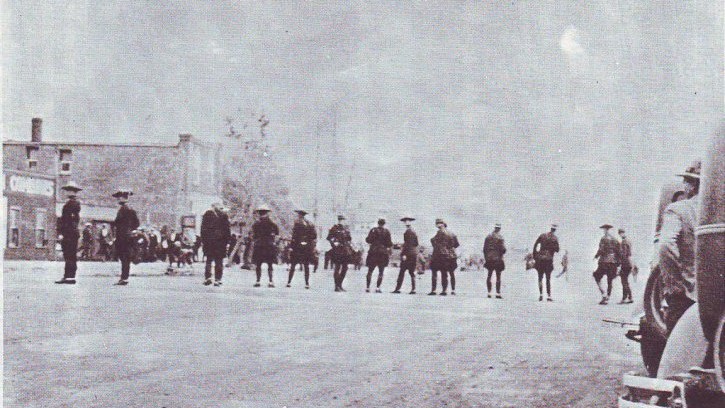
© The Provincial Archives of Saskatchewan, R-B14216 (1)-(5)
On 29 September 1931, miners and their families organized a cavalcade of cars and trucks intended to drive through the town of Estevan to draw public attention to their grievances. As the procession entered Estevan, a police roadblock prevented the motor cavalcade from following its intended route, bringing the vehicles to a halt. Amid an increasingly chaotic confrontation between demonstrators and local police, City of Estevan Police Chief A.E. McCutcheon fired a fatal shot that killed coal miner Nick Nargan. Members of the Royal Canadian Mounted Police subsequently opened fire as the violence escalated. Over approximately 15 minutes, two additional miners, Peter Markunas and Julian Gryshko, were fatally shot and 23 others were injured in what became known as Black Tuesday.
The aftermath of Black Tuesday was marked by profound grief and a fierce struggle for justice. The funerals for the slain miners became solemn expressions of solidarity, underscoring both collective mourning and the tensions surrounding accountability for the violence. Meanwhile, more than 30 individuals faced criminal charges related to the incident in Estevan, and their trials highlighted a broader conflict between the working class and the state over unionism in the coalfields of Saskatchewan. A provincial royal commission was established, which provided a forum for miners to present their grievances while offering only limited and temporary resolutions. Although the 30-day strike ended in October 1931 following a temporary agreement, the strike and its aftermath continue to shape both public memory and the legacy of labour relations during the Great Depression.
This press backgrounder was prepared at the time of the Ministerial announcement in 2026.
The National Program of Historical Commemoration relies on the participation of Canadians in the identification of places, events and persons of national historic significance. Any member of the public can nominate a topic for consideration by the Historic Sites and Monuments Board of Canada.
- Date modified :