
The Establishment of the High Commission of Canada in the United Kingdom National Historic Event

© Canada. Dept. of External Affairs / Library and Archives Canada / PA-127558 / Copyright: Expired
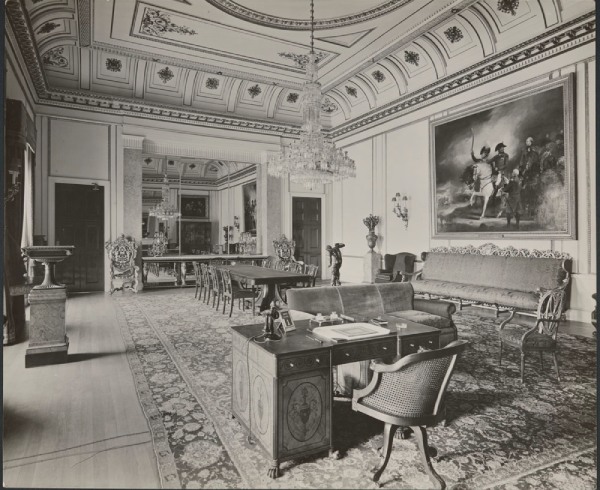
© Bedford & Strand Co. / Library and Archives Canada / e011896963
The Establishment of the High Commission of Canada in the United Kingdom was designated as a national historic event in 2025.
Historical importance: Canada’s oldest diplomatic posting and the first Commonwealth high commission, important chapter in Canada’s diplomatic history, a symbol and a gathering place for Canadians overseas.
Commemorative plaque: will be installed at Canada House, Trafalgar Square, London, United KingdomFootnote 1
The Establishment of the High Commission of Canada in the United Kingdom
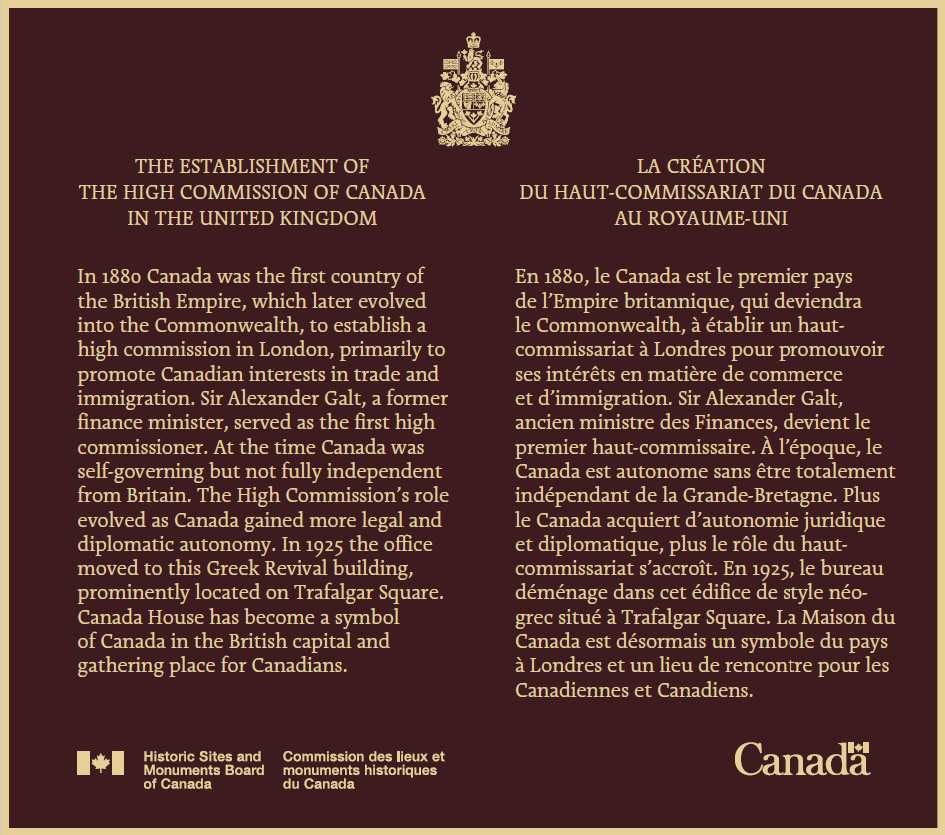
In 1880 Canada was the first country of the British Empire, which later evolved into the Commonwealth, to establish a high commission in London, primarily to promote Canadian interests in trade and immigration. Sir Alexander Galt, a former finance minister, served as the first high commissioner. At the time Canada was self-governing but not fully independent from Britain. The High Commission’s role evolved as Canada gained more legal and diplomatic autonomy. In 1925 the office moved to this Greek Revival building, prominently located on Trafalgar Square. Canada House has become a symbol of Canada in the British capital and gathering place for Canadians.
The Establishment of the High Commission of Canada in the United Kingdom
The establishment of the High Commission of Canada in the United Kingdom (UK) in 1880 was an important chapter in Canada’s diplomatic history. Canada was the first country in the British Empire, which later evolved into the British Commonwealth of Nations, to establish a high commission. At the time, Canada was self-governing but not fully independent from Britain as it had no international status and no foreign policy of its own. The role of the High Commission, Canada’s oldest diplomatic posting, evolved as Canada gained more legal and diplomatic autonomy. Since its informal beginnings in 1869 and the appointment of the first high commissioner in 1880, the office has promoted Canadian interests in trade and immigration. Its move to Canada House on Trafalgar Square in 1925 consolidated the Canadian presence, giving it a prominent visibility. Over time, Canada House has become a symbol of Canada in the British capital, a gathering place for Canadians living or travelling overseas, and a showcase for Canadian art, culture, and heritage.

Left to right: His Excellency, the Honourable Ralph E. Goodale, PC, High Commissioner for Canada in the United Kingdom; Ron Hallman, Parks Canada President and Chief Executive Officer
© High Commission of Canada in the United Kingdom
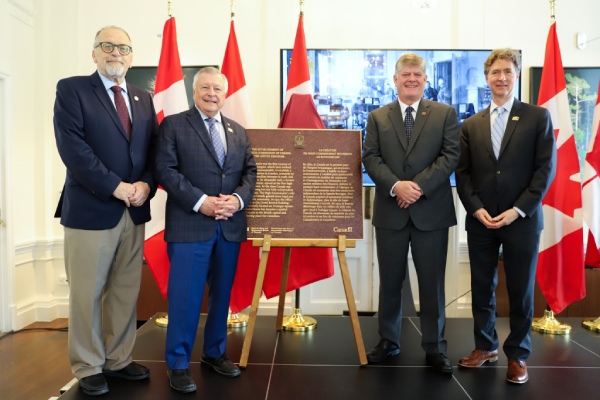
Left to right: Bernard Thériault, Board Chair and Representative for New Brunswick, Historic Sites and Monuments Board of Canada; His Excellency, the Honourable Ralph E. Goodale, PC, High Commissioner for Canada in the United Kingdom; Ron Hallman, Parks Canada President and Chief Executive Officer; His Excellency, Robert A. Fry, Deputy High Commissioner for Canada in the United Kingdom
© High Commission of Canada in the United Kingdom
When the British North America Act created the Dominion of Canada in 1867 and outlined its structure of government, Britain retained responsibility for foreign relations, including diplomacy and international trade. Largely autonomous in terms of its domestic affairs, the new Dominion was firmly within the British Empire with no international status, no foreign policy of its own, and no authority to establish diplomatic missions. From 1869, Canada was represented informally in London by Sir John Rose, a leading corporate lawyer, banker, and former finance minister in the new Canadian federal government. Recognizing the need for formal representation, the Canadian government created the position of high commissioner in 1880. Although the position had no formal diplomatic status nor the right to negotiate directly with foreign powers, the high commissioner represented Canadian commercial and financial interests, promoted emigration and trade, and managed Canada’s relationship with Britain. This distinctive title, born of the unique status of Canada within the British Empire in the immediate post-Confederation period, would eventually become standard among Commonwealth countries.
The prominence of the three men who served as high commissioners from 1880 to 1914—Sir Alexander Galt, Sir Charles Tupper, and Sir Donald Smith (Lord Strathcona from 1897)—helped to establish and even elevate the role, achieving a de facto diplomatic status. The First World War resulted in a significant shift in Canada’s relationship with Britain, and Canada emerged from the conflict with greater autonomy and international presence. On June 29, 1925, King George V and Queen Mary opened the newly renovated Canada House on Trafalgar Square, which became the new home of the High Commission of Canada. Its stature and proximity to the centres of British decision-making reflected Canada’s growing independence and important role within the British Empire, and the Commonwealth as of 1926.
Today, the High Commission promotes Canada’s interests in the UK in a variety of ways—representing the Canadian government to the UK; facilitating bilateral relations in areas such as trade, military and security, climate action, science, and innovation; providing immigration and visa services as well as consular services to Canadians in the UK; and promoting Canadian culture, values, and government priorities.
“Canada House is pleased that the Government of Canada has recognized the national historic significance of the establishment and growth of the High Commission of Canada in the United Kingdom. This special recognition underscores the important role that Canada’s evolving diplomatic presence in U.K. has played in representing our country on the global stage since 1869. It acknowledges the extraordinary dedication and hard work of all our Canada-based and locally-engaged staff down through the years, and adds to our celebration this year of the 100th anniversary of Canada House in its current prestigious location in the heart of London on Trafalgar Square.”
This press backgrounder was prepared at the time of the Ministerial announcement and plaque unveiling in 2025.
The National Program of Historical Commemoration relies on the participation of Canadians in the identification of places, events and persons of national historic significance. Any member of the public can nominate a topic for consideration by the Historic Sites and Monuments Board of Canada.
- Date modified :