
Moose
Wapusk National Park
In a place home to three different species of bears, it's tough competition to claim to be the giant of Wapusk National Park. Canada’s iconic moose (Alces alces) easily claims this title. These massive members of the deer family can be found in all ecosystems of Wapusk National Park. They typically wander alone, foraging on both the land and aquatic vegetation of the park. Moose can be over three metres tall, but despite towering over predator species in Wapusk National Park, moose can be preyed upon by any of the three bear species. Moose are also more commonly preyed on by the wolves that also call the park home. The long legs of the moose allow it to easily navigate through Wapusk’s ecosystems in all seasons. Long legs are ideal for trudging through thick snowbanks in the wintertime or sloppy fens in the summertime.
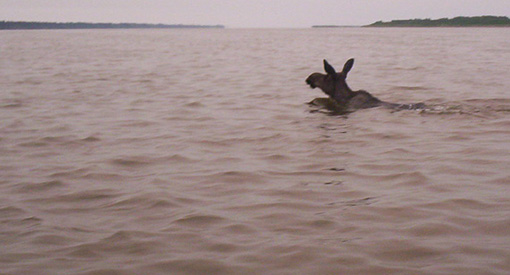
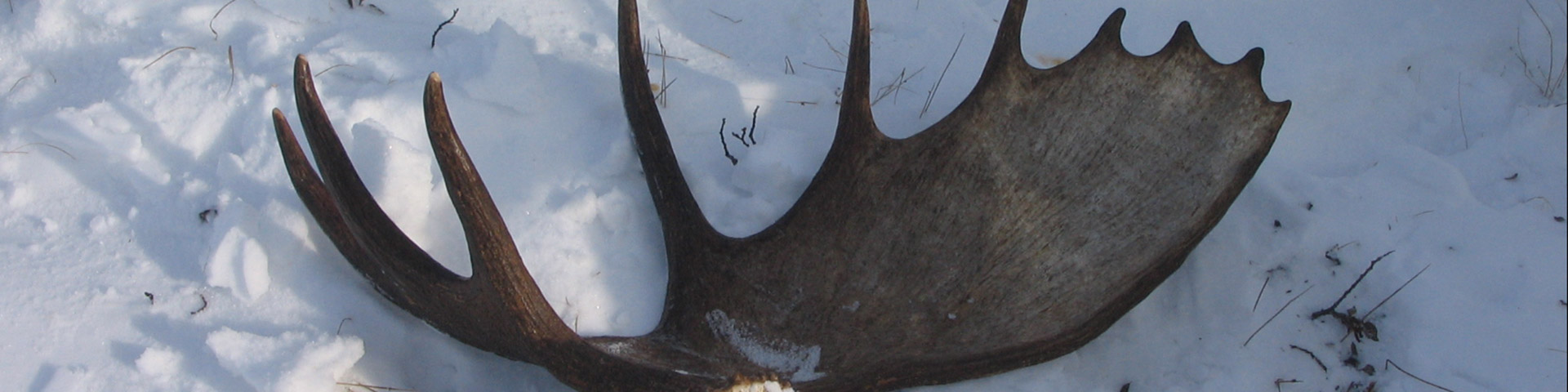
Cows and calves are the exception to the lonely lifestyle of the moose. Young calves stay with their mothers for one year after birth. Mating season takes place through September and October. Males and females can be heard from kilometres apart making loud calls to each other. Bulls may spar during this time by smashing large antlers together. These antlers are a telling characteristic of moose, as they are broad and flat, different from the tall, skinny ones possessed by most other species in the deer family. Only bull moose grow antlers, and they naturally fall off after mating season; a new pair is grown each year. The other identifying characteristic is a strip of fur, called a dewlap, hanging from the moose’s neck.
Moose are of cultural significance in the North. Despite being found across the circumpolar arctic, they are undeniably a Canadian icon. In the region now designated as Wapusk National Park, moose were traditionally harvested by both Dene and Cree people. Moose continue to be an important resource and continue to be harvested outside of the park. In some regions of Manitoba, moose populations are declining. However, the population that live in Wapusk National Park and its greater ecosystem appears stable. Climate change and human industry remain the biggest threats to the moose population.
Related links
- Date modified :