
Remote camera images
Waterton Lakes National Park

Many people visit Waterton Lakes National Park hoping to see wildlife. Sometimes they are lucky, but often they leave without seeing the animals they were looking for.
Park biologists face the same problem when attempting to monitor wildlife populations: it is hard to count animals when you don’t see them.
One technique used to overcome this problem is ‘camera trapping’.
This data helps the park plan for the type and amount of activity on a trail. All pictures of people are deleted from our computers as soon as the type of activity and number of users are recorded.
Camera trapping
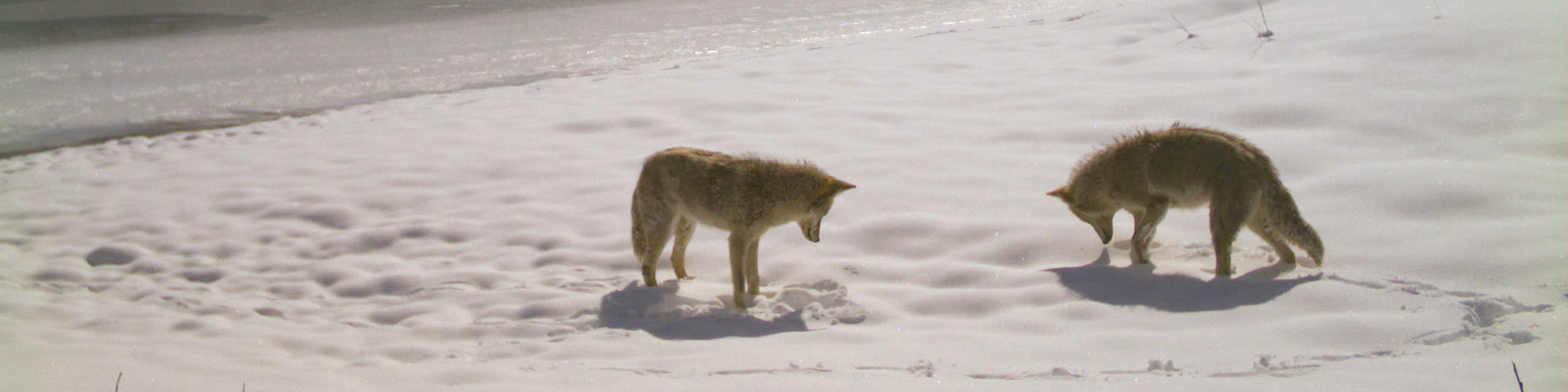
Camera trapping uses specially-designed digital cameras placed at strategic locations in the park, and the animals take their own pictures!
These cameras are usually attached to trees along a trail and when an animal walks by it triggers an infrared motion detector, which in turn triggers the camera shutter. There are about 25 remote cameras currently set up in the park.
Biologists download the images from the camera’s memory card which details the recording location, date and time. The images are classified by species observed, age and sex of the animal (if discernible), and number of animals in the group. This information is maintained in a database of wildlife observations and used to monitor wildlife populations.
These cameras are also used to document the number and type of trail users in the park. While traditional infrared trail counters can tell that something passed along a trail, they don’t establish whether it was a hiker or a deer that triggered the counter. A camera records whether it was an animal or a human, and whether the person was riding a horse or a bike, or using skis or snowshoes, etc.
We maintain the cameras year round, but some camera locations are just too difficult or hazardous to access in the winter due to avalanche danger so are left until spring.
These cameras offer a unique view into the world of wild animals. Please explore these pages to enjoy some of the photos we have captured, and check back frequently as these images will be updated.
Featured image galleries
Related links
- Date modified :