
Power down. Look up!
Jasper National Park's Dark-Sky Preserve
Jasper National Park
Free admission and discounted overnight stays
The Canada Strong Pass is back! Enjoy free admission and 25% off camping and overnight stays with Parks Canada from June 19 to September 7, 2026.
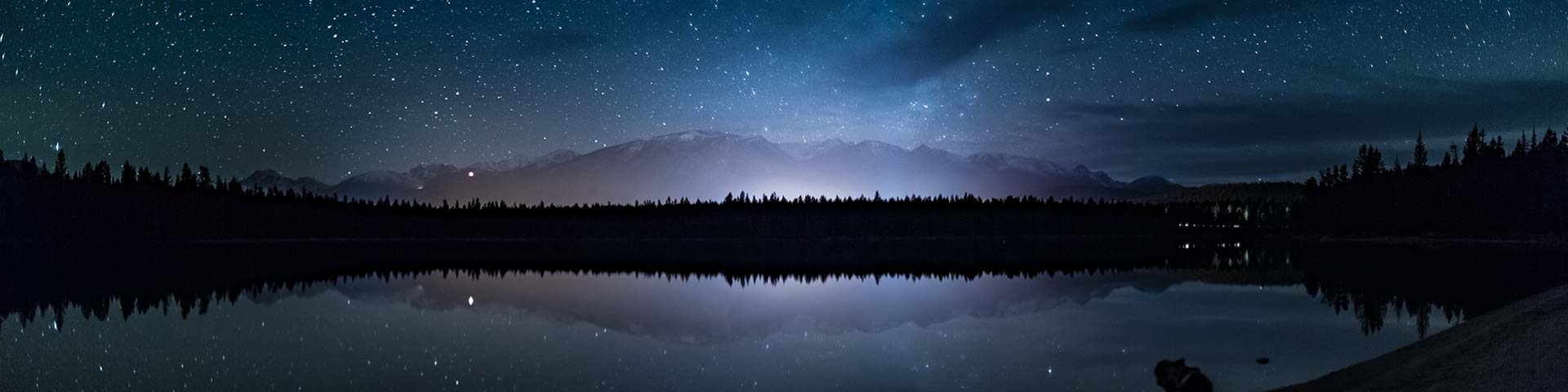
Are you an avid stargazer or do you simply enjoy looking up into the night sky? Jasper National Park offers breathtaking dark-sky views 365 days a year.
A UNESCO World Heritage Site, Jasper National Park is over 11,000 km² in size and is the second largest Dark-Sky Preserve in the world. Stars stretch from horizon to horizon. Every October, the park celebrates Dark-Sky Month. That makes October a great time to visit the park and take in the festivities at the annual Jasper Dark-Sky Festival.
Jasper Dark-Sky Festival
Each October, Tourism Jasper’s Dark-Sky Festival celebrates the night sky with guest speakers, science demonstrations, kids’ activities and spectacular star parties. Tourism Jasper’s website has more information about the Dark-Sky Festival, including a full schedule of events.
What exactly is a Dark-Sky Preserve?
On March 26, 2011, after years of work with Parks Canada, local residents, and astronomy fans, the Royal Astronomical Society of Canada designated Jasper National Park a Dark-Sky Preserve. Dark-Sky Preserves promise to protect the night sky and reduce or remove light pollution.
Jasper National Park, its residents, in-town businesses, and outlying commercial accommodations, are taking extra steps, such as replacing older streetlights with downward-facing fixtures and improving Parks Canada operations, to lessen impact on the night sky. The Dark-Sky designation and responsibilities help conservation efforts by protecting nocturnal animals’ night habitats. Programs throughout fall and winter highlight the importance of dark-sky conservation and raise awareness about reducing light pollution.
Cultural and Indigenous connections
For thousands of years, Indigenous Peoples have looked to the skies for navigation, storytelling, ceremony and art. Throughout the year and during the Dark-Sky Festival, visitors can learn about traditional constellations and legends from local Knowledge Holders, adding a cultural layer to the stargazing experience.
Photo gallery


Astronomy highlights
Every season brings its own celestial wonders to Jasper’s skies.
In spring, Orion sets early while the constellations Leo and Virgo take centre stage. This is also the time to catch the Lyrids meteor shower streaking across the darkness, typically between April 16 and 25.
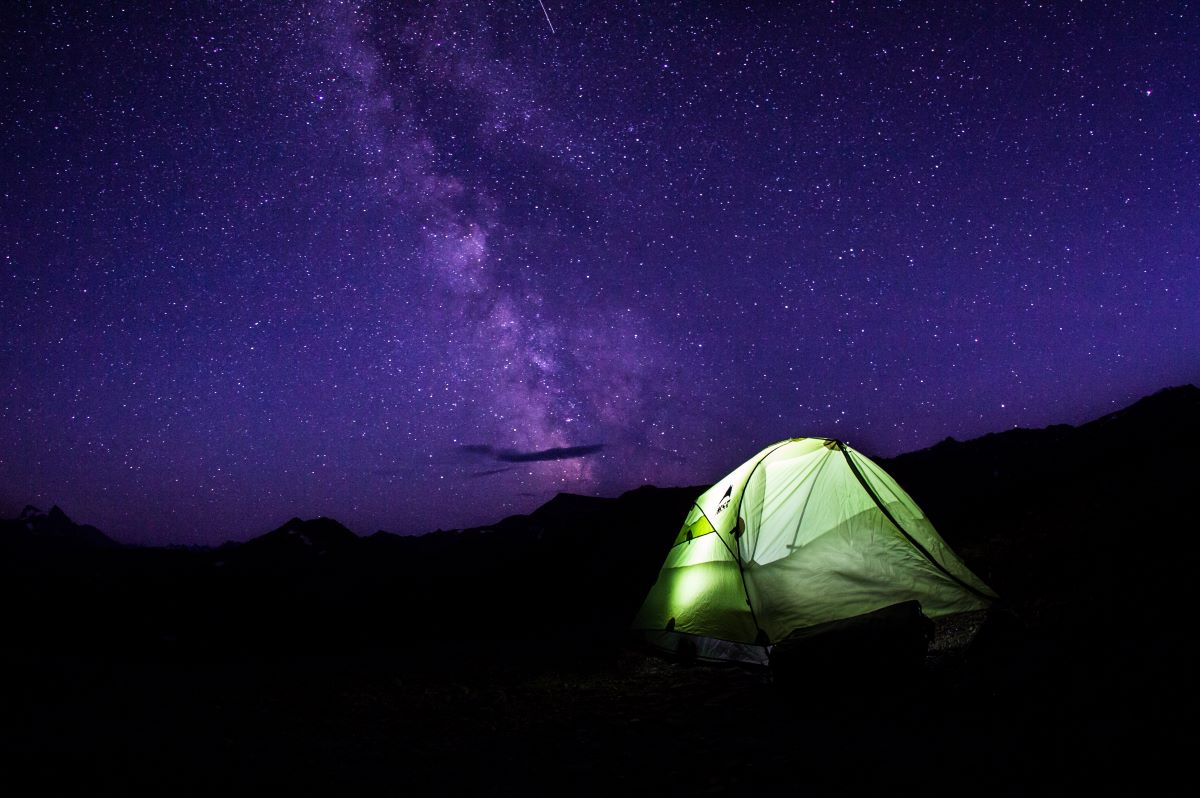
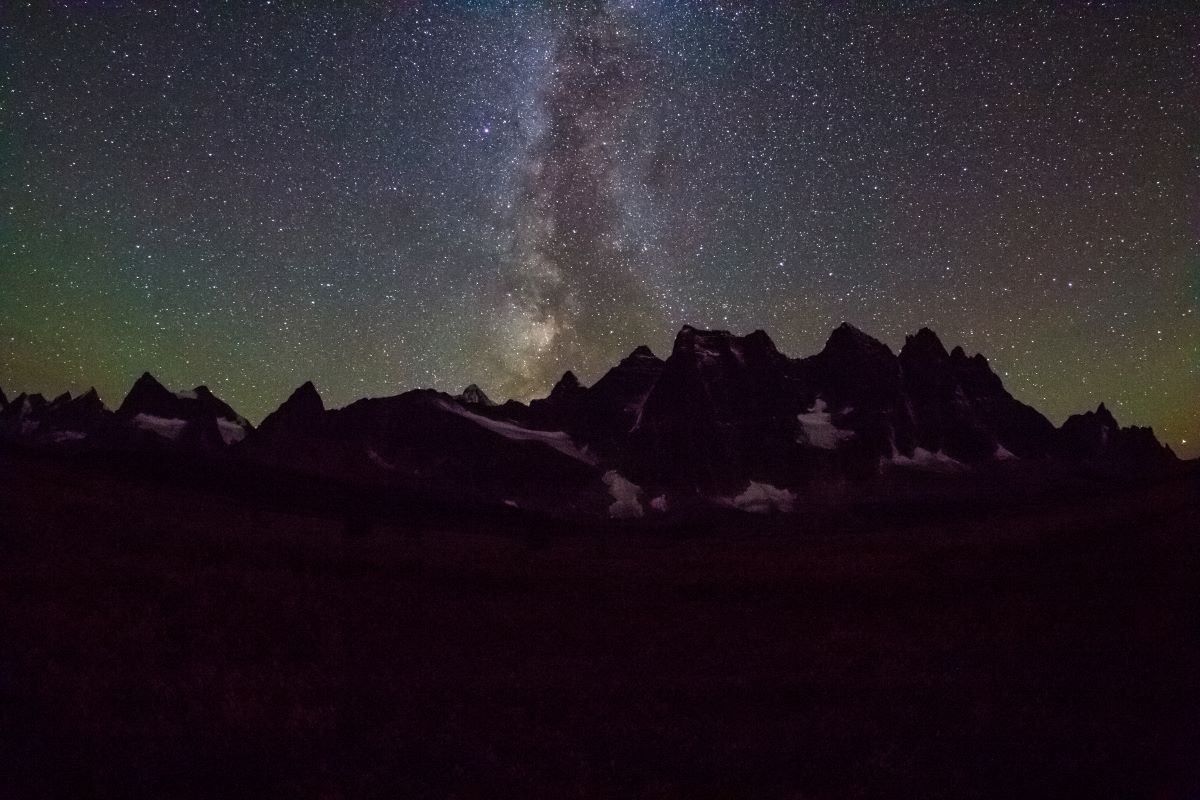
Summer belongs to the Milky Way. Its dense centre arches overhead from July through September, offering unforgettable astrophotography opportunities. In mid-August, the Perseids meteor shower adds hundreds of shooting stars. It is a must-see for skywatchers.
As fall arrives, the Andromeda Galaxy, our neighbouring galaxy, comes into view. With just a pair of binoculars, you can see its soft glow rising in the east by September. It reaches its highest point around midnight in October.
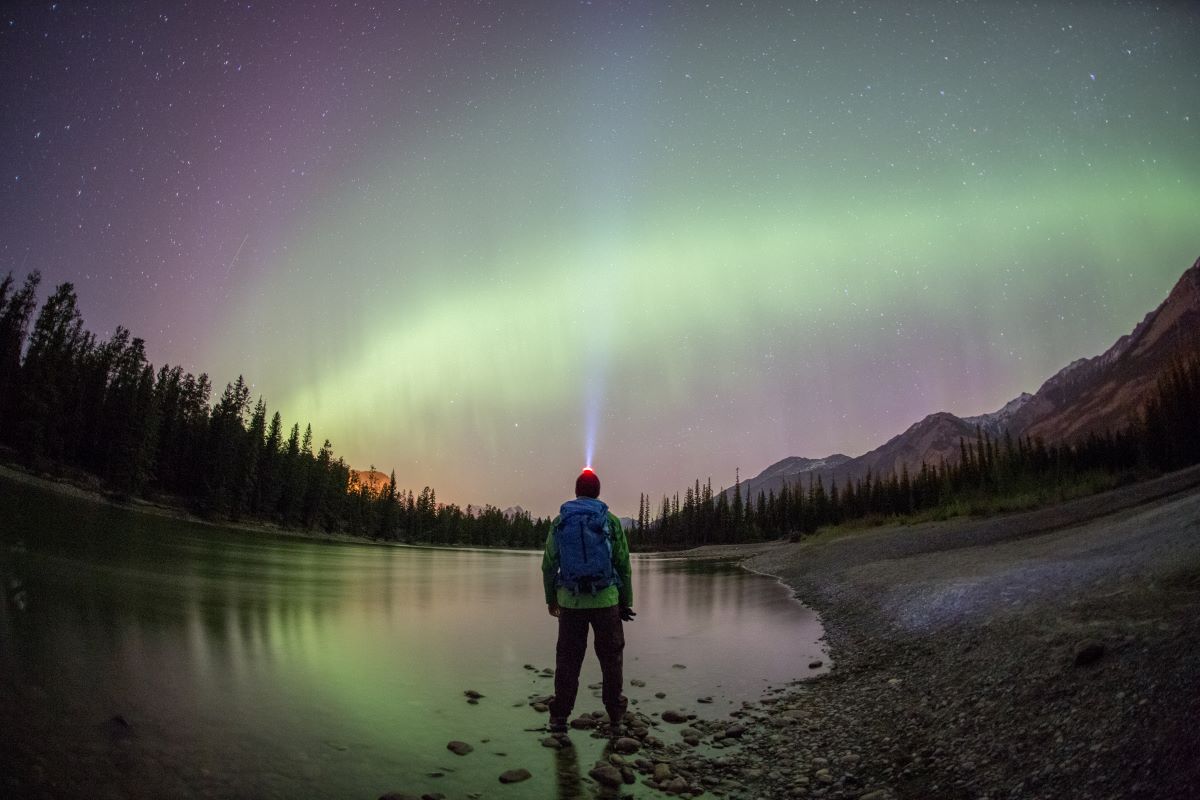
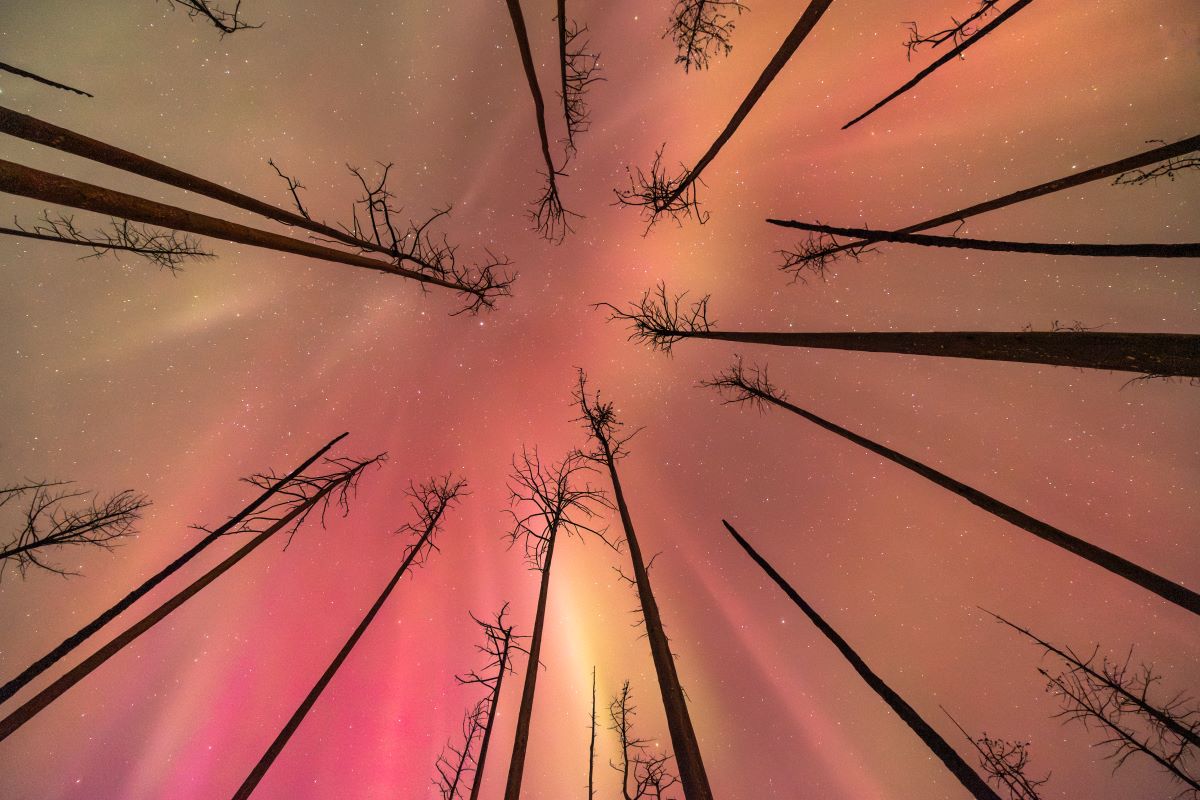
Winter brings back Orion. Its famous belt of three stars climbs into the eastern sky from November through February. This is also the season of the spectacular Geminid meteor shower. Bundle up and head outside for one of the brightest and most reliable displays of the year! On clear, cold nights, you might even see one of nature’s greatest light shows, the aurora borealis, shimmering across the horizon.
Tip: Download an astronomy app to find out what stars are visible today.
When and how to watch
- Best times: Around new moon nights with clear skies, especially in fall and winter
- Best weather: Clear, cool nights with low humidity
- What to bring:
- warm layers (temperatures can drop quickly at night)
- your camera: dark-sky viewing is best when you can take it home with you
- red-light flashlight to preserve night vision
- binoculars, tripod, or small telescope (optional but helpful)
- blanket or reclining chair for comfort
- star map or astronomy app
Best locations
All year long, several locations within Jasper offer breathtaking night skies. These areas are accessible and suitable for most visitors:
- Pyramid Island: Easy access, great for families.
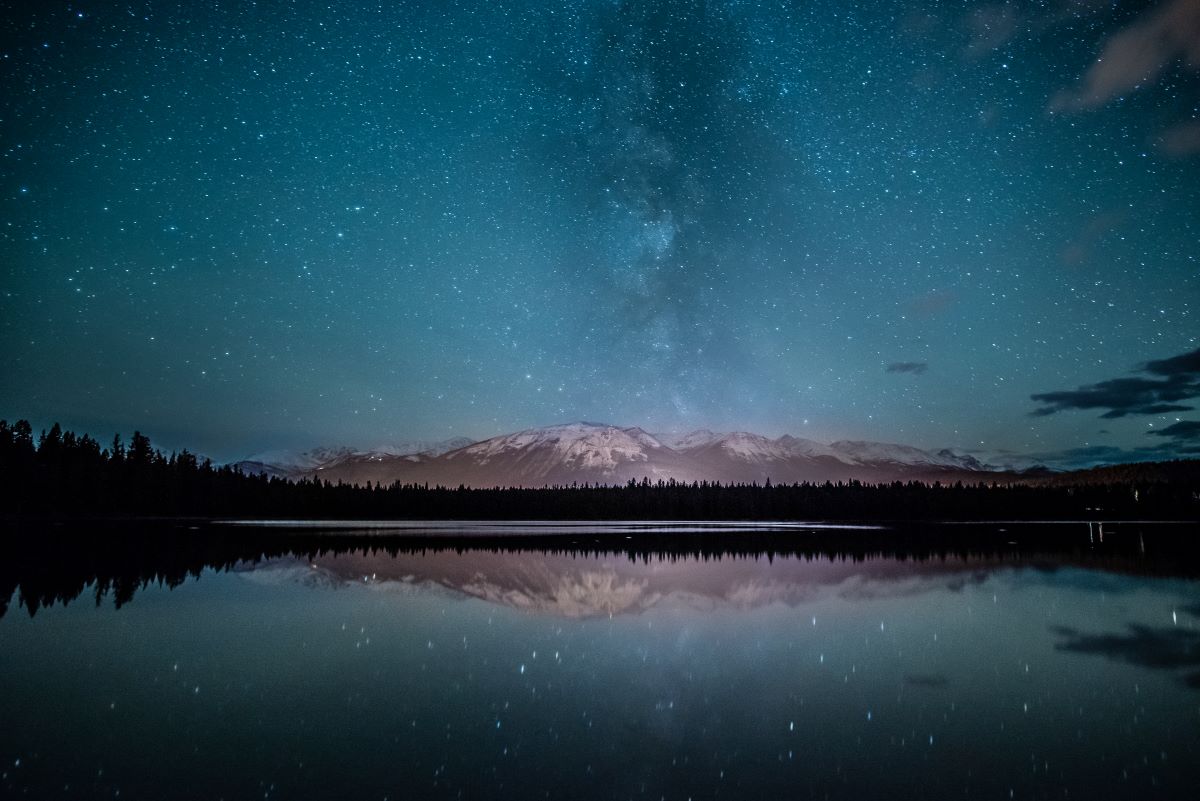
- Jasper Lake: Wide open views and reflection shots.
- Old Fort Point: Elevated vantage point for sweeping panoramas.
- Toe of the Athabasca Glacier: A dramatic backdrop for astrophotography.
Starry Nights
Transcript
Beaver Logo fades in and out. Upbeat music
Cuts to close up of boy’s face looking at an ipad with headphones on.
Cut to wide shot of someone putting a backpack on the ground, the boy is still playing his game
Cut to mother who put the bag down signalling the boy to come along
Cut to close up of boy’s eyes from below his ipad as he looks up at his mother.
Cut to boy’s feet walking upto the bag on the ground
Cut to boy walking out of his garage
boy walks by his father putting the cooler in the car
boy opens car door
Cut to side of the boy sitting in the car as it’s moving, still playing on his ipad. Game sounds are heard.
music picks up. Cut to view of the mountain from th backseat of the car
Mother points to a mountain
Cut to a slider shot of a campsite where the mother tends to the tent and father to the campfire. The boy is sitting and playing on his ipad.
Cut to a timelapse of the town of Jasper at sunset
Cut to timelapse of Spirit Island at sunset. Wolf howl
Fade to campfire timelapse, coals burning
fade to black
Group laughing
Fade in from black, dolly a backpack lights up with notification sound
Flash light comes on in the tent.
Cut to medium shot of the tent, boy sticks his head and flashlight out of the tent and scans.
Cut to boy’s feet outside with flashlight on grass.
The flashlight clicks off.
Cut to close up of the boy hitting the flashlight with his hand.
Cut to boys face as he looks around and then looks up to the sky. Owl hooting
Cut to extreme close up of boy’s eye with a reflection of the night’s sky and a shooting star in his eyeball
Cut to timelapse of the campsite, tent is seen as well as the starry night’s sky
Cut to timelapse of Maligne Lake at night with starry sky rotating and shooting stars
Cut to timelapse of Mount Edith Cavell during a cloudy night.
Cut to timelapse close up of pine needels with stars in the shape of circles in the background.
Cut to timelapse of a mountain range, lake and night’s sky with the milky way.
Cut to timelapse of night’s sky at Lake Annette with milky way and shooting stars
Cut to timelapse of a campsite with a tent, starry night’s sky and the northern lights.
Cut to timelapse of northern lights.
Cut to timelapse of Athabasca Glacier and night sky with shooting star
Cut to timelapse close up of the moon moving across the sky and behind a cloud.
Cut to timelapse of night’s sky that transform into star trails across the sky
Cut to timelapse of star trails and shooting stars.
Cut to timelapse of the Ramparts with the night’s sky that transforms into star trails and shooting stars.
Cut to close up timelapse of a starry night’s sky which transforms into star trails and rotates.
Cut to timelapse of Spirit Island as the sun rises with a few stars left in the sky
Cut to over-the-shoulder shot of the family sitting on the couch looking at the boy’s ipad. There is a photo of Spirit Island at sunrise and stars on his timelapse
The boy swipes his fingers to change photos to a camper and his tent at night.
Cut to medium shot of the family sitting on the couch smiling.
Cut to black.
Fade from black to text that reads Jasper appearing over a timelapse of mountains and a starry sky.
fade to black
Text reads Jasper over black as National Park fades in a few letters at a time
Text swipes out with sound cue.
Cut to Parks Canada Logo
Text fades in and out (Copyright Majesty the Queen in Right of Canada, represented by Parks Canada, 2014.)
Canada text with Canadian flag fades in and out
Related links
- Date modified :