
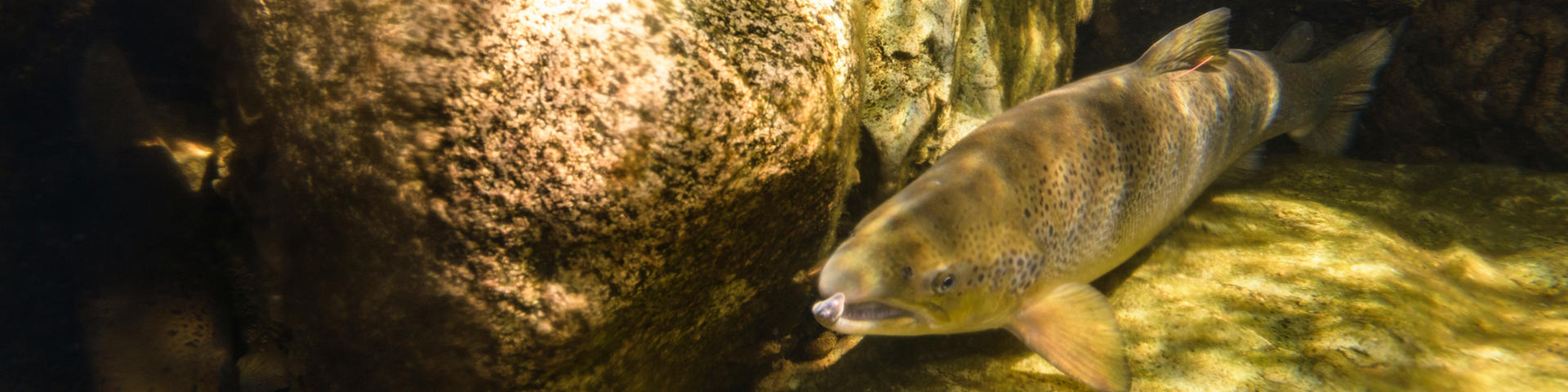
Salmon Soaring at Parks Canada
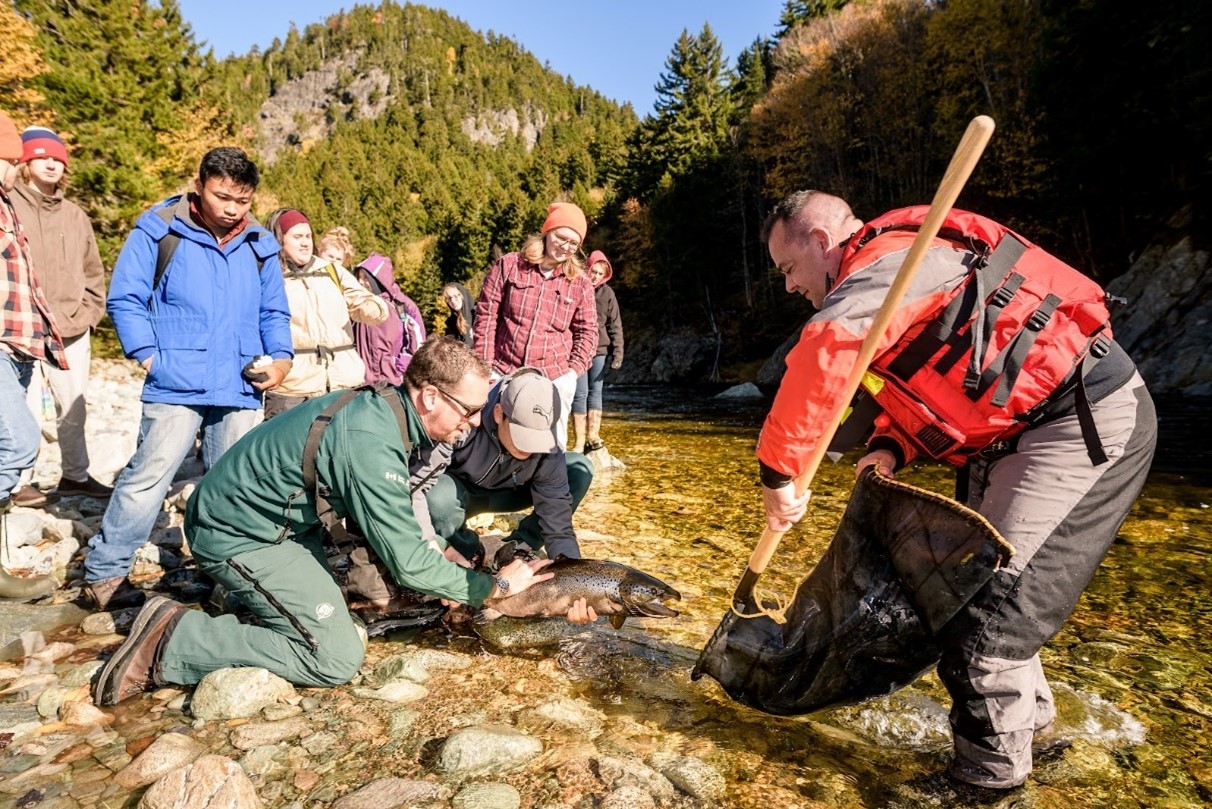
Parks Canada is on a mission to revitalize salmon populations, in collaboration with Indigenous communities and partners in Atlantic Canada, British Columbia, and the Yukon. This effort combines habitat restoration and cutting-edge genetic research, all while celebrating the cultural importance of these iconic fish. It’s not just about saving salmon; it’s about reigniting hope for the “king of fish” and creating a brighter future for our ecosystems. Together, we’re making waves for a better tomorrow!
Salmon have been deeply important to the health of ecosystems, Indigenous Peoples, and coastal communities. They are fundamental to many traditional practices and play a crucial ecological role in how rivers function. However, both Pacific and Atlantic salmon numbers are declining across their ranges due to causes that are not fully understood. Parks Canada is dedicated to salmon revival, aiming to recover salmon populations, freshwater ecosystems, and cultural practices across the Atlantic, Pacific, and Yukon regions.
And good news! This work has recently been recognized as United Nations World Restoration Flagship, as part of the 7th UN Environment Assembly. The World Restoration Flagships represent some of the most ambitious, science-based, and inclusive examples of restoration in action in the world.
Dive in and explore how Parks Canada is committed to restoring salmon populations and habitats across the country while supporting the communities that depend on them.
Text transcript
[Slow-motion close-up of an Atlantic salmon being lowered into a river and swimming away.]
Salmon is more than just a fish. It's a species that connects the marine environment with freshwater environment with forests. When you have salmon in your river, you know your river's healthy.
[Aerial footage shows landscapes from above.]
[Text: “To save our planet”.]
[Aerial footage shows a wildfire burning through a landscape.]
[Text: “we must save our ecosystems”.]
[A glacier calves into the sea.]
[A fast-paced montage shows close-up portraits of people looking into the camera.]
[In quick cuts, people do environmental work, including planting seedlings, swimming underwater, using a fire hose, and taking photos.]
[The montage continues with wildlife, including a rhinoceros, a gorilla, and a koala perched in a tree.]
[Text: “RESTORE Stories from the UN Decade on Ecosystem Restoration”.]
[Aerial footage looks down into green-tinted water where salmon swim just below the surface.]
[A woman fly-fishes, casting her line.]
[Elder Betty Ward sits outdoors wearing a blue outfit and a ribbon skirt, with water and greenery behind her.]
Atlantic salmon sustained our Aboriginal people for thousands and thousands of years, but they're always fighting for survival.
[Aerial footage pans over a small community along a river.]
There's been a sharp decline in the 90s and since that time on salmon populations.
[Two Parks Canada staff walk along a riverbank.]
[Aerial footage follows a winding river through autumn forest, with orange and yellow foliage.]
[hiischid Jack G. Thompson speaks to camera beside a river, surrounded by greenery.]
It makes me angry when I walk the river. And what can we tell our children, that it's soon going to be gone?
[Close-ups show forest details: moss on rocks and tree bases, and leaves moving in the wind.]
[Aerial footage sweeps over treetops in early autumn colours.]
[Corey Clarke speaks to camera in a Parks Canada uniform. A red covered bridge and rocky riverbank sit behind him.]
This population was listed as endangered under the Species at Risk Act in Canada, and that motivated action to do more than just monitoring, simple surveillance, but to actually restore the population and try and avoid extinction.
[Parks Canada staff prepare equipment and put on gloves.]
[Four Parks Canada staff stand in the river wearing waders and safety gear. They lift a net and transfer contents into buckets.]
[Parks Canada staff walk down a forest path toward the river carrying gear.]
[From above, three Parks Canada staff float in the river wearing snorkel gear.]
When we were first putting the team together, it was very clear to all of us that Western science didn't have all the answers.
[A Parks Canada staff member writes notes in a field notebook.]
[A group gathers in a circle on the rocky shoreline beside the river, filmed from directly overhead.]
From day one, working with Fort Folly First Nation, we see these problems together.
[Slow-motion close-up of Chief Rebecca Knockwood outdoors.]
[A sign reads: “Fort Folly First Nation, New Brunswick,” with a logo featuring a beaver and a tree trunk.]
[Chief Rebecca Knockwood speaks to camera outdoors. She wears a vibrant knitted sweater in orange, blue, and red. Tall grass and trees fill the background.]
We're a small community, but we're very mighty and we care about the environment. By bringing the salmon back, we know it's going to sustain our people.
[In slow-motion, hiischid Jack G. Thompson holds and shakes a rattle.]
[Close-up of a person’s face lit by soft daylight, with green and orange foliage behind.]
[Aerial footage shows a road cutting through dense green forest.]
[Parks Canada staff and Fort Folly First Nation members pass a salmon from a blue bin into a net.]
We didn't come to the table knowing what we needed to do. We came to the table knowing where we wanted to go.
[The net is carried into the river, and the salmon is held briefly in the water.]
[Slow-motion close-up of the salmon being released and swimming away.]
[Text: “RESTORE CANADA’S SALMON”.]
[Aerial footage shows shallow waters and forested terrain.]
[Text: “FUNDY NATIONAL PARK, NEW BRUNSWICK, CANADA”.]
[Close-up of sunlit water rippling around shoreline rocks.]
I fish because it was a gift that was given to me by the creator.
[Hands open a case containing fly-fishing flies.]
It was a legacy that my father, my grandfather, and my great grandfather left me.
[Close-up of a fly lure moving through the water as it is reeled.]
They were all fly fishermen and guides.
[Name Tag: Elder Betty Ward, Knowledge Holder, Metepenagiag First Nation, Atlantic Region]
That is why I feel so connected to the river.
[Slow-motion shot of a Elder Betty Ward casting toward the river.]
[A wide landscape shot shows a blue sky over a large body of water, with dark, silhouetted treetops in the foreground.]
We grew up fishing salmon when I was a young boy.
[Underwater view of salmon swimming in green-tinted water as raindrops dimple the surface above.]
We would just fish in a canoe. There's no outboard motors.
[Return to hiischid Jack G. Thompson speaking beside the river.]
[Name Tag: hiischid Jack G. Thompson, Ditidaht First Nation, Pacific Region]
We just rode around in little canoes with one line fishing the salmon.
[Aerial shots return, following the river through the surrounding landscape.]
But that was before Cheewaht [River] really got ruined by logging. It was really pristine at the time.
[Overhead view of salmon swimming beneath the surface.]
My home has really changed since I was a child.
[An outdoor interpretive sign in the forest reads: “Streams for salmon”.]
It makes me angry when I walk the river, and what can you tell our children, that it's soon going to be gone?
[Close-up of a mossy tree base and forest floor with twigs and acorns.]
[Blair Pardy speaks to camera in a Parks Canada uniform, seated at a picnic table with greenery behind him.]
[Name Tag: Blair Pardy, Field Unit Superintendent, Parks Canada]
We can't have ecological integrity unless all the parts are there, and the salmon is an integral part of this aquatic ecosystem.
[Aerial footage of the riverside community.]
[Aerial footage follows the river as it winds toward the ocean.]
The Inner Bay of Fundy salmon population began a drastic decline in the late 1990s, and that was due primarily to a significant decrease in fish leaving the river to successfully return from their marine migration.
[Underwater footage shows salmon swimming alone and in groups.]
[Return to Blair Pardy speaking at the picnic table.]
No one knows for sure what the exact reason is, but certainly predation at sea, commercial fishing of salmon, and also climate change.
[Aerial footage follows the river with exposed riverbed toward the ocean between forested hills.]
As you can see, this year is a particularly dry year, a drought year, so salmon are having a hard time getting up the river to spawn.
[Corey Clarke speaks again near the red covered bridge.]
[Name Tag: Corey Clarke, Manager of Resource Conservation, Fundy National Park, Parks Canada]
This population was listed as, under the Species at Risk Act in Canada, and that motivated action to do more than just monitoring, but actually restore the population and try and avoid extinction.
[A photo display mounted on a wall shows salmon restoration imagery.]
[Underwater footage shows a dense school of salmon moving together.]
[Close-ups showing the forest floor with dirt and green moss, followed by orange leaves moving in the wind.]
[A group of Parks Canada staff stand together outdoors in uniform with forest behind them.]
When we were first putting the team together to look at us that Western science didn't have all the answers.
[The “Fort Folly First Nation, New Brunswick” sign appears again.]
My predecessor approached the local First Nation community at Fort Folly First Nation and spoke with then Chief Joe Knockwood and asked if Chief Joe would be interested in working with us together.
[A portrait photo of Chief Joe Knockwood appears. He wears a traditional feathered headdress.]
[Return to Chief Rebecca Knockwood speaking in her outdoor interview setting.]
[Name Tag: Chief Rebecca Knockwood, Mi’gmaq leader, Fort Folly First Nation]
My uncle's passion for salmon, or plamu is what we call it in Mi’gmaq, came when he was first born. That's his culture.
[Close-up of river water flowing steadily.]
On the Petitcodiac [River], my ancestors were guided in their winter encampments by the fish.
[Slow-motion close-up shows Chief Rebecca Knockwood’s smiling in profile outdoors.]
For the summer, they would go to Beaumont.
[Slow-motion close-up of a hand brushing near a leafy branch.]
That's where our former reserve is, until they moved us here in Fort Folly.
[Aerial footage approaches a rocky shoreline beside the river.]
[Return to Chief Rebecca Knockwood.]
And when the salmon started to deteriorate in the Petitcodiac, he felt he had to do something about it.
[A dense forest shot focuses on tall tree trunks.]
[Close-up of water flowing over rocks in the river.]
[Aerial footage shows several buildings and parked vehicles surrounded by forest.]
A phrase called two-eyed seeing, which was coined by a Mi’qmaq elder in Cape Breton, Albert Marshall.
[Abstract close-up footage shows water moving and swirling.]
[Return to Blair Pardy speaking.]
What it says is: Western science doesn't have all the answers, and Indigenous knowledge just doesn't have all the answers.
[Parks Canada staff member writing notes in a yellow-binded notebook.]
Western science really looks at generalities, looks at trends over time, and we put all this together to come up with theories.
[Three people stand together as the camera pulls back.]
Indigenous knowledge, in my mind, it's place based; so folks that have been on this land here for hundreds of years, if not thousands of years.
[Close-up of sunlit rocks beside water, reflecting shimmering light.]
Two-eyed seeing: we can see together.
[Chief Rebecca Knockwood walks in slow motion through the forest as patches of sunlight fall across her.]
We're getting Fort Folly’s perspective continuously. We're a small community. We're very small, but we're very mighty, and we care about the environment.
[Return to Chief Rebecca Knockwood in her interview position.]
And so when we got together, it just felt natural, It just felt right.
[Close-up of the Parks Canada logo on the door of a vehicle.]
In the early days, we really started with very little knowledge and capacity of restoring salmon populations.
[A Parks Canada pickup truck drives along a forest road in autumn colours.]
[Aerial shot looks straight down at a road with a yellow centre line, surrounded by trees.]
We didn't come to the table knowing what we needed to do.
[The pickup truck arrives where other trucks are parked near the river.]
We came to the table knowing where we wanted to go.
[Return to Corey Clarke in his interview position.]
So we adopted techniques that were underway in other places, and that was a live gene banking process to ensure that we didn't lose critical diversity that already existed in the population from the remnant population.
[A person in a red jacket uses a small net to scoop tiny fish from a bucket and release them into the river.]
[Close-up of a juvenile salmon being measured in a small measuring device.]
Most of the conventional wisdom at the time was to reintroduce juvenile progeny, or smaller salmon, back into the rivers.
[A series of photos shows small fish held carefully in hands.]
They would grow them in hatcheries, super saturate the river and hope they would come back, but they weren't coming back.
[Photos show Parks Canada staff in red jackets in a boat holding fish and handling a net partially submerged in the water.]
Following ten years of standard restoration methods, we were still failing to see any returning adult salmon, and we knew then that we would need to pursue more innovative partnerships and methods if we were to succeed.
[Underwater shot shows a salmon inside a metal enclosure.]
In order to produce fish with as little captive exposure as possible, ideally, those fish would be produced naturally in the river.
[Aerial footage rises from near ground level, revealing the river and surrounding landscape.]
[Underwater footage shows salmon swimming out of an enclosure and into open water.]
To do that, we would need to release adult salmon.
[Parks Canada staff walk through a facility used for salmon restoration.]
We developed an innovative partnership with the aquaculture industry who has a deep capacity for growing and moving large numbers of adult sized fish.
[A staff member stands on a structure as the camera tilts down to reveal text.]
[Text on the structure: “Live fish transport fresh water”.]
Fort Folly and Parks Canada staff could collect the fish - the smolts - as they left the river to the ocean to the aquaculture industry who would grow them to the adult stage.
[Underwater footage shows many salmon swimming closely together.]
[A red helicopter flies overhead carrying a suspended load on a long line toward the river.]
[Three Parks Canada staff stand in the river, prepared to receive the load.]
[The helicopter’s load is lowered into the water, and Parks Canada staff release salmon from the open container.]
We would bring them back here, release them back into the river to spawn naturally and produce the next generation of fish in the wild.
[Parks Canada staff prepare equipment, putting on gloves and interacting with devices.]
[Staff walk through autumn forest carrying buckets and nets.]
So the Guardians and the team that we have actually put out the flight nets, capture the fish, tag the fish.
[Staff stand in the river and work their nets through the water.]
That works hand in hand with what Parks is doing as well.
[Underwater shot shows a net moving above.]
[Return to Corey Clarke speaking with the red covered bridge in the background.]
Techniques that we use are electric fishing to sample juveniles and monitor juvenile populations.
[Parks Canada staff put on gear, including lacing boots and securing a life jacket.]
[Two staff, wearing life jackets and snorkel gear, submerge into the river.]
Through snorkel surveys, a team of divers swimming down the river to count adults.
[Top-down aerial shot shows three Parks Canada staff floating in the water beside a rocky shoreline.]
[Return to Corey Clarke.]
And adults which return that are carrying the tag from our program are detected by antennas which are installed at the mouth, which operate 24 hours a day.
[Parks Canada staff leave a building and walk together toward the river.]
[A Parks Canada staff member lifts the laptop lid and start working.]
Now, today, after nearly a decade of releasing adult fish, it is so predictable that the adults will return now, we are wondering “how many?”
[A close-up shows lines of data on a computer screen, followed by Parks Canada staff looking at a computer monitor.]
Not “if” they will return, but how many will return.
[Return to Corey Clarke.]
Cultural and ecological restoration are being carried by the presence of these adult salmon.
[A slow-motion close-up shows Corey Clarke smiling, then the camera pans to Elder Betty Ward.]
Enter Betty Ward.
[Elder Betty Ward and Corey Clarke walk in slow motion along the rocky river shore, with trees to one side.]
I joined this program about three and a half years ago. I am from the Metepenagiag First Nation.
[Return to Elder Betty Ward seated for an interview.]
The manager of the ResCon team, Corey Clarke comes walking in and he goes, “Is Betty Ward here?” And I said, “Right here.” He said, “You know you're famous?” I said, “For salmon?”
[Slow-motion close-up of hands holding a salmon, then releasing it into the river.]
He asked me if I would come to do consulting as an elder.
[The group comes together and forms a circle on the rocky shoreline beside the river.]
She is now bringing Indigenous teaching and culture that has been missing, just like the aquatic productivity has been missing from this environment for the last 20 or 30 years.
[Close-up of hiischid Jack G. Thompson shaking a rattle during a ceremony.]
When the salmon start to come back in, we do a ceremony on the beach and we welcome the salmon back.
[Elder Betty Ward speaks during the ceremony while others stand nearby with hands folded.]
We've never really had our culture here before.
[Return to Chief Rebecca Knockwood.]
And just to see it come back, to see the youth hold that pride, I guess you can't explain the feeling, but you can see it on my face.
[Aerial shot shows a Parks Canada vehicle towing a trailer with a large blue container near the red covered bridge and river.]
[View from the trailer as it exits the red covered bridge.]
[Parks Canada staff and Fort Folly First Nation members unload equipment and handle nets.]
[Return to hiischid Jack G. Thompson.]
This was my first time releasing salmon in the Bay of Fundy. Even though I got wet as a first time, but it was a nice feeling to let one go, knowing that, I was part of this.
[Parks Canada staff walk through dense forest carrying long-handled nets.]
And they’re going to come back, maybe more into the future.
[Top-down aerial view shows a net being passed person-to-person toward the river, where fish are released.]
There are actually seven Parks Canada administered sites across the country that are involved in various aspects of salmon restoration.
[Return to Blair Pardy speaking at the picnic table.]
Over ten years in the seven sites, we’ve restored about 65,000 hectares of habitat, which includes 228km of rivers and streams.
[Aerial shot shows a forested area with two dried stream channels exposed as rocks.]
[In slow motion, Elder Betty Ward points while hiischid Jack G. Thompson stands beside her.]
This is a dream that we can really make possible, and we're doing it every day.
[Return to Corey Clarke.]
In a world where environmental and ecological things generally are coming in negative stories, a group of people can get together and they can actually change the direction of some of those trends.
[Slow-motion close-ups show people looking toward the light.]
[Staff continue carrying fish in nets through the forest and releasing them into the river.]
I feel privileged to be part of an ecological story that is better now than it was 20 years ago.
[Elder Betty Ward fly-fishes, casting again.]
It is a legacy that I’m going to leave behind for my sons and my grandchildren.
[Return to Elder Betty Ward in her interview position.]
And when I leave this world and go on to the spirit world, they will continue on and they will take care of plamu.
[Overhead shot shows salmon swimming in the river.]
[Text: “Respectful Returns in Canada has been recognized as a UN World Restoration Flagship”.]
[Forest shot focuses on tall trunks and filtered light.]
[A “World Restoration Flagship” emblem appears with the title “Respectful Returns in Canada”.]
[Multiple logos appear on screen, including Fort Folly First Nation, Haida Nation, Ditidaht First Nation, Kopit Lodge, Qalipu First Nation, and UINR, along with the Government of Canada wordmark in English and French.]
[Three logos appear, including United Nations Decade on Ecosystem Restoration 2021-2030, UN Environment Programme, and Food and Agriculture Organization of the United Nations.]
[Additional logos appear, including the Federal Ministry for the Environment, Nature Conservation, Nuclear Safety and Consumer Protection, the International Climate Initiative (IKI), and the Ministry of Foreign Affairs of Denmark.]
[End credits appear with roles and names in text.]
Regional perspectives
Atlantic Canada
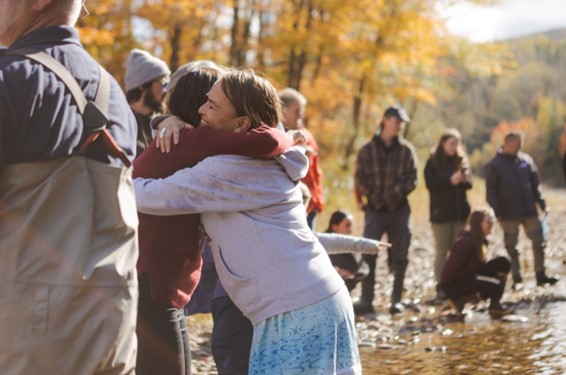
Parks Canada is on a mission to revive Atlantic salmon (Salmo salar), whose numbers have been declining for decades.
The reasons for the decline are mostly unknown, but changes in the ocean environment may be playing a big role. The Inner Bay of Fundy salmon population was declared Endangered in 2003, with an estimate of only about 200 salmon left in the population. While the population is still listed on the Species at Risk Act of Canada as Endangered, the positive impact of recovery work on ecosystems and local communities has been profound.
Atlantic salmon are vital to the health of freshwater and forest ecosystems in the Bay of Fundy. Salmon are unique because they make an incredible journey from rivers to the ocean and back again. While travelling from saltwater to freshwater, they enrich the river environments with essential marine nutrients that help feed the plants and animals in that ecosystem. Beyond their ecological benefit, these fish also hold deep cultural significance for Atlantic communities, especially for Indigenous Peoples, symbolizing tradition, and connection to the land.
Since the early 2000s, Fort Folly First Nation in New Brunswick worked alongside Fundy National Park to restore the inner Bay of Fundy Atlantic salmon. This conservation work has progressed into a leading conservation collaborative called Fundy Salmon Recovery. Fort Folly First Nation now manages their own salmon recovery branch of Fundy Salmon Recovery on the Petitcodiac River.
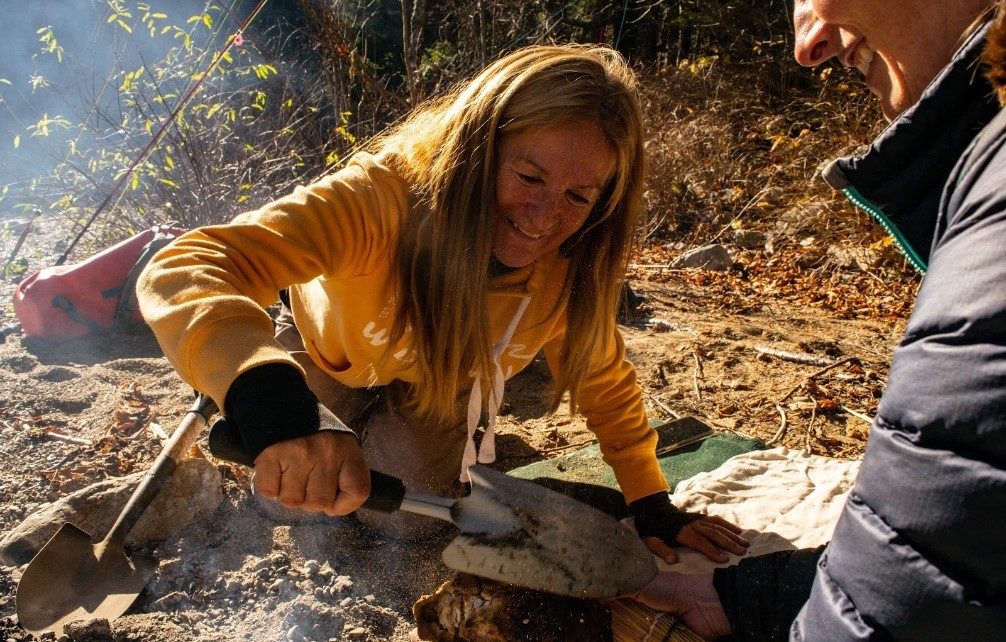
Elder Betty Ward, Indigenous Knowledge holder from Metepenagiag First Nation, highlights connections between people, salmon, and the ecosystem in Fundy National Park:
They are so important to the fabric of New Brunswick— They are the "king of fish"
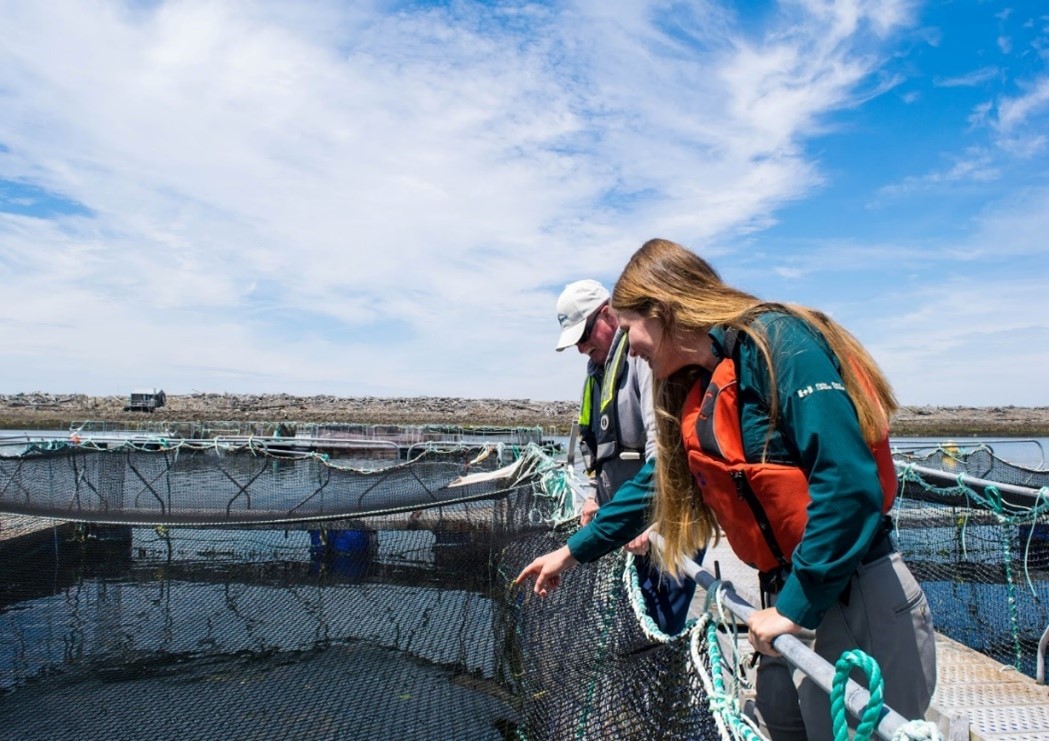
While work in Fundy was successful on a local level, a regional approach was needed for a cohesive conservation outcome. Enter the Atlantic Salmon Recovery project—an example of teamwork at its finest. This initiative brings together over 40 partners, including First Nations, scientists, industry, nonprofits, and local communities. Together, they’re working to not only conserve and restore Atlantic salmon populations but also to rekindle the deep spiritual and cultural connections to this iconic fish.
The learnings and research from the Atlantic salmon recovery project are actively shared between the five Atlantic national parks and their partners.
Fundy, Cape Breton Highlands, Gros Morne, Kouchibouguac and Terra Nova national parks study conservation actions across different populations at the same time. The regional Atlantic Salmon Recovery collaborative is teaming up on conservation efforts to align ecological and social perspectives of salmon conservation, creating a cohesive Parks Canada approach.
Fundy National Park
Fundy National Park’s innovative approach to salmon restoration has led to the establishment of the world’s first marine conservation farm dedicated to wild Atlantic salmon. This sets a new benchmark for conservation efforts and continues to work with various partners to boost endangered Atlantic salmon in the Upper Salmon and Point Wolfe Rivers.
Cape Breton Highlands National Park
Cape Breton Highlands National Park is partnering with Indigenous, academic, government and local groups to revitalize wild salmon and the Clyburn Brook ecosystem. For over 30 years, the park has been actively monitoring the adult salmon population in Clyburn Brook, playing a key role in this vital restoration effort.
Kouchibouguac National Park
Kouchibouguac National Park is collaborating with Indigenous communities and nonprofits to boost Atlantic salmon in the Kouchibouguac and Kouchibouguacis rivers. Kouchibouguac National Park captures returning salmon in the fall, spawns them and places salmon eggs into the river to promote hatching success and to support struggling salmon populations.
Terra Nova National Park
Terra Nova National Park works with the local community to manage salmon in the Northwest River. Thanks to collaborative stewardship, the abundance of salmon returning to the river each year has allowed for a community fishery since 2003! This is a success because the goal for every river is to renew the relationship between people and salmon by having enough salmon to sustain a harvest.
Gros Morne National Park
Text transcript
Hi everyone, my name is Danielle.
I am a project coordinator with Parks Canada's Atlantic Salmon Conservation and Restoration project. I am here in Gros Morne National Park Come join us on some monitoring work today.
Gros Morne is one of the five national parks that are working together to recover Atlantic Salmon.
The other national parks are Fundy, Kouchibouguac, Cape Breton Highlands, and Terra Nova.
Salmon populations at these different sites are all at various stages.
Some are healthy, but others are threatened or endangered, and our aim is to study these populations and figure out exactly when we should be stepping in on our recovery actions.
Is it effective to come in once a population is already endangered, or should we be stepping in before when populations are still healthy?
Monitoring salmon populations across Atlantic Canada gives us the data needed to determine when recovery actions are necessary.
So right now I am going to put on a dry suit, which is basically similar to a wet suit, but you stay dry underneath so you can wear all of your clothing and you zip it up and then you’re water tight.
All right. We're going to start our snorkel survey.
And you'll notice behind me we have three people in the water and one person here on shore behind me.
And it's important to have a shore support to count all the salmon that we see in the water, as well as to provide safety support.
So the team is saying they're ready to start.
Everyone's good.
They're starting their survey all in a line.
This is to make sure that they're covering the entire area that we're monitoring.
Sean's putting up his hand, and that means he's seeing salmon.
They're communicating to Todd.
And Todd's writing all of these numbers down, and he's writing down the location that we're seeing these fish.
Snorkel surveys help biologists track the number of salmon returning to the rivers each year.
We can then look at these numbers regionally to see the peaks and the valleys of salmon abundance, and how they relate to our recovery efforts.
So we reached the end of our snorkel survey, and we have met up with the team doing biofilm sampling.
So let's go check it out.
Kurt... Yes?
What are we doing here?
So we are collecting biofilm from a number of rocks in the river to get an idea, an estimate of how productive these rivers are.
So this biofilm covers rocks.
It's that slippery stuff that everyone falls on when you're walking through a river.
And so we want to collect that.
We're going to scrape it off with this toothbrush.
As you can see, the water is getting greener.
And then from there we can we can measure how green, how much stuff is in there.
Very cool.
And why do we care about biofilm being in our rivers?
Right.
So biofilm is really important because it's the base of the food web.
And it feeds the little organisms like these guys right here.
These little, we call them macro invertebrates.
They're the river bugs. These are important because this is what salmon eat primarily when they're juveniles in the river.
And so the more biofilm there is, the more algae, the more food at the bottom of the food web, there's more food for these bugs.
That means there's more bugs for salmon to eat and we can sustain larger, healthier salmon, populations.
All right.
I'm out of my dry suit and the day is done.
Check out this awesome view behind me.
Now it's just time to pack up and head on out.
Thank you so much for joining me on this adventure today.
Bye bye.
The Parks Canada Atlantic Salmon Recovery Project aims to prevent salmon populations from further decline, disappearing from the region, or becoming at risk.
Learn more about salmon recovery across Canada at: parks.canada.ca/saumon-salmon
In Gros Morne National Park, since monitoring began in 2001, the Trout River salmon population has consistently fallen below the conservation target, unlike other rivers in Gros Morne. In 2013, fishing was banned to allow salmon to recover. Since 2019, targeted recovery actions have aimed to boost the salmon population. The park increased enforcement against poaching, delivered an outreach and education program, and established a Trout River Salmon Stewardship group.
British Columbia
Text transcript
[Gloria Frank] Without salmon I would feel like there’s an empty hole in my heart. I really think that our world as we know it would cease to exist.
[Jessica Hutchinson] Pacific Rim National Park Reserve is made up of a network of small stream systems. Historically, these small streams were very productive. They supported healthy populations of wild Pacific salmon. Close to 30% of the Park was logged prior to the land being set aside for National Park purposes. This logging severely impacted healthy stream habitats and caused the salmon to almost disappear. Parks Canada, along with local First Nations and Central Westcoast Forest Society, are working to restore these streams and bring salmon back to the park.
[Yuri Zharikov] Just before the Park was established about a quarter of this area was logged. In those years often creeks were logged to the bank so there wasn’t even a buffer left around those creeks. So, with the trees removed and the extensive rainfall that we get here a lot of debris, sediment, and everything should not be in the creek ended up in the creek.
[Jessica Hutchinson] And this caused the stream to not flow properly. It caused sediment to back up and fish could no longer access because they couldn’t get through these debris jams and the sediment sort of in-filled and buried the natural spawning gravels.
[Yuri Zharikov] When salmon decline all the other things, in response, they decline as well. For example, bears rely on salmon in order to acquire fat reserves to hibernate. If salmon runs fail, bears suffer.
[Jennifer Yakimyshin] Pacific salmon are unique in their life history compared to other fish species because they rely on both fresh water and marine systems to complete their life cycle. Young salmon start out their life in the freshwater creeks and they’ll spend a short time in these creeks until they make their migration into the ocean. In the marine environment, in the oceans, they’re able to feed on rich marine foods and, basically, pack it on and they get bigger faster than they could ever get in the freshwater creeks. And after 2-4 years they’re able to come back to their natal streams and they’re able to do this by a process of chemoreception, which basically means they smell their way back to those creeks. And in these creeks, that’s where the adults are going to spawn and give birth to the new young of the next generation.
[Warren Wartig] Once they spawn they die, and they become a great protein source for dozens of different species. And the bears and eagles and seagulls will pack the morts, the dead fish, way up into the forest and actually fertilize the forest.
[Yuri Zharikov] So in essence you could say that salmon accessing and spawning in those streams they feed the trees that grow on stream banks. So that’s why those trees grow the largest: they actually have salmon in them.
[Joe Martin] And you know as the people on the West Coast here have a saying, Hishook ish tsawalk, everything is one. Or, everything is connected. And so it’s important that we all understand that.
[Yuri Zharikov] The Pacific Rim has been established to protect a piece of temperate rainforest, and salmon-bearing streams are a key feature of such a forest. Overall, the degradation of this area as a salmon producing environment has been considerable. And so any restoration that we can afford surely helps to revert that trend and that condition.
[Gloria Frank] There was tonnes of salmon here, every kind of salmon…right from Coho to Sockeye. There was really lots; there was more than enough to go around. But we only took what we needed; never more, never less.
[Joe Martin] You know the people have been here for thousands of years, and we’re not newcomers to this part of the world. So, people did have an intimate knowledge of all these areas, you know? And those songs and those dances that our people do have, they’re basically teachings about natural law and, you know, we all live under natural law. And we’re not allowed to just go there and take and, you know, not be aware of the consequences.
[Jessica Hutchinson]We’re hoping to restore this area by bringing back the habitat required to support healthy salmon populations. And we do that by repositioning and removing some of the large and small woody debris that was dumped into these creeks and placing this large woody debris to provide certain habitat features that are required by salmon. We also add spawning gravel to improve the spawning grounds. We plant stream-side vegetation and trees to help restore the vegetation on the banks so they’ll provide shade and cover for the salmon in the streams and help regulate water temperatures.
[Warren Wartig] One key thing that we look for are barriers. Sometimes there’s a real bad culvert that was put in, and some of them we call hung culverts because the drop out of the culvert is higher than what a fish can jump to get to the upstream. By replacing one culvert on Sand Hill Creek we opened up 18 kilometers of habitat.
[Jessica Hutchinson]Through our monitoring efforts we have been able to measure a great number of successes where we’re seeing individual rocks that have been place in the stream being used by salmon as cover, or we’ve seen logs placed into the streams scour deep pools. Then we’re seeing rearing salmon grow in these pools. We’re seeing wild Pacific salmon return to their natal streams, habitat that was previously inaccessible.
[Jennifer Yakimyshin]It’s amazing, these animals will go through a gauntlet of different predators and barriers just to come back to the streams, and if we here in the Park can ensure that we have the stream that is healthy and has the spawning gravel and has the habitat for the young fish… it’s really, if we can give them at least that one piece we know we’re doing our part.
[Joe Martin]And the forest, for the whole world, is a very important thing. It’s, you know, like our lungs of the world. If we don’t restore it, you know, we’re gonna be in big trouble on this planet.
[Gloria Frank]What my hopes for the future are is that we can establish a healthy ecosystem so that my great- grandchildren can enjoy the same things that I do.
Without salmon, I would feel like there’s an empty hole in my heart. I really think that our world as we know it, would cease to exist.
Wild Pacific salmon play an important role in west coast ecosystems and are important to Indigenous Peoples.
Salmon are essential for both people and wildlife. For millennia, Indigenous communities on the west coast have depended on them for food and culture. And when salmon die, their bodies enrich the temperate rainforest, providing vital nutrients to the soil. This rainforest and the rivers they support then offer a haven for spawning and young salmon, completing a cycle of life.
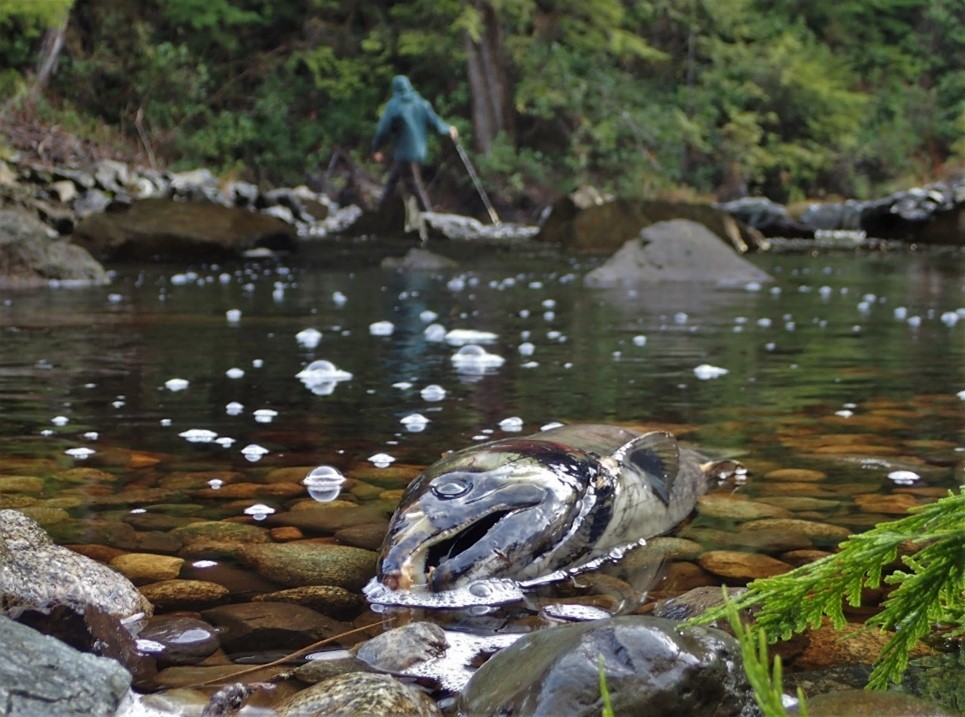
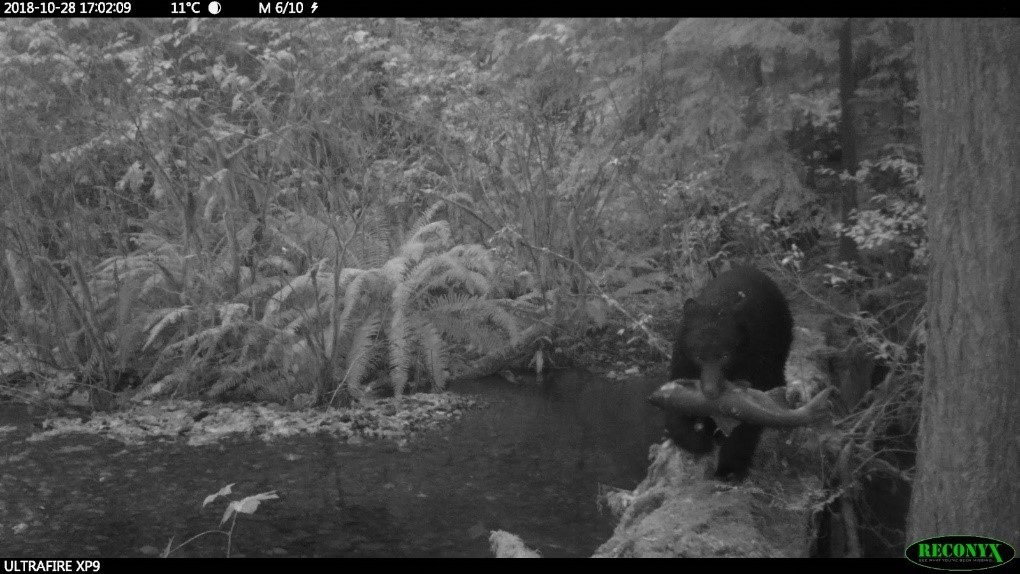
Here’s a peek at some of the revolutionary efforts in Pacific Rim National Park Reserve:
Reviving streams and boosting salmon populations
Transcript
[Parks Canada Beaver Logo]
[Music only]
A dark green illustrated map of Canada shows Pacific Rim National Park Reserve on a large island off the coast of Vancouver, British Columbia in the Pacific Ocean. The map zooms in to focus on Cheewaht Lake - čaaxʷiyt and a stream that empties into the lake. Two logs representing debris are shown across two points of the stream.
A string of red and orange dots of different sizes appears along the stream, but stops before the second log. The date “2018” is indicated in the top left corner. A legend in the bottom right corner reveals that the dots indicate the number of Sockeye Salmon that have been counted in each section of the stream (an extra small red dot is 100, a small dark orange dot is 200, a medium-sized light orange dot is 400, and a large yellow dot, not yet visible on the stream, is 600). The stream itself and log debris are also shown on the legend.
By 2019, the debris has blocked so much access to sections of the stream, that many orange dots have been reduced to red dots. This indicates that less salmon are present in sections of the stream that have been blocked by the debris.
During this year, the debris is removed from the stream, allowing both waterflow and salmon to access previously blocked sections of the stream. In 2020, small dots that were formerly red and orange have turned into large yellow dots, indicating that salmon counts have increased in the newly opened up sections of the stream. Salmon counts continue to increase in these sections of the stream into 2022.
[Ditidaht First Nation Logo]
[Government of Canada logo]
In 2020, Pacific Rim National Park Reserve worked with Ditidaht First Nation to revitalize 1.1 km of streams, to enhance important habitat for sockeye and coho salmon, and help these iconic fish thrive!
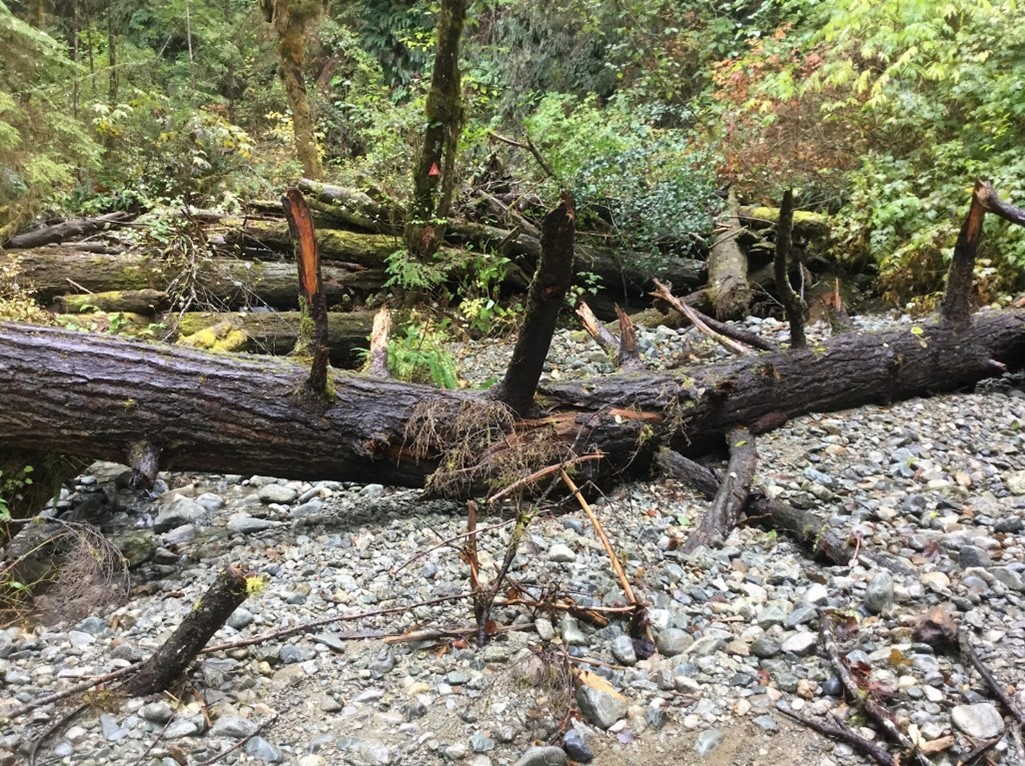
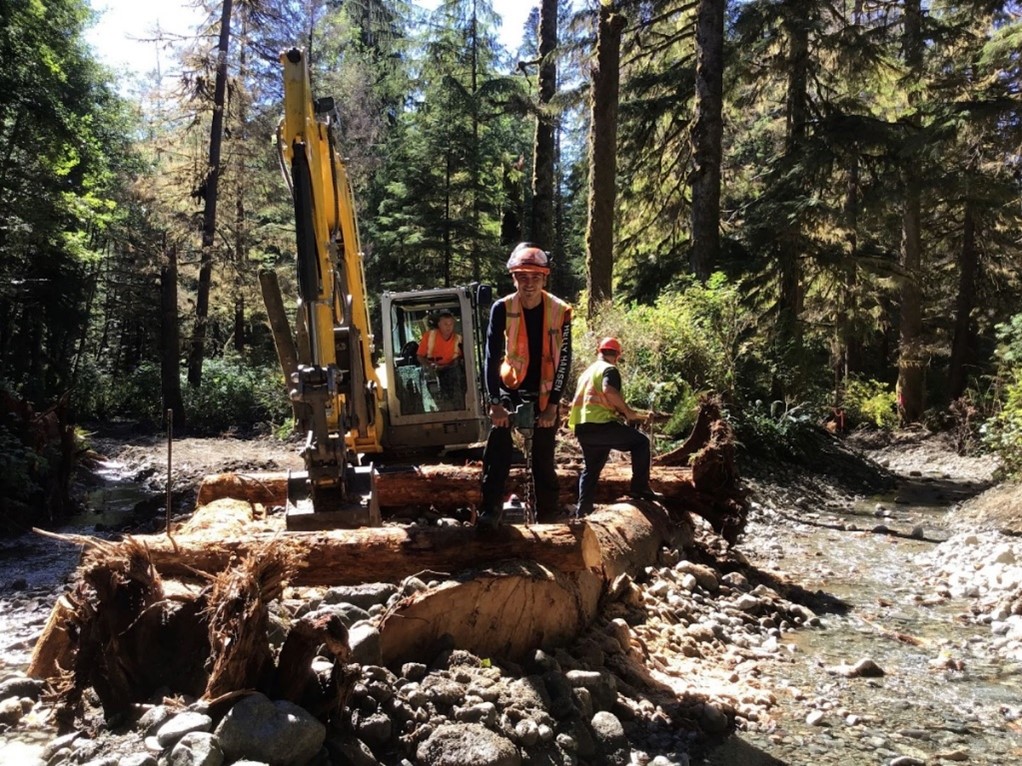
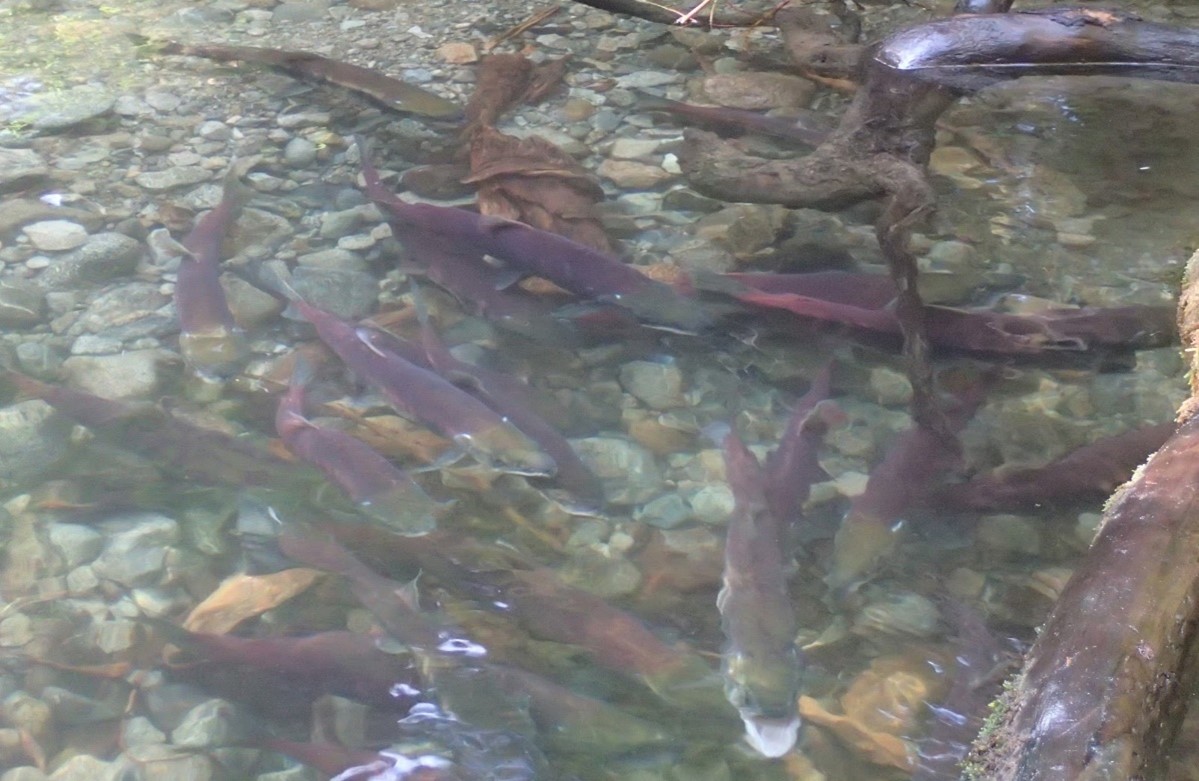
The restoration of the Cheewaht streams has brought together various groups and dedicated individuals, creating a collaborative effort that goes beyond just fish.
This initiative not only supports the recovery of sockeye salmon but it also enhances the health of the local ecosystem and community. While the full Cheewaht restoration—encompassing both ecological and cultural aspects—will take time, its potential benefits are significant.To learn more details, read about the Parks Canada salmon stream restoration process!
Using environmental DNA to track Chinook and chum salmon and support the recovery of Southern Resident Killer Whales
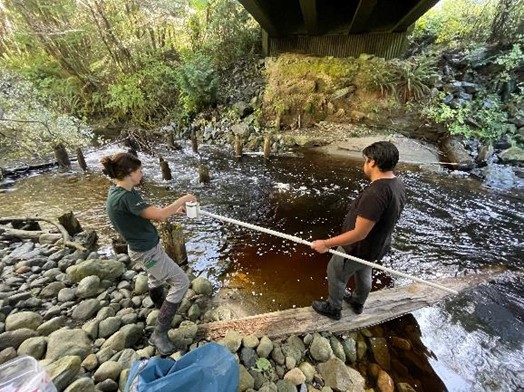
Scientists are studying the role of Chinook and chum salmon as a food source for Southern Resident Killer Whales. Pacific Rim National Park Reserve, with Ditidaht First Nation, Huu-ay-aht First Nation, Yuułuʔiłʔatḥ, Toquaht Nation and Tla-o-qui-aht First Nation, are using environmental DNA (eDNA) to assess Chinook and chum salmon in streams. This technology detects genetic material such as skin, scales, or feces in collected water samples.
In the fall of 2022, 2023 and 2024, stream systems in Pacific Rim National Park Reserve—historically habitats for salmon populations—were chosen for eDNA assessments. This was guided by the insights of First Nation partners and was informed by current low population numbers of Chinook and chum salmon on the west coast of Vancouver Island, low occurrences of recent observations in streams, and the difficulty in accessing these sites. Identifying these important stream systems helps prioritize future restoration projects.
The eDNA research also addresses key threats to Southern Resident Killer Whales within or adjacent to Pacific Rim National Park Reserve waters. These killer whales primarily rely on Chinook salmon for their diet. Together, these efforts are making waves throughout the entire ecosystem they support.
Yukon
Text transcript
[Soft suspenseful music]
Parks Canada and Champagne and Aishihik First Nations are trying to solve a mystery.
Why did this population of Kokanee Salmon undergo a decade-long decline?
Kluane National Park and Reserve is Canada's only national park with a wild population of Kokanee Salmon.
This species is an important food source for many animals.
Kokanee have been monitored in the park for over 40 years.
The First Nations' Land Guardians join Parks Canada's team during the spawning season.
They count how many salmon reproduce at the end of their life and collect some of the carcasses for research.
[Kokanee spawning counts]
[Year]
The number of reproducing salmon or spawners shows the health of the population.
In 2009, spawners dropped to an all-time low of 20 fish.
[Upbeat positive music]
Amazingly the population bounced back to 5500 fish in 2015 & 2016, but by 2017 dropped to 1000 spawners.
Our team, along with researchers from Environment and Climate Change Canada and University of Waterloo are trying to learn why the number of salmon changes so often.
Naturally occurring turbidity and metals like aluminum and selenium in the water may hold the answer.
Levels of selenium for each year of a salmon's life can be found in Otoliths.
Otoliths are bone-like structures that act like ears.
Otoliths grow annual rings just like trees.
Much is still unknown about the impacts of sediment and metals on Kokanee.
While research continues Park visitors have an important role.
[Non-Spawning Kokanee Salmon]
[Spawning Kokanee Salmon]
Release all Kokanee Salmon So they may return to spawn the next generation.
Like. Comment. Share.
pc.gc.ca/parksinsider
Parks Canada
A message from the Government of Canada
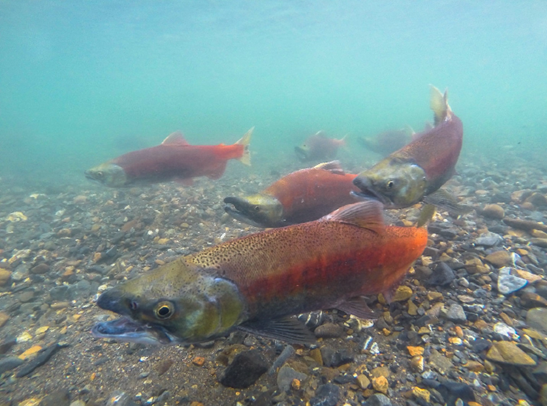
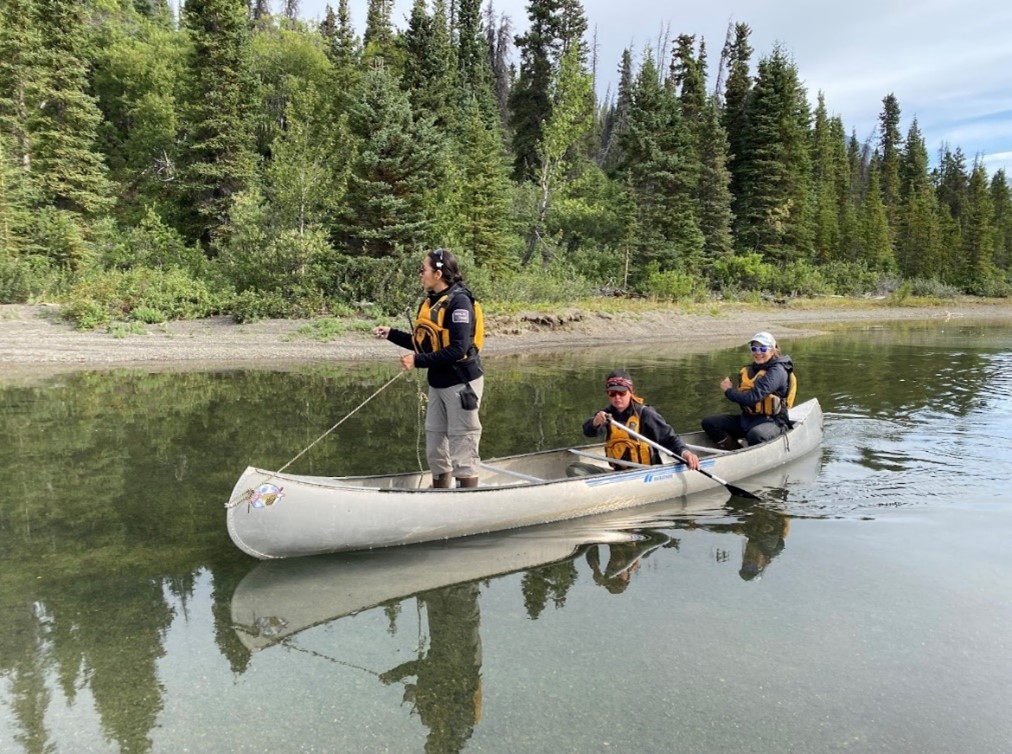
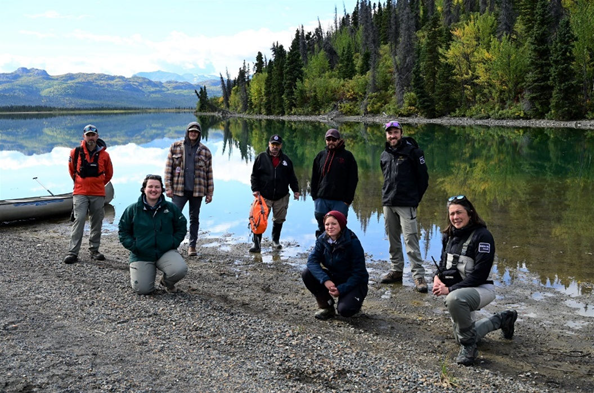
Parks Canada has been monitoring kokanee salmon as they return to spawn in Sockeye Creek for over 40 years!
Kokanee salmon are often called the "red jewels" of freshwater lakes in North America. These bright, colourful fish are important for lake ecosystems. They help balance the environment by being both predators and prey. Kokanee are actually sockeye salmon that became land-locked in the past.
Kluane National Park and Reserve protects the most northern population of wild kokanee salmon in Canada. This population collapsed in 2002, remained low until an unexpected increase in 2015 and has since fluctuated from very low to moderate abundance.
Kluane National Park and Reserve is co-managed with Kluane First Nation and Champagne and Aishihik First Nations. The Kluane National Park Management Board also provides input into cultural and conservation initiatives like understanding the highly variable kokanee population.
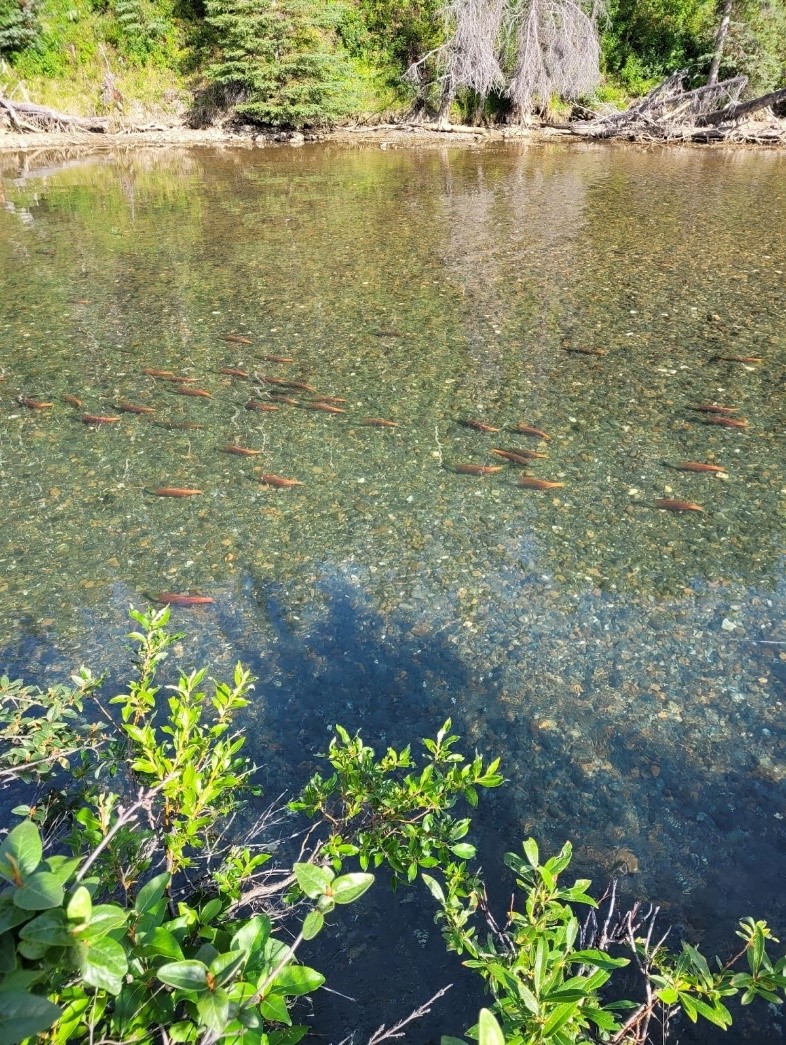
To help restore these “red jewels”, Kluane National Park and Reserve is collaborating with Champagne and Aishihik First Nations and regional knowledge holders to identify objectives and guide future investigations about kokanee.
Kluane National Park and Reserve collaborated with the University of British Columbia, the University of Waterloo, and Environment and Climate Change Canada to explore the genetic diversity of kokanee salmon and the chemistry of the spawning creek and waters flowing into this important habitat.
Recent research indicates that kokanee salmon have low genetic diversity, both before and after their population decline. This suggests they have some resilience, but it also raises concerns about their vulnerability. The main source of metals in their habitat comes from natural geological sources. However, climate change is likely increasing the transport of sediment that was previously trapped in frozen materials of headwater streams, adding to the environmental challenges these fish face.
By exploring the environmental conditions that influence the productivity and reproductive success of the kokanee salmon, Parks Canada and partners are working hand in hand to enhance the health of this vital ecosystem and secure a sustainable future for these remarkable fish. Together, we’re enriching our understanding and commitment to preserving this important species!
Learn more about ecological monitoring in Kluane National Park and Reserve.
Get involved!
Parks Canada is leading an essential mission to revitalize salmon populations across various regions. Parks Canada’s approach includes extensive habitat restoration, advanced genetic research, and strong partnerships with Indigenous communities. This effort not only aims to restore important ecosystems for salmon but also respects and preserves the cultural significance tied to these fish.
By supporting these initiatives, you’re playing a key role in shaping the future of salmon and protecting our natural environments. Your involvement will help these ecosystems thrive, allowing salmon populations to recover and flourish.
You can contribute by:
- choosing sustainable seafood: Opt for seafood, especially salmon, that follows guidelines from organizations like Ocean Wise
- participating in local events and volunteering: Engage in community events and volunteer opportunities focused on salmon conservation to support hands-on restoration and raise awareness
Dive in and be part of the change! Together, we can create a healthier environment and a vibrant legacy for future generations.
Related links
- Date modified :