
John Stewart National Historic Person (1758-1834)
John Stewart was designated a national historic person in 2022.
Commemorative plaque: Footnote 1
John Stewart (1758-1834)
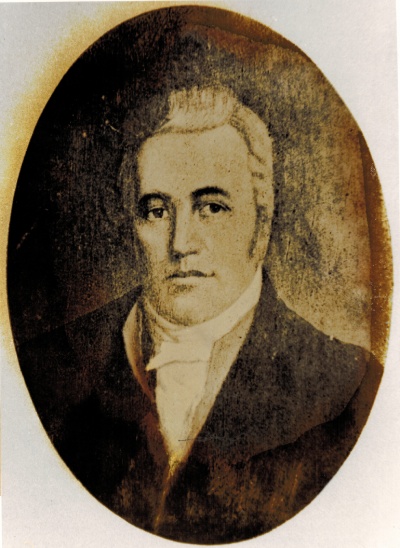
© Prince Edward Island Public Archives and Records Office (PAROPEI Acc 2320/2-1) / Bill Rose Collection
John Stewart was the author of An Account of Prince Edward Island (1806), which is recognized as the first written history of the colony of Prince Edward Island. Through this publication, he made an important contribution to the understanding and interpretation of Prince Edward Island’s history, and to the knowledge of the Island’s ecology and natural resources in the colonial period.
Born in 1758 in Campbeltown, Kintyre, Scotland, Stewart came to St. John’s Island (later Prince Edward Island) with his family in 1775. Known as “Hellfire Jack” for his fiery temperament, Stewart was a member of the colonial gentry of the Island and was involved in the military, law, politics, and landholding. Like a number of others in similar positions, Stewart used public office for personal gain and score-settling; for example, on more than one occasion he stirred up agitation against personal and political rivals in attempts to unseat them from political power. He was first elected to the colony’s assembly in 1784 and maintained a strong influence, serving as speaker three times, despite facing scandal and opposition. While serving in the Assembly, Stewart collected other offices and land. In 1790, he succeeded to the post of the Office of Receiver of the Island Quit Rents—responsible for collecting rent for the state from island landlords. Stewart held this post for over 25 years. He also held various military offices.
In 1804, Stewart was appointed as Paymaster General for the British forces stationed in Newfoundland. While splitting his time between St. John’s and London, he remained involved in the affairs of Prince Edward Island and published one of his most enduring historical legacies: An Account of Prince Edward Island, a historical and geographical snapshot of the Island at the turn of the century. With this publication, Stewart has become recognized as the Island’s first historian.
With his book, Stewart aimed to present a new interpretation of the Island’s settlement (or lack thereof) to colonial decision makers in Britain, which he hoped would counteract the negative image of the Island and its residents. He criticized absentee landlords who remained in Britain and did not develop or settle their lands, but did not criticize Island officials or the Island landholding system itself. This subtle argument, pitting the absentee landlords against the Island residents, was intertwined with Stewart’s encyclopaedic description of PEI. Stewart’s Account has had a lasting impact on how subsequent historians wrote Island history, influencing interpretations into the 1970s.
The book has also become an important historical source on the Island in its own right. Stewart’s Account is a frequently cited source for the environmental and natural history of PEI. The detail with which Stewart compiled the Island’s natural resources, combined with its early publication date, provides a time capsule of Island flora and fauna before European agricultural practices came to dominate the landscape.
After a long and eventful political career, Stewart retired from public life in 1830 and died in 1834.
This backgrounder was prepared at the time of the Ministerial announcement in 2022.
The National Program of Historical Commemoration relies on the participation of Canadians in the identification of places, events and persons of national historic significance. Any member of the public can nominate a topic for consideration by the Historic Sites and Monuments Board of Canada.
The National Program of Historical Commemoration relies on the participation of Canadians in the identification of places, events and persons of national historic significance. Any member of the public can nominate a topic for consideration by the Historic Sites and Monuments Board of Canada.
- Date modified :