For the week of May 25, 2026.
On May 30, 1951, Signal Hill was designated a national historic site. Overlooking St. John’s, it was one of the first national historic sites designated in Newfoundland and Labrador after it became a province of Canada in 1949.
A strategic promontory at the narrow entrance to St. John’s Harbour, Signal Hill has played a key role in the defence of the port city since the late 17th century.
British forces built substantial fortifications on the hill during conflicts with France in the 18th century. Additional defences were added in the 19th century and during the First World War. American forces later garrisoned and fortified the site with batteries during the Second World War. Traces of these successive defences remain visible along the cliffside today, including the Queen’s Battery and Barracks, Ladies’ Lookout retaining wall, and the Imperial Powder Magazine.
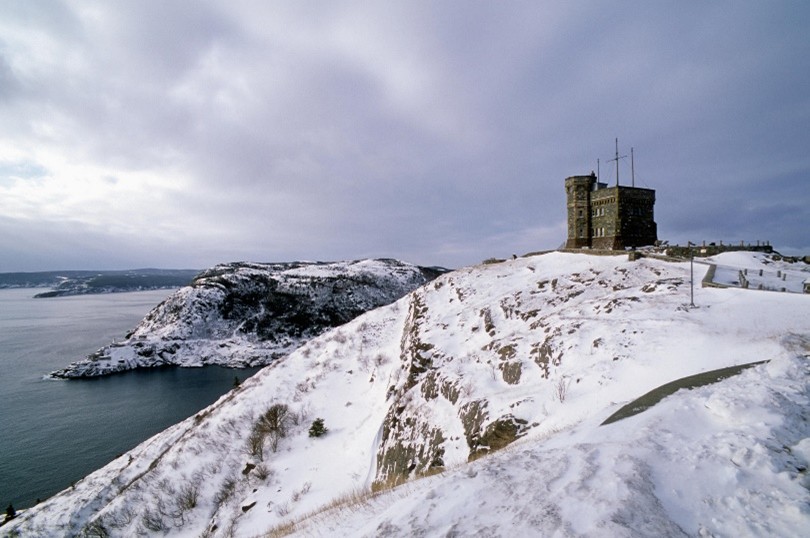
Cabot Tower has long dominated the landscape of Signal Hill. Designed by William Howe Greene, a leading architect in the rebuilding of St. John’s after the Great Fire of 1892, the tower commemorates both the 400th anniversary of John Cabot’s reputed landfall in Newfoundland and Queen Victoria’s Diamond Jubilee. Built between 1897 and 1900, the buttressed sandstone structure with octagonal turret is an example of the Gothic Revival style.
Cabot Tower was also used for flag signalling—a visual communication system where flags of various colours and symbols are raised and lowered from a mast to notify the arrival of naval or merchant ships. Prior to the invention of radio, this was how ships communicated with each other as well as military and harbour officials on land. Flag signalling began at Signal Hill as early as 1704 and continued until 1958.
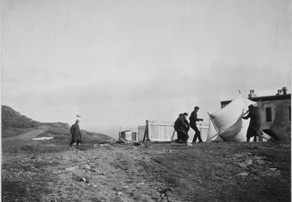
Signal Hill is also associated with wireless communication. On December 12, 1901, the Italian physicist, inventor, and entrepreneur Guglielmo Marconi received the first transatlantic wireless signal in an old quarantine hospital located on the hill. The Morse Code letter “s” (three dots) was transmitted from a station in Cornwall, England, reaching Marconi’s receiver 3,440 kilometres away. Battling high winds, Marconi and his team managed to raise a kite antenna to receive the signal, ushering in a new era of global communication. A wireless station operated from the second floor of Cabot Tower between 1933 and 1960.
Signal Hill is one of the most iconic landmarks associated with St. John’s and is a popular tourist destination experienced by hundreds of thousands of visitors each year. A symbol of the city’s long and rich heritage, it contributes to a sense of place for many Newfoundlanders and Labradorians. May 2026 marks the 75th anniversary of the designation of Signal Hill as a national historic site and its ongoing stewardship under Parks Canada. Special events and celebrations are planned to commemorate this milestone throughout the site’s opening season from June to October.