
Originally published on October 9, 2023.
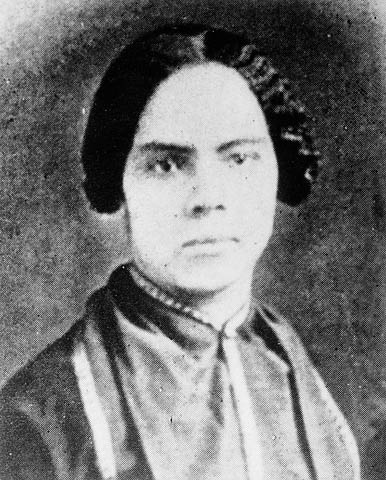
On October 9, 1823, Mary Ann Camberton Shadd Cary was born in the American state of Delaware. She moved to Canada West (Ontario) in 1851 and became an influential abolitionist, newspaper publisher, educator, and public speaker.
Shadd was the eldest of 13 children born to Abraham Doras Shadd and Harriet Burton Parnell. In her youth, the Shadd family home was a station on the Underground Railroad, helping people of African descent who sought to escape enslavement in the United States. Her father’s support for abolition and belief in racial equality greatly influenced her. She was educated by Quakers and throughout her life stressed the importance of education for African Americans to attain self-reliance.
Shadd became pessimistic about the future of the United States after Congress passed the Fugitive Slave Act in 1850. As a result of this legislation, self-emancipated African Americans could be captured in Northern states where enslavement was illegal and returned to enslavers in the South. After attending a convention in Toronto in September 1851, she decided to move to Windsor in Canada West. There, she opened a racially integrated school for children of African and European descent.
In 1852, Shadd published A Plea for Emigration; or Notes of Canada West, in which she outlined the living conditions for Black settlers in Canada and aimed to convince African Americans of its perceived advantages over other destinations in North and South America. The following year, she became the first woman of African descent to publish a newspaper in North America. The Provincial Freeman, as it was known, made Shadd an important figure in the Canadian emigration movement, contributed to a sense of African Canadian identity, and gave a voice to anti-slavery activists. Shadd also gave public lectures in the United States and Canada, becoming known and respected by many of the influential Black leaders of the time, including Frederick Douglass, William Still, Martin Delany, and Samuel Ringgold Ward.
During the American Civil War (1861–1865), Shadd became a recruiting agent for the Union army, at times travelling in territories that were unsafe for people of African descent. After the war ended, she moved to Washington, D.C. There, she took up teaching, advocated for women’s right to vote, and became one of the first African American women to earn a law degree in 1883.
Mary Ann Shadd was designated as a national historic person in 1994. The Historic Sites and Monuments Board of Canada advises the Government of Canada on the commemoration of national historic persons—individuals who have made unique and enduring contributions to the history of Canada.
The National Program of Historical Commemoration relies on the participation of Canadians in the identification of places, events, and persons of national historic significance. Any member of the public can nominate a topic for consideration by the Historic Sites and Monuments Board of Canada. Learn how to participate in this process.