
For the week of June 9, 2025.
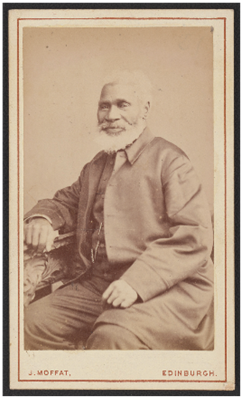
On June 15, 1789, Reverend Josiah Henson was born into slavery in the American state of Maryland. He went on to become a conductor for the Underground Railroad, helping self-emancipated people of African descent find freedom in British North America. He was also a well-known advocate for abolition and a founder of the African Canadian settlement of Dawn in Upper Canada (now Ontario).
Britain abolished enslavement throughout its Empire in 1834, but the practice continued in the United States. Thousands of people of African descent fled enslavement in the United States for freedom in British North America. This movement peaked in the 1850s, when roughly 30,000 self-emancipated people crossed the border. Despite achieving freedom in the British colonies, they still faced discrimination. As a result, some chose to organize their own communities and to develop their own institutions.
Josiah Henson was enslaved for more than 40 years, first in Maryland and then in Kentucky, where he became a Methodist minister. In 1830 he fled to Upper Canada with his wife and children. For roughly four years, Henson lived near Fort Erie, where he worked for shares or wages, preached, and became a leader among a growing population of formerly enslaved people. In 1834 he led a small group who settled in Colchester. He served in the militia during the Rebellion of 1837. During the 1840s and 1850s, he travelled back to the United States several times to help freedom seekers navigate the Underground Railroad.
In 1841 Henson helped found the African Canadian settlement of Dawn near Fairport (renamed Dresden in 1854) and its school, called the British American Institute. Separate, insular, all-Black communities were created, so they could learn the skills of independent living before integrating into British Canadian society. At its height, there were about 500 people living in the community and the British American Institute provided education to a total of 80 students, about half of whom were adults. The community supported itself in part through agriculture, mills, and a rope factory. However, additional funding was needed, so Henson often travelled to the United States and Britain to raise money. Still, Dawn fell into debt, leading to criticism of its leadership, the decline of the community in the 1850s, and the closure of the institute in 1868.
In 1849 Henson published his first of three autobiographies, which is thought to have helped inspire Harriet Beecher Stowe’s Uncle Tom’s Cabin. This story is controversial today, but played a significant role in the abolition movement of the mid-19th century. During the American Civil War, Henson recruited African Canadians in Upper Canada for the Union Army. He travelled to Britain for eight months in 1876–1877, where he spoke in front of thousands of people, collected donations, and met Queen Victoria. He later travelled to the United States and met President Rutherford B. Hayes. Josiah Henson spent his final years at his home near Dresden, where he died on May 5, 1883.
Reverend Josiah Henson was designated a national historic person in 1995. The Underground Railroad, the Abolition Movement in British North America, and Black Militia Units in Upper Canada, 1812-1850 were designated national historic events in 1925, 2004, and 2014, respectively. The Historic Sites and Monuments Board of Canada advises the Government of Canada on the commemoration of national historic persons—individuals who have made unique and enduring contributions to the history of Canada, and national historic events, which evoke significant moments, episodes, movements, or experiences in the history of Canada.
The National Program of Historical Commemoration relies on the participation of Canadians in the identification of places, persons, and events of national historic significance. Any member of the public can submit a subject to the Historic Sites and Monuments Board of Canada. Learn how to participate in this process.