For the week of January 13, 2025.
On January 17, 1904, Canadian artist Pegi Nicol MacLeod was born in Listowel, Ontario. She grew up to become an exceptionally talented and successful painter, who influenced the development of modern art in Canada, helped establish the art program at the University of New Brunswick, and documented Canadian experiences of the Second World War (1939–1945).
Pegi Nicol grew up in Ottawa and studied at the Ottawa Art School from 1921 to 1923. From 1923 to 1924, she continued her education at Montréal’s École des Beaux Arts, where she won several prizes for her art. In Ottawa, she became friends with National Gallery of Canada Director Eric Brown, who introduced her to many leading figures in Canada’s art scene.
Marius Barbeau, an influential Canadian ethnographer and folklorist, arranged government-sponsored trips for Nicol to visit the Gitanmaax Band in British Columbia in 1927 and the Stoney Nakoda in Alberta in 1928. The art she produced of the people and the landscapes helped raise her reputation with the members of the Group of Seven, who invited her to exhibit at one of their shows in Toronto in 1928.
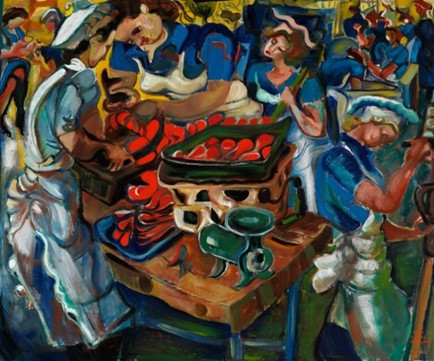
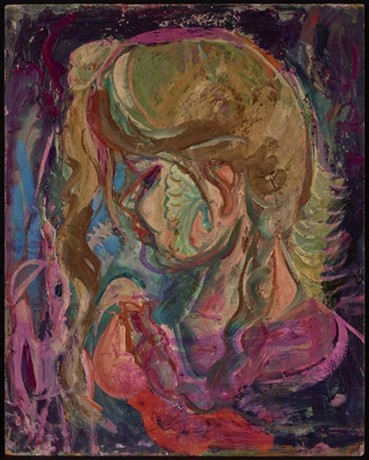
Over time, Nicol developed a uniquely modernist approach to painting. She became known for using watercolours and swiftly applied brushwork to create expressive paintings, with a focus on the human form, portraiture, and self-portraiture. Her importance as an artist was recognized by her election to the Canadian Society of Painters in Water Colour in 1936 and the Canadian Group of Painters in 1937.
In 1937 she moved with her husband, Norman MacLeod, to New York City. There, she painted portraits of their daughter Jane, views from their window, and street scenes near their apartment. Pegi Nicol MacLeod maintained her ties with Canada, spending her summers in Fredericton, New Brunswick, from 1940 to 1948. She and Lucy Jarvis, another well-known Canadian painter, convinced the University of New Brunswick to establish art classes in the former observatory building. By 1946, the program had attracted so many students that it had outgrown this space. When full-time art courses began in 1947, the observatory became a gallery and meeting place.
During the Second World War, MacLeod was commissioned by the National Gallery of Canada to paint women in the armed forces as part of the Canadian War Records Program. She was one of a small number of female artists whose works depicted the approximately 45,600 Canadian women in uniform. MacLeod painted the women performing military duties and relaxing during their free time, thus creating a well-rounded view of their lives.
Pegi Nicol MacLeod died in 1949. She is remembered today for her numerous works in major art galleries and private collections across the country, and for her significant contributions to the art program at the University of New Brunswick.