For the week of February 19, 2024.
On February 23, 1990, the Government of Canada recognized the John Street Roundhouse (Canadian Pacific) in Toronto, Ontario, as a national historic site. At the time of its construction, it was thought to be one of the largest and most technologically advanced roundhouses in Canada.
In 1897, the Canadian Pacific Railway (CPR) built a roundhouse near John Street and the Toronto harbour. Roundhouses are semi-circular buildings, with a large round spinning table that rotate trains into radiating stalls. They are maintenance facilities, where trains can be repaired and prepared for travel. In the late 19th century, this was hard and sometimes dangerous work: the noise was deafening and the smoke from the steam engines made the air toxic.
The original John Street Roundhouse had 15 stalls, each about 21 metres long, with a 21-metre-wide turntable. The CPR lengthened the stalls in 1907, 1918, and 1929, as local rail traffic increased and locomotives grew larger. However, it still struggled to keep up and traffic only increased after the 1927 opening of Union Station, which the CPR and the Canadian National Railway (CNR) both serviced.
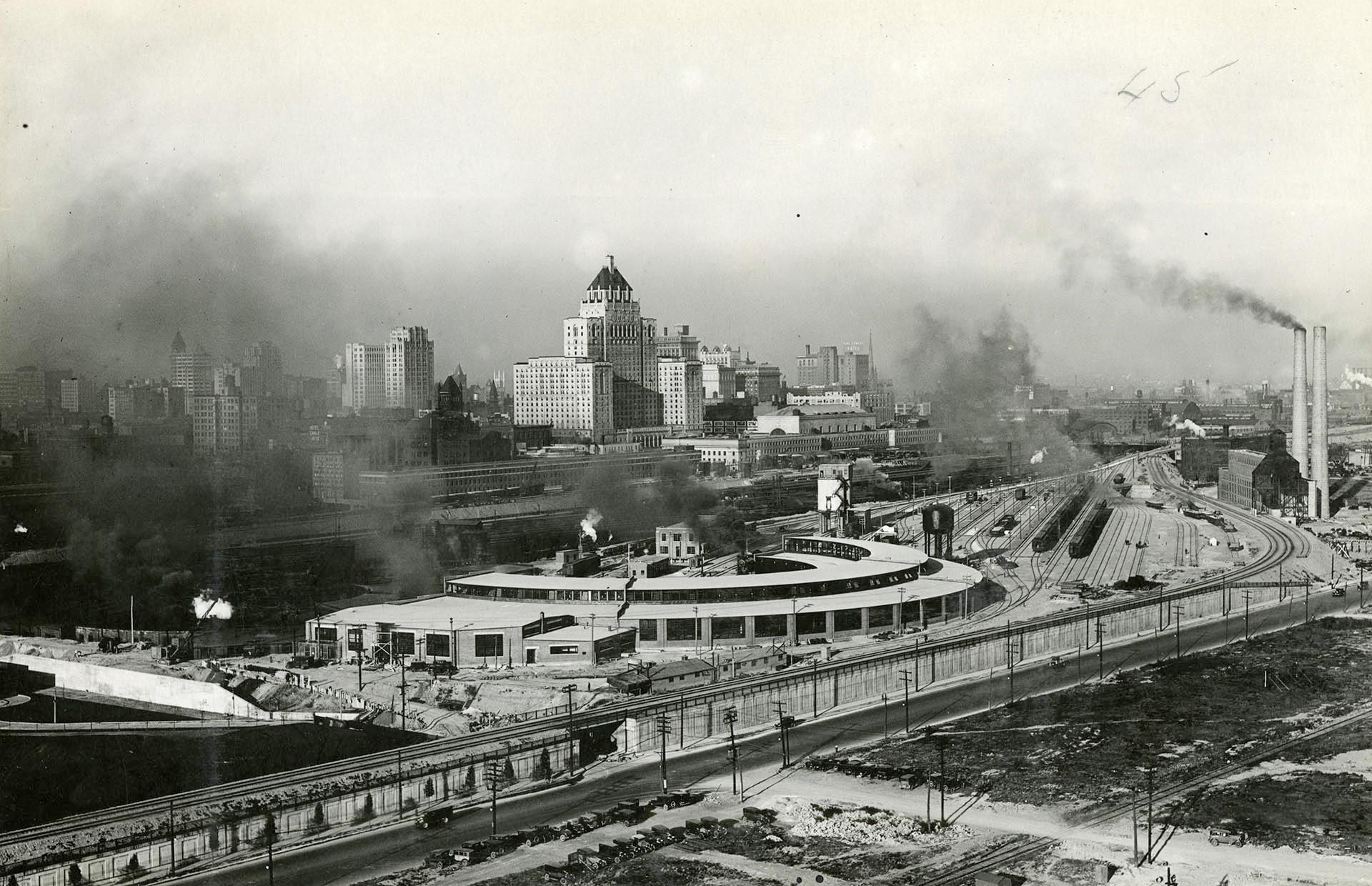
In response, the CPR built a new roundhouse with the same name in Toronto between 1929 and 1931. It was located southeast of the original John Street Roundhouse on Fleet Street (now Lake Shore Boulevard). Thought to be the largest in Canada at the time, it had 32 stalls and a 37-metre-wide turntable to accommodate larger trains.
The roundhouse used new technology to pump steam into the train’s boilers directly from the Central Heating Plant operated by Toronto Terminals Railway (TTR), jointly owned by the CPR and CNR. The Central Heating Plant generated steam to heat buildings owned by the two railway companies, including Union Station. This steaming mechanism was the first of its kind in Canada and one of only half a dozen in North America. The steam was also fed directly into train engines, so they could operate without burning coal. That meant no more toxic smoke inside the roundhouse, which improved working conditions. It also greatly sped up the process of preparing the engines for departures by pre-heating the boilers.
The new roundhouse offered round-the-clock service by a staff of 150, including blacksmiths, mechanists, engineers, and general labourers, who repaired and maintained train cars and engines. The pay was low and despite improvements, conditions were still dangerous. Personal protective equipment such as hard hats were not required until the 1960s, for example.
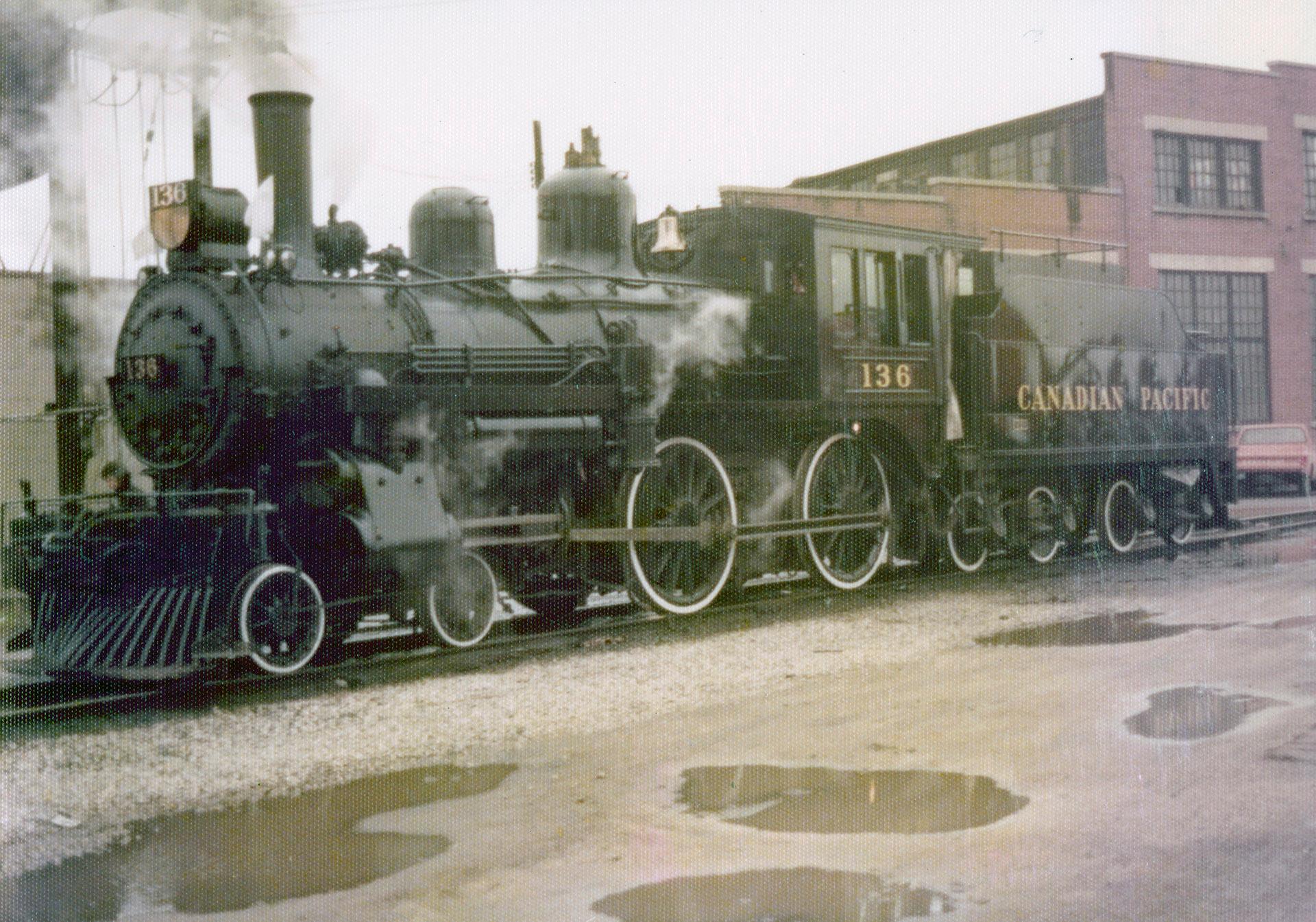
Between the 1940s and the 1960s, the CPR gradually replaced steam with diesel engines, which required less maintenance. The John Street Roundhouse declined in importance, as a result, and ultimately closed in 1986. In 1997, the CPR transferred ownership of the facility and surrounding land to the City of Toronto, which redeveloped the site for mixed use, including a new park and a railway museum that opened in 2010.