
For the week of February 12, 2024.
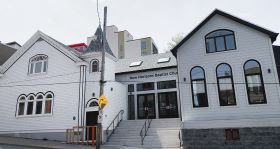
On February 15, 1831, Richard Preston arrived in England. There, he was ordained by the West London Association of Baptist Ministers and raised funds to build the Cornwallis Street African Baptist Church (now the New Horizons Baptist Church) in Halifax, Nova Scotia. He led the church as pastor, becoming an important spiritual and community leader among African Nova Scotians.
Richard Preston was born in the early 1790s and enslaved as a child in the American state of Virginia. In 1816, he purchased his freedom and travelled to the British colony of Nova Scotia to reunite with his mother. She was among the approximately 1,600 people of African descent who fled enslavement in the United States for freedom in the British colony of Nova Scotia during the War of 1812. They became known as “Black Refugees” in Nova Scotia. There, they forged a distinct identity and built communities of their own, the largest of which were in Halifax County at Hammonds Plains and Preston.
The Baptist church was central to Black Refugee community life. At first, many turned to Reverend John Burton for spiritual guidance. He came to Nova Scotia from England and established Baptist churches at Halifax in 1795 and Hammonds Plains in 1820. Richard Preston played a leading role in building a new church that would minister primarily to Black Refugees. He had been leading revivalist meetings across Nova Scotia for several years when a local farmer granted him land in 1827 for a new chapel. While in England to be ordained in 1832, he raised the needed funds. Preston returned to Halifax later that year and served as pastor of the new African Baptist Church.
Preston had become an important spiritual and community leader. He continued to minister to rural African Nova Scotian settlements and established several more churches between the 1830s and the 1850s. He became so influential that the Conservative party recruited him to build support among African Nova Scotians in the 1847 election campaign. Preston also helped found a Mutual Aid Improvement Society, Anti-Slavery Society, and the African United Baptist Association (AUBA). One of the most important community-based organizations between 1854 and 1918, the AUBA led, united, and advocated on behalf of African Nova Scotians.
Reverend Richard Preston was designated as a national historic person in 2005. The Historic Sites and Monuments Board of Canada advises the Government of Canada on the commemoration of national historic persons—individuals who have made unique and enduring contributions to the history of Canada.
The National Program of Historical Commemoration relies on the participation of Canadians in the identification of places, events, and persons of national historic significance. Any member of the public can nominate a topic for consideration by the Historic Sites and Monuments Board of Canada. Learn how to participate in this process.