For the week of December 30, 2024.
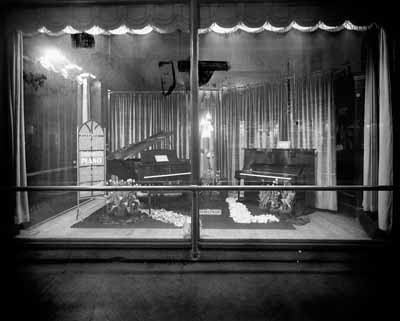
On January 1, 1928, Heintzman and Company took over Nordheimer Piano and Music Company. The two piano manufacturers based in Toronto, Ontario, had been competing for customers for many years. Following the acquisition, Heintzman and Company became the largest piano manufacturing firm in Canada.
German-born Theodore August Heintzman started making pianos in the 1860s, soon after he moved to Toronto. The company quickly expanded its operations and focused on producing high-quality musical instruments. Between 1860 and 1899, it received 11 awards in America and the British Empire, including the prestigious William Prince of Wales Medal.
In the 1870s, there was an economic recession that put most piano manufacturers out of business. Protective tariffs on the importation of musical instruments helped some stay in business, while the growing middle class in Toronto provided new customers. Heintzman and Company was among the few to survive.
Nordheimer Piano and Music Company was another. It expanded from printing sheet music to manufacture pianos. Before opening its own factory in 1890, it shared space with Gerhard Heintzman Company, owned by the nephew of Theodore Heintzman.
By the 1920s, Heintzman and Company had grown to 20 branches, selling its pianos across Canada and around the world. In 1927, it acquired Gerhard Heintzman Company and Nordheimer Piano and Music Company. This cemented its leading position within the Canadian market.
Still, Heintzman and Company suffered during the Great Depression of the 1930s, when sales of musical instruments declined significantly. The company was forced to diversify to stay afloat, selling sheet music, phonographs, records, other instruments, radios, and even kitchen appliances.
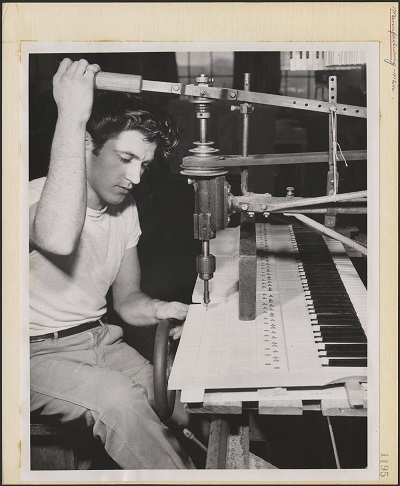
However, in the 1950 and 1960s, the company returned to its original focus of manufacturing high-quality pianos. One of the longest-lived and most prominent piano manufactures in Canada, Heintzman and Company closed in the mid-1980s, forced into bankruptcy by the recession.