
For the week of December 23, 2024
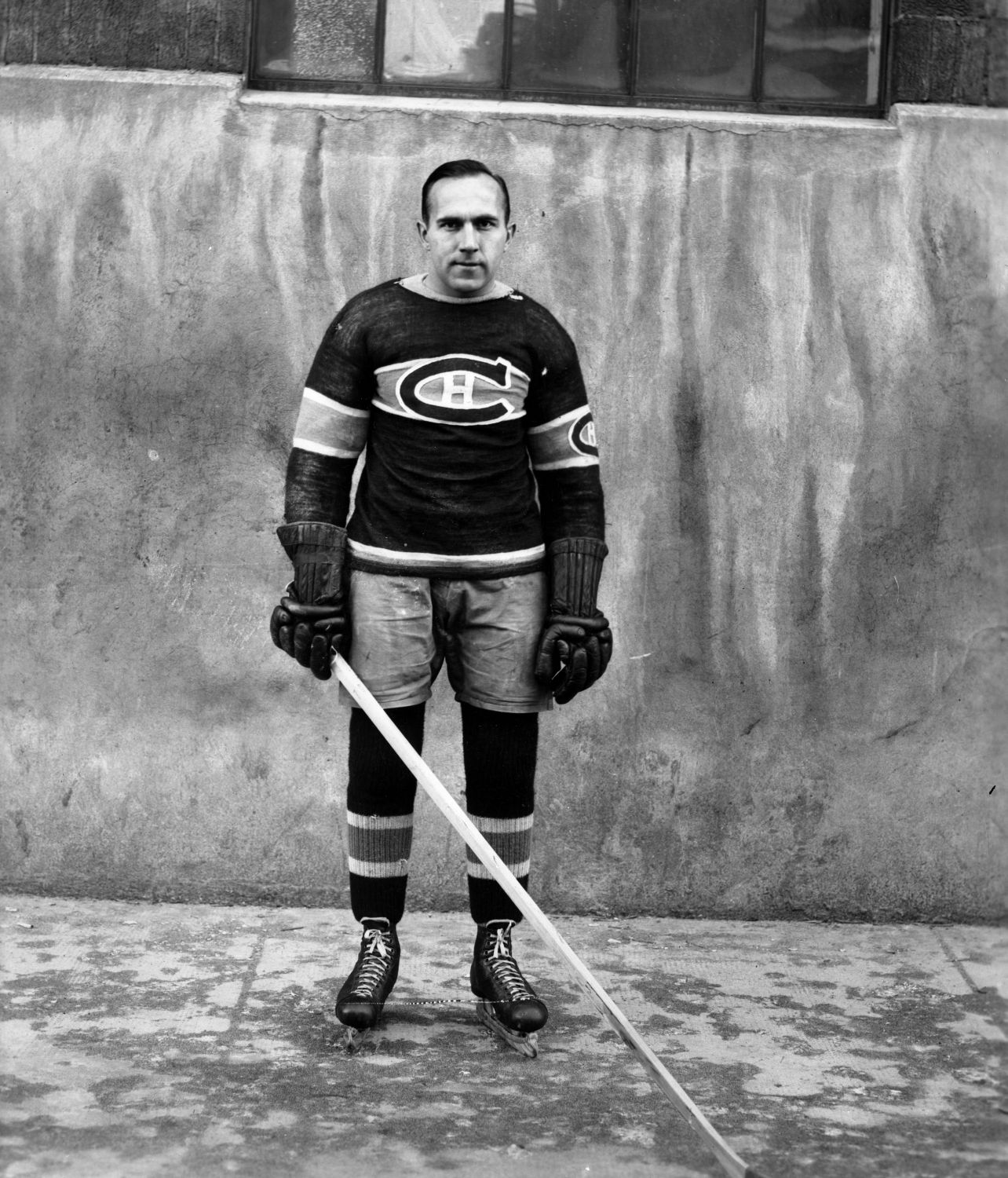
On December 23, 1933, Howie Morenz broke the all-time scoring record in the National Hockey League (NHL) with his 248th career goal. This achievement helped establish Morenz as a star player for the oldest and most successful team in the league, the Club de hockey Canadien (Montréal Canadiens).
Born in Mitchell, Ontario, on September 21, 1902, Howarth William Morenz was the youngest of six siblings. He grew up playing ice hockey. After moving with his family to Stratford, Ontario in 1917, he joined a junior hockey team and earned the nickname, “The Stratford Streak,” for his speed on the ice. In 1922, he scored nine goals during an away game in Montréal, where he caught the eye of Canadiens staff.
Morenz joined the Montréal Canadiens in December 1923. The team, founded in 1909, was distinctively French Canadian. Between 1912 and 1925, its convention allowed the team to dress only two non-francophone players at a time, which included Morenz. He had an impressive first season with the Canadiens, scoring 13 goals and helping the team win the Stanley Cup in 1924. He played on Montréal’s Stanley-Cup winning teams two more times, in 1930 and 1931. Morenz was also a three-time recipient of the Hart Trophy as league MVP and won the league scoring championship twice.
Morenz had many fans in Montréal and beyond. They nicknamed him “the Babe Ruth of Hockey,” “the Hurtling Hab,” and “the Swiss Cyclone.” The English-language press had nicknamed the Canadiens’ first star players the “Flying Frenchmen,” for their speed and artistry. The name stuck and was applied to team legends like Aurèle Joliat and Georges Vézina. Many in the francophone press and fans in Montréal claimed Morenz as one of their own, though his family was of Swiss origin. Thousands filled the Montréal Forum to watch home games and many more listened to the action on the radio.
Morenz moved to the Chicago Black Hawks in 1934 and was later traded to the New York Rangers. In 1936, he returned to the Canadiens. During a game against Chicago on January 28, 1937, his skate got caught in a rut in the ice as an opposing defensemen body checked him, unintentionally breaking Morenz’s leg in four places. He died on March 8 from complications resulting from the injury. His funeral took place on March 10 at the Montréal Forum. Approximately 50,000 people attended, and another 250,000 lined the streets for the funeral procession. Morenz’s jersey—number 7—was retired and he was inducted into the Hockey Hall of Fame in 1945. Over the course of his hockey career, he played 550 games and scored 271 goals and 205 assists.