For the week of October 21, 2024.
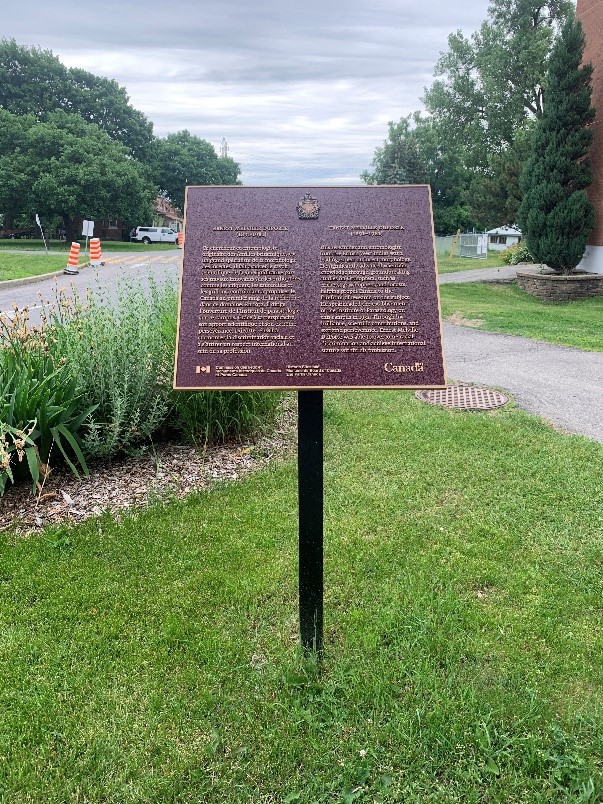
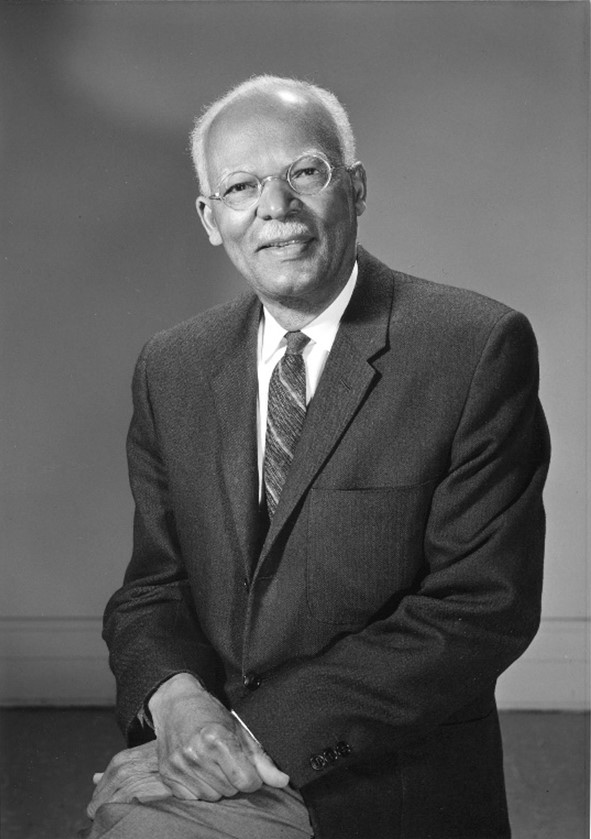
On October 24, 1891, Ernest Melville DuPorte was born on the Island of Nevis in the former British West Indies. He later moved to Canada, where he broke racial barriers to become one of the leading experts in insect morphology and helped found the Institute of Parasitology at what is now the Macdonald Campus of McGill University in Montréal, Quebec.
DuPorte was an exceptionally gifted student. He earned scholarships to the St. Kitts-Nevis Grammar School in Basseterre (the capital of St. Kitts) and to study abroad. In 1911, he entered McGill University. As a result of his previous academic credits, he was able to complete the four-year program in three years, earning his Bachelor of Science in Agriculture in 1913. The following year, he became the first entomologist to earn a Master of Science at Macdonald College.
He was invited to give courses in biology and bacteriology while a graduate student. In 1916, he joined the Zoology and Entomology Department, and worked part-time in Bacteriology. He was acting Chair of the department from 1924 to 1926, while working on his doctorate in Invertebrate Zoology with a minor in Parasitology. His dissertation on grasshoppers and crickets helped propel Macdonald College to the forefront of animal parasitology.
In 1929, DuPorte chaired the McGill Committee for Biological Research on Animal Sciences. In this capacity, he led the founding of the Institute of Parasitology at Macdonald College. He faced opposition but won support of the committee and helped convince Canadian authorities of the need to understand and control animal parasites for agriculture. In 1932, the National Research Council of Canada granted funding for the study of poultry parasites. Two years later, the Institute of Parasitology was officially established at Macdonald College.
Over the course of his 70-year academic career, DuPorte had significantly advanced scientific knowledge of insect and plant morphology, entomology, and parasitology. He published 39 studies, most of which focused on the morphology of beetles, crickets, and ticks. In 1959, he brought his findings together in the Manual of Insect Morphology, which has become a classic work in the field.
Along the way, DuPorte faced racial discrimination and hostility that impeded his career. For instance, though he unofficially led his department for decades, he only received the title of chair in 1955. He retired as a full professor in 1957 but continued to teach at Macdonald College until 1980. Ernest DuPorte died in 1981 in Ste-Anne-de-Bellevue, Quebec.