For the week of October 7, 2024.
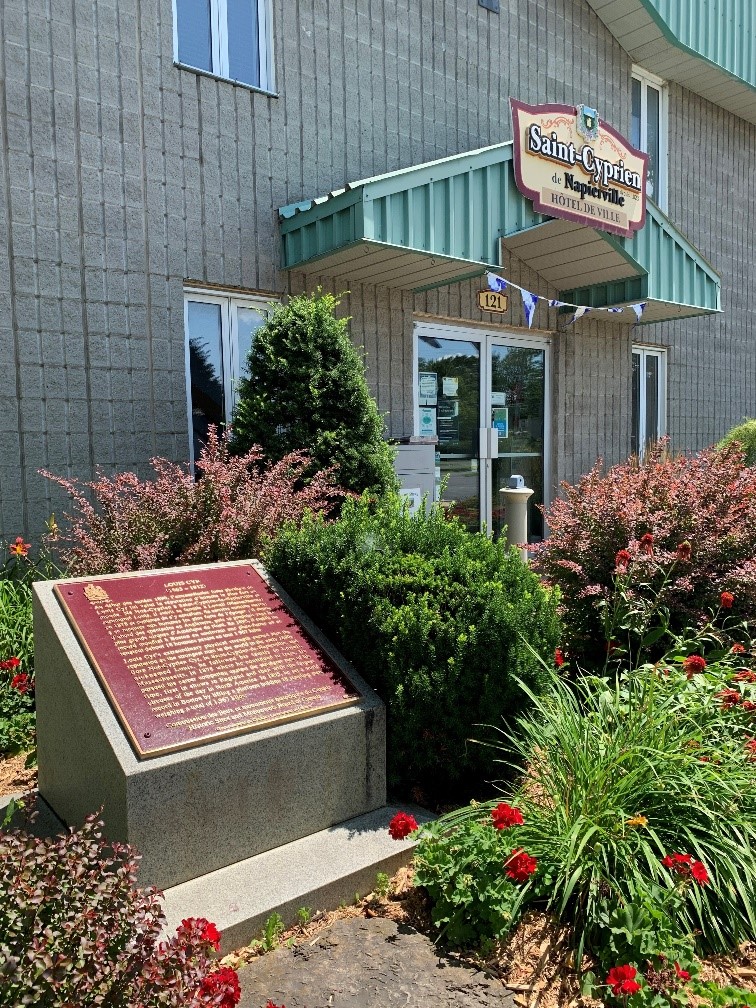
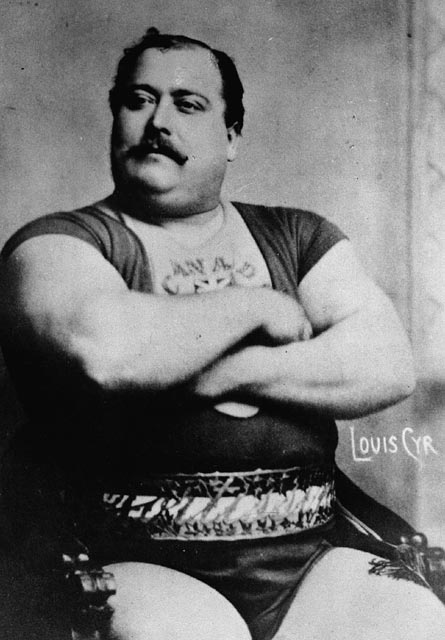
On October 10, 1863, Louis Cyr was born in Saint-Cyprien-de-Napierville, in present-day Quebec. His extraordinary strength earned him the title of strongest man in the world in the late 19th and early 20th centuries.
Baptized Cyprien-Noé Cyr, he was one of 17 children born to Pierre Cyr and Philomene Berger. The family lived on a farm in Saint-Cyprien-de-Napierville until 1878, when they moved to the United States. Like many other French Canadians at the time, they left in search of employment and better living conditions. The Cyr family settled in Lowell, Massachusetts, where they found work in the textile industry.
There, he adopted the name Louis, as it was easier to pronounce in English. He began working in the mills at the age of 17. He was known to do the work of two men, single-handedly stacking crates of cotton weighing several hundred pounds. In 1882, he married Mélina Comptois, with whom he would have a daughter, Émiliana Cyr, who inherited his strength.
In 1883, Louis Cyr attracted attention when he lifted a 517-pound field stone before a crowd of 4,000 people. A horse dealer named Mac Sohmer persuaded Cyr to tour the Maritime provinces and Quebec, performing feats of strength. These performances were often part of novelty shows held in theatres. Cyr also performed at amusement parks, gardens, hotels, taverns, cafés, velodromes, skating rinks, racetracks, agricultural exhibitions, and fairs. After the tour ended, Cyr settled with his wife in Montréal, where he worked as a police officer and firefighter in Sainte-Cunegonde.
In December 1885, he retired from policing and returned to performing feats of strength in Canada, the United States, and Western Europe. In March 1886, he defeated David Michaud to win the title of strongest man in Canada. In 1892, Cyr toured Great Britain, where he faced the champions of Prussia, Italy, Austria and England. On the evening of February 19, in London, Cyr set four records, including a one-armed clean lift, followed by a press of a 273¼-pound weight—a record that stood unbeaten for the next 122 years. Following this event, he claimed the title of strongest man in the world.
After 1892, Cyr continued to perform in Canada and the United States, notably in the Ringling Brothers circus (1897–1898). For a few years, he toured with his family in his own circus, featuring strongmen, acrobats, and jugglers. He retired in 1906 due to back pain and Bright’s disease. He spent his final years in the countryside in Saint-Jean-de-Matha. Louis Cyr died in 1912, at the age of 49.