For the week of June 3, 2024.
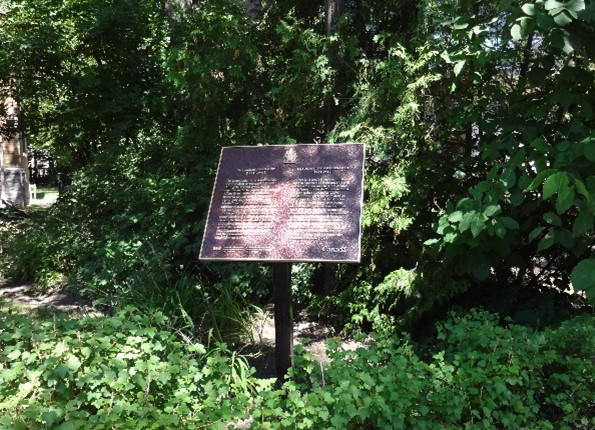
On June 9, 1941, the Examination Unit (the XU) became operational. Canada’s secret civilian cryptographic bureau during the Second World War, it facilitated greater international cooperation in intelligence-sharing and helped lay the foundations for the Communications Security Establishment (CSE).
When the Second World War began, Canada had no capacity for cryptography. A small number of military intercept stations were monitoring wireless signals, but Canada had no means to decode them, so it sent all transcripts to British intelligence. Recognizing the need, the Department of External Affairs decided to establish its own cryptographic bureau in secret. It was codenamed the XU and hidden within the National Research Council of Canada (NRC).
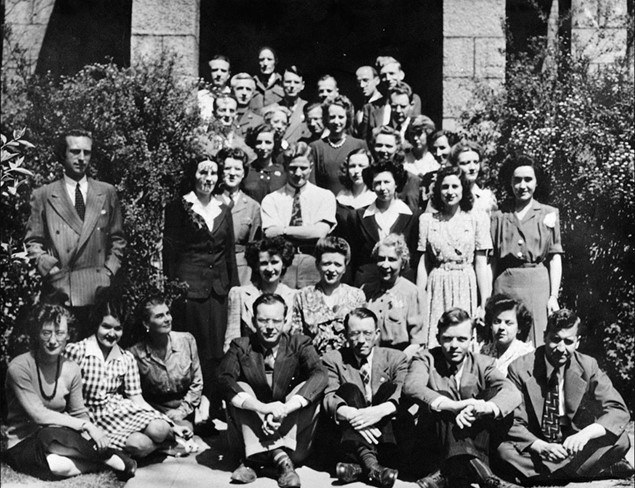
It began operations in 1941 under the direction of controversial American codebreaker Herbert O. Yardley. By August, the team of nine had successfully solved several codes and ciphers used by Germany, Japan, Vichy France, and Colombia, some of which had not been given attention by the codebreaking services of Britain and the United States. When British and American officials discovered that Yardley had been brought to Canada to head the XU, they insisted he be dismissed on security grounds. Not only had Yardley published a tell-all memoir of his earlier codebreaking efforts for the United States, but there were allegations he had leaked secrets to Japan.
At British insistence, Yardley was replaced by a veteran British codebreaker, Oliver Strachey. He brought with him French, German, and Japanese codes and cipher keys, along with training manuals from the Government Code and Cypher School at Bletchley Park in England. Before long, the XU was decrypting Vichy telegrams and soon hired additional French linguists. It was the first to figure out the transposition cipher used by the Vichy fleet, which it shared with the British and Americans.
Under the leadership of British cryptologist F. A. Kendrick, who replaced Strachey in 1942, the XU increasingly specialized in Japanese and French traffic. It started monitoring Free French communications after Canada and the United States severed diplomatic relations with Vichy. Free French officials used codes and ciphers already known to the XU, even for high-grade diplomatic intercepts, making this a relatively easy transition for the Canadians. The resulting decrypts helped the Canadian Department of External Affairs broaden its understanding of events in occupied Europe and the Pacific, rather than relying exclusively on British and American assessments.
At the end of the war, the XU closed and several of its former staff joined the new Communications Branch of the NRC, which became the Communications Security Establishment in 1975.