For the week of January 8, 2024.
On January 12, 2010, the Canadian Government recognized the Canadian Car & Foundry plant (also known as Can-Car) in Thunder Bay, Ontario, as a national historic site. During the Second World War (1939–1945), it was the largest producer of fighter aircraft in Canada.
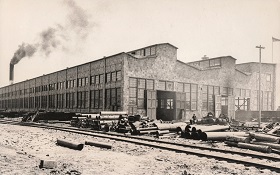
The Can-Car plant was established in 1912 in Fort William (now part of Thunder Bay), on the traditional territory of the Fort William First Nation. The Canadian Car & Foundry Company had been formed in 1909, through the merger of the Rhodes, Curry Company of Amherst, Nova Scotia, and two Montréal railcar manufacturers. By locating the plant in the Lakehead region, the company was able to supply all three transcontinental railways—the Canadian Pacific, Canadian Northern, and Grand Trunk Pacific/National Transcontinental.
During the First World War (1914–1918), it built minesweeping ships for France. After suspending operations between 1922 and 1937, the plant reopened. During the Second World War, it built military aircraft for the Allies, especially the (British) Royal Air Force and the United States Navy.
By the end of the war, Can-Car had manufactured 1,451 or 10 per cent of Hawker Hurricanes procured by Allied forces and 853 or 12 per cent of all Curtis Helldivers produced globally. The Hawker Hurricane was celebrated for its role in the Battle of Britain. Elsie MacGill, the first female aeronautical engineer in Canada, became known as the “Queen of the Hurricanes” for her role in overseeing the production of this aircraft at the Can-Car plant. She modified the design, reducing its reliance on British parts and adapting it for cold climates, adding skis and de-icing equipment, for example. The Curtis Helldiver was an underwhelming US design in performance, but its folding wings made it ideal for aircraft carriers.
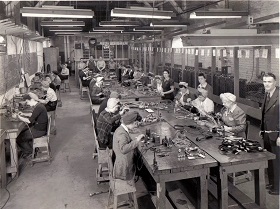
Women played a significant role in building these aircraft. Many had entered the workforce to help fill shortages caused by men enlisting for the war. Women made up only 10 per cent of all the workers at the Can-Car plant in 1941. That figure increased to 40 per cent by 1944, with most women coming from the Prairies in search of work. This did not continue after the war: the Can-Car plant laid off all but three of the 1,200 women employed at the plant in August 1945.
After the war, the Can-Car plant returned to building railcars. It introduced a popular series of buses and streetcars, and manufactured training aircraft, highway trailers and forest skidders (Tree Farmers), and then turned to building subway cars for the Toronto Transit Commission. The business changed hands a few times over the years, operated by the British Hawker Siddeley Group from 1962 until 1984. It is now owned by Alstom of France.
On January 12, 2010, the Canadian Government recognized the Canadian Car & Foundry plant (also known as Can-Car) in Thunder Bay, Ontario, as a national historic site. During the Second World War (1939–1945), it was the largest producer of fighter aircraft in Canada.
The Can-Car plant was established in 1912 in Fort William (now part of Thunder Bay), on the traditional territory of the Fort William First Nation. The Canadian Car & Foundry Company had been formed in 1909, through the merger of the Rhodes, Curry Company of Amherst, Nova Scotia, and two Montréal railcar manufacturers. By locating the plant in the Lakehead region, the company was able to supply all three transcontinental railways—the Canadian Pacific, Canadian Northern, and Grand Trunk Pacific/National Transcontinental.
During the First World War (1914–1918), it built minesweeping ships for France. After suspending operations between 1922 and 1937, the plant reopened. During the Second World War, it built military aircraft for the Allies, especially the (British) Royal Air Force and the United States Navy.
By the end of the war, Can-Car had manufactured 1,451 or 10 per cent of Hawker Hurricanes procured by Allied forces and 853 or 12 per cent of all Curtis Helldivers produced globally. The Hawker Hurricane was celebrated for its role in the Battle of Britain. Elsie MacGill, the first female aeronautical engineer in Canada, became known as the “Queen of the Hurricanes” for her role in overseeing the production of this aircraft at the Can-Car plant. She modified the design, reducing its reliance on British parts and adapting it for cold climates, adding skis and de-icing equipment, for example. The Curtis Helldiver was an underwhelming US design in performance, but its folding wings made it ideal for aircraft carriers.
Women played a significant role in building these aircraft. Many had entered the workforce to help fill shortages caused by men enlisting for the war. Women made up only 10 per cent of all the workers at the Can-Car plant in 1941. That figure increased to 40 per cent by 1944, with most women coming from the Prairies in search of work. This did not continue after the war: the Can-Car plant laid off all but three of the 1,200 women employed at the plant in August 1945.
After the war, the Can-Car plant returned to building railcars. It introduced a popular series of buses and streetcars, and manufactured training aircraft, highway trailers and forest skidders (Tree Farmers), and then turned to building subway cars for the Toronto Transit Commission. The business changed hands a few times over the years, operated by the British Hawker Siddeley Group from 1962 until 1984. It is now owned by Alstom of France.