For the week of November 20, 2023.
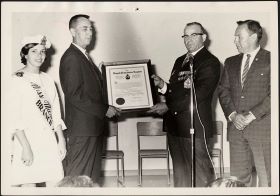
On 25 November 1925, veterans’ associations met at the Marlborough Hotel in Winnipeg, Manitoba. This two-day “National Unity Conference” culminated in the founding of the Canadian Legion of the British Empire Service League. Renamed the Royal Canadian Legion in 1960, it became Canada’s largest veteran-based social and advocacy organization.
By the end of the First World War (1914–1918), roughly 620,000 Canadians had served in uniform. Many had a difficult time returning to civilian life after their experiences of war. This was especially true for the approximately 172,000 living with physical injuries and countless others with psychological wounds. The transition was made even more difficult by the economic circumstances of the late 1910s, when new industries were changing the job market and high inflation was driving up the cost of living.
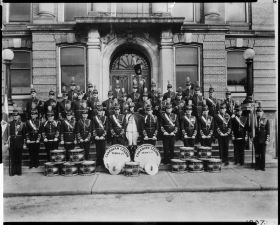
Veterans came together to form organizations for comradery and mutual support. The Great War Veterans Association (GWVA), for example, was established in April 1917. By 1919, it was the largest veterans’ organization in Canada. It lobbied government and led campaigns to raise funds and support for veterans’ causes. By the mid-1920s, however, internal disputes and the emergence of rival associations brought it to near collapse.
During a visit to Canada in 1925, Field Marshal Sir Douglas Haig encouraged veterans to unite in one organization. He was a founder of the British Empire Service League, which supported veterans from Canada. Lieutenant-General Sir Richard Turner acted as his deputy and, under his chairmanship, the GWVA organized a conference of veterans’ groups at the Marlborough Hotel between November 25 and 27, 1925. Two days later, they had formed a new organization with a cohesive voice. The Canadian Legion of the British Empire Service League, as it was known, was incorporated by a special Act of Parliament and its Charter issued in July 1926. Its first national conference took place in 1927, when delegates again convened at the Marlborough Hotel.
The Legion grew steadily during the 1930s, working to improve the lives of veterans across Canada. It advocated for the War Veterans Allowance Act (1930), which provided financial compensation for veterans whose ability to work was inhibited by their military service. It was a major victory that addressed many shortcomings in The Pension Act (1919), established for severely injured veterans of the Great War. The organization won financial assistance for thousands of men who had not been eligible for disability pensions under the criteria of the 1919 Act.
The Legion expanded rapidly after the Second World War (1939–1945). The membership included women and racialized Canadians, but Indigenous Peoples faced barriers to participation. The Indian Act restricted the sale and possession of alcohol. Since local chapters of the Legion served alcohol, Indigenous veterans could not attend until the legislation was amended in 1951 to remove those restrictions. Even so, Indigenous Peoples and racialized Canadians did not always feel welcome because of the racial prejudices and discrimination that pervaded society.
Since 1945, the Legion has continued to focus on supporting Canadian veterans and their dependents, helping them access government services, and advocating on their behalf. Today, the Legion is the largest veteran and community service organization in Canada with about 250,000 members across 1,350 branches.