For the week of September 25, 2023
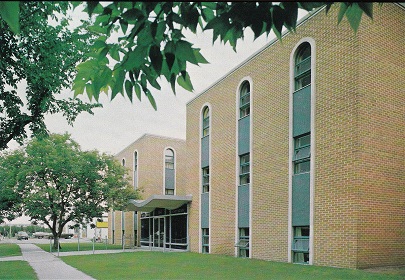
On September 30, 1916, the Petro Mohyla Institute opened at 716 Lansdowne Avenue in Saskatoon, Saskatchewan. This secular institute was part of a movement to support higher education for Ukrainian Canadian youth and over the years it fostered a strong sense of Ukrainian identity in generations of young men and women.
By 1914, approximately 170,000 Ukrainian immigrants had settled in Canada, mostly on the Prairies. Some Canadian provinces allowed bilingual instruction in languages besides French or English in the late 19th century. During the First World War, however, the Prairie provinces withdrew their support of Ukrainian bilingual schools and closed teachers’ colleges for foreign language-speaking teachers. Many Ukrainian Canadians wanted to educate their youths in Ukrainian language and culture. After the school closures, in August 1916, Ukrainian teachers held the first of what became a series of “people’s conferences” (narodni zizdy). More than 500 people attended to discuss pressing issues. They resolved to found the Petro Mohyla Institute.
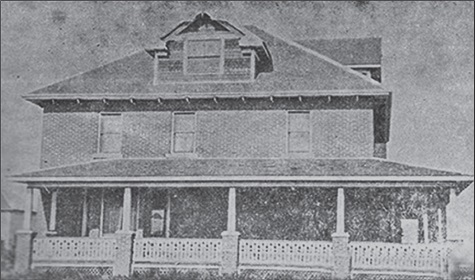
The Petro Mohyla Institute was part of the Ukrainian movement for the establishment of bursy— student residences that also served as educational and cultural centres. Wasyl Swystun, a Ukrainian educator and activist, oversaw its establishment as rector. The first 35 students occupied a rented three-storey building in Saskatoon. The Institute quickly outgrew this building and, in 1918, it acquired the Empress Hotel. The former hotel was home to as many as one hundred students at a time during the 1920s, with dining and common areas for classes, clubs, and other group activities that were part of the Institute’s program.
To motivate students to become community leaders, the Institute hosted talks by Ukrainian politicians, academics, and artists travelling through Saskatoon. Guest speakers included Professor D. Doroshenko, a noted Ukrainian historian, and Vasile Avramenko, a dancer who specialized in Ukrainian folk dance. The Institute also held lectures on subjects such as “How to Publish a Newspaper” and participated in competitive public-speaking debates with other schools. The success of the Petro Mohyla Institute inspired the establishment of other bursy in Canora, Saskatchewan, and Vegreville, Alberta, in 1917, Edmonton, Alberta, in 1918, and Winnipeg, Manitoba, in 1927. They coordinated to provide consistent programs for students across the Prairies.
The Institute also encouraged former students to found affiliate organizations, like the Kameniari (Stonecutters) literary and dramatic arts society formed in 1919. Although the Kameniari was open to all, in 1923 female students decided to form their own organization, called the Mohylianky after Ukrainian Princess Raina Mohylianka, to focus on public-speaking skills. The Petro Mohyla Institute and related organizations exemplified how Ukrainian Canadians sought to preserve their language and culture while instilling community values and skills in youth.